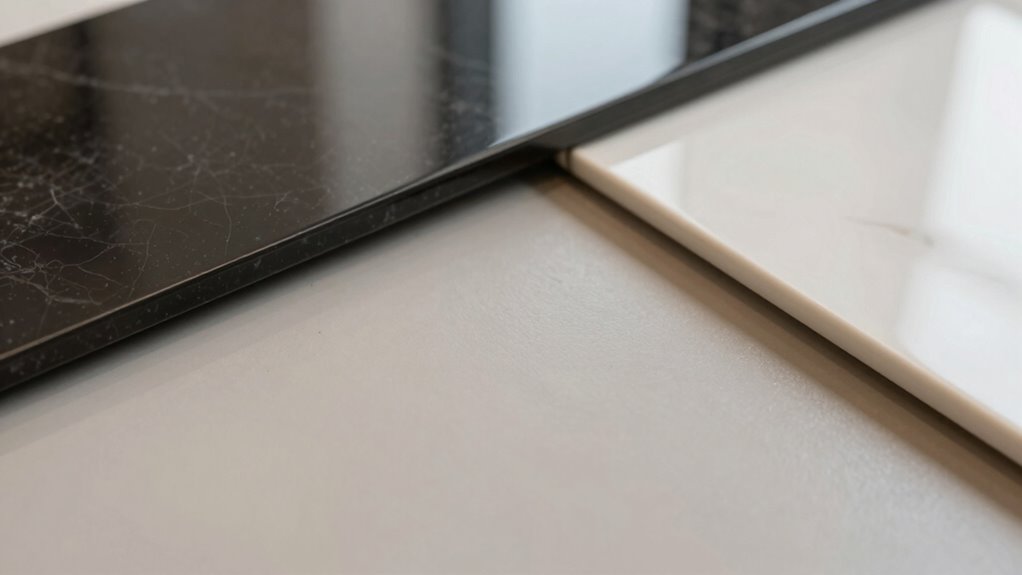

Understanding finish, sheen, and surface reflection helps you choose the right look and durability for your space. A high-gloss finish adds shine and makes colors pop but shows fingerprints and scratches more easily. Matte finishes create a soft, understated look that hides imperfections but can be harder to clean. Satin or semi-gloss balances durability and style, ideal for busy areas. Keep exploring to discover how to pick the perfect combination for your project’s needs.

Prime made for students and young adults
- Fast, free delivery for dorm and study essentials
- Prime Video and Amazon Music included
- Member-only deals
Key Takeaways
- Choose finish types (matte, semi-gloss, high-gloss) based on desired reflection, durability, and concealment of imperfections.
- High-gloss surfaces reflect more light, making spaces appear brighter but showing fingerprints and scratches more easily.
- Matte finishes provide a subtle, non-reflective look ideal for hiding surface flaws but are harder to clean.
- Surface reflection influences room brightness, ambiance, and how lighting interacts with décor.
- Balance aesthetic preferences with functional needs by selecting finishes that resist wear, moisture, and environmental factors.
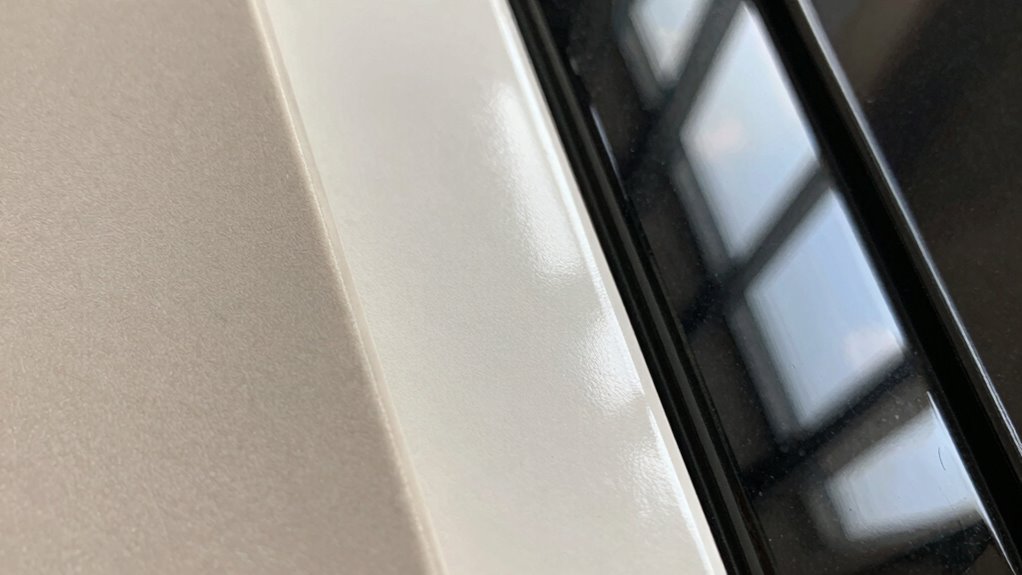
Choosing the right finish, sheen, and surface reflection can profoundly impact the look and durability of your project. These choices influence not only how your space appears but also how well it holds up over time. When selecting a finish, you need to consider both surface durability and aesthetic appeal. Surface durability ensures that your surface withstands daily wear and tear, resisting scratches, stains, and moisture. Meanwhile, aesthetic appeal determines how well the finish complements your overall design, enhancing the texture, color, and style you want to achieve. Balancing these two factors is essential for a successful outcome.
Choosing the right finish and sheen enhances both your space’s beauty and its durability over time.
Sheen levels play a vital role in this balance. High-gloss finishes reflect more light, making colors pop and creating a sleek, modern look. They’re ideal for areas where a polished, sophisticated appearance matters, like kitchens and bathrooms. However, because high-gloss surfaces are more reflective, they tend to show fingerprints, scratches, and smudges more readily. If you prefer a softer, more forgiving look, a satin or semi-gloss finish might suit you better. These finishes offer a subtle sheen that enhances the surface’s beauty without highlighting imperfections. They also tend to hide dirt and scratches better, making them practical choices for high-traffic areas.
Matte finishes, with their minimal reflection, create a smooth, understated appearance that’s perfect for walls and ceilings where you want a muted, calming effect. They’re less reflective and better at disguising surface imperfections, but they can be more difficult to clean if they develop stains or fingerprints. When considering surface reflection, think about how much light you want to bounce around the space and how much you need to hide surface flaws. A highly reflective finish might make a room look brighter and more spacious but requires more maintenance to keep it looking pristine. Conversely, a less reflective, matte surface offers a cozy, subdued atmosphere with easier concealment of imperfections. Additionally, understanding the surface reflection properties can help you choose finishes that suit your lighting and décor preferences. It’s also important to consider the environment where the surface will be used, as exposure to moisture or wear can influence the durability needed.
Choosing a finish that balances both aesthetic appeal and surface durability ensures your project remains beautiful and functional over time. Ultimately, your choice should align with your functional needs and aesthetic preferences. If durability is a priority, opt for finishes designed to resist scratches and moisture. If visual appeal is more important, select a sheen level that complements your décor and lifestyle. Remember, the right finish not only beautifies your project but also extends its lifespan, maintaining its beauty and integrity over time. By understanding how surface durability and aesthetic appeal interplay with sheen and surface reflection, you can make informed decisions that ensure your project looks stunning and performs well for years to come.
Frequently Asked Questions
How Do Different Finishes Affect Durability?
Different finishes greatly impact durability through their textures and surface gloss. Smooth, high-gloss finishes tend to resist scratches and stains better, making them ideal for high-traffic areas. Matte or textured finishes hide imperfections but may be less resistant to wear and tear. By choosing the right surface gloss and finish textures, you can enhance durability, ensuring your surfaces stay protected and looking great longer.
Can Surface Reflection Impact Room Lighting?
Surface reflection can definitely impact room lighting. Gloss finishes reflect more light, creating a brighter and more lively space, while matte surfaces absorb light, reducing glare. If you prefer a soft, cozy ambiance, matte or low-reflective surfaces are ideal. Conversely, glossy or highly reflective surfaces, like certain paints or finishes, can enhance brightness and make a room feel more open. Choose based on the mood and lighting needs you want to achieve.
Are Certain Sheens Better for High-Traffic Areas?
Think of your walls as a battlefield—matte textures act like soldiers in armor, hiding scuffs and dirt, making them ideal for high-traffic areas. Glossy effects, like shiny shields, reflect light brilliantly but show fingerprints and scratches easily. So, if durability matters most, matte finishes are your best bet. They’ll keep your space looking fresh longer, even when busy hands and bustling activity take center stage.
How Do Finishes Influence Color Appearance?
Finishes notably influence how color appears in your space. A glossy finish enhances color depth and makes hues look richer and more vibrant, while a matte finish softens colors, reducing perceived brightness. Satin finishes strike a balance, offering moderate color depth and brightness. When choosing a finish, consider how it will affect the room’s overall look, as surface reflection can either amplify or mute the perceived brightness of your colors.
What Maintenance Is Required for Various Surface Finishes?
You should follow specific cleaning routines for each surface finish to keep it looking its best. For example, use gentle cleaners for matte finishes, while semi-gloss or gloss surfaces might need slightly stronger solutions. Repair techniques vary; you might need touch-up paint or re-polishing. Regular maintenance prevents damage, and addressing scratches or scuffs early guarantees your finishes stay vibrant and protected, prolonging their lifespan.
Conclusion
Understanding finish, sheen, and surface reflection isn’t just about choosing a look — it’s about transforming your space with purpose. Many believe that high-gloss finishes always make a room look bigger, but in reality, they can highlight imperfections. So, don’t just follow trends; test different sheens to see what truly works for your style and needs. When you know the facts, every decision becomes a step closer to your perfect finish.
Fall Picks
fall essentials
As an affiliate, we earn on qualifying purchases.