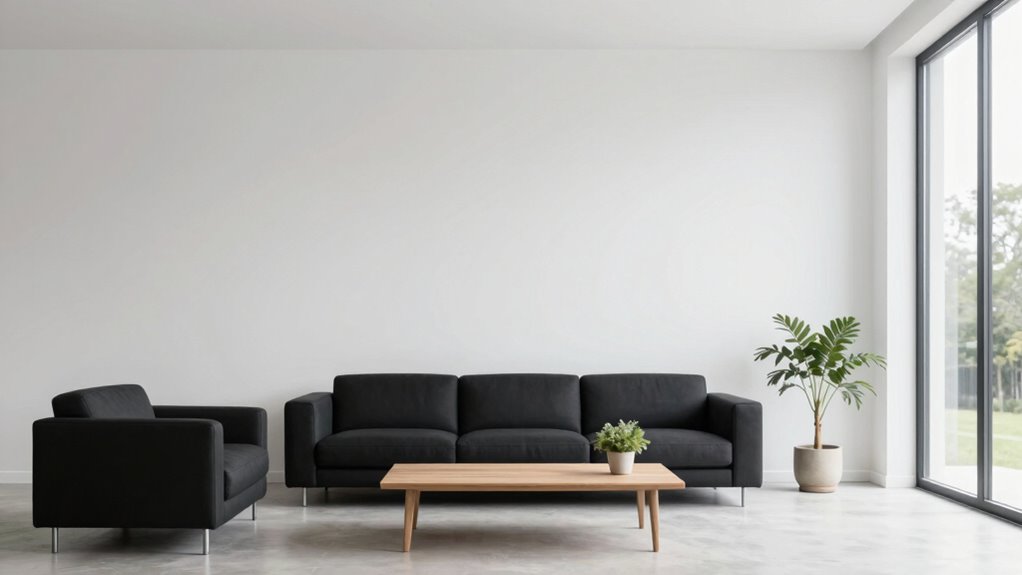

To think about negative space at home, focus on creating balanced open areas that let furniture, decor, and colors breathe. Use neutral tones and soft shades as a backdrop to highlight your favorite pieces, avoiding clutter and crowding. Pay attention to furniture placement and spatial arrangement to promote flow and harmony. Good lighting enhances the sense of openness and depth, making your space feel calm and inviting. Keep exploring for more tips on achieving the perfect balance.
Key Takeaways
- View negative space as a balance that prevents clutter and promotes visual harmony.
- Use neutral or soft tones as a backdrop to highlight focal points and accent pieces.
- Arrange furniture to create open pathways and define zones without overcrowding.
- Incorporate natural and strategic lighting to enhance depth and emphasize open areas.
- Recognize how spatial arrangement influences flow, making the space feel inviting and cohesive.
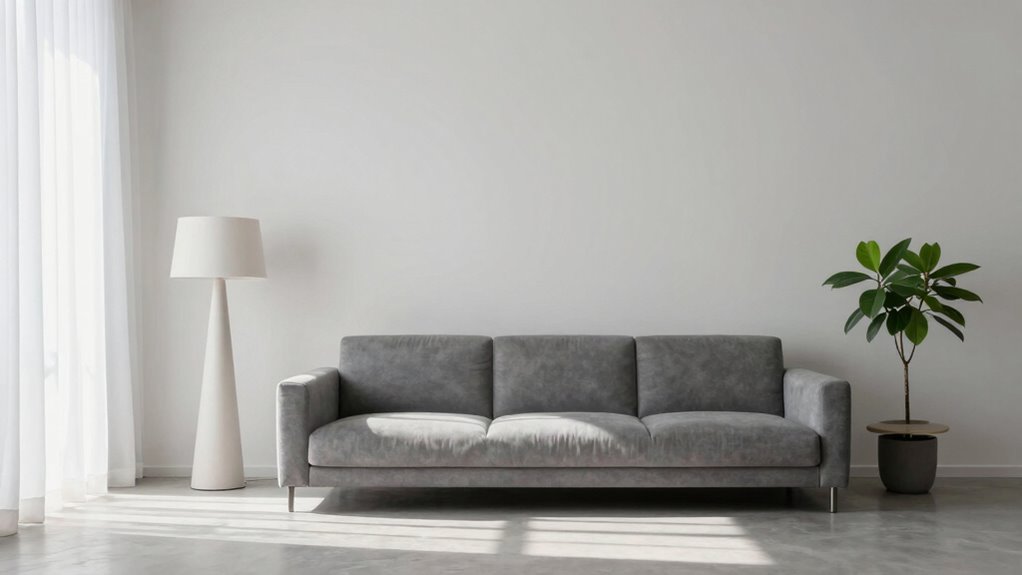
Understanding negative space at home isn’t just about empty areas; it’s about creating balance and harmony in your living environment. When you think about negative space, imagine it as the breathing room in your rooms—those areas that aren’t cluttered or filled to the brim. It’s the space that allows your furniture, décor, and color choices to stand out without feeling overwhelming. To master this, you need to pay attention to how you manage color coordination and furniture placement. These elements work together to craft a visual flow that feels natural and inviting.
Negative space creates balance, letting your furniture and décor breathe for a more harmonious and inviting home.
Start by considering the colors you use. Negative space isn’t just white walls or empty corners; it’s about giving your eye room to rest. If your furniture and décor are too busy or brightly colored without ample negative space, your rooms can feel chaotic. Instead, opt for a balanced color palette where neutral tones or soft shades serve as a backdrop. These colors act as negative space, helping other elements like artwork or accent pieces pop without competing for attention. When you coordinate your colors thoughtfully, it creates a sense of calm and cohesion, making your space look more intentional and less cluttered. Additionally, understanding visual flow helps you design a space that feels smooth and cohesive. Recognizing how spatial arrangement influences the overall feel of a room is key to mastering negative space. Paying attention to visual balance can significantly enhance the harmony within your space. Incorporating furniture placement strategies that prioritize openness can also make a major difference in how your room feels. Furthermore, considering lighting and natural light can enhance the perception of negative space by highlighting open areas and creating depth within your rooms.
Next, focus on furniture placement. The way you position your pieces directly influences how negative space functions in your home. Avoid crowding furniture against walls or filling every corner; instead, leave open areas that allow movement and visual relief. For example, placing a sofa with enough space around it prevents the room from feeling cramped. Use furniture to define zones without enclosing the entire space, which allows negative space to breathe. This approach not only enhances the room’s flow but also emphasizes your focal points, like a fireplace, artwork, or a window view. When furniture placement considers negative space, it creates a balanced environment that feels welcoming rather than cramped.
In the end, understanding negative space at home is about more than just leaving empty spots; it’s about intentionally designing your space to feel balanced and harmonious. When you pay attention to color coordination, choosing soft, complementary hues, and arrange your furniture to promote flow and openness, you create an environment that’s both functional and aesthetically pleasing. Negative space isn’t a flaw or a gap—it’s a tool to elevate your interior design, giving your home a sense of calm and sophistication. With thoughtful attention to these details, you’ll find your space feels more spacious, organized, and truly reflective of your personal style.

AUREUO Morandi Acrylic Paint Set – 8 Muted Colors x 0.71 Fl Oz/21ml Tubes, Vintage Neutral Earthy Tones for Canvas Painting, DIY Crafts, Home Decor, Wall Art Non-Toxic Matte Finish
- Morandi Color Palette: 8 muted, sophisticated shades inspired by Morandi
- Quick-Drying & Water-Based: Dries fast with smooth, even flow
- Versatile & Lightfast: Suitable for various surfaces, resists fading
As an affiliate, we earn on qualifying purchases.
As an affiliate, we earn on qualifying purchases.
Frequently Asked Questions
How Can Negative Space Improve Room Functionality?
Negative space improves room functionality by creating a sense of openness, making it easier to move around comfortably. You can strategically use artificial lighting to highlight focal points and accentuate the negative space, which helps avoid clutter and enhances the room’s usability. By balancing filled areas with empty ones, you allow natural flow and purpose, making your space feel more organized, inviting, and functional for everyday activities.
What Colors Work Best for Negative Space?
You should choose neutral or muted colors for negative space, like soft grays, beiges, or whites. These colors support color psychology by creating calm and focus, enhancing visual balance in your room. They don’t compete with your focal points, allowing your main decor to stand out. Using these hues helps your space feel open, organized, and harmonious, making the negative space an effective element of your overall design.
How Do I Balance Negative Space and Decor?
Think of your space as a symphony, where negative space is the silent pause that emphasizes the melody. To balance negative space and decor, select pieces that serve as visual accents, creating harmony through contrast. Use negative space as a backdrop for artistic expression, allowing your decor to breathe without feeling cluttered. This balance enhances visual harmony, making your home feel both intentional and calming.
Can Negative Space Make a Small Room Feel Larger?
Yes, negative space can make a small room feel larger. By minimizing clutter and leaving areas of visual breathing, you create a sense of openness. Use empty walls, simple furniture, and strategic placement to enhance this effect. Negative space draws attention to key features without overwhelming the room. This approach helps your small space appear more expansive, calm, and inviting, making it feel less crowded and more comfortable.
Is Negative Space Suitable for All Interior Styles?
Negative space works well with many interior styles, especially artful minimalism and creating clutter-free zones. You’ll find it enhances modern, Scandinavian, and contemporary designs by emphasizing open, airy environments. However, in more traditional or ornate styles, too much negative space might feel sparse. You should consider the overall aesthetic and balance negative space with decorative elements to achieve a harmonious look tailored to your style.

DurayLoly L Shaped Gaming Desk with No Side Bar Shelf for Small Space,Black
- Ideal for Small Spaces: Fits corner and small rooms
- Reversible Corner Design: Install on left or right side
- Spacious Surface: Fits 24–27 inch monitors and laptops
As an affiliate, we earn on qualifying purchases.
As an affiliate, we earn on qualifying purchases.
Conclusion
Embracing negative space at home isn’t just about empty corners; it’s about creating a sanctuary so serene, even a whisper could echo with tranquility. When you master this art, your space transforms into a masterpiece of balance, where every empty nook whispers sophistication and calm. So, don’t just fill every inch—let the voids breathe, and watch your home elevate to a level of elegance and peace that could make even the busiest mind pause in awe.

Ambient Lighting, 16 Colors Led Lights for Bedroom, Gift Ideas, Room Decor
- 3-in-1 Ambient Lighting: Crystal globe with dynamic light modes
- Multi-Color Projector: 18 colors, 10 brightness levels, 3 modes
- Eye-Caring & Adjustable Brightness: Flicker-free, 10 brightness levels, remote control
As an affiliate, we earn on qualifying purchases.
As an affiliate, we earn on qualifying purchases.

ABenkle 8 Pcs Drink Coasters with Holder, Cotton Woven Absorbent Coasters for Drinks, Minimalist Home Decor Coaster Set for Wooden Tabletop Protection Table, 4.3 inches Mixed Brown
- Package Includes: 8 round coasters with holder
- Size and Thickness: 4.3-inch diameter, 0.3-inch thick
- Material: 100% cotton and linen
As an affiliate, we earn on qualifying purchases.
As an affiliate, we earn on qualifying purchases.