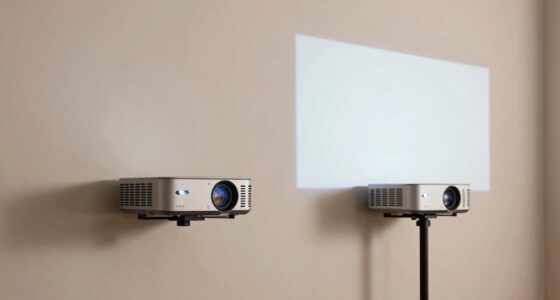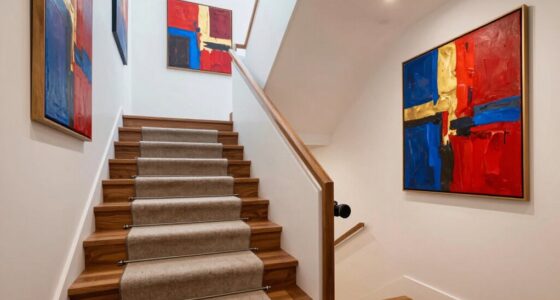
To think about distance, viewing angle, and room function together, focus on how furniture placement guides movement and visual flow. Position seats facing focal points like a TV or fireplace to guarantee comfort and clear sightlines. Adjust distances to balance space perception without crowding or emptiness. Consider lighting and activity zones to enhance functionality and mood. Keep pathways unobstructed for easy circulation. If you want to explore how these elements work harmoniously, there’s more to discover.

Prime made for students and young adults
- Fast, free delivery for dorm and study essentials
- Prime Video and Amazon Music included
- Member-only deals
Key Takeaways
- Prioritize primary activities to determine optimal furniture placement and sightlines for comfortable viewing and movement.
- Ensure seating faces focal points, maintaining appropriate distances to prevent strain and enhance visual engagement.
- Balance natural and artificial lighting to highlight functional zones and influence perceived room size and comfort.
- Design pathways that facilitate smooth circulation without obstructing views or access to key areas.
- Integrate furniture, lighting, and layout to achieve harmony, supporting both aesthetic appeal and practical use.
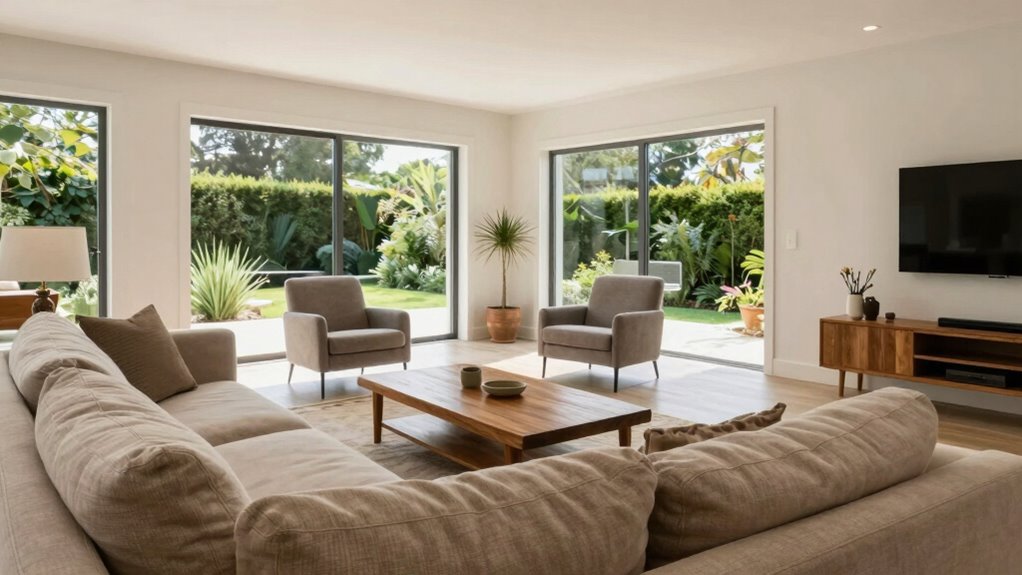
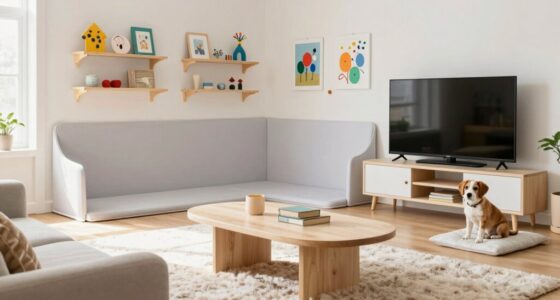
When designing a space, it’s vital to take into account how distance, viewing angle, and room function interact to create a comfortable and functional environment. Your furnishing arrangement plays a key role here, as it guides how people move through the space and how they experience it visually. Think about the primary activities that will happen in the room—whether it’s relaxing, working, entertaining, or a combination—and arrange your furniture accordingly. For example, in a living room, you want the seating to face the focal point, like a fireplace or TV, making sure that the viewing angle is comfortable and unobstructed. This setup minimizes strain on the eyes and neck, making it easier to relax or engage with content.
Lighting considerations tie directly into this planning. Proper lighting enhances the room’s function and influences how you perceive distances and angles. If you position a reading nook near a window, natural light provides a more inviting atmosphere and reduces eye strain. Conversely, if you need targeted lighting for tasks—like a desk lamp for work or a spotlight for artwork—place these light sources strategically to avoid glare and harsh shadows. The placement of lighting fixtures also impacts the perceived size of the room; well-lit areas appear larger and more open, while poorly lit corners can feel cramped or neglected. When thinking about lighting, consider how the light will interact with your furnishings and how it can guide the eye toward focal points, improving the viewing experience. Additionally, understanding how room function influences furniture placement can help optimize both comfort and efficiency in your space.
In terms of room function, your layout should promote smooth flow and easy access between zones. For example, if the space combines cooking, dining, and lounging, ensure pathways are unobstructed, and furniture placement supports effortless movement. This not only enhances functionality but also affects how people perceive the room’s size and usability. When you position larger pieces, keep in mind their impact on sightlines and how they influence the overall viewing angles from different parts of the room. Adjusting the distance between furniture pieces and the room’s boundaries creates a balanced environment that feels neither overcrowded nor underutilized.
Ultimately, balancing furnishing arrangement and lighting considerations with room function helps you craft a space that’s visually appealing, comfortable, and practical. Take time to analyze how each element interacts — from the placement of your sofa to the placement of a desk lamp — and you’ll create a harmonious environment that works perfectly for your needs. By paying attention to these factors, your space will invite both comfort and efficiency.
TV wall mount with adjustable viewing angle
As an affiliate, we earn on qualifying purchases.
As an affiliate, we earn on qualifying purchases.
Frequently Asked Questions
How Do Lighting Choices Affect Viewing Angles and Room Perception?
Lighting choices directly influence how you perceive viewing angles and room perception. Ambient illumination creates an overall sense of space, making the room feel larger or cozier. Task lighting focuses attention on specific areas, guiding your viewing angles and optimizing functionality. By balancing ambient and task lighting, you can enhance room perception, control glare, and guarantee that different zones are visually connected, making your space more comfortable and visually appealing.
What Are Common Mistakes in Balancing Distance and Room Function?
Balancing distance and room function is like walking a tightrope—you need steady spatial awareness. Common mistakes include ignoring how lighting impacts activity zones, which throws off aesthetic balance. People often place too much emphasis on style over practicality or misjudge the ideal distance for tasks, making spaces feel awkward or inefficient. To avoid this, consider how lighting enhances both function and form, ensuring every element supports your room’s purpose.
How Does Furniture Placement Influence Viewing Experience?
Furniture arrangement directly impacts your viewing experience by shaping sightlines and focal points. When you position pieces thoughtfully, you create an inviting flow that enhances aesthetic balance and minimizes obstructions. Proper placement guarantees comfortable viewing angles, whether for a TV, artwork, or a conversation area. This strategic layout boosts the room’s functionality and visual harmony, making your space more enjoyable and visually appealing.
Can Room Size Limit Optimal Viewing and Distance Setup?
Room size can definitely limit your ideal viewing and distance setup, especially since a recent study shows that 60% of living rooms are too small for ideal TV viewing distances. Larger rooms offer more flexibility, but smaller spaces impose distance limitations that might cause discomfort or poor viewing angles. To enhance your setup, consider compact furniture and strategic placement to maximize your space and improve your viewing experience.
How to Adapt These Principles for Multi-Purpose Rooms?
To adapt these principles for multi-purpose rooms, focus on flexible layouts and modular furniture. Arrange your space so you can easily switch between activities, like watching TV or hosting guests. Use movable furniture to create distinct zones, maintaining appropriate viewing angles and distances. This way, you optimize room function without sacrificing comfort, allowing the space to serve various needs smoothly and efficiently.
ergonomic reading chair with lumbar support
As an affiliate, we earn on qualifying purchases.
As an affiliate, we earn on qualifying purchases.
Conclusion
So, next time you’re designing or rearranging a room, remember: distance, viewing angle, and function aren’t just random fancy terms. They’re basically your room’s way of saying, “Hey, I want to be both functional and fabulous.” Ignore them at your peril, or risk living in a space that’s either picture-perfect but useless or super useful but totally uninviting. Master these, and you’ll be the Picasso of interior design—minus the paint splatters.
LED task desk lamp for reading and work
As an affiliate, we earn on qualifying purchases.
As an affiliate, we earn on qualifying purchases.
modular sofa for flexible room layout
As an affiliate, we earn on qualifying purchases.
As an affiliate, we earn on qualifying purchases.
Fall Picks
fall essentials
As an affiliate, we earn on qualifying purchases.