
TL;DR

Prime made for students and young adults
- Fast, free delivery for dorm and study essentials
- Prime Video and Amazon Music included
- Member-only deals
Astral Codex Ten has published an anonymous reader’s review of Clark Elliott’s memoir, The Ghost in My Brain, as a finalist in its 2026 book review contest. The review describes Elliott’s severe, long-lasting difficulties after a 1999 car crash and raises questions about concussion care and the treatments he says helped him; it does not establish those treatments as proven therapies.
Astral Codex Ten has published an anonymous review of Clark Elliott’s memoir, The Ghost in My Brain, as a finalist in its 2026 book review contest. The review recounts Elliott’s severe difficulties after a 1999 car crash and considers his account of living with cognitive impairment for years. It leaves open questions about the effectiveness of the treatments discussed in the book.
The review says Elliott, a DePaul University artificial intelligence professor, was rear-ended at a stoplight in 1999. He initially thought he was well enough to drive to work, but the reviewer describes a severe concussion followed by profound problems with everyday tasks. In one memoir passage quoted in the review, Elliott says he could not find the initiative to walk across a parking lot, then struggled for hours to get into his car.
The review presents these episodes as examples of impairment that did not erase all of Elliott’s abilities. It says he could teach a graduate seminar and write, yet had trouble reading, recognizing familiar places, or moving through doorways. The essay’s central question is how a person can remain verbally capable and employed while experiencing such severe disruption in ordinary life.
A second question concerns Elliott’s reported recovery and the treatments he describes. The reviewer says some of these interventions may initially sound like “boutique neuro-quackery,” but does not establish that they are effective. The author also discloses having sustained a concussion and says that personal experience shaped the reading; this is context for the review, not independent clinical evidence.
Why Elliott’s Case Draws Attention
The review highlights a difficult problem in concussion care: serious symptoms may not be apparent from a person’s speech or outward competence. Elliott’s account describes a mismatch between what he could do in some settings and his difficulty with basic tasks elsewhere. That contrast helps explain why patients may struggle to convey the extent of their impairment to others.
The review also draws attention to uncertainty around diagnosis and treatment. It describes diffuse axonal injury as one model for how rapid acceleration and deceleration can damage the brain’s axons, and says standard CT and MRI scans may not show microscopic or functional disruptions. These are explanations offered in the source essay; they do not confirm Elliott’s particular injuries or demonstrate that a specific therapy produced his recovery.
For readers, the account is a reminder that one memoir cannot establish a general treatment pathway. Its value is in documenting one person’s reported experience and prompting questions about how persistent symptoms are recognized and managed, not in replacing medical advice or clinical evidence.
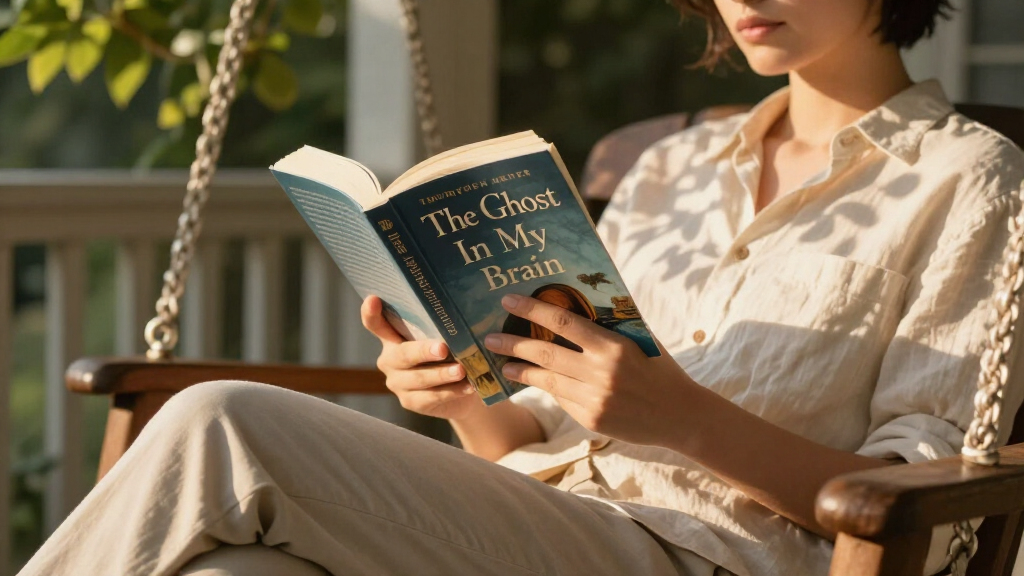
The Ghost in My Brain Clark Elliott book
As an affiliate, we earn on qualifying purchases.
As an affiliate, we earn on qualifying purchases.
From Crash to Contest Finalist
The Ghost in My Brain is described in the review as a memoir based in part on notes Elliott took while concussed. The reviewer uses that detail to frame the book’s unusual perspective: the narrative records a person trying to understand cognitive problems while experiencing them. Elliott’s quoted recollections include difficulty recognizing spatial concepts such as a center or target, which he says prevented him from putting a key into a car lock.
The review places the memoir within a broader discussion of concussion. It cites commonly reported U.S. estimates of 1.6 million to 3.8 million concussion cases a year, noting that many are unreported, and says studies cited in the essay find that 15% to 30% of adults report post-concussion symptoms three to six months later. Those figures are presented as background estimates in the review, not as new findings from the contest post.
Astral Codex Ten says the contest finalist reviews will be posted at a pace of roughly one per week for several months. The publication plans to ask readers to vote for a favorite after all the reviews have appeared. The reviewer’s identity is being withheld until voting is complete, according to the post.
“I had lost the mysterious initiative that impels us all forward when we walk.”
— Clark Elliott, as quoted in the review
concussion recovery and traumatic brain injury books
As an affiliate, we earn on qualifying purchases.
As an affiliate, we earn on qualifying purchases.
Treatment Claims Remain Unresolved
The excerpt provided does not name or evaluate the specific treatments Elliott received in enough detail to assess them. It also does not establish which interventions, if any, caused improvement, how much he recovered, or whether his course applies to other people with concussion. The reviewer’s questions about treatments that sound unconventional are not evidence that those approaches work—or that they do not.
The source essay offers general concussion statistics and a description of diffuse axonal injury, but readers are not given the underlying studies in the supplied material. The precise diagnosis and mechanisms behind Elliott’s reported symptoms, as well as the full medical record and treatment timeline, remain unclear from the review excerpt.
concussion symptom journal and recovery tracker
As an affiliate, we earn on qualifying purchases.
As an affiliate, we earn on qualifying purchases.
Contest Voting Follows Reviews
Astral Codex Ten says it will continue publishing the 2026 finalist reviews weekly for several months. It plans to invite readers to vote for their preferred review once the series is complete. The anonymous author’s identity is expected to remain undisclosed until after voting, according to the contest notice.
For the medical questions raised by the essay, the review itself announces no new study, clinical guidance, or treatment recommendation. Any broader conclusions about concussion care would require evidence beyond this memoir and its review.
brain injury cognitive rehabilitation workbook
As an affiliate, we earn on qualifying purchases.
As an affiliate, we earn on qualifying purchases.
Key Questions
What is the news about The Ghost in My Brain?
Astral Codex Ten published an anonymous review of Clark Elliott’s memoir as a finalist in its 2026 book review contest. The essay focuses on Elliott’s reported experience after a 1999 car crash.
Who is Clark Elliott?
The review identifies Elliott as a DePaul University professor of artificial intelligence and the author of the memoir discussed in the piece.
Does the review prove that Elliott’s treatments work?
No. The review raises questions about treatments described in the memoir, but the supplied material does not establish their effectiveness or show that they caused Elliott’s recovery.
When will readers vote in the contest?
Astral Codex Ten says it will post finalist reviews at about one per week for several months, then ask readers to vote after the reviews are published.
Source: rss
Fall Picks
fall essentials
As an affiliate, we earn on qualifying purchases.