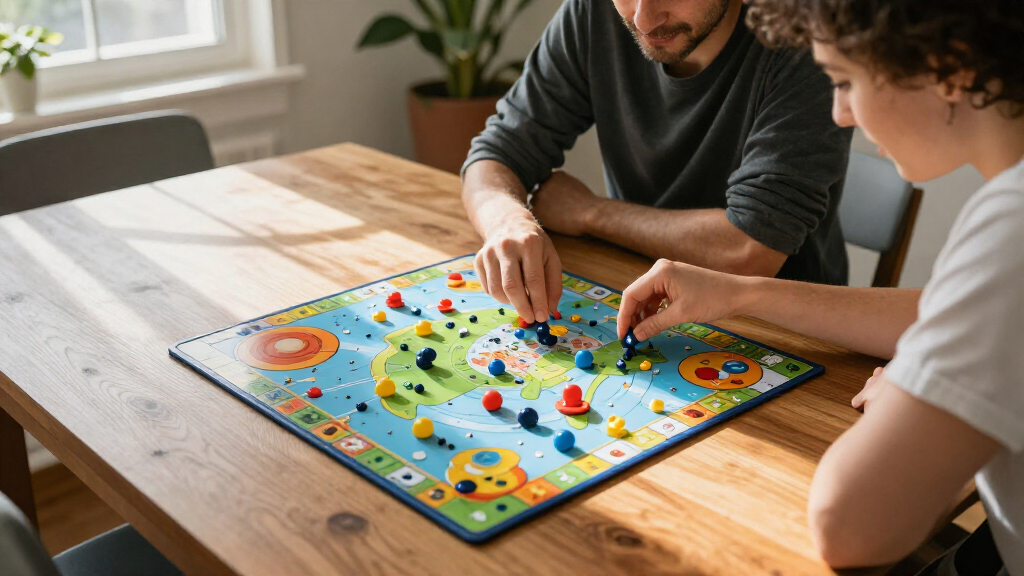
Among science board games for adults, Cytosis: A Cell Biology Game is my best overall pick for its satisfying worker-placement play and clear connection to cellular processes. Subatomic: An Atom Building Game is a standout for players who want a more technical puzzle, while Photosynthesis makes ecology and light competition easy to bring to the table. The main tradeoff is between scientific detail and accessibility: some games reward close attention to their models, while others prioritize quick turns and approachable rules. Theme also matters, since building molecules feels quite different from managing a forest or competing over organs. Read on for the full breakdown and help matching a game to your group.

Prime made for students and young adults
- Fast, free delivery for dorm and study essentials
- Prime Video and Amazon Music included
- Member-only deals
Key Takeaways
- Cytosis offers the strongest all-around balance of recognizable cell biology and strategic play; its worker-placement structure also gives adults choices beyond trivia.
- Subatomic and Peptide suit players who enjoy building scientific structures, but their narrower molecular focus may be less appealing to groups seeking a broad theme.
- Photosynthesis and Ecosystem bring ecological systems to the table, with the former emphasizing spatial competition and the latter offering a lighter card-game format.
- Ion and Periodic use chemical elements as the basis for play, but buyers should distinguish compound-building decisions from element-matching and set-collection play.
- Awkward Yeti Organ Attack is the most overtly playful option, while Compounded and Cellulose are better fits for groups willing to spend more time with science-themed strategy.
| Ion: A Compound Building Game (2nd Edition) |  | Best for Quick Science Sessions | Edition: 2nd Edition | Players: 2–7 | Playing time: 20–30 minutes | VIEW LATEST PRICE | See Our Full Breakdown |
| Subatomic: An Atom Building Game (2nd Edition) |  | Best for Strategic Science Play | Edition: 2nd Edition | Players: 2–4 | Playing time: 40–60 minutes | VIEW LATEST PRICE | See Our Full Breakdown |
| Photosynthesis Strategy Board Game |  | Best for Spatial Nature Strategy | Edition: Standard Edition | Players: 2–4 | Recommended age: 8 years and up | VIEW LATEST PRICE | See Our Full Breakdown |
| Compounded: The Peer-Reviewed Edition — Chemistry Strategy Board Game |  | Best for Interactive Lab Competition | Edition: The Peer-Reviewed Edition | Players: 2–5 | Playing time: 45 minutes | VIEW LATEST PRICE | See Our Full Breakdown |
| Cellulose: A Plant Cell Biology Strategy Game |  | Best for Solo and Deep Biology Play | Edition: Standard Edition | Players: 1–5 | Playing time: 60–90 minutes | VIEW LATEST PRICE | See Our Full Breakdown |
| Cytosis: A Cell Biology Board Game |  | Best for Strategic Cell Biology | Brand: Genius Games | Genre: Educational, Family | Players: 2, 3, 4, or 10+ (as listed) | VIEW LATEST PRICE | See Our Full Breakdown |
| Peptide: A Protein Building Game |  | Best for a Quick Biology Strategy Game | Brand: Genius Games | Players: 2–5 | Playing time: 30–45 minutes | VIEW LATEST PRICE | See Our Full Breakdown |
| Awkward Yeti Organ Attack Card Game |  | Best for a Lighthearted Anatomy Night | Age range: 8+ years | Players: 2–6 | Playing time: 30 minutes | VIEW LATEST PRICE | See Our Full Breakdown |
| Ecosystem Family Card Game |  | Best for Fast Ecology Play | Brand: Genius Games | Game type: Card drafting game | Players: 2–6 | VIEW LATEST PRICE | See Our Full Breakdown |
| Periodic: A Game of the Elements |  | Best for Chemistry Fans | Brand: Genius Games | Genre: Strategy | Players: 2–6 | VIEW LATEST PRICE | See Our Full Breakdown |
| science board games for adult | Players | Brand | Playing time | Recommended age |
|---|---|---|---|---|
| Ion: A Compound Building Game | 2–7 | Genius Games | 20–30 minutes | 8 years and up |
| Subatomic: An Atom Building Ga | 2–4 | Genius Games | 40–60 minutes | 14 years and up |
| Photosynthesis Strategy Board | 2–4 | Blue Orange Games | — | 8 years and up |
| Compounded: The Peer-Reviewed | 2–5 | Greater Than Games | 45 minutes | 14 years and up |
| Cellulose: A Plant Cell Biolog | 1–5 | Genius Games | 60–90 minutes | — |
| Cytosis: A Cell Biology Board | 2, 3, 4, or 10+ (as listed) | Genius Games | 90 minutes | — |
| Peptide: A Protein Building Ga | 2–5 | Genius Games | 30–45 minutes | 8–15 years (listed) |
| Awkward Yeti Organ Attack Card | 2–6 | — | 30 minutes | — |
| Ecosystem Family Card Game | 2–6 | Genius Games | 15–20 minutes | 12 years and up |
| Periodic: A Game of the Elemen | 2–6 | Genius Games | — | 10 years and up |
More Details on Our Top Picks
Ion: A Compound Building Game (2nd Edition)
Ion is the briskest way into chemistry in this lineup: card drafting asks players to pair positive and negative ions into neutral compounds, turning a core idea in ionic bonding into a quick tactical puzzle. Its 20–30 minute playtime makes it easier to bring out than longer options such as Cellulose, while the 2–7 player range suits groups that do not fit the smaller tables of Subatomic or Compounded. The included Science Behind booklet adds context beyond the card decisions, and an advanced radioactivity mode gives returning groups another layer. The tradeoff is that the advanced mode is recommended for experienced players and groups of at least four, so it is not an equally smooth fit for every table. I would choose Ion for accessible, concise chemistry rather than a deep strategy game.
Pros:- Drafting and ion pairing make ionic bonding and neutral compounds part of the central puzzle.
- Short sessions are easier to fit into a game night than Cellulose’s 60–90-minute format.
- Supports 2–7 players, accommodating larger groups than Subatomic or Compounded.
- Science Behind booklet and radioactivity mode add learning context and an advanced option.
Cons:- The advanced radioactivity mode is recommended for experienced players and groups of four or more.
- Its short, card-driven format offers less sustained strategic development than Subatomic’s deck building.
Best for: Adults who want a short, approachable chemistry game for mixed-experience groups of up to seven, with a science booklet for discussion after play.
Not ideal for: Players seeking a long, strategic engine-building experience, or small groups hoping to use the advanced radioactivity mode.
- Edition:2nd Edition
- Players:2–7
- Playing time:20–30 minutes
- Recommended age:8 years and up
- Brand:Genius Games
- Included science material:Science Behind booklet
- Material:Paper
- Model year:2022
Our verdict“Choose Ion for a fast, accessible chemistry game that can seat a larger group, but look to Subatomic for more involved strategy.”
Subatomic: An Atom Building Game (2nd Edition)
Subatomic is the pick here for adults who want science concepts wrapped in a substantial strategy game, rather than a quick educational card session. Players build atoms while improving their decks with particle and scientist cards, so choices about what to add shape later turns and scoring. That evolving strategy gives it more staying power than Ion, which focuses on rapid ion matching, but the commitment is longer at 40–60 minutes. Its 2–4 player limit also makes it less flexible for a large group than Ion. A Science Behind booklet supports the learning angle, while the 14+ recommendation and deck-building structure make this a better match for teens and adults comfortable with multi-step planning. I would skip it if your group wants a short, casual introduction to atomic science.
Pros:- Deck building makes particle choices matter across multiple turns, not just the current play.
- Scientist cards and deck improvements create different strategic routes.
- Science Behind booklet connects the game’s concepts to atomic science.
- Provides a longer strategic alternative to Ion’s quick card-drafting format.
Cons:- Limited to 2–4 players, so it is a poor fit for larger gatherings.
- The 40–60-minute playtime asks for more commitment than Ion.
- Its 14+ recommendation and deck-building demands make it less suitable for younger or very casual groups.
Best for: Adults and older teens who enjoy deck-building decisions and want atomic science to be part of a medium-length strategy game.
Not ideal for: Large groups, younger players, or casual tables that prefer a quick game with minimal planning.
- Edition:2nd Edition
- Players:2–4
- Playing time:40–60 minutes
- Recommended age:14 years and up
- Brand:Genius Games
- Included components:Game; Science Behind the Game booklet
- Material:Cardboard
- Model number:GOT1012
Our verdict“Pick Subatomic if your group wants atom science paired with evolving deck-building strategy and can spare a medium-length session.”
Photosynthesis Strategy Board Game
Photosynthesis takes a different route from the chemistry-focused games here: its science theme is expressed through a spatial contest over sunlight, tree growth, and planting position. Players must time growth and judge how taller trees will cast shade, so the central challenge is planning around a changing shared board rather than building compounds as in Compounded or atoms as in Subatomic. That visual, nature-centered puzzle can suit adults who want accessible rules with meaningful positional decisions, and its 2–4 player count works for a small table. The drawback is that tree placement can limit opponents’ access to light, making the competition feel direct; players who prefer collaborative discovery or resource engines may prefer Cellulose. The supplied details do not list a playtime, so I would not choose it on the assumption of a short session.
Pros:- Sunlight and tree height turn the nature theme into a clear spatial planning challenge.
- Shared shading creates meaningful timing decisions rather than isolated player puzzles.
- Designed for both family and adult play, with a broad recommended age range.
- Detailed tree pieces and board components make growth states visible during play.
Cons:- Taller trees can block sunlight, so opponents’ placements may restrict your plans.
- Strategic planting and growth require attention to timing and board position.
- Supports only 2–4 players, less than Ion’s larger group range.
Best for: Adults who enjoy spatial planning and want a nature-themed strategy game that can also work with family players.
Not ideal for: Players who dislike blocking tactics, want explicit chemistry or cell biology, or need a listed playtime before choosing a game.
- Edition:Standard Edition
- Players:2–4
- Recommended age:8 years and up
- Brand:Blue Orange Games
- Genre:Nature
- Language:English
- Included components:Game board, sun segment, 4 player boards, first player token, scoring tokens, sun marker tokens, seed tokens, small, medium, and big trees, illustrated rules
Our verdict“Choose Photosynthesis for visible, competitive nature strategy built around sunlight and positioning rather than chemistry or cell biology.”
Compounded: The Peer-Reviewed Edition — Chemistry Strategy Board Game
Compounded: The Peer-Reviewed Edition puts players in the role of lab managers, making chemistry a social contest over collecting, trading, and completing compounds. Worker placement and hand management give it a broader mix of decisions than Ion, whose faster drafting focuses more tightly on matching ions. Its press-your-luck element adds tension: volatile compounds can explode if left unfinished, so a tempting project can cost progress. That risk may create memorable table talk, but it also means plans are not fully secure. At 45 minutes for 2–5 players, it sits between Ion’s quick sessions and Cellulose’s longer resource-management game. Updated rules and larger components are part of this edition, though the supplied details do not specify component contents beyond one board game. I’d pick it for interactive chemistry, not a low-conflict puzzle.
Pros:- Trading and worker placement make chemistry a social, interactive experience.
- Element collection and compound completion connect decisions to chemical concepts.
- Volatile compounds add consequential risk rather than making every plan predictable.
- Updated rules and larger components distinguish this edition from earlier versions.
Cons:- Unfinished volatile compounds may explode, undoing progress and frustrating cautious planners.
- Requires at least two players and offers no listed solo mode, unlike Cellulose.
- Its mix of trading and worker placement may be less direct than Ion for players seeking a simple chemistry introduction.
Best for: Adults who enjoy trading, worker placement, and shared table negotiation alongside chemistry concepts.
Not ideal for: Players who dislike losing progress to risk, prefer a mostly individual puzzle, or need solo play.
- Edition:The Peer-Reviewed Edition
- Players:2–5
- Playing time:45 minutes
- Recommended age:14 years and up
- Brand:Greater Than Games
- Mechanics:Hand management, trading, worker placement
- Educational objective:Learning about chemistry
- Language:English
- Included components:1 board game
Our verdict“Choose Compounded for a mid-length, interactive chemistry game where trading and risk matter as much as building compounds.”
Cellulose: A Plant Cell Biology Strategy Game
Cellulose is the strongest fit for players who want to spend a full session working with biology rather than using science as a light theme. Its worker-placement and resource decisions model plant cell processes, with players activating organelles to produce carbohydrates and score points. Compared with Photosynthesis, which centers on visible tree growth and competition for sunlight, Cellulose focuses on the workings of a plant cell; compared with Compounded, it offers a solo option and a longer, more involved resource puzzle. The Cactus and Mangrove scenarios add variation, and a science booklet gives the biology context. That depth comes with a 60–90-minute commitment, while limited action spaces and shared resources can intensify competition. I’d choose it for patient strategy fans, not a quick science-game slot.
Pros:- Worker placement and resource management make plant cell biology central to play.
- Solo play gives it an option not listed for Compounded or Photosynthesis.
- Cactus and Mangrove scenarios offer additional ways to play.
- Science booklet provides context for the biological concepts behind the game.
Cons:- A 60–90-minute session is a substantial commitment compared with Ion or Compounded.
- Limited action spaces can make turns competitive and restrict preferred plans.
- Shared resources can add friction for groups that prefer a less contested game.
Best for: Adults interested in biology-heavy strategy, including solo players and groups comfortable with longer worker-placement games.
Not ideal for: Players seeking a quick, low-pressure game or a title with abundant action space and little competition over shared resources.
- Edition:Standard Edition
- Players:1–5
- Playing time:60–90 minutes
- Minimum age recommendation:14 years
- Brand:Genius Games
- Language:English
- Included components:Cards
- Scenarios:Cactus and Mangrove
- Model number:230979
Our verdict“Choose Cellulose if you want the lineup’s most involved plant-biology experience and value solo play more than a short session.”
Cytosis: A Cell Biology Board Game
Cytosis is the strongest fit here for adults who want biology woven into a substantial strategy game rather than a quick educational activity. Its worker placement and resource collection turn cell processes into planning choices: players gather materials and use them to build enzymes, hormones, and receptors. Compared with Peptide, which focuses more narrowly on protein translation in a shorter card-game format, Cytosis offers a broader cell-biology setting and a longer strategic session. A fact-based booklet gives players a way to revisit the science beyond the turns themselves. The tradeoff is time: the listed 90-minute session asks for more commitment than Peptide or Ecosystem. The player-count listing also says both 2–4 and 10+, so I would check the intended configuration before planning a large group game.
Pros:- Connects resource collection and building choices to cell biology concepts
- Worker-placement strategy offers more planning depth than a simple quiz-style learning game
- Includes a fact booklet for reviewing the biology after play
- Can suit family or classroom sessions
Cons:- A listed 90-minute playing time is a substantial commitment
- The player-count information is unclear, listing both 2–4 and 10+
- Its biological theme may be less engaging for players uninterested in cell processes
Best for: Adults and science-minded families who enjoy worker-placement strategy and want a broad introduction to cell biology.
Not ideal for: Players seeking a short, casual game or organizers who need a clearly specified player count for a large group.
- Brand:Genius Games
- Genre:Educational, Family
- Players:2, 3, 4, or 10+ (as listed)
- Playing time:90 minutes
- Minimum age:10 years
- Included components:Cytosis: A Cell Biology Game
- Model number:GOT1006
Our verdict“Choose Cytosis if you want a longer, strategic cell-biology game and can confirm the player setup before hosting.”
Peptide: A Protein Building Game
Peptide makes a focused biology topic playable in a compact session: players collect amino acids and mRNA resources, then build protein chains to score. Its 30–45-minute card-game format is easier to fit into a weeknight than Cytosis, whose listed session runs 90 minutes, while still offering choices beyond straightforward recall. The science coverage centers on protein translation, amino acids, tRNA, and organelles, so it suits players who want a clear lesson rather than a tour across many areas of biology. Compared with Organ Attack, which uses humorous anatomy and take-that-style survival, Peptide is more directly about biological processes and resource planning. That focus can also limit its appeal: players who have little interest in biology may find the theme does much of the work, and the supplied age details vary between listings.
Pros:- Turns protein translation and amino-acid collection into strategic choices
- Shorter listed session than Cytosis
- Supports 2–5 players, making it workable for small groups
- Covers linked concepts including mRNA, tRNA, ATP, and organelles
Cons:- Its narrow focus on protein biology may not suit players seeking a wider science theme
- The age guidance varies between product details and description
- Players who are not interested in biology may find the subject matter limits the fun
Best for: Adults, older children, and classroom groups looking for a manageable strategy game centered on how cells build proteins.
Not ideal for: Groups wanting broad science coverage, a party-first game, or an unambiguous age recommendation.
- Brand:Genius Games
- Players:2–5
- Playing time:30–45 minutes
- Recommended age:8–15 years (listed)
- Game type:Strategy card game
- Science concepts:mRNA to protein translation, polypeptide chains, proteins, amino acids, organelles, tRNA, ATP
- Model number:GOT1003
- Warranty:No warranty
Our verdict“Pick Peptide for a shorter, focused biology game; choose Cytosis instead if you want a broader cell-based strategy experience.”
Awkward Yeti Organ Attack Card Game
Organ Attack is the lineup’s most overtly social science pick: players use organ, affliction, and immunity cards to outlast one another, giving anatomy a humorous, competitive party-game frame. At about 30 minutes for 2–6 players, it is easier to bring to a casual gathering than Cytosis, which asks for a longer worker-placement session, and its portable hardcover case makes it simple to pack. The subject is human anatomy and health rather than the cellular mechanisms emphasized by Peptide, so it offers a different entry point for science-minded adults. The tradeoff is depth. Organ Attack’s humor and accessible card play may bring newcomers in, but the supplied description warns that replay value can fade after several games. I would choose it for lively groups, not for sustained strategy or detailed science study.
Pros:- Makes anatomy and health topics accessible through humorous competition
- Supports 2–6 players for flexible group play
- Listed playing time of about 30 minutes suits casual sessions
- Hardcover case is compact and portable
Cons:- Replay value may diminish after several games
- Party-style humor offers less strategic depth than Cytosis or Periodic
- The supplied description does not specify detailed science concepts covered
Best for: Adults who want an easy-to-carry, anatomy-themed party game for mixed-age groups and casual gatherings.
Not ideal for: Players seeking a deep, long-lived strategy game or a detailed treatment of biology concepts.
- Age range:8+ years
- Players:2–6
- Playing time:30 minutes
- Dimensions:8 in L × 6 in W
- Weight:440 g
- Material:Paper
- Manufacturer:The Awkward Yeti
- Model number:6916
Our verdict“Choose Organ Attack for a portable, humorous anatomy game, not for deep science strategy or long-term replay variety.”
Ecosystem Family Card Game
Ecosystem is the quickest way in this group to put a science idea on the table: players draft cards to build habitats and wildlife combinations, with biodiversity rewarded and monocultures penalized. Its 15–20-minute sessions are much shorter than Cytosis, while its ecology focus contrasts with the cell biology in Peptide and Cytosis. That makes Ecosystem a good choice for adults who want a compact game with meaningful choices about how species fit together, rather than a longer simulation or a party-style anatomy contest like Organ Attack. The main tradeoff is that quick play does not mean effortless mastery: the listing describes the game as difficult to master, and the recommended age is 12 and up. I’d favor it for groups happy to learn a card-drafting system; casual players may prefer Organ Attack’s more direct premise.
Pros:- Makes biodiversity and habitat matching central to play
- 15–20-minute sessions are notably shorter than Cytosis
- Supports 2–6 players
- Card-drafting choices offer strategic depth beyond simple fact recall
Cons:- Recommended for ages 12 and up, limiting its fit for younger family groups
- Described as difficult to master despite its short playing time
- The ecology theme may not appeal to players more interested in chemistry or human biology
Best for: Adults and teens who enjoy card drafting and want a short, repeatable way to explore biodiversity and habitat relationships.
Not ideal for: Younger children or casual groups looking for a game they can fully grasp in one quick explanation.
- Brand:Genius Games
- Game type:Card drafting game
- Players:2–6
- Playing time:15–20 minutes
- Recommended age:12 years and up
- Material:Cardboard
- Included components:Game
- Model year:2019
Our verdict“Choose Ecosystem for brisk, strategic ecology play if your group is comfortable with a learning curve.”
Periodic: A Game of the Elements
Periodic puts chemistry at the center of the decision-making: players move across the periodic table using periodic trends, discover elements, and collect sets for points. Unlike Ecosystem, which builds a web of habitats and species through card drafting, Periodic uses tactical movement to make the table’s structure part of play. That gives chemistry-interested adults a more direct way to engage with element organization than a general science party game such as Organ Attack. Its 2–6 player range and age recommendation of 10+ make it suitable for family or classroom tables, though the supplied data does not include a playing-time estimate. The tradeoff is also the hook: players need some willingness to engage with chemistry concepts to get the most from the game. Those seeking broad biological themes may prefer Cytosis or Ecosystem.
Pros:- Uses periodic trends as part of movement and tactical planning
- Combines element discovery with set collection
- Supports 2–6 players
- Can serve family-game and classroom settings
Cons:- The chemistry concepts are central, so the game may not suit players uninterested in the subject
- No playing-time estimate is provided in the supplied specifications
- Its chemistry focus is narrower than the ecology and cell-biology themes in this lineup
Best for: Adults who enjoy chemistry, periodic-table patterns, and tactical games that reward planning around scientific structure.
Not ideal for: Players who want a science theme that works without engaging with chemistry, or buyers who need a listed playtime before choosing.
- Brand:Genius Games
- Genre:Strategy
- Players:2–6
- Recommended age:10 years and up
- Edition:Standard Edition
- Included components:Game
- Model number:GOT1008
Our verdict“Choose Periodic if your group likes chemistry and wants the periodic table to shape its strategy.”
How We Picked
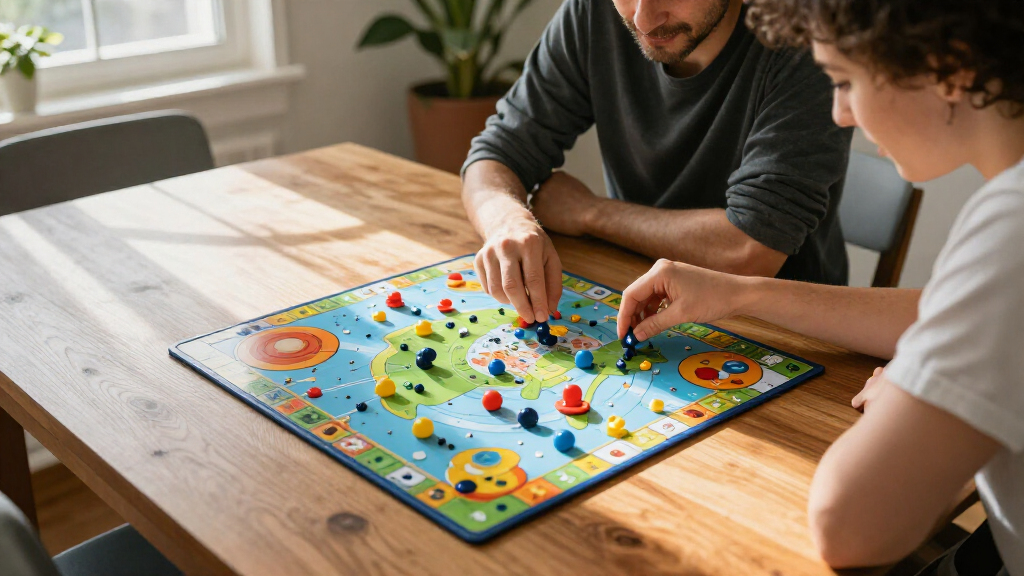
I compared these ten games by how well their scientific ideas shape actual decisions, not just the artwork or vocabulary on the box. I looked at the clarity of the central rules, the weight of strategic choices, how directly the mechanics connect to chemistry, biology, or ecology, and how readily a mixed-experience adult group could learn and enjoy the game. I also weighed replay appeal and whether a title offers a distinct experience beside other games in this lineup.
The ranking favors games with a strong mix of playable strategy, understandable science, and broad group appeal. That puts Cytosis at the top as a balanced choice, while more specialized games earn their place for the right audience rather than being treated as interchangeable alternatives. Lighter card games rank well for accessibility but offer less strategic depth; highly focused science games can reward enthusiasts but ask more of the group. I have not treated any game as a substitute for a formal science lesson.
| science board games for adult | Brand |
|---|---|
| Ion: A Compound Building Game | Genius Games |
| Subatomic: An Atom Building Ga | Genius Games |
| Photosynthesis Strategy Board | Blue Orange Games |
| Compounded: The Peer-Reviewed | Greater Than Games |
| Cellulose: A Plant Cell Biolog | Genius Games |
| Cytosis: A Cell Biology Board | Genius Games |
| Peptide: A Protein Building Ga | Genius Games |
| Awkward Yeti Organ Attack Card | — |
| Ecosystem Family Card Game | Genius Games |
| Periodic: A Game of the Elemen | Genius Games |
Factors to Consider When Choosing Science Board Games For Adults
Choosing among science games is less about finding the most technical title and more about matching the scientific theme to how your group likes to play. These questions can help you avoid buying a game whose subject sounds appealing but whose pace or complexity does not fit your table.
Look Beyond the Box for Replay and Learning Value
Replayability depends on more than a large supply of cards or pieces. Ask whether changing player choices, board layouts, or competing goals will create a different experience from one session to the next. For educational use, check whether the rulebook or included materials explain the science clearly; a science theme alone does not make a game a teaching resource. For regular game nights, varied strategies and interaction may matter more than the amount of background information. Buyers sometimes pay extra attention to scientific accuracy while overlooking whether the game will be replayed. The best fit delivers the kind of repeat play your group values, whether that means fresh strategic problems or a memorable introduction to a topic.
Frequently Asked Questions
Which of these games is the safest choice for a group with mixed science knowledge?
I would start with a game whose main appeal is strategic play rather than prior knowledge of scientific terms. Cytosis is a strong candidate in this lineup because its cell biology theme supports the game without requiring players to arrive as biology experts. Photosynthesis is another approachable route for groups interested in ecology and spatial decisions. Before buying, read the rulebook or a full rules overview to check how much vocabulary must be learned at the start. A science-themed game should invite curiosity, not make players feel tested.
Which titles are better for a group that wants strategy rather than science trivia?
Look for games where players build systems, manage resources, or plan actions instead of answering factual questions. Cytosis, Photosynthesis, and Compounded all lean toward strategic decisions, though they focus on different scientific settings. Subatomic and Peptide may appeal to players who like a more focused building puzzle. Check the rules for the kind of interaction your group enjoys: resource competition, spatial planning, or set-building can feel very different. None of these choices needs to be treated as a science quiz night.
Are the chemistry games interchangeable, or should I choose by mechanism?
They are not interchangeable just because they share a chemistry theme. Ion centers on building compounds, while Periodic uses elements as the basis for its own pattern of play; Subatomic shifts the focus to constructing atoms. Those differences can matter more than the shared subject when deciding what your group will enjoy. If players like assembling components into a larger structure, compare the rules for how each game handles that process. Choose by the decisions you want at the table, not by the chemistry label alone.
Can I use these games to teach science in a classroom or club?
They can support a science-themed activity, but I would not assume that game mechanics alone teach a topic accurately or fully. Check the rulebook and any included educational notes for explanations, vocabulary, and the age or experience level the material suits. A game may use scientific terms while simplifying how a real system works. For a class, match the title to a specific learning goal and leave time to discuss where the game’s model differs from real science. For informal clubs, let the game spark questions rather than treating it as a complete lesson.
Should I buy a lighter science card game or a more involved strategy game?
Base that choice on how often your group plays and how much time it wants to spend learning rules. A lighter option such as Awkward Yeti Organ Attack or Ecosystem can suit casual sessions where quick explanations matter. A deeper strategy game may be a better fit for a group that returns to the same table and enjoys exploring different approaches. If you are unsure, consider who will teach and whether the game needs to work at spontaneous gatherings. A shorter learning curve is often more valuable than extra complexity when players have limited time or varied experience.
Conclusion
For the strongest mix of strategy and recognizable science, I recommend Cytosis as the best overall choice. Ecosystem is my best value-style pick for groups who want a lighter ecological card game, while Compounded is the best premium-style choice for players who want a more involved chemistry strategy experience. For beginners, I would start with Photosynthesis if the group likes spatial competition, or Awkward Yeti Organ Attack for a more playful, casual session. For specific interests, choose Subatomic or Peptide for molecular building, Ion or Periodic for chemistry, and Cellulose for plant cell biology. The right pick is the one whose scientific theme and level of strategy match the people who will actually play.