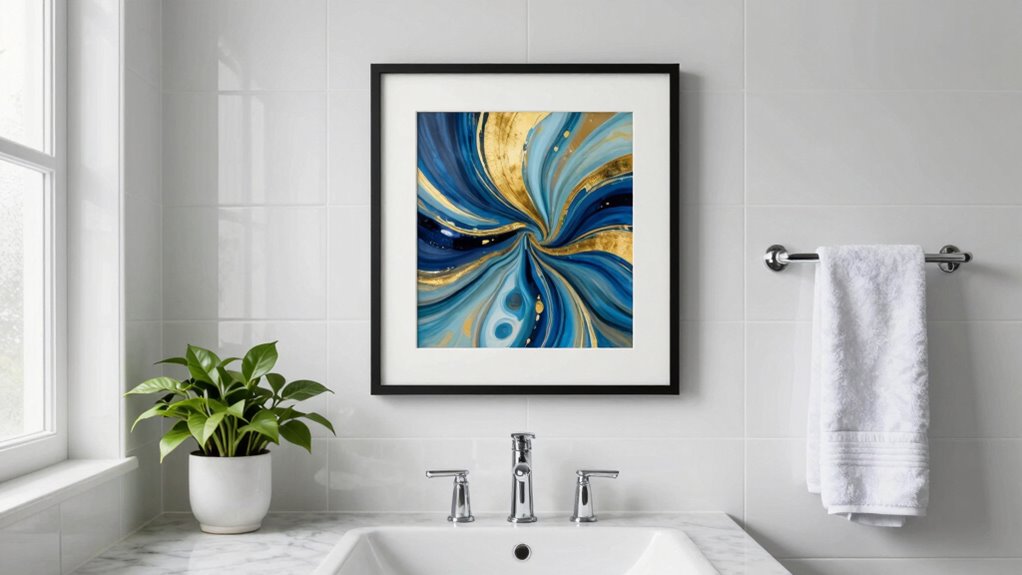
Don’t hang art in your bathroom without considering the high humidity, temperature changes, and potential water splashes. These conditions can damage delicate or paper-based artwork quickly. Opt for moisture-resistant materials, waterproof frames, and protective covers like glass or acrylic. Proper placement, ventilation, and regular maintenance are essential for longevity. To keep your bathroom decor appealing and safe, you should follow best practices—if you’re enthusiastic to learn what those are, keep going.

Prime made for students and young adults
- Fast, free delivery for dorm and study essentials
- Prime Video and Amazon Music included
- Member-only deals
Key Takeaways
- Bathrooms’ high humidity and moisture can damage delicate or paper-based artwork if not properly protected.
- Use moisture-resistant materials and sealed, waterproof frames to prevent water damage and mold growth.
- Position art away from direct splashes and ensure proper ventilation to maintain its condition.
- Regularly monitor humidity levels, inspect seals, and clean artwork gently to prolong lifespan.
- Consider alternative decor options like moisture-resistant panels or open shelving to avoid water-related risks.
moisture resistant bathroom art frames
As an affiliate, we earn on qualifying purchases.
As an affiliate, we earn on qualifying purchases.
Understand the Bathroom Environment Challenges for Art
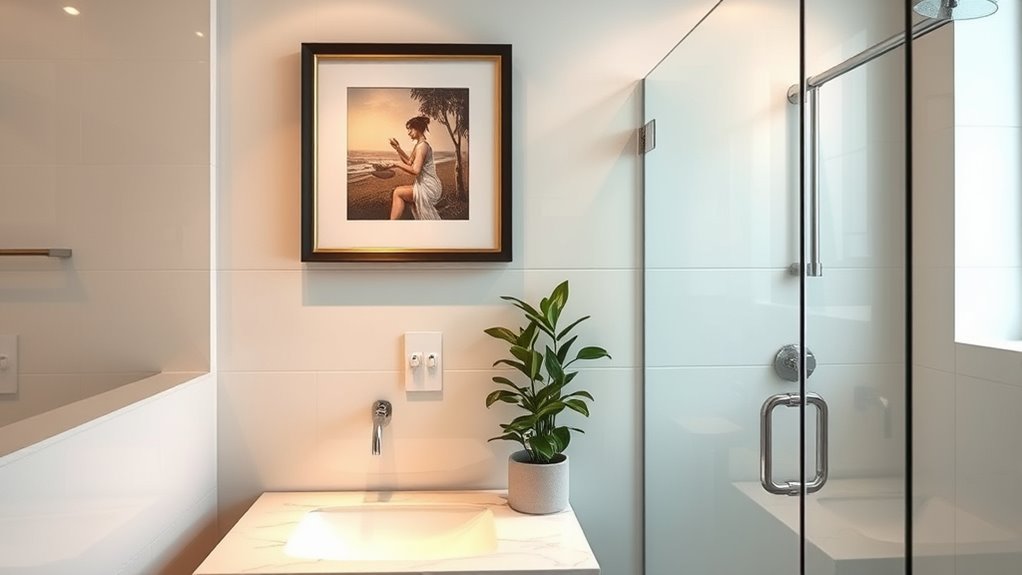
Bathrooms pose unique challenges for displaying art because they’re humid and often have temperature fluctuations. These conditions can cause damage if you’re not careful with your framing techniques and art selection. To protect your artwork, choose pieces with durable materials and avoid delicate or paper-based art that can’t withstand moisture. When framing, opt for waterproof or sealed frames that prevent humidity from seeping in and causing warping or mold. Proper framing techniques also include using UV-protective glass to guard against light damage. Understanding these environmental factors helps you select the right art and framing options, ensuring your bathroom decor remains vibrant and intact over time. Additionally, selecting appropriate materials designed for high-humidity environments can further extend the lifespan of your artwork. Considering humidity control options like dehumidifiers or ventilation systems can also help maintain optimal conditions for your art. Being aware of these challenges is the key to successfully incorporating art into your bathroom space, especially by considering indoor air quality, which influences surface and material preservation. Incorporating humidity-resistant finishes can also help protect your artwork from moisture-related deterioration. Implementing specialized mounting techniques can further prevent damage caused by moisture and temperature shifts.
waterproof picture frames for bathroom
As an affiliate, we earn on qualifying purchases.
As an affiliate, we earn on qualifying purchases.
Pick Art Materials That Handle Humidity Well
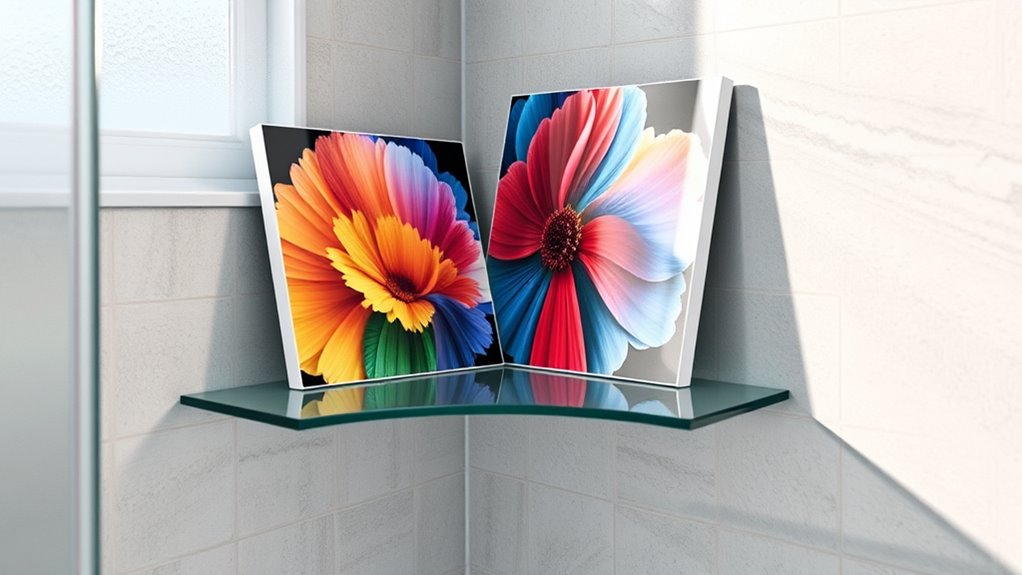
Since humidity can quickly damage delicate materials, choosing art made from moisture-resistant materials is essential for bathroom displays. Look for pieces created with materials that offer strong humidity control, such as metal, glass, or treated canvas. Incorporating smart home technology like humidity sensors can help monitor and maintain optimal conditions, further protecting your artwork. These materials resist warping, mold, and deterioration better than paper or untreated textiles. Opt for art with durable finishes or sealed surfaces to withstand moisture exposure. Selecting appropriate materials is crucial to ensure your artwork remains vibrant and intact over time. Using moisture-resistant coatings on artwork can provide an extra layer of protection against humidity. Additionally, choosing art with sealed surfaces can further enhance its resistance to moisture and humidity. Being aware of humidity levels in your bathroom can help you manage the environment and prolong the life of your art. With the right materials, your bathroom art can endure the damp conditions and continue to add beauty without deterioration.
humidity resistant artwork materials
As an affiliate, we earn on qualifying purchases.
As an affiliate, we earn on qualifying purchases.
Choose Waterproof, Mold-Resistant Frames for Safety

When selecting frames for bathroom art, make sure they’re waterproof and mold-resistant to prevent damage. Material choice is key—look for options like plastic or treated metal that can withstand moisture. Using evidence-based materials can help ensure durability and safety. Additionally, selecting frames with proper European cloud server features can enhance long-term performance and resilience. Incorporating moisture-resistant coatings to prevent mold growth and water intrusion over time is also crucial. Proper air circulation techniques, such as using desiccants or ventilation, can further protect your artwork. Finally, guarantee proper sealant use around the edges to keep water out and protect your artwork over time.
Material Matters for Frames
Choosing the right frame material is crucial to safeguard your artwork and guarantee safety in a damp bathroom environment. Opt for waterproof, mold-resistant materials like plastic, PVC, or treated metal to prevent damage. These materials enhance canvas durability and support various framing styles, ensuring your art stays pristine over time. Not all frames are created equal—some may warp or harbor mold when exposed to moisture. Consider the table below to compare options:
| Material | Canvas Durability | Framing Styles |
|---|---|---|
| Plastic | High | Modern, sleek |
| PVC | Very high | Minimalist |
| Aluminum | Excellent | Contemporary |
| Treated Wood | Moderate | Classic, ornate |
Additionally, choosing moisture-resistant materials helps preserve the integrity of your art in humid environments. Incorporating proper ventilation and humidity control measures further minimizes risk factors that could compromise your artwork’s condition. Understanding material properties is essential for selecting frames that withstand bathroom humidity. Keeping your artwork safe and looking great depends on selecting appropriate materials that withstand bathroom humidity, especially when moisture management techniques are properly implemented.
Proper Sealant Usage
Proper sealant application plays a pivotal role in maintaining the integrity of your bathroom art. When selecting frame styles, opt for waterproof and mold-resistant frames to prevent moisture damage. Incorporate smart technology into your maintenance routine by using humidity sensors to monitor bathroom moisture levels, ensuring your art remains protected. Correct sealing around the edges of the frame ensures water doesn’t seep in, protecting your artwork and wall surfaces. Use high-quality hanging hardware designed for humid environments to keep your art secure and stable. Make sure that all gaps between the frame and wall are sealed tightly with a waterproof sealant, especially around corners and joints. Proper sealing techniques are essential to prevent mold growth and water infiltration. Regularly check and reseal as needed to maintain protection. Additionally, understanding waterproof sealants and their proper application can significantly enhance the longevity of your bathroom decor. Paying attention to moisture-resistant materials for frames and hardware further helps prevent damage over time. By paying attention to sealant application and choosing the right frames and hardware, you’ll preserve your bathroom art’s appearance and longevity.
bathroom wall art with sealed surfaces
As an affiliate, we earn on qualifying purchases.
As an affiliate, we earn on qualifying purchases.
Find the Best Spots and Ventilation Tips for Bathroom Art
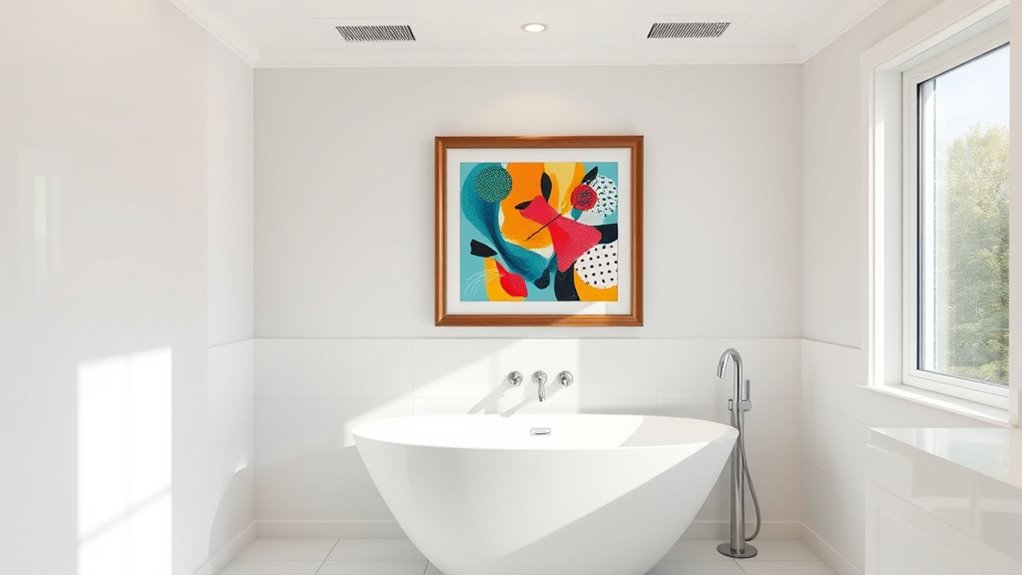
Finding the ideal spots for bathroom art involves selecting areas that enhance the space without exposing your pieces to excess moisture. Look for wall sections away from direct water splashes, such as above the toilet or near the sink, but not directly exposed to humidity. Consider protective measures like waterproof mats or sealed edges to further safeguard your artwork. Use framing techniques that provide a secure, moisture-resistant barrier—consider waterproof mats or sealed edges. Lighting options also play a role; opt for fixtures that don’t emit excessive heat or moisture, like LED lights, and avoid placing art where steam from showers will linger. Incorporating proper placement and strategic positioning can make a significant difference in preserving your art. Proper ventilation, including humidistat-controlled exhaust fans, is key—install exhaust fans and open windows regularly to reduce humidity. Proper placement and ventilation help preserve your artwork’s appearance and prevent damage, keeping your bathroom stylish and functional.
Protect Your Artwork With Glass or Acrylic Covers

Using glass or acrylic covers shields your artwork from water damage and humidity. These covers help prevent mold growth and keep your art looking fresh over time.
Protecting your pieces with these barriers guarantees they stay vibrant and intact in your bathroom environment.
Prevent Water Damage
To protect your bathroom art from water damage, covering your pieces with glass or acrylic shields is an effective solution.
When choosing art, opt for pieces that suit humid environments, like water-resistant prints or sealed photographs.
Proper framing techniques also matter; use moisture-resistant mats and frames with sealed edges to prevent water infiltration.
Acrylic or glass covers add an extra barrier, shielding your artwork from splashes and humidity.
Confirm the covers are tightly sealed and fit securely to avoid any water seepage.
Regularly inspect your display for signs of moisture or damage, replacing or resealing covers as needed.
Avoid Mold Growth
Since mold thrives in humid environments, protecting your bathroom artwork with glass or acrylic covers is essential to prevent mold growth. These covers act as a barrier, stopping moisture from settling on the art’s surface.
Regular art cleaning is still necessary to remove dust or any potential mold spores, but covers substantially reduce the risk.
Without protection, excessive moisture can cause mold to develop, which not only damages the artwork but also accelerates color fading.
By sealing your art behind glass or acrylic, you create a controlled environment that limits exposure to humidity and prevents mold from forming.
This simple step preserves your artwork’s integrity and appearance, ensuring it stays vibrant and mold-free for years to come.
Preserve Artwork Quality
Protecting your bathroom artwork with glass or acrylic covers is one of the most effective ways to preserve its quality. These covers act as a barrier against moisture, dust, and accidental splashes, helping with art preservation. They also make cleaning easier, preventing dirt from settling on the surface.
By shielding your art, you reduce the risk of deterioration caused by humidity fluctuations. Proper humidity control is essential in bathrooms, and a sealed cover creates a more stable environment for your artwork.
Choose high-quality glass or acrylic that resists scratches and UV rays to guarantee long-lasting protection. With these measures, you can enjoy your art without worrying about moisture damage or fading, keeping your bathroom decor looking fresh and vibrant for years to come.
Seal and Waterproof Your Art to Prevent Damage
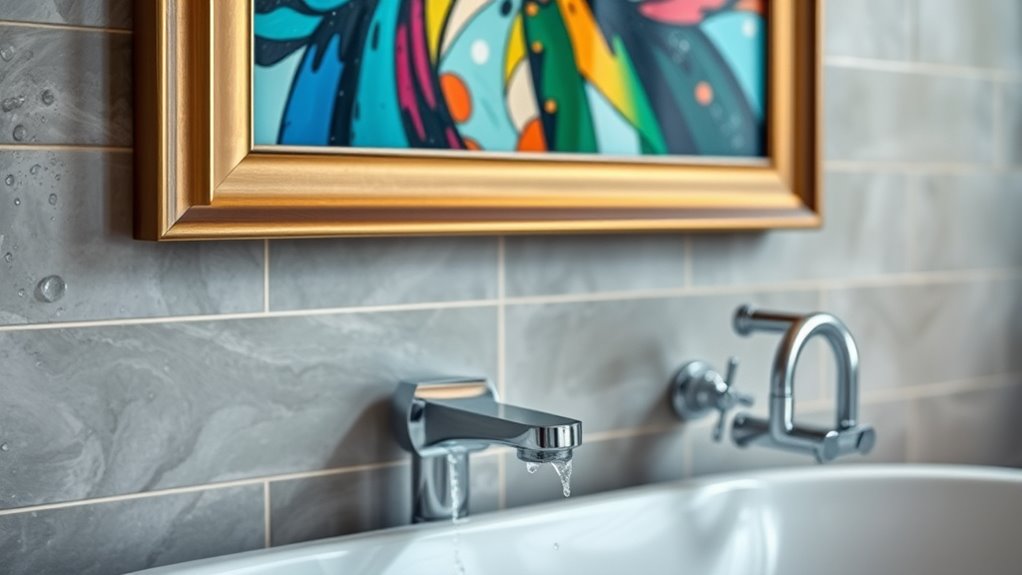
Applying a sealant or waterproof coating is essential to keep your bathroom art safe from moisture and humidity. This layer acts as a moisture barrier, preventing water vapor from seeping into the artwork and causing damage over time.
By sealing your art, you enhance humidity control, reducing the risk of warping, peeling, or mold growth. Use a clear, acid-free sealant suitable for the medium of your artwork, ensuring it doesn’t alter the appearance.
Make sure to apply the coating evenly and follow the manufacturer’s instructions for drying time. Regularly inspect the sealant’s integrity and reapply when necessary.
Proper sealing creates a protective barrier that preserves your art’s vibrancy and longevity in the high-humidity environment of your bathroom.
Keep Your Bathroom Art Looking Fresh With These Maintenance Tips
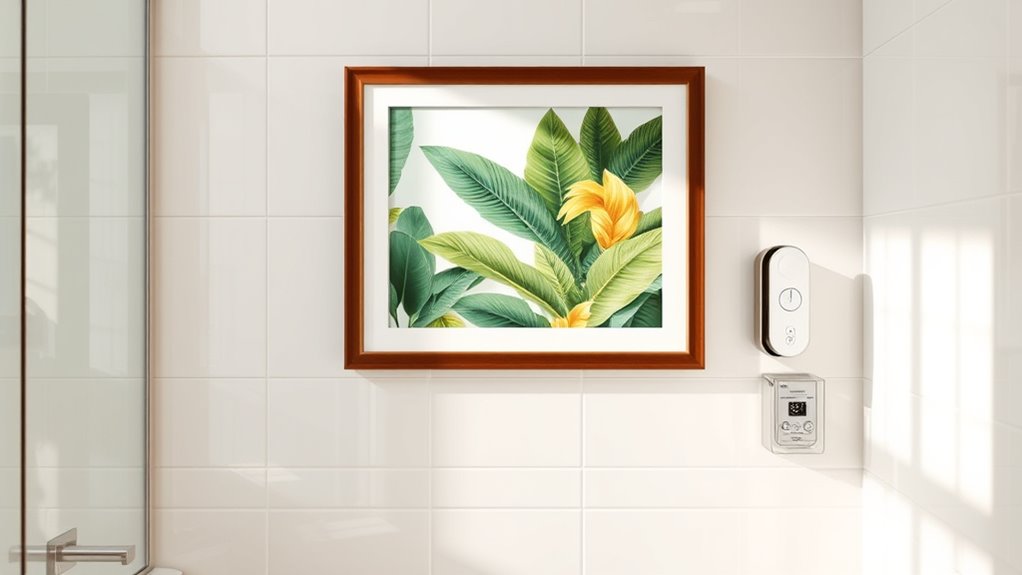
Once your bathroom art is sealed and waterproofed, keeping it looking fresh requires regular maintenance. To guarantee proper art preservation, monitor humidity levels and avoid drastic temperature changes, as fluctuating environmental control can cause damage over time.
Wipe your artwork gently with a soft, damp cloth to remove dust and moisture buildup, which can lead to deterioration. Avoid harsh cleaners or abrasive materials that could scratch or harm the surface.
Keep the bathroom well-ventilated to prevent mold and mildew from forming behind or around the art. Periodically inspect the sealant and framing to catch any signs of wear early.
Consistent care helps maintain the vibrancy and integrity of your bathroom art, ensuring it remains a beautiful focal point for years to come.
Explore Creative Alternatives to Wall Art in Bathrooms
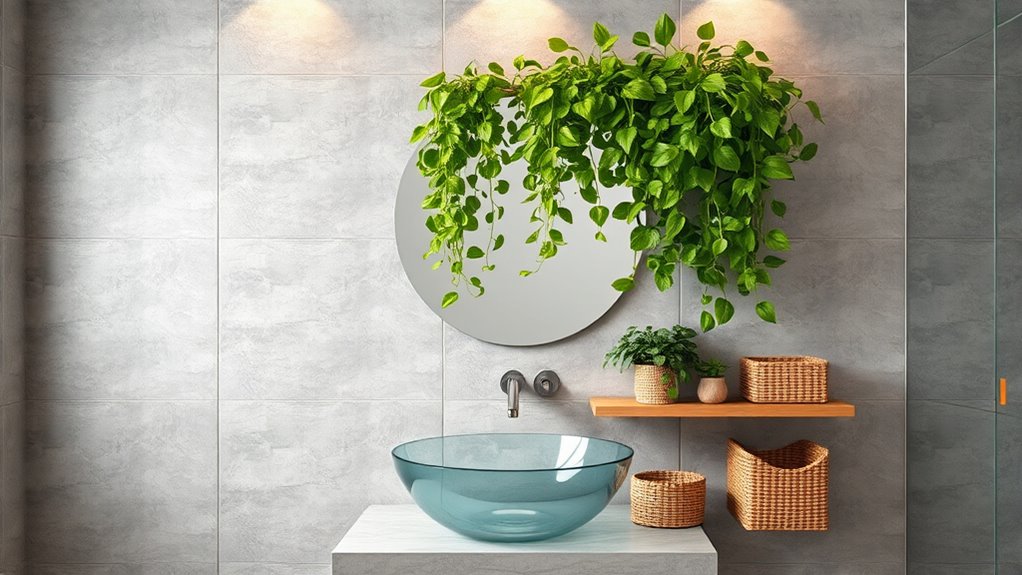
If you’re looking to add personality and style to your bathroom without relying solely on traditional wall art, there are plenty of creative alternatives to contemplate. Consider installing open shelving with decorative items, such as plants or unique containers, which can enhance ambiance while improving ventilation strategies.
Hang waterproof or moisture-resistant artwork, like metal or glass pieces, that can withstand humidity without damage. Incorporate textured wall panels or 3D tiles to add visual interest without cluttering the space.
To protect your decor, focus on humidity control by ensuring proper ventilation, like exhaust fans, reduces excess moisture. These options not only elevate your bathroom’s aesthetic but also help maintain the integrity of your decor, making your space feel stylish and functional.
Know When to Call a Professional for Art Installation

While experimenting with creative ways to decorate your bathroom can be fun, there are times when professional help is the safest choice. If you’re dealing with large or fragile artwork, like pieces from an art gallery, or need precise framing techniques, calling a pro guarantees safe handling. Professionals can assess wall types, weight limits, and humidity risks, preventing damage. They also know how to properly install artwork securely, avoiding accidents. Use this table to decide if you should call a professional:
| Situation | Indicators | Recommended Action |
|---|---|---|
| Heavy or fragile art | Thick glass, delicate materials | Hire a professional |
| Unique framing needs | Custom or complex framing techniques | Consult an expert |
| Humid bathroom environment | Artwork prone to moisture damage | Seek professional advice |
Knowing when to call ensures your art stays safe and beautiful.
Frequently Asked Questions
How Often Should I Replace Bathroom Art Due to Humidity?
You should replace bathroom art every 1 to 2 years, especially if humidity control isn’t consistent. Humidity can cause damage over time, especially to less durable materials like paper or canvas.
To prolong the life of your artwork, choose pieces made from moisture-resistant materials or frame them with sealed glass.
Regularly check for signs of wear or mold, and replace artwork when it shows noticeable damage to keep your space fresh and attractive.
Can Non-Waterproof Art Be Safely Displayed in Bathrooms?
You can safely display non-waterproof art in bathrooms if you choose moisture-resistant materials and decorative wall accents designed for humid environments.
Opt for frames made of plastic or treated wood, and consider sealed prints or acrylic-mounted pieces to prevent moisture damage.
Regularly check and clean your artwork, and avoid placing it directly near showers or tubs to keep it looking fresh and avoid deterioration.
What Are the Best Cleaning Practices for Bathroom Artwork?
To safeguard your bathroom artwork, you should regularly clean it with gentle, non-abrasive cleaning solutions. Use a soft cloth or sponge to avoid damage, and avoid harsh chemicals that can harm the art.
Keep humidity levels in check to prevent deterioration. Consider framing pieces with moisture-resistant materials.
How Do I Prevent Mold Growth on Framed Art?
To prevent mold growth on framed art, you should use mold-resistant materials like sealed glass or acrylic frames, which deter moisture buildup.
Keep humidity levels low using a dehumidifier or good ventilation, especially in bathrooms.
Regularly wipe down your artwork with a dry cloth to remove excess moisture.
Are There Specific Lighting Options to Protect Bathroom Art?
You should opt for moisture resistant lighting and waterproof light fixtures to safeguard your bathroom art. These lighting options prevent moisture buildup and reduce the risk of mold or damage.
Install waterproof fixtures in areas prone to splashes and choose moisture resistant bulbs to ensure longevity.
Conclusion
Before hanging art in your bathroom, understand the environment and choose materials that resist moisture and mold. Use waterproof frames, seal your artwork, and guarantee proper ventilation to keep your pieces looking fresh. Consider creative alternatives if needed, and don’t hesitate to call a professional for installation. With these tips, you can enjoy beautiful, lasting art in your bathroom without worry. Transform your space into a stylish sanctuary that stays vibrant over time.
Halloween Picks
halloween
As an affiliate, we earn on qualifying purchases.