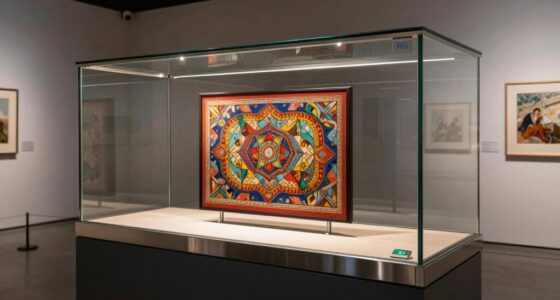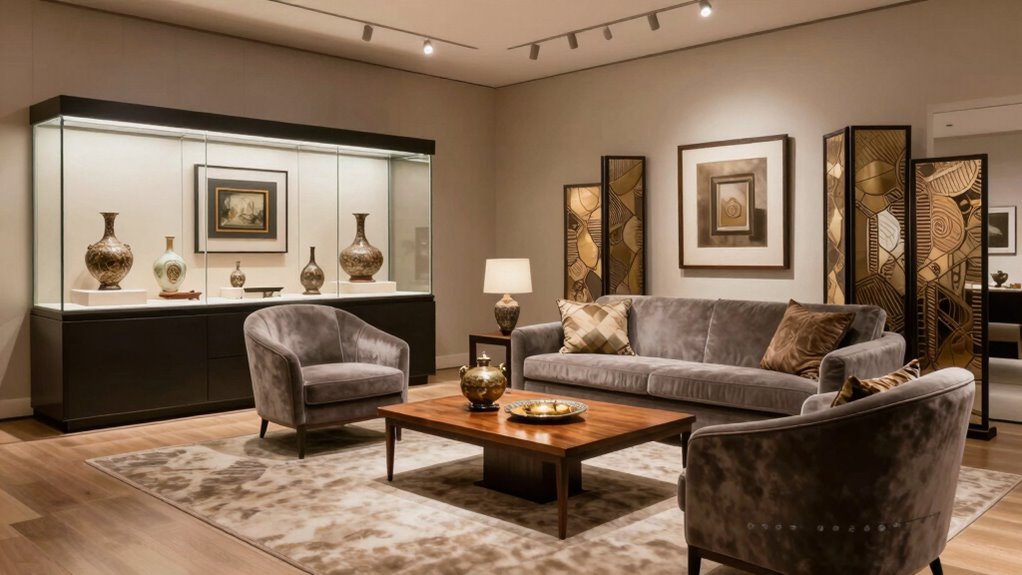

To protect your art during home events, carefully choose low-traffic, secure spots on sturdy walls away from high-traffic areas. Use proper hanging hardware and secure fragile items with protective coverings or barriers. Keep hazards like loose wires or uneven flooring out of reach, and monitor environmental conditions with smart tech to maintain proper temperature and humidity. Use adjustable lighting to prevent damage and encourage guests to respect the artwork. Want to discover more ways to keep your art safe?
Listen free for 30 days with Audible
Thousands of audiobooks and originals — cancel anytime.
As an affiliate, we earn on qualifying purchases.
Key Takeaways
- Place artwork in low-traffic areas on sturdy walls using secure hanging hardware.
- Remove or secure objects that could be knocked over or cause injuries near artwork.
- Use protective coverings like acrylic shields or plastic wraps for fragile or valuable pieces.
- Adjust lighting to highlight art while avoiding prolonged exposure to harsh or direct rays.
- Use signs or gentle reminders to encourage guests to respect and avoid touching the artwork.
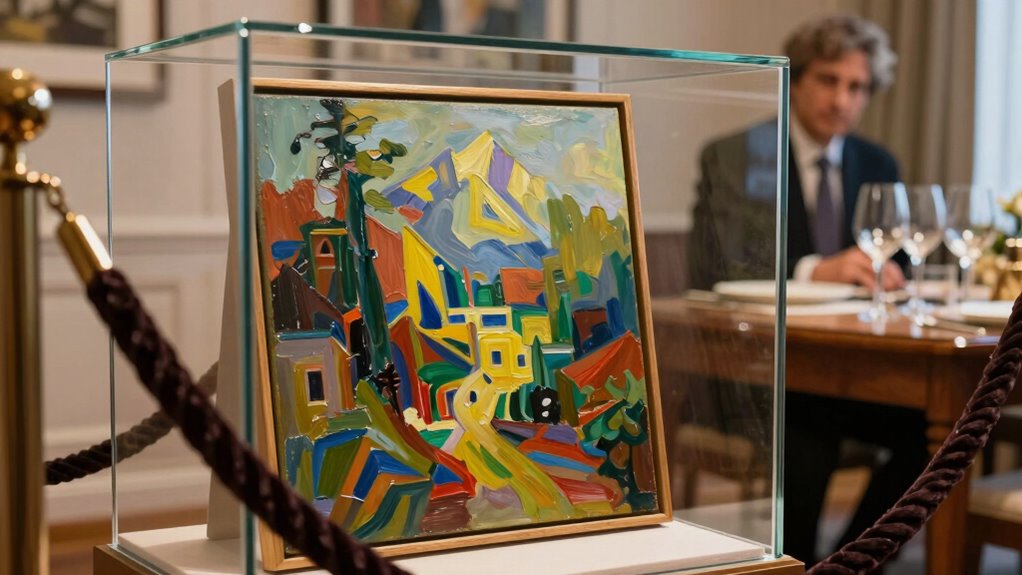
Hosting events at home can be a fantastic way to gather with friends and family, but it also poses risks to your valuable artwork. You want your pieces to be admired, not accidentally damaged or ruined. That’s why understanding how to protect art during gatherings is essential. When it comes to art preservation, your primary goal should be to minimize exposure to potential hazards like spills, bumps, or environmental changes. Start by thoughtfully arranging your artwork in areas less likely to be disturbed. Placing pieces on sturdy walls away from high-traffic zones reduces the chance of accidental contact. Additionally, consider using secure hanging hardware, such as anti-tip brackets or picture hooks designed for weight support, to guarantee your artwork stays firmly in place throughout the event.
Arrange art in low-traffic areas and secure with proper hardware to protect during gatherings.
Event safety is equally vital. Before the gathering, evaluate your space for possible hazards—loose wires, uneven flooring, or sharp corners—that could cause accidents. Remove or secure any objects that might be knocked over or cause injury. If your art includes fragile or valuable pieces, think about temporary protective measures. Clear plastic covers or acrylic shields can act as a barrier against accidental spills or contact. If you’re hosting in a space with children or pets, take extra precautions; use childproof locks or barriers around artwork, and keep delicate items out of reach. Ensuring proper art display techniques can also help prevent accidental damage. Moreover, maintaining a suitable environmental condition, such as controlled temperature and humidity, plays a significant role in preserving your art during gatherings. Incorporating smart home technology can help monitor and adjust these conditions to keep your art safe. Regularly checking your environment and making adjustments can make a significant difference in art preservation.
Lighting also plays a vital role. Bright, direct light can harm certain artworks over time, especially those on paper or sensitive materials. Use adjustable lighting to highlight your pieces while preventing prolonged exposure to harsh rays. Keep windows equipped with UV-filtering film or curtains to limit sunlight that could cause fading. These measures not only preserve your art’s condition but also enhance the overall safety of the environment. Proper air quality management by reducing pollutants and controlling humidity levels can further support your art’s longevity and overall indoor safety.
Finally, communicate with your guests about the importance of respecting your artwork. Simple signs or gentle reminders can go a long way in preventing mishaps. Encourage careful movement around displayed pieces and remind everyone to avoid leaning on or touching the art unless invited. By being proactive with art preservation and event safety, you create a welcoming atmosphere where your artwork remains protected, and your guests can enjoy the event without concern. Protecting your art isn’t just about safeguarding your collection; it’s about guaranteeing that your space remains beautiful and inviting for everyone involved.
anti-tip picture hanging hardware
As an affiliate, we earn on qualifying purchases.
As an affiliate, we earn on qualifying purchases.
Frequently Asked Questions
What Insurance Options Are Best for Protecting Artwork at Home Events?
You should consider specialized art insurance to protect your artwork during home events, as it offers coverage for theft, damage, or loss. Pair this with robust home security measures like cameras and alarms to deter potential threats. Combining art insurance with good home security ensures your artwork is well-protected, giving you peace of mind while hosting. Always review policy details to ensure extensive coverage tailored to your artwork.
How Can I Secure Valuable Art From Accidental Damage During Gatherings?
Think of yourself as a guardian, akin to a museum curator, safeguarding your treasures. Use careful art handling techniques to prevent accidental damage, ensuring each piece is supported and stable. Manage visitors diligently, keeping them at a respectful distance and guiding them around your art. With these steps, you create a protective environment, reducing risks and preserving your valuable art during gatherings, just like a seasoned curator safeguarding priceless collections.
What Are the Best Ways to Monitor for Theft at Home Art Events?
You should set up surveillance technology, like cameras, to monitor your art during events, deterring theft and providing evidence if needed. Additionally, implement guest screening by checking IDs or invitations at the door, ensuring trusted attendees are present. Keep an eye on your art throughout the event, and consider assigning a responsible person to oversee the space, making sure your artwork stays safe and secure from potential theft.
How Do I Choose the Right Display Materials to Protect Artwork?
To choose the right display materials, focus on lighting considerations and your display setup. Use UV-protective glass or acrylic to shield artwork from harmful rays. Opt for sturdy, non-abrasive backing materials that won’t damage the art. Arrange your display setup to minimize direct sunlight and harsh lighting, ensuring even illumination. Select materials that prevent scratches and vibrations, keeping your artwork safe and vibrant during the event.
Are There Specific Legal Considerations for Hosting Art Events at Home?
When hosting art events at home, you need to take into account legal permits to guarantee compliance with local regulations, especially if you’re selling or displaying art publicly. Liability concerns are also essential; securing appropriate insurance can protect you from potential claims if someone gets injured or if artwork is damaged. Always check with local authorities and possibly consult a legal expert to cover all bases, making your event safe and legal.
As an affiliate, we earn on qualifying purchases.
Conclusion
Remember, hosting events at home is like guarding a precious treasure—your artwork. When I once hosted a dinner party, I placed a delicate sculpture on a sturdy shelf and kept a close eye on guests. Just like a fortress protecting its gold, taking simple precautions guarantees your art stays safe. With these tips, you can enjoy your gatherings while your treasured pieces remain secure, allowing you to focus on creating memories, not mishaps.
UV-filtering window film for artwork
As an affiliate, we earn on qualifying purchases.
As an affiliate, we earn on qualifying purchases.
smart humidity and temperature monitor
As an affiliate, we earn on qualifying purchases.
As an affiliate, we earn on qualifying purchases.
Flea & tick season Picks
flea and tick prevention
As an affiliate, we earn on qualifying purchases.