TL;DR

Prime made for students and young adults
- Fast, free delivery for dorm and study essentials
- Prime Video and Amazon Music included
- Member-only deals
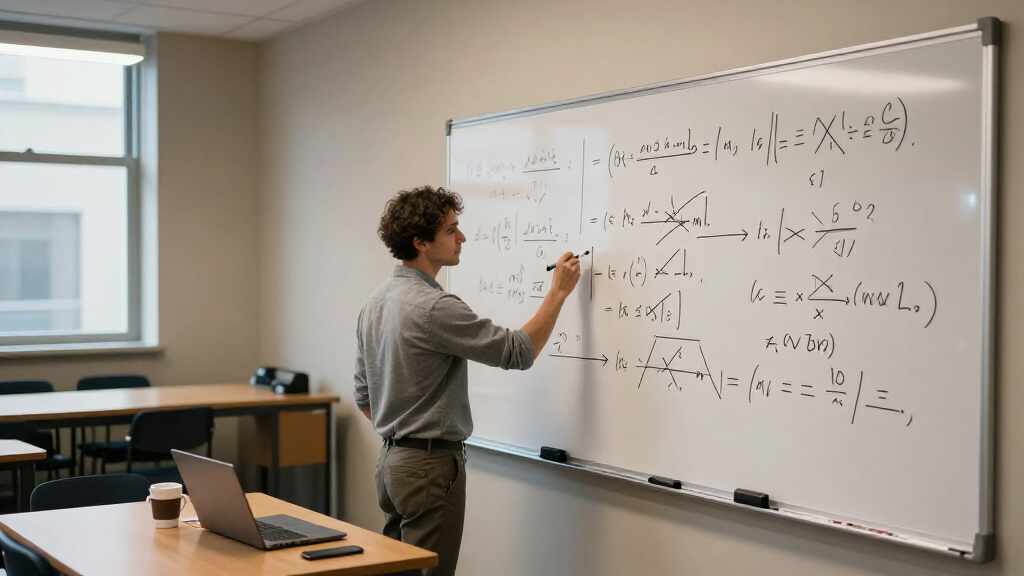
Derek Thompson’s report describes a wave of OpenAI mathematical findings and the astonishment, disorientation and grief some mathematicians say they have felt in response. The report centers on Steven Strogatz’s view that the reaction is about more than competition: mathematics is also a shared human pursuit built across generations.
OpenAI has published hundreds of mathematical findings in recent months, Derek Thompson reports, including work in number theory, theoretical computer science and logic. Some reportedly address problems that challenged leading researchers for decades or centuries. The release prompted astonishment, indignation and grief among some mathematicians, raising questions about how AI may change research and the human meaning of scientific work.
Thompson’s account focuses on the reaction to an OpenAI release in October, which included proofs in several branches of mathematics. The source describes the work as tackling problems that had stumped prominent mathematicians, but does not provide a list of the results, identify independent evaluations of each proof, or explain how many have been formally checked or published through conventional peer review. Those distinctions matter: the reported existence of findings is not, by itself, evidence that every result has been independently verified.
Two mathematicians quoted in the report describe an unusually personal response. Hugo Duminil-Copin, the 2022 Fields Medal recipient, said he cried after the October release and felt that it had wiped out his research area. Steven Strogatz, a Cornell University mathematician, described feeling disoriented, exhilarated and grief-stricken. Their comments are individual reactions, not a survey of the mathematical community; the report characterizes the wider response as mixed.
Thompson spoke with Strogatz to explore why the development might provoke more than professional disappointment. Strogatz connected mathematics to a tradition of researchers building on one another’s work, recalling the ancient mathematician Archimedes and his hope that future discoverers would add to the theorems already found. In this view, mathematical research is both problem-solving and a conversation across generations. AI’s ability to contribute to that process can unsettle researchers’ expectations about their role in it.
The report matters because it frames AI’s impact on research as more than a question of whether a machine can solve a hard problem. Mathematics has traditionally depended on human judgment, accumulated knowledge and exchange between researchers. If AI systems produce results that are correct and useful, they could change how mathematicians choose problems, test proofs and decide what kinds of contributions receive recognition.
But the emotional response described by Thompson is not proof that mathematicians as a whole have been displaced, nor that their field has been made redundant. It signals a tension between technical achievement and human meaning: researchers may welcome new tools while worrying about status, the value of years of work, and whether discovery will remain a shared endeavor. The same tension could arise in other fields if AI begins to perform work that people connect to identity and purpose.
As an affiliate, we earn on qualifying purchases.
From Proofs to Scientific Community
Thompson places the debate within a broader account of how human knowledge develops. People copy, adapt and build on discoveries, passing techniques between individuals and generations. Science, in that account, is not only a method of investigating the world but also a social process in which researchers test, challenge and extend one another’s ideas.
Strogatz’s reference to Archimedes gives that idea a historical frame. Archimedes wrote to Eratosthenes about future discoverers adding to the theorems already found. Strogatz told Thompson that he felt the ancient mathematician was speaking to researchers in the present: each generation contributes to a continuing pursuit. The report uses this connection to explain why an AI-generated result might be experienced as both an impressive technical advance and a disruption to that inheritance.
“Tuesday night, I cried and it woke up my daughter.”
— Hugo Duminil-Copin, 2022 Fields Medal recipient, as quoted in Derek Thompson’s report
As an affiliate, we earn on qualifying purchases.
Verification and Research Impact
The source does not specify the year of the October release or identify all the findings it describes. It also does not detail how the proofs were checked, which results have received independent confirmation, or whether they have been accepted in peer-reviewed publications. Without those details, readers cannot assess the status of every claim or compare the system’s contributions with established research practices.
The report also leaves open how broadly the quoted feelings are shared, whether the findings will materially change mathematicians’ day-to-day work, and how OpenAI’s methods performed across the problems involved. The comments from Duminil-Copin and Strogatz establish their own reactions; they do not establish a field-wide consensus or show that human mathematicians’ roles have ended.
As an affiliate, we earn on qualifying purchases.
Independent Checks and Further Results
The next meaningful developments will be independent scrutiny of the reported proofs, fuller disclosure of the problems and methods involved, and evidence of how other researchers use or challenge the results. The source does not give a schedule for such checks or identify a forthcoming release, so no specific milestone can be confirmed from the report.
For now, the confirmed news is the reported publication of a large body of mathematical findings and the strong reactions of some researchers. Whether those findings reshape mathematical practice will depend on their verification, usefulness and integration into the wider research community. Those questions—not the emotional reaction alone—will show how far the technology changes the field.
As an affiliate, we earn on qualifying purchases.
Key Questions
What is the report about?
Derek Thompson reports on mathematicians’ reactions to hundreds of mathematical findings attributed to OpenAI and considers why the work has prompted both excitement and grief.
Which areas of mathematics are mentioned?
The report says the findings span number theory, theoretical computer science and logic.
Have all the reported proofs been independently verified?
The supplied source does not say how many proofs have been independently checked or formally published. Their verification status is unclear from the report.
Why does Steven Strogatz describe grief?
Strogatz connects the reaction to more than competition. He describes mathematics as a shared pursuit across generations, and says AI’s findings can disrupt researchers’ sense of their place in that tradition.
Does the report say mathematicians have been replaced?
No. It describes reactions to new findings but does not establish that mathematicians have been replaced or that the field’s work has ended. The longer-term effect on research practice and human contributions remains uncertain.
Source: hn
Halloween Picks
halloween
As an affiliate, we earn on qualifying purchases.