
Tape ruins paper art over time because the adhesives chemically react with the fibers, causing deterioration, discoloration, and weakening of the material. Moisture trapped by the tape accelerates damage, leading to warping and tears. As the adhesive breaks down, it releases acids and residues that further harm the paper. Environmental factors like humidity and temperature fluctuations speed up this process. To learn how to prevent these issues, keep exploring ways to protect your artwork effectively.

Prime made for students and young adults
- Fast, free delivery for dorm and study essentials
- Prime Video and Amazon Music included
- Member-only deals
Key Takeaways
- Tape’s adhesives contain chemicals that react with paper fibers, causing irreversible deterioration over time.
- Residual adhesive attracts dirt and moisture, leading to staining, weakening, and discoloration of the paper.
- Environmental factors like humidity and temperature fluctuations accelerate chemical reactions and physical damage from tape.
- Long-term adhesive bonding can cause tearing, warping, and structural weakening of the paper surface.
- Difficult removal of aged tape often results in additional damage, further compromising the artwork’s integrity.
As an affiliate, we earn on qualifying purchases.
What Makes Tape Harmful to Paper Art Over Time

Tape can seem like a convenient way to attach or decorate paper art, but over time, it can cause serious damage. The problem lies in tape chemistry; most adhesives contain chemicals that interact with the paper’s fibers. When tape is applied, it can trap moisture and acids against the paper, leading to undesirable paper reactions. These reactions cause the paper to become brittle, discolored, or warped as the adhesive breaks down and releases acidic byproducts. Over decades, this process accelerates, weakening the paper’s structural integrity. Additionally, color accuracy in preservation methods is critical to maintaining the original appearance of artwork over time. Proper storage and conservation techniques are essential to prevent such deterioration and preserve the artwork’s long-term value. Understanding acidic reactions and their impact on paper can help in choosing appropriate preservation strategies to mitigate damage, especially since archival quality materials can significantly reduce such risks.
acid-free paper preservation supplies
As an affiliate, we earn on qualifying purchases.
As an affiliate, we earn on qualifying purchases.
How Tape Binds to Paper Surfaces and Why It Matters

Understanding how tape binds to paper surfaces is essential because it directly impacts the longevity of your artwork. Adhesive bonding occurs when the tape’s adhesive interacts with the paper’s surface, creating a bond that may seem strong initially. However, this surface interaction varies depending on the type of paper and adhesive used. Some tapes form a tight, almost permanent bond, making removal difficult and risking damage. Others may only lightly adhere, but still cause issues over time as the adhesive seeps into the fibers. Recognizing how tape interacts with paper surfaces helps you choose the right materials and avoid damage. Proper understanding of surface interaction can prevent the long-term deterioration and preserve your artwork’s integrity. Additionally, selecting the appropriate adhesive type can significantly reduce the risk of damage over time. Knowing the surface chemistry of your paper can also influence the choice of tape, as different surface properties respond uniquely to various adhesives.
As an affiliate, we earn on qualifying purchases.
What Happens When Tape Reacts With Paper Components

When tape interacts with paper components, its acidic composition can cause the paper to weaken and discolor over time. You might notice adhesive residue that becomes difficult to remove, leading to staining or tearing. Understanding these reactions helps you protect your paper art from long-term damage, especially when considering archival quality materials for preservation. Additionally, the chemical composition of some tapes accelerates the deterioration process, making it crucial to choose appropriate materials for delicate works. Recognizing acidic tape properties can help artists and collectors prevent irreversible damage to their cherished paper pieces.
Acidic Composition Effects
As tape ages and reacts with paper components, its acidic composition can cause significant damage. The acids in tape create a pH imbalance in the paper, accelerating deterioration. This chemical process is a form of acid hydrolysis, which breaks down cellulose fibers, weakening the paper’s structure and making it brittle. Material interactions between the tape’s adhesive and paper exacerbate this process, leading to discoloration, staining, and loss of integrity. The acidity can seep deep into the paper, causing irreversible damage that worsens with age. This chemical reaction undermines the artwork’s longevity, transforming what once was vibrant and resilient into fragile, degraded material. Recognizing these acidic effects highlights the importance of proper storage and preservation methods to prevent long-term damage from tape’s corrosive properties. Employing acid-free storage materials is essential to preserve paper art over time.
Adhesive Residue Damage
Adhesive residue from tape can cause serious damage to paper artwork by leaving behind sticky layers that attract dirt, dust, and other contaminants. Over time, this residue can lead to staining, weakening paper fibers, and complicating paper conservation efforts. When tape reacts with paper components, the adhesive may seep into the fibers, causing irreversible damage. To understand this better, consider the following:
| Effect | Description | Mitigation |
|---|---|---|
| Residue buildup | Sticky layers attract dirt, leading to discoloration | Use archival adhesives carefully |
| Fiber deterioration | Adhesives weaken paper fibers over time | Remove tape promptly |
| Staining | Residue causes stains that are hard to remove | Seek professional conservation |
Additionally, the chemical composition of certain adhesives can accelerate deterioration, making timely removal essential to preserve the artwork’s integrity. Recognizing the adhesive’s chemical makeup early can help prevent irreversible damage and facilitate more effective conservation strategies. Proper handling and understanding of adhesive properties are crucial for effective preservation, especially considering how chemical interactions can influence the long-term stability of paper artifacts. Moreover, the Youngster Choice knowledge highlights how different adhesives have varying effects on materials, emphasizing the importance of selecting appropriate options for conservation work.
conservation-grade adhesive remover
As an affiliate, we earn on qualifying purchases.
As an affiliate, we earn on qualifying purchases.
How Environment Accelerates Tape Damage on Paper

High humidity makes tape stick more firmly to paper, speeding up damage. Warm temperatures cause the materials to break down faster, worsening deterioration. Additionally, environmental conditions significantly influence the rate of tape-induced paper degradation, especially in regions with extreme weather patterns that can cause fluctuations in humidity and temperature. Proper storage environments can help preserve delicate paper art and prevent environmental damage. Maintaining controlled climate conditions is essential for long-term preservation and minimizing deterioration caused by environmental factors.
Humidity Promotes Adhesion
Humidity can considerably speed up the damage caused by tape on paper by increasing the adhesive’s stickiness. When the air is humid, the moisture enhances the adhesive strength of tape, making it cling more tightly to the paper surface. This stronger adhesion means the tape’s backing and adhesive components interact more aggressively with the paper fibers, leading to increased tearing and degradation over time. The tape composition plays a significant role here; adhesives containing water-based or solvent-based compounds respond differently under high humidity, often worsening the damage. As moisture penetrates the tape and paper, it weakens the paper’s fibers and accelerates chemical interactions that cause discoloration and deterioration. Elevated humidity conditions make tape more aggressive, hastening the breakdown of fragile paper artworks, especially when combined with environmental factors like temperature fluctuations. Understanding the effects of humidity on paper and adhesives can help in selecting proper storage conditions to preserve delicate art. Additionally, long-term exposure to high humidity can lead to mold growth, further damaging the artwork and complicating preservation efforts. Recognizing the chemical interactions between moisture, adhesives, and paper fibers is crucial for preventing irreversible damage over time.
Temperature Accelerates Deterioration
Temperature plays a crucial role in speeding up tape-induced damage on paper because heat causes the adhesive to soften and become more fluid. As temperatures rise, the tape’s adhesive can seep into the paper fibers, accelerating deterioration. This process damages both archival tapes and original artwork, making preservation harder. To visualize, imagine:
| Cold Environment | Warm Environment |
|---|---|
| Adhesive remains firm | Adhesive melts and spreads |
| Paper stays stable | Paper warps and tears |
| Preservation techniques work | Conservation becomes difficult |
Higher temperatures weaken the bond between tape and paper, leading to warping, staining, or tearing. Proper climate control, such as cooling and humidity regulation, is essential to slow deterioration and protect your paper art from irreversible damage.
Common Problems Tape Causes in Paper Artwork
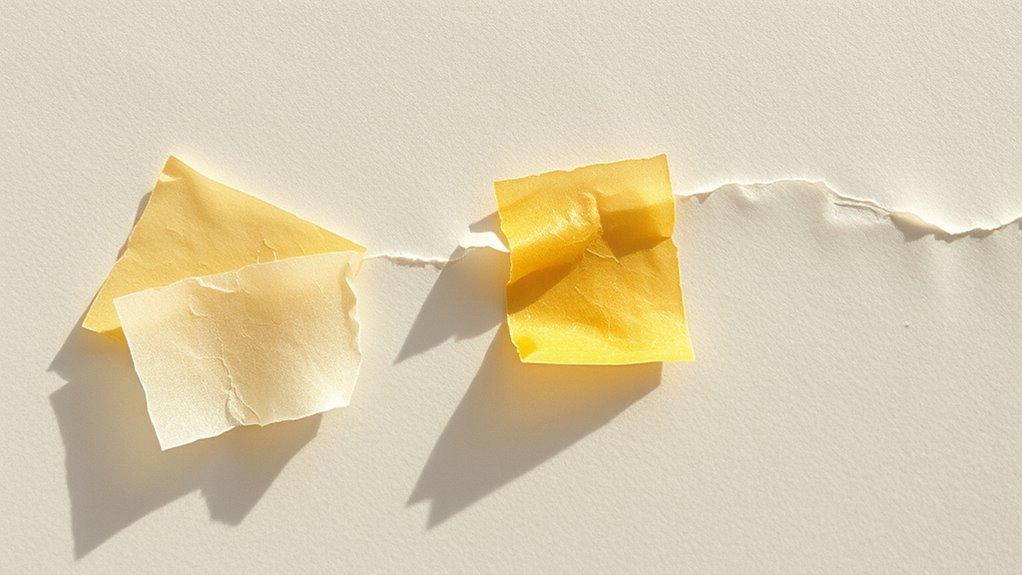
Tape can cause several problems in paper artwork, often leading to irreversible damage if not addressed promptly. One major issue is the adhesive’s longevity; over time, adhesives break down and become difficult to remove. When you try to peel tape off, it can rip or tear delicate paper fibers, causing permanent damage.
Using improper tape removal techniques, such as pulling quickly or using sharp tools, can exacerbate this problem. The adhesive residue left behind can attract dirt and moisture, further degrading the paper’s quality.
Even if the tape seems harmless initially, its adhesive properties can cause long-term issues that aren’t immediately visible. Recognizing these problems early helps prevent unnecessary harm, underscoring the importance of careful removal and proper preservation methods.
How Residual Adhesive Stains Develop and Spread

Residual adhesive stains can migrate over time, gradually spreading beyond the original tape area.
As the adhesive interacts with paper fibers, it diffuses through mechanisms like capillary action and chemical reactions.
Understanding these processes helps explain why stains worsen and become harder to remove.
Adhesive Migration Over Time
Over time, adhesive residues from tape can slowly migrate beyond their original placement, leaving behind stubborn stains on paper art. This process is driven by adhesive aging, where the adhesive’s chemical structure breaks down, becoming more fluid and prone to movement.
As tape degrades, its adhesive layer weakens, losing its initial grip and allowing residual adhesive to seep into surrounding fibers. Environmental factors like humidity, temperature fluctuations, and exposure to light accelerate this migration.
Over decades, the residual adhesive can spread unevenly, creating unpredictable stains that distort the artwork’s appearance. You might notice that what once seemed like a stable tape mark now appears as a diffuse, spreading discoloration.
The longer the tape remains on the paper, the more likely it is for adhesive migration to cause lasting damage.
Stain Diffusion Mechanisms
As adhesive residues break down and weaken, they begin to spread beyond their original confines, creating stains that slowly diffuse into the surrounding paper fibers. This process is driven by adhesive chemistry, where components like plasticizers and solvents migrate outward, altering the paper’s structure.
The staining patterns you see result from this diffusion, forming irregular, often unpredictable marks that deepen over time. Residual adhesive molecules dissolve gradually, moving into adjacent fibers and causing discoloration.
Factors like humidity, temperature, and paper porosity influence how quickly and extensively stains develop. Understanding these stain diffusion mechanisms reveals why paper art can suffer lasting damage long after tape removal, as the adhesive’s chemical properties continue to spread and alter the artwork’s appearance over decades.
Why Tape Moisture Breaks Down and Warps Paper
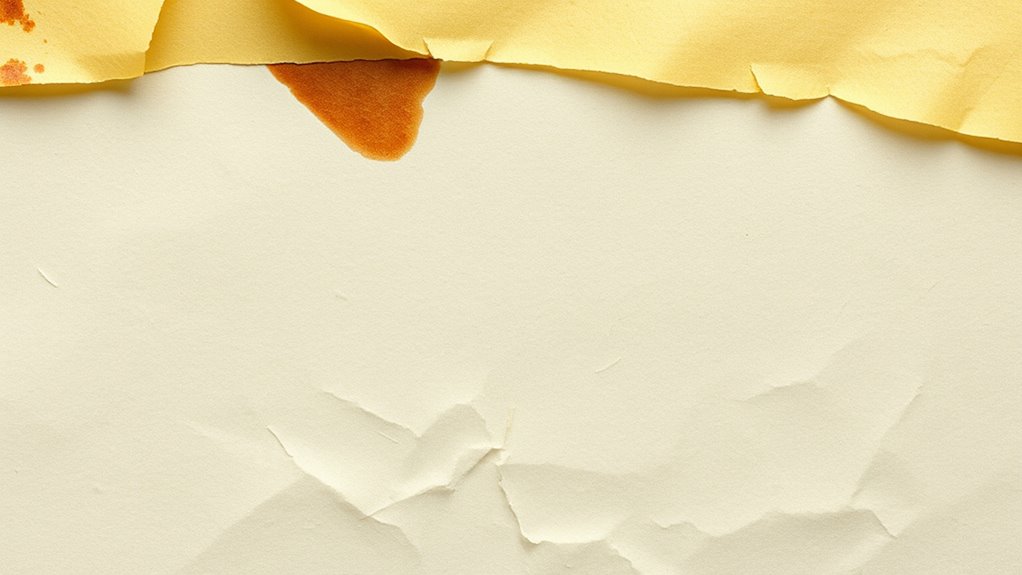
Moisture from tape can cause significant damage to paper because it weakens the fibers and creates uneven expansion. When moisture seeps in, it disrupts paper preservation by compromising the structural integrity of the fibers.
The adhesive chemistry of tape is designed to stick, but it often traps moisture against the paper surface. Over time, this trapped moisture accelerates deterioration, leading to warping and deformation.
As the paper absorbs water, it expands unevenly, causing wrinkles, curls, and distortions that are difficult to reverse. This process weakens the paper’s surface and can result in cracks or tears.
Understanding how moisture interacts with adhesive chemistry highlights the importance of avoiding tape on valuable or delicate paper artwork, ensuring its longevity and preservation.
Why Old Tape Turns Yellow and How It Affects Your Art

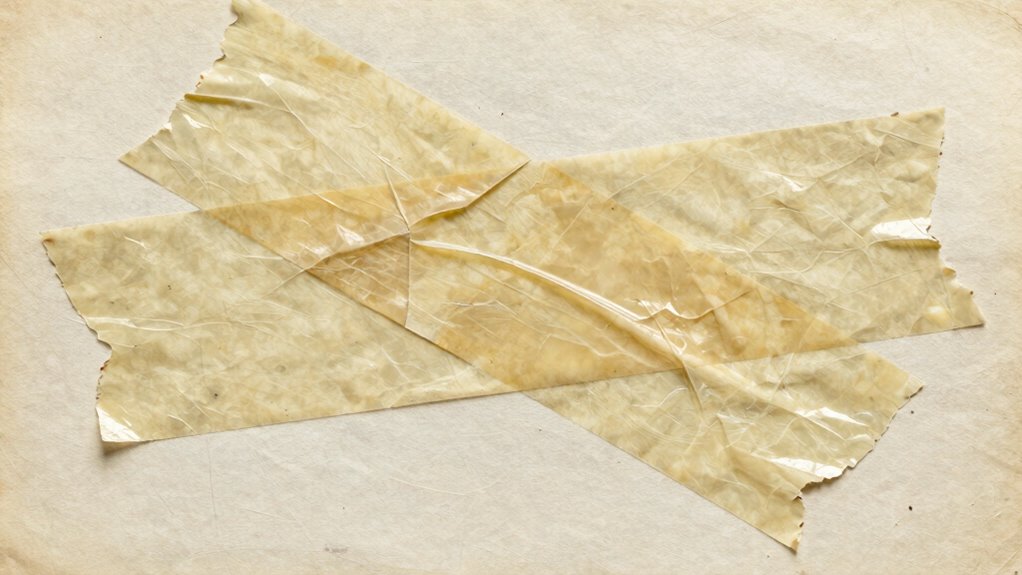
Old tape turns yellow because the adhesive’s chemical composition breaks down over time, releasing compounds that oxidize when exposed to light and air. This process, known as tape discoloration, is common in older tapes, especially non-archival types. The yellowing can transfer to your paper art, causing stains and weakening the paper’s integrity. Archival tapes are designed to resist such deterioration, but even they can discolor if stored improperly.
| Effect of Tape Discoloration | Impact on Paper Art |
|---|---|
| Stains and yellow patches | Diminished visual clarity |
| Chemical breakdown | Paper weakening |
| Loss of original color | Reduced aesthetic value |
| Increased acidity | Accelerated paper deterioration |
| Visible aging signs | Devaluation of artwork |
The Difference Between Removable and Permanent Tape for Preservation

Choosing the right tape is essential for preserving your paper art, and understanding the difference between removable and permanent tapes helps you make informed decisions.
Removable tapes have lower adhesive strength, allowing you to detach them without damaging the paper or leaving residue. Their tape backing is usually designed for easy removal, making them ideal for temporary mounting or repairs.
Permanent tapes, on the other hand, have high adhesive strength, creating a strong bond that’s difficult to remove later. Their tape backing is sturdier to support long-term adhesion.
If you want to preserve your art without risking damage, opt for removable tapes with gentle adhesive strength. Permanent tapes should only be used when a permanent attachment is necessary, as they can cause damage if removed later.
How to Protect Your Paper Art From Tape-Related Damage

Using the right type of tape is essential, but even with the best choices, improper application or removal can still cause damage to your paper art. To protect it, consider using archival tape designed specifically for preservation. Applying protective coatings, like a thin layer of conservation-grade varnish, can also shield your artwork from tape-related harm.
| Tip | Action |
|---|---|
| Use archival tape | Avoid damage from adhesive residues |
| Apply protective coatings | Create a barrier against future damage |
| Remove tape carefully | Use solvents or heat for gentle removal |
These steps help preserve your paper art’s integrity and prevent long-term deterioration caused by tape adhesives.
Frequently Asked Questions
Can Tape Damage Be Completely Reversed on Old Paper Artwork?
You can’t fully reverse tape damage on old paper artwork. Tape residue often leaves behind sticky spots, and paper discoloration can set in permanently.
While some cleaning may reduce visible tape residue, it won’t restore the paper to its original state. Over time, the adhesive causes irreversible damage, making it impossible to completely eliminate tape effects.
Preservation efforts can help, but complete reversal isn’t realistically achievable.
Are Some Tape Types Safer Than Others for Paper Preservation?
Some tape types are safer than others for paper preservation, especially those with lower adhesive strength and designed to meet archival standards. You should look for acid-free, pH-neutral tapes that won’t damage your artwork over time.
Avoid duct tape or masking tape, as their strong adhesive can cause long-term deterioration. Always choose archival-quality tapes to minimize potential harm and guarantee your paper art remains intact for decades to come.
How Does Humidity Influence Tape-Related Deterioration of Paper Art?
Humidity effects profoundly influence tape-related deterioration of paper art. High humidity weakens tape adhesion, causing it to peel or become loose over time, which damages the artwork.
Conversely, low humidity can make tape brittle and prone to cracking. Fluctuating humidity levels accelerate deterioration, as moisture changes cause expansion and contraction in the paper and tape.
Maintaining stable humidity helps preserve your art and minimizes tape-related damage.
What Are the Best Methods to Remove Tape Without Harming Paper?
To remove tape without harming paper, you should start with gentle adhesive removal techniques. Use archival solutions like acetone-free adhesive removers or specialized conservation gels, applying them carefully with a soft brush or cotton swab.
Gently loosen the tape edges, avoiding excessive force. Patience is key; avoid peeling or scraping.
If unsure, consult a professional conservator for safe, effective removal that preserves your artwork’s integrity.
Does the Age of Tape Affect Its Potential to Damage Paper Over Time?
Yes, the age of tape can increase its potential to damage paper because adhesive chemistry changes over time. Older tapes often contain non-archival adhesives that become brittle or sticky, violating archival standards.
This deterioration causes increased risk of tearing, staining, or disintegration when removed or exposed to environmental factors. To preserve your art, avoid using aged tapes and opt for archival-quality adhesives that maintain stability over decades.
Conclusion
To safeguard your paper art, avoid using tape altogether. If you must attach something, choose archival-quality, acid-free options designed for preservation. Keep your artwork in stable environments away from humidity and temperature fluctuations, and regularly check for signs of damage. Remember, tape’s corrosive properties can cause long-term harm that’s often invisible at first. By being cautious now, you’ll help guarantee your paper art stays beautiful and intact for decades to come.
Fall Picks
fall essentials
As an affiliate, we earn on qualifying purchases.