
If you’re considering whether to leave your artwork exposed or protected with glass, it’s best to shield valuable or fragile pieces in environments with dust, sunlight, moisture, or potential vandalism. Glass helps prevent physical damage, fading, and theft while enhancing display clarity. In outdoor or public spaces, protection becomes even more vital. To find out when leaving art uncovered might be acceptable and how to preserve it long-term, keep exploring these essential tips.
Key Takeaways
- Never leave fragile or sensitive artworks exposed in harsh environments prone to humidity, pollution, or sunlight to prevent deterioration.
- Use glass protection for valuable, public, or outdoor pieces to shield against vandalism, impacts, and environmental damage.
- Avoid leaving photos, textiles, or archival materials unprotected, as they are highly susceptible to fading, mold, and physical harm.
- Glass with UV filtering and anti-reflective coatings is essential for preserving colors and details, especially in well-lit or outdoor settings.
- When preservation and security are priorities, never leave art exposed; proper framing and glass protection are critical for longevity.
Why Glass Protects Your Artwork Better
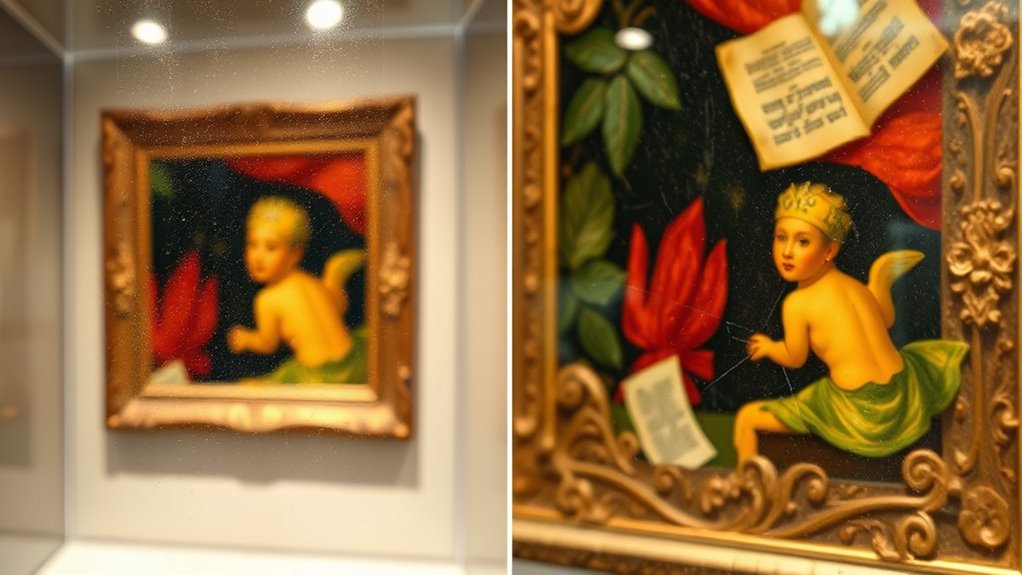
Glass offers a superior barrier against dust, dirt, and physical damage, helping to preserve your artwork over time. Its protective qualities are vital for maintaining the integrity of a museum display or any valuable piece. When you choose glass, you guarantee better glass safety by preventing scratches, chips, and accidental contact that could harm the artwork. Glass acts as a sturdy shield, reducing the risk of damage from handling or environmental factors. Unlike no glass, it creates a clear barrier that keeps pollutants and debris away, safeguarding delicate surfaces. Properly installed ventilation systems can help prevent moisture buildup behind the glass, further protecting your artwork from deterioration. Incorporating climate control measures can also ensure a stable environment, reducing risks of damage caused by fluctuations in temperature and humidity. Additionally, selecting the appropriate glass type can enhance protection against UV rays and other environmental hazards, extending the lifespan of your artwork. Using protective coatings can further enhance the durability and resistance of the glass surface against scratches and chemical damage. Implementing UV filtering options can significantly prolong the vibrancy of your artwork’s colors by blocking harmful ultraviolet light.
When Environmental Conditions Threaten Unprotected Art
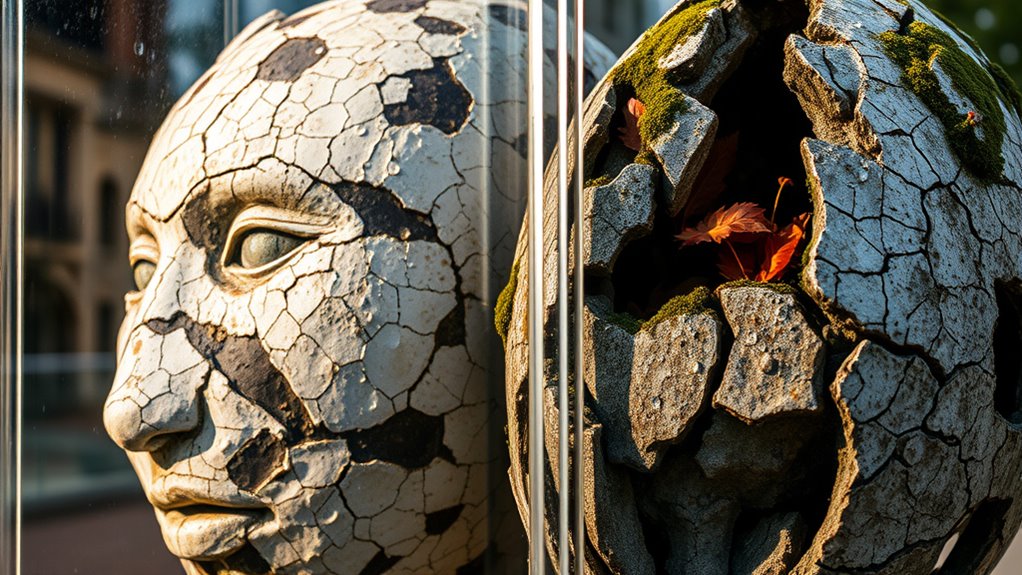
When environmental conditions become harsh, unprotected artwork faces significant risks from humidity, temperature fluctuations, and airborne pollutants. UV damage is a primary concern, as prolonged exposure to sunlight can fade colors and degrade materials over time. Sudden temperature shifts can cause expansion and contraction, leading to cracking or warping. Proper mounting techniques can also help prevent vibrations that may damage delicate surfaces. Airborne pollutants, like dust and chemicals, settle on surfaces, hastening deterioration. Pest control also becomes difficult, making artworks vulnerable to insects and rodents that can cause physical damage. Without proper protection, these factors accelerate aging and compromise integrity. Additionally, understanding art preservation methods is essential to maintain the artwork’s condition over time. Controlling environmental factors helps create stable conditions that preserve your art’s longevity. Implementing climate control systems can further stabilize temperature and humidity levels, significantly extending the lifespan of your collection. Regular environmental monitoring enables you to detect and address harmful changes promptly, safeguarding your art. To preserve your art, it’s crucial to control environmental conditions, use protective glazing when necessary, and minimize exposure to harmful elements. Acting proactively ensures your artwork remains vibrant and intact for years to come.
Which Media Need Extra Shielding
Certain types of media are more vulnerable to environmental damage and consequently require extra shielding. Fragile materials, such as old photographs, paper documents, and textile artworks, have delicate surfaces that easily deteriorate when exposed to light, humidity, or pollutants.
These items need added protection to prevent fading, warping, or mold growth. Photographs with sensitive dyes, for instance, can quickly lose their detail if not properly protected. Similarly, archival papers and fragile textiles are at risk of physical damage from handling or environmental fluctuations. Recognizing material sensitivity is crucial for determining the appropriate safeguarding measures for different art forms. Recognizing environmental hazards can help in designing effective preservation strategies to extend the lifespan of vulnerable media. Implementing proper storage conditions is essential to minimize exposure to damaging elements and ensure long-term preservation. Additionally, utilizing conservation techniques can significantly improve the durability and longevity of delicate artworks. Adopting a comprehensive preservation approach ensures that these fragile items are kept safe for future generations.
Why Glass Matters in Public Spaces
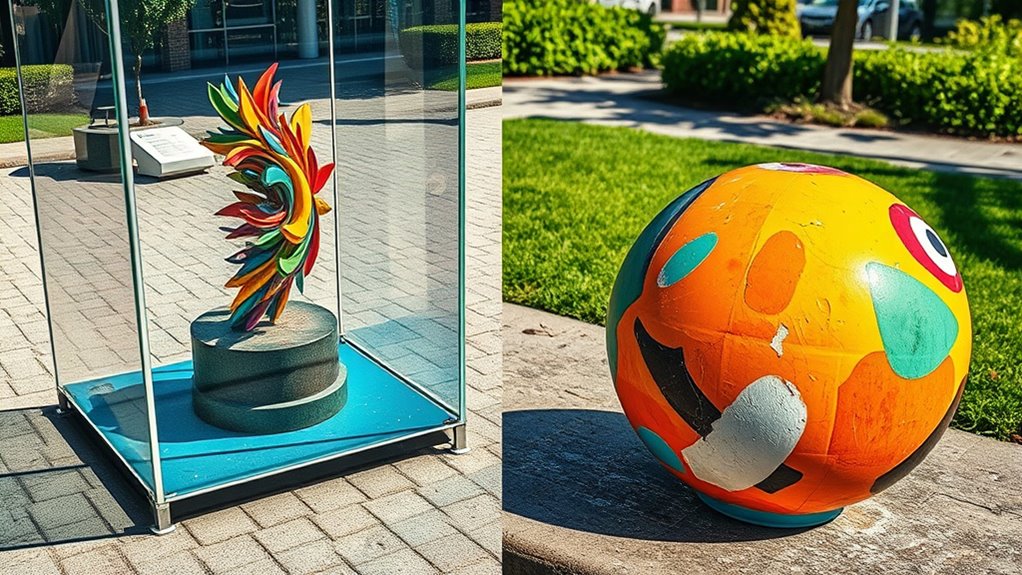
When you choose glass for public spaces, you protect artworks and displays from vandalism. It keeps these pieces clear and visible, ensuring everyone can appreciate them fully. Additionally, visual clarity is essential for enhancing the overall experience and preserving the aesthetic integrity of luxury environments. Using glass also helps maintain a safe environment by preventing accidental damage or injury, which is especially important in high-traffic areas where public safety is a top priority. Moreover, understanding market trends and insights can inform better decisions about material choices that balance visibility and protection.
Protects Against Vandalism
Glass in public spaces serves as a strong barrier against vandalism, making it harder for individuals to cause damage. It protects artwork from intentional harm and accidental impacts. Additionally, glass allows museum lighting to illuminate pieces effectively, reducing the need for harsh lighting that could encourage vandalism. Conservation techniques are easier to implement when artworks are behind glass, as it provides a physical barrier that discourages direct contact. This added layer of security helps preserve the integrity of the art for longer periods. Proper installation of protective barriers like glass is essential for maintaining the longevity and aesthetic quality of public art collections. By preventing scratches, spray paint, or other destructive acts, glass guarantees that public displays remain intact and visually appealing. Moreover, security enhancements such as reinforced or shatterproof glass can further deter vandalism and protect valuable cultural assets. Implementing advanced security measures can also serve as a proactive approach to safeguarding artworks from theft or damage. Incorporating modern protective technology can significantly increase the safety of exposed art pieces.
Maintains Artwork Clarity
Clear visibility is essential for appreciating public artwork, and glass plays a pivotal role in maintaining that clarity. It reduces glare, reflections, and dirt buildup, ensuring your view remains sharp. When choosing frame styles, opt for minimalistic options that don’t distract from the art’s details. Lighting considerations are also critical; proper lighting enhances vibrancy without causing reflections on glass surfaces. The right combination of glass and lighting allows viewers to see every nuance clearly. Additionally, selecting appropriate lighting techniques can further reduce glare and highlight details effectively, especially when considering anti-reflective coatings that improve overall visibility. Incorporating glare reduction methods can also optimize viewer experience by minimizing disruptive reflections.
How Glass Prevents Damage and Vandalism
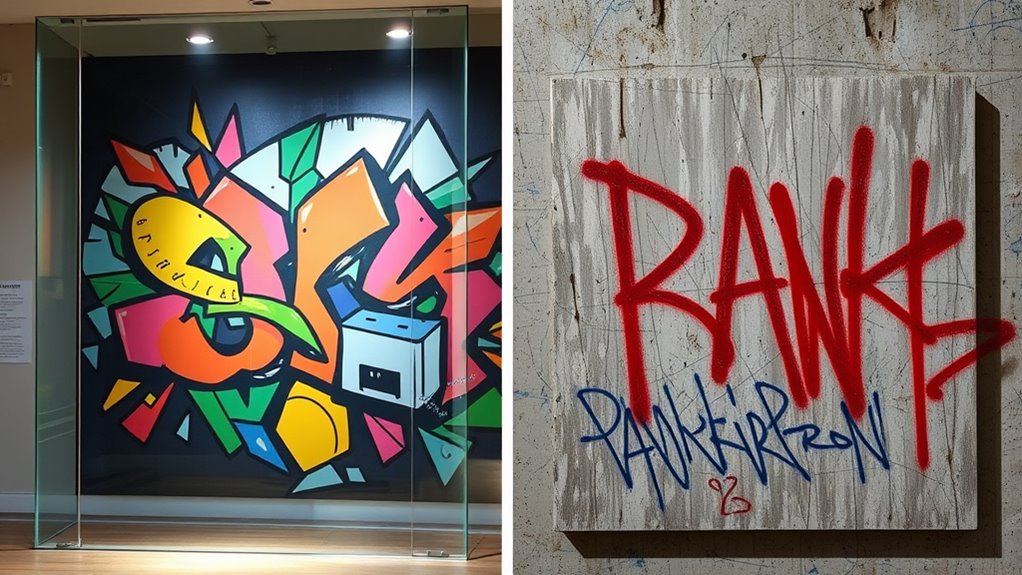
Glass acts as a barrier that shields surfaces from weather damage like rain and wind. It also makes it harder for vandals or thieves to break in or cause harm. Additionally, temperature control is maintained more effectively behind glass, protecting delicate art from heat fluctuations.
Protects From Weather Elements
Because it acts as a barrier against the elements, glass helps protect your property from weather-related damage and vandalism. It shields your art from harmful UV rays, preventing fading and deterioration over time.
Glass also offers temperature regulation, reducing the impact of extreme heat or cold and maintaining a stable environment for your artwork. By blocking rain, snow, and wind, it prevents water damage, corrosion, and physical wear.
This barrier minimizes exposure to moisture, dirt, and debris that can cause long-term harm. With glass, you create a controlled environment that preserves your art’s integrity, ensuring it stays vibrant and intact despite changing weather conditions.
Fundamentally, glass acts as a durable shield, safeguarding your collection from nature’s unpredictable forces.
Deters Vandalism and Theft
While vandalism and theft pose ongoing threats to valuable artwork, installing glass barriers considerably reduces the risk. Glass acts as a physical deterrent, making it harder for vandals to damage or steal pieces that hold cultural significance. It preserves artistic expression by protecting the integrity of the artwork, ensuring it remains accessible for future generations. Additionally, glass barriers can be equipped with security features like alarms or shatterproof materials.
| Benefit | Explanation |
|---|---|
| Physical barrier | Prevents direct contact and tampering |
| Deterrent to vandals | Visual reminder of surveillance and security |
| Preserves cultural value | Ensures artwork remains intact and accessible |
The Dangers of Leaving Valuable Art Unprotected
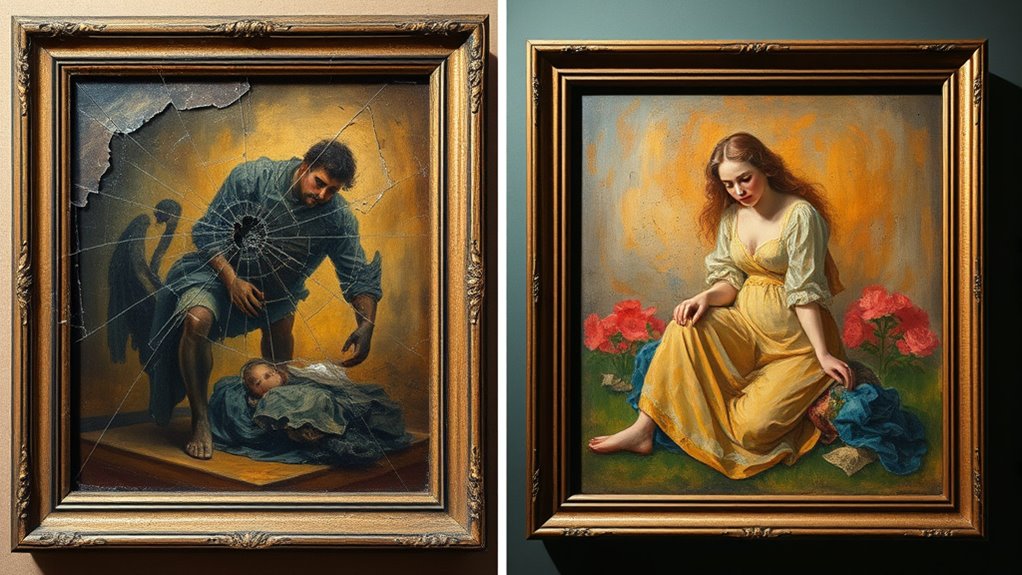
Leaving valuable art unprotected considerably increases the risk of theft, damage, or deterioration. Without proper safeguards, your artwork becomes vulnerable to accidental bumps, scratches, or environmental factors that can accelerate deterioration.
Over time, exposure to dust, pollutants, and humidity can compromise art conservation efforts, making restoration more difficult and costly. Ignoring protective measures also threatens display aesthetics, as smudges, fingerprints, or fading can diminish visual impact.
Leaving art exposed sends a message that it’s not valued or cared for, increasing the likelihood of mishandling or vandalism. To preserve both its beauty and value, you need to contemplate appropriate protection, whether through glass or alternative solutions, ensuring your artwork remains in pristine condition for years to come.
When Outdoor or Humid Settings Call for Glass
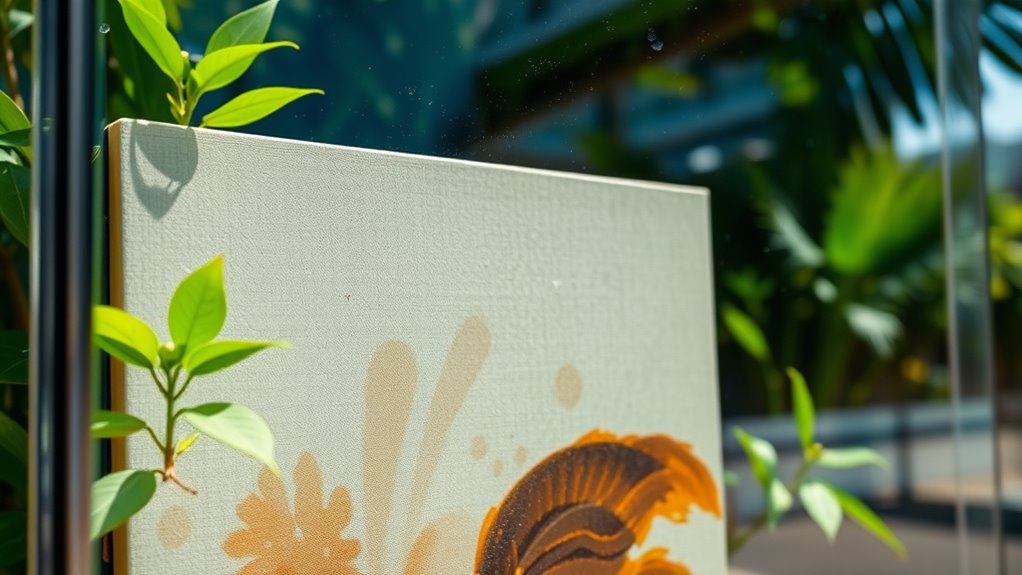
In outdoor or humid environments, protecting artwork becomes even more important to prevent damage. Glass with UV protection helps block harmful ultraviolet rays that can fade colors and weaken materials over time. It also aids in temperature regulation, reducing the risk of warping or cracking caused by temperature fluctuations.
When you choose glass for outdoor or humid settings, you create a barrier against moisture, dust, and pollutants that can accelerate deterioration. This added layer ensures your art stays vibrant and intact longer.
Keep in mind, selecting the right type of glass with UV protection and proper sealing helps maintain the artwork’s integrity, even in challenging environments. Ultimately, using glass in these settings is a smart way to preserve your art against the elements.
How Glare and Reflections Can Hurt Viewing
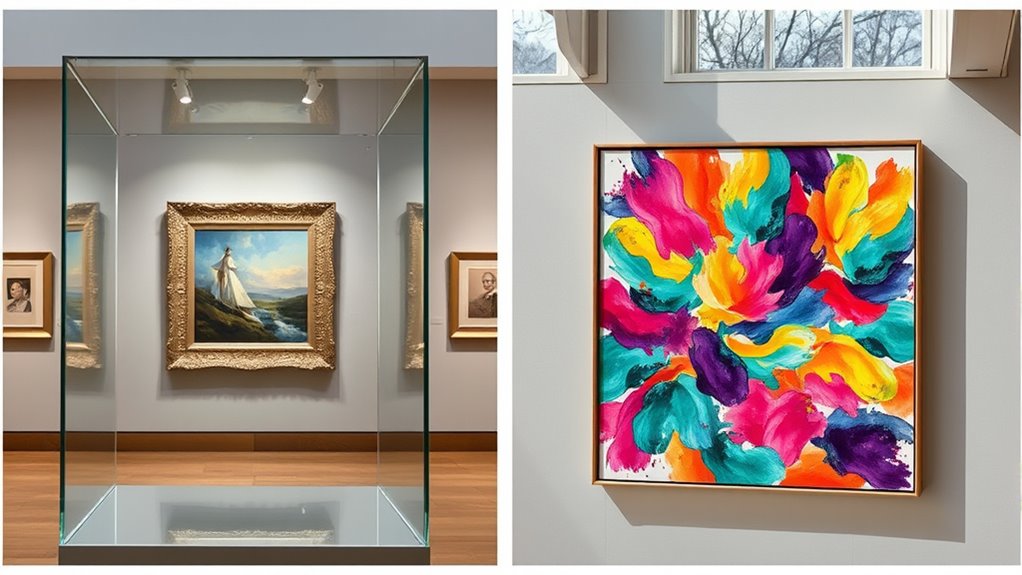
Glare and reflections can considerably hinder your ability to appreciate artwork, especially when viewing through glass. They cause unwanted light spots and distort your view, making it difficult to see details clearly.
Reflections from surrounding lights or windows can distract you and obscure the artwork’s true colors. Additionally, UV damage from prolonged exposure to light can accelerate fading and color distortion over time, even if the glass is UV-protective.
When glare is intense, it can wash out subtle tones and textures, diminishing your overall experience. To fully enjoy the piece, minimizing glare and reflections is essential.
Without proper consideration, these visual obstructions can substantially reduce the impact of the artwork, robbing you of its intended beauty and depth.
What to Consider for Long-Term Artwork Preservation
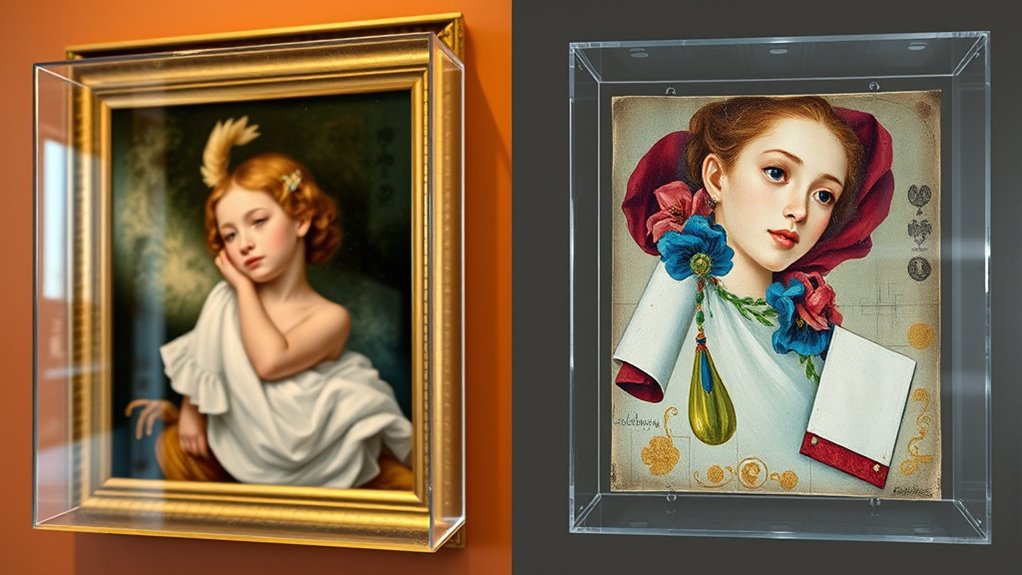
To make certain your artwork remains vibrant and intact over time, you need to take into account several key factors. Framing aesthetics play a vital role in how your piece is protected and displayed, influencing both its appearance and longevity.
Choosing between glass and no glass depends on your priorities for protection against dust, UV rays, and physical damage. You should also consider cost considerations; glass options vary in price, and high-quality UV-protective glass can be an investment but helps preserve colors and materials.
Additionally, think about environmental factors like humidity and light exposure, which impact long-term preservation. Balancing these factors ensures your artwork stays beautiful and well-preserved for years, whether you opt for glass or a more exposed display.
Frequently Asked Questions
How Does Glass Impact the Viewing Experience of Artwork?
Glass enhances your viewing experience by providing artistic clarity and protecting the artwork. It reduces glare, allowing you to see details clearly without reflections obscuring the piece.
When you use glass, you get a better sense of the colors and textures, making the art more vivid and engaging. Overall, glass creates a barrier that preserves the artwork while still letting you appreciate its full beauty without distraction.
Can Non-Glass Alternatives Offer Similar Protection Levels?
Non-glass alternatives like acrylic or polycarbonate can offer similar protection levels, especially when they include UV protection and anti-reflective coatings. These options are lightweight, shatter-resistant, and provide effective defense against UV rays that damage artwork.
However, verify they’ve high-quality coatings to minimize glare and reflections, so your viewing experience remains clear and true to the art. Properly chosen alternatives can match glass’s protective benefits effectively.
What Are the Costs Associated With Glass Versus No Glass?
You’ll find that glass options often have higher initial costs due to premium materials and installation expenses, compared to no glass alternatives, which tend to be cheaper upfront.
However, consider the long-term cost comparison; glass provides better protection, potentially saving you money on repairs or replacements.
No glass options might lower installation expenses but could lead to higher maintenance costs if your art gets damaged, so weigh both factors carefully.
How Does Glass Affect the Long-Term Preservation of Art?
Glass considerably benefits the long-term preservation of your art by filtering UV rays and reducing light damage.
An anti-reflective coating minimizes glare, making viewing easier without harming the piece.
This protection helps prevent fading, discoloration, and deterioration over time.
Are There Specific Types of Glass Recommended for Art Protection?
You should opt for specialized glass like Museum Glass or UV-filtering acrylic for art protection.
Look for glass with UV protection to block harmful rays that fade colors over time.
Anti-reflective coatings reduce glare, making your art easier to view without distortion.
These features help preserve your artwork’s vibrancy and integrity, ensuring it stays beautiful for years to come.
Always choose high-quality, purpose-designed glass for long-term art preservation.
Conclusion
Choosing to safeguard your artwork with glass is essential for its longevity. It shields against environmental threats, prevents damage and vandalism, and ensures your pieces stay vibrant over time. While glare and reflections can be drawbacks, proper placement and quality glass can minimize these issues. If you want your art to remain pristine and appreciated for years to come, never underestimate the importance of a good glass barrier. It’s the best choice for long-term preservation.