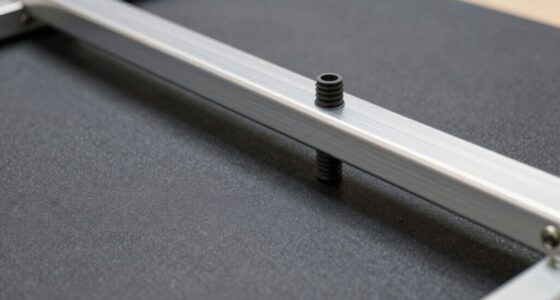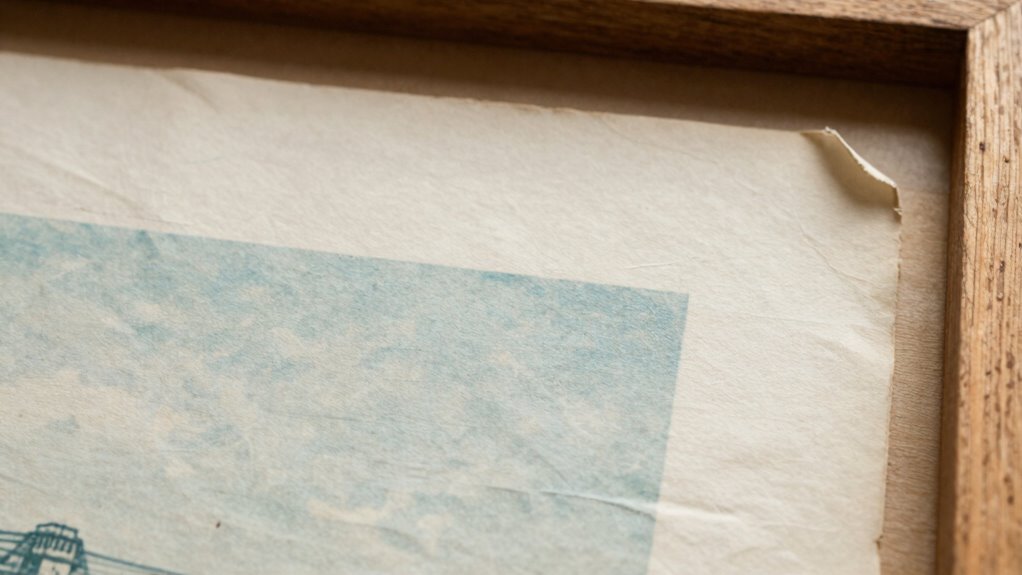

You might notice prints curling, cockling, or shifting in a frame because environmental changes, like fluctuating humidity and temperature, cause moisture buildup in the paper. Improper framing methods, such as sealing or tight glass, can trap moisture and add pressure, worsening the damage. Lighter or acidic papers tend to respond more negatively. Using proper materials and techniques helps prevent this. If you want to understand how to better protect your artwork, keep exploring these key factors.

Prime made for students and young adults
- Fast, free delivery for dorm and study essentials
- Prime Video and Amazon Music included
- Member-only deals
Key Takeaways
- Fluctuating humidity and temperature cause paper to expand or contract, leading to curling or shifting.
- Improper framing methods trap moisture, resulting in cockling or warping of the print.
- Using aggressive adhesives or tight glass applies pressure, increasing the risk of deformation.
- Lightweight, acidic papers are more susceptible to environmental changes, causing curling or cockling.
- Lack of proper ventilation and environmental control accelerates moisture buildup and paper movement.
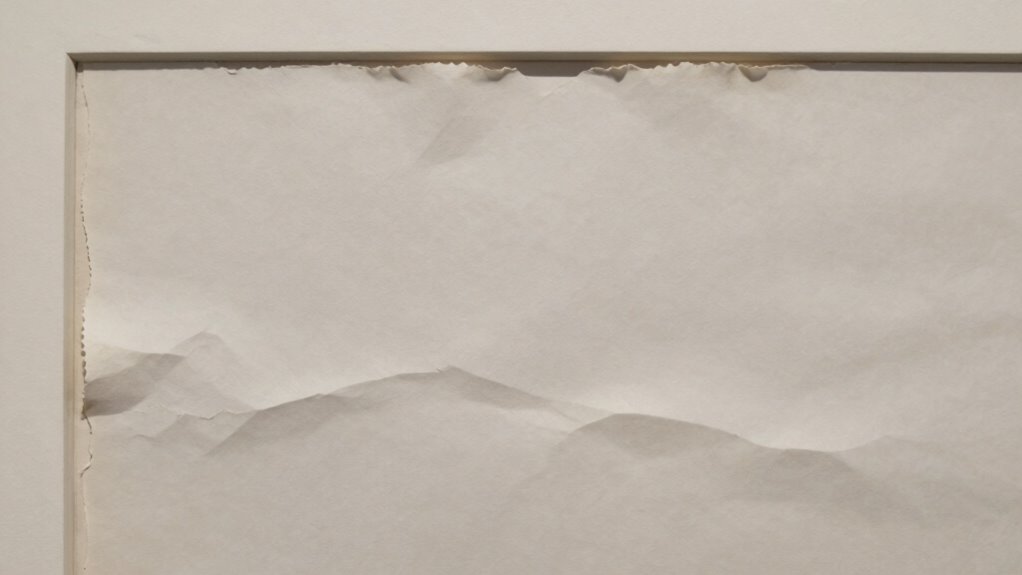
When prints in a frame start to curl, cockle, or shift, it’s usually a sign that environmental conditions or framing methods are causing stress on the paper or artwork. The type of paper you choose plays a significant role in how well your print holds up over time. For example, thicker, acid-free papers tend to be more resistant to warping and cockling because they’re designed to withstand moisture and environmental changes better than thinner, acidic papers. If you’ve used a delicate, lightweight paper, it’s more likely to respond negatively to fluctuations in humidity or temperature.
Your framing techniques also have a big impact on the stability of your prints. Improperly sealing or mounting your artwork can trap moisture, leading to curling or cockling. For instance, using aggressive adhesives or glass that’s too tight can create pressure points or restrict the natural movement of the paper. Conversely, framing with proper spacers and using archival mounting methods allows the paper to breathe and reduces stress. It’s essential to contemplate the type of backing and whether you’re using matting or framing directly on the surface, as these choices influence how the paper reacts to environmental changes. Additionally, understanding environmental conditions and their effects on paper can help you better care for your artwork in different settings. A stable environment with controlled humidity and temperature is key to preventing damage over time. Proper ventilation can also reduce the risk of moisture buildup and prolonged exposure to humidity, which can contribute to paper deterioration.
As an affiliate, we earn on qualifying purchases.
Frequently Asked Questions
Can Certain Paper Types Prevent Curling or Cockling?
Yes, certain paper types can prevent curling or cockling. Look for papers with specific coatings designed to control moisture absorption and improve dimensional stability. Coated papers often perform better on printing presses because their surface reduces uneven ink absorption, minimizing deformation. Choosing the right paper with appropriate coatings guarantees your prints stay flat and stable, preventing issues like curling, cockling, or shifting in frames.
How Does Humidity Affect Print Stability Over Time?
Humidity can turn your print into a runaway train, causing warping or shifting over time. You need to control humidity to keep your print stable; too much moisture makes the print material swell, while too little causes it to crack or curl. Proper humidity control maintains a steady environment, ensuring your prints stay flat and true, preserving their beauty and integrity for years to come.
What Role Does Ink Type Play in Print Warping?
Your choice of ink type considerably influences print warping because different inks absorb into paper differently. For example, solvent-based inks tend to absorb quickly and dry faster, reducing the risk of curling caused by excess moisture. On the other hand, slow-drying inks can lead to uneven absorption, increasing warping. Ensuring proper ink absorption and optimizing drying time helps maintain flat, stable prints, preventing curling or shifting in frames.
Are There Specific Framing Techniques to Avoid Shifting?
You can prevent shifting by ensuring proper frame tension and using glass protection. Tighten the frame evenly to keep the print flat, avoiding loose areas that cause movement. Adding a UV-protective glass not only shields your artwork from damage but also stabilizes the print, reducing warping. Coincidentally, these techniques work together to maintain your print’s position and appearance, giving you a beautifully preserved piece that stays secure over time.
How Can I Fix Curled or Shifted Prints Without Damage?
To fix curled or shifted prints without damage, gently flatten them using a clean, damp cloth and press them with a weight under archival storage conditions. Avoid direct heat or excessive moisture. For best print preservation, handle prints with cotton gloves and store them in acid-free materials. Proper framing techniques, like UV glass and a stable environment, help prevent future shifting or curling.
As an affiliate, we earn on qualifying purchases.
Conclusion
Understanding why prints curl, cockle, or shift helps you troubleshoot and prevent future issues. By keeping your paper dry, controlling humidity, and choosing the right printing settings, you can keep your prints smooth and aligned. Think of your printer as a delicate dance partner—if you don’t maintain its balance, the results suffer. With a little care, you’ll ensure your prints stay perfect, turning every project into a masterpiece rather than a misstep.
humidity control for framed prints
As an affiliate, we earn on qualifying purchases.
As an affiliate, we earn on qualifying purchases.
framing glass with breathing space
As an affiliate, we earn on qualifying purchases.
As an affiliate, we earn on qualifying purchases.
Fall Picks
fall essentials
As an affiliate, we earn on qualifying purchases.