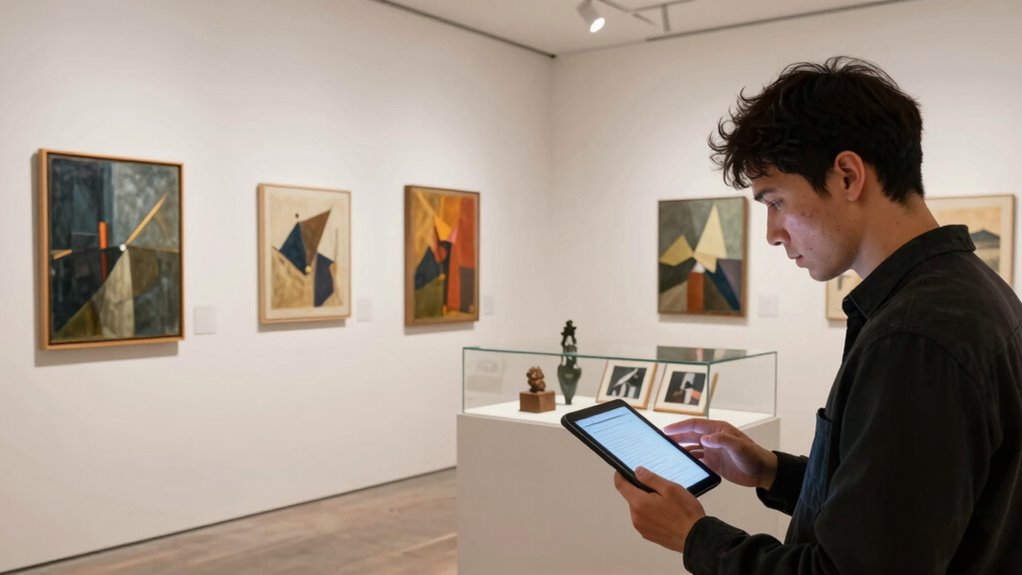

Gallery representation offers you a formal partnership where the gallery promotes, sells, and exhibits your work, boosting exposure and expanding your network. In exchange, you typically give up some control over pricing, promotion, and artistic choices, and agree to gallery commissions—usually around 40-50%. While this can boost your career and visibility, it may also limit your creative independence. Want to understand exactly what you’ll get—and what you might give up? Keep exploring to learn more.
Key Takeaways
- Artists gain exposure, marketing support, and sales opportunities by partnering with galleries.
- In return, they often give up a percentage of sales (typically 40-50%) as commission to the gallery.
- Gallery contracts may impose restrictions on artistic choices, subject matter, or promotional activities.
- Artists retain copyright and control over their work, unless the gallery requests rights transfer.
- Collaboration with galleries can enhance career growth, but may limit artistic independence and flexibility.
Americanflat Kids Artwork Frame Changeable (Black) – Magnetic Door Holds 100 Art Pieces – 8.5×11 Letter Size Display with Mat or 10×12.5 Without Mat – My Mini Masterpiece
Turn every drawing, doodle, and masterpiece into a gallery-worthy showcase with our frames for kids' artwork. Matted for…
As an affiliate, we earn on qualifying purchases.
As an affiliate, we earn on qualifying purchases.
What Is Gallery Representation and How Does It Work?
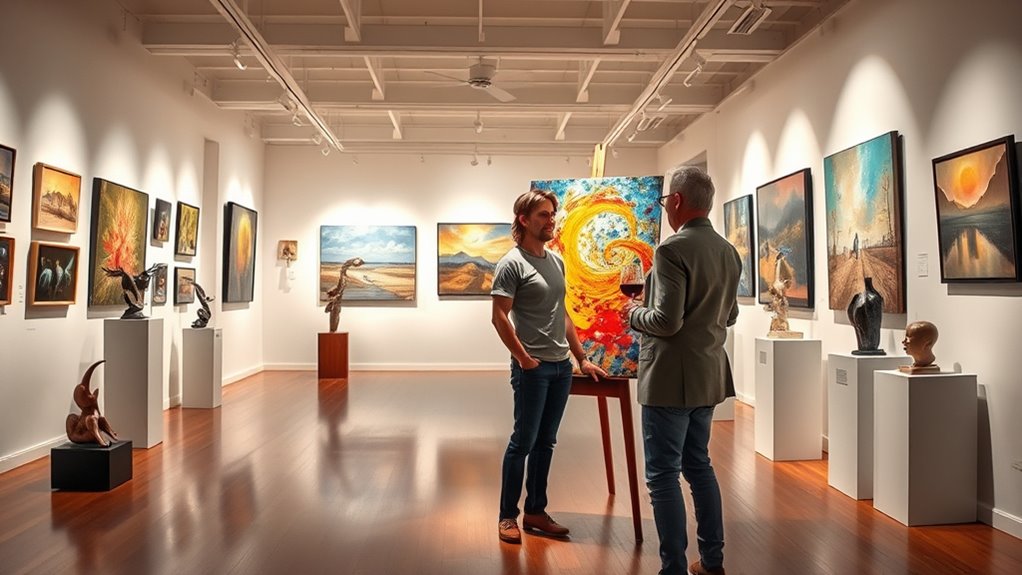
Have you ever wondered how artists get their work displayed in galleries? Gallery representation involves a formal relationship where a gallery promotes and sells your artwork. When you’re represented, the gallery acts as your agent, handling sales, marketing, and exhibitions. However, this often means sacrificing some artistic independence since galleries may influence your creative choices to suit their clientele. You’ll also need to understand gallery fees, which typically include commissions on sales—usually around 50%. These fees cover the gallery’s expenses like staffing, marketing, and exhibition costs. While this arrangement can boost your exposure, it’s essential to weigh the benefits of gallery support against the potential loss of control and the financial commitments involved. Additionally, understanding artistic independence is crucial, as it may be affected by the gallery’s preferences and market demands. It’s also helpful to consider how galleries operate and what to expect from their promotional strategies. Moreover, knowing how diversification of exposure can influence your career growth helps artists make more informed decisions about gallery relationships. Gaining insight into market trends can further assist artists in aligning their work with current demands and maximizing opportunities. Being aware of the art market dynamics can also help artists anticipate shifts and adapt their strategies accordingly.
Make Market Diamond Art Tool Kit, 54-Bottle Storage & Stylus Set, Gray/Clear, 10.4" x 6.6" x 5", 100+ Pieces
Gray case with clear top
As an affiliate, we earn on qualifying purchases.
As an affiliate, we earn on qualifying purchases.
How Can Galleries Help Promote Your Artwork?
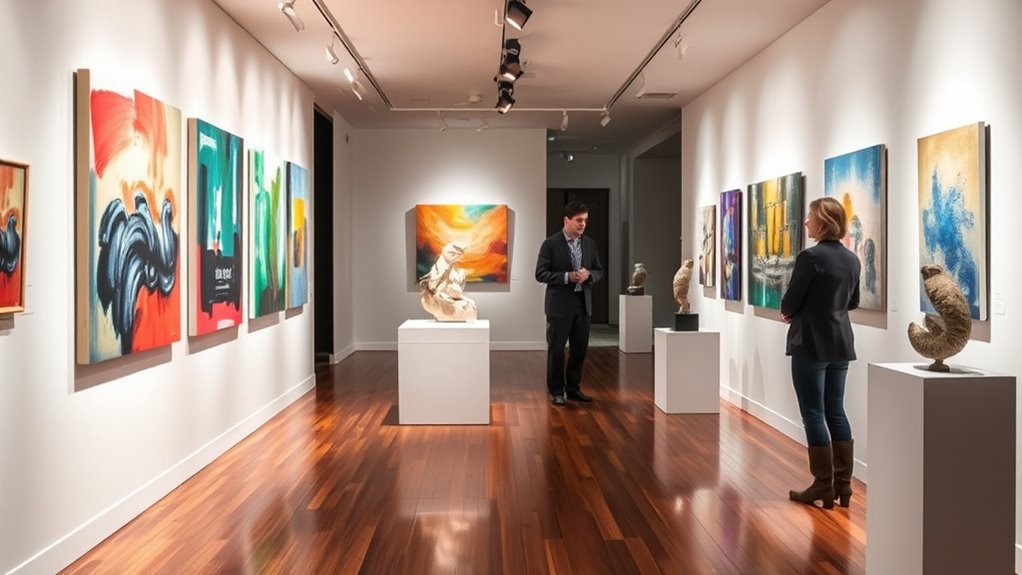
Galleries can give your artwork broader exposure by showcasing it to a wider audience and attracting new collectors. They also provide professional marketing support, helping you reach the right buyers through curated events and online promotion. This increased visibility can lead to more opportunities for sales and recognition within the art community, especially when combined with curated exhibitions and targeted outreach. Additionally, galleries often employ visual marketing techniques that enhance the presentation and appeal of your work to potential buyers. Understanding artwork presentation and how it impacts viewer perception is crucial for maximizing the effectiveness of these marketing efforts. Recognizing the importance of art branding can further strengthen your artistic profile and appeal to prospective clients, ultimately fostering a consistent and memorable artistic identity.
Broader Exposure Opportunities
By showcasing your artwork in reputable galleries, you can considerably increase your visibility to a broader audience. Galleries often facilitate studio collaborations, connecting you with other artists or professionals that can amplify your reach. They also participate in online exhibitions, allowing your work to be seen by viewers worldwide without geographical limitations. These platforms help you attract interest from collectors, critics, and new fans, expanding your audience beyond local circles. Additionally, galleries’ established networks and relationships with media outlets can lead to features or interviews, further broadening exposure. Incorporating innovative European cloud servers can enhance the digital presentation and security of your online portfolio, ensuring sustainable and secure exposure for your artwork. Leveraging digital platforms can further extend your reach, making your art accessible to a global audience anytime. Utilizing digital marketing strategies can also help target specific audiences and increase engagement with your artwork. Moreover, understanding artistic branding can help you craft a compelling narrative that resonates with a wider audience and attracts potential buyers. Integrating secure data storage solutions can protect your digital assets and maintain the integrity of your online presence.
Professional Marketing Support
Wondering how galleries can boost your artwork’s promotion? They provide professional marketing support that elevates your visibility while helping you maintain artistic independence. Galleries often have established networks, press contacts, and marketing channels that you mightn’t access alone. They handle promotional activities like press releases, social media campaigns, and exhibition planning, allowing you to focus on creating. This support strengthens your personal branding, presenting a cohesive and professional image to collectors and the public. By partnering with a gallery, you gain marketing expertise without sacrificing your artistic voice. The gallery’s promotional efforts help attract new audiences and increase sales, all while you retain control over your creative process. Additionally, understanding concepts like Free Floating can help you navigate your options for exhibiting your work without being tied to specific physical or thematic constraints. Recognizing the importance of sustainable practices in the art industry can further enhance your appeal to environmentally conscious collectors and institutions. Incorporating local traditions and regional influences into your work can also resonate more deeply with audiences and elevate your artistic profile. Developing a clear understanding of project management support can help you better collaborate with galleries and streamline your exhibition process. Building awareness of industry standards can also ensure your work aligns with professional expectations and increases your credibility. Ultimately, they act as a powerful amplifier for your artistic journey.

Aredpoook 6 Pack Acrylic Book Stand, Clear Easel Stand for Display, Book Display Holder, Display Stand for Album, CD, Magazine, Postcard, Picture, Plate, Artworks, Phone, Tablet
Clear Book Stand: Unlike the inferior wood and metal display stands on the market, our book stand is…
As an affiliate, we earn on qualifying purchases.
As an affiliate, we earn on qualifying purchases.
What Benefits Come From Partnering With a Gallery?
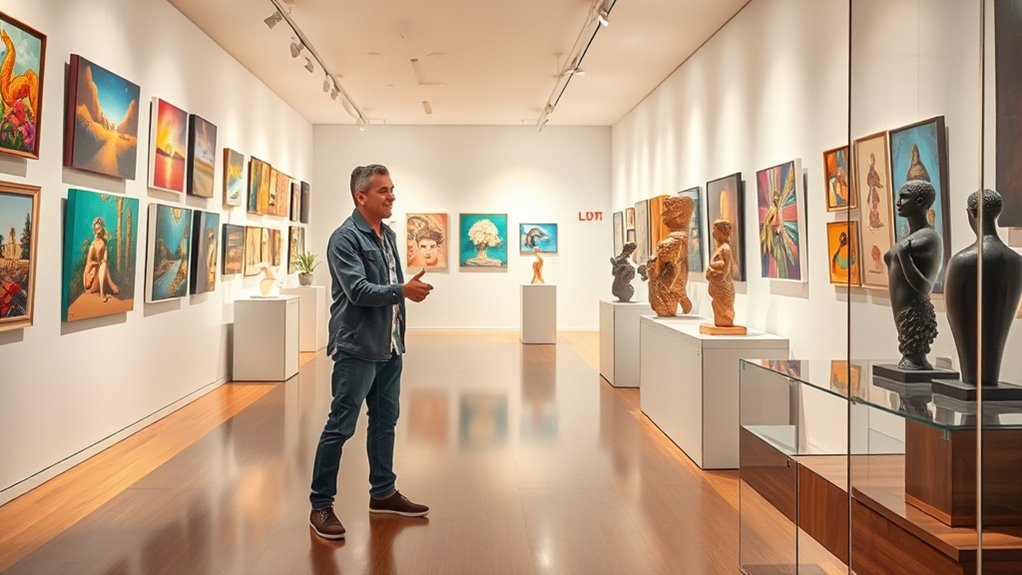
Partnering with a gallery offers artists numerous advantages that can considerably boost their careers. It provides access to artistic collaboration, expanding your creative horizons through shared ideas and projects. A good gallery also simplifies gallery selection, helping you find spaces that align with your style and goals. This relationship can serve as a career catalyst, opening doors to new opportunities and networks. Additionally, galleries often handle the logistics of exhibitions, allowing you to focus on your art. The table below highlights key benefits: Floating on Water can be a metaphor for the fluidity and adaptability required in navigating gallery relationships and art markets. Moreover, collaborating with galleries can support imaginative play, inspiring new ways to approach your work and connect with audiences. Understanding the artistic terminology involved can also empower you to communicate more effectively with gallery professionals and collectors, making market navigation an essential skill for artists.

Novabright 5 Pcs Mini Leopard Print Branding Irons for Personalized Crafts Make Your Own Brand Iron Artwork for Branding Hats Leather Wood Felt Cowhide
Package Includes: 5 mini leopard print branding irons, 5 different designs for your use; You can create your…
As an affiliate, we earn on qualifying purchases.
As an affiliate, we earn on qualifying purchases.
How Do Galleries Expand Your Audience and Network?
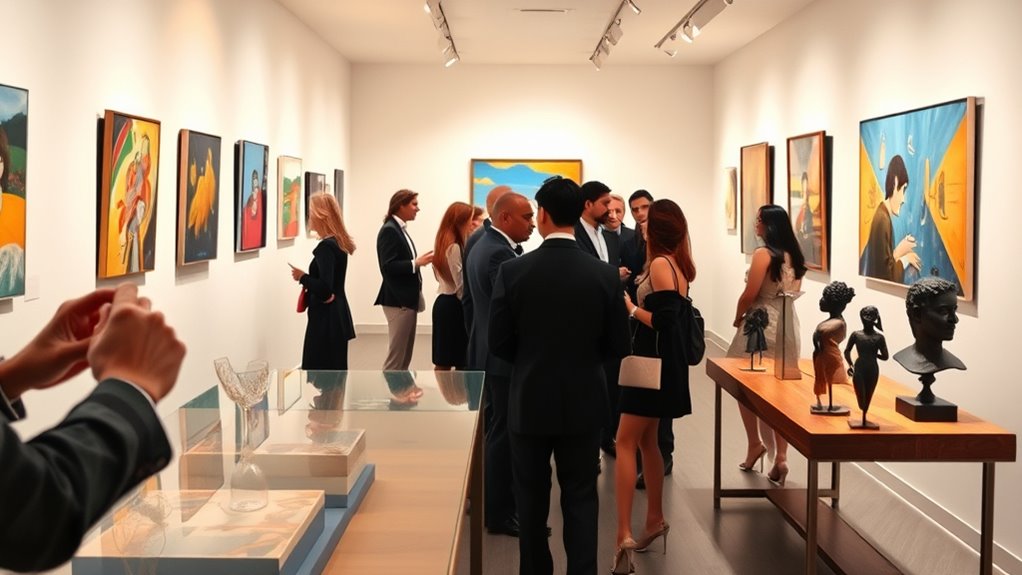
Have you ever considered how galleries serve as powerful gateways to new audiences? When you partner with a gallery, they leverage their industry connections, marketing channels, and event spaces to showcase your work to broader audiences. This exposure helps you reach collectors, critics, and art enthusiasts you mightn’t access alone. Best gelato in Laguna Beach can also serve as a metaphor for how galleries introduce your art to diverse viewers, enhancing your reputation. Galleries also help you expand your network by connecting you with other artists, curators, and gallery owners, opening doors for collaborations and future opportunities. Importantly, working with a gallery can support your artistic independence and creative freedom by handling the promotion and sales logistics, allowing you to focus on creating. Ultimately, a gallery’s network acts as a catalyst, amplifying your visibility and helping you grow your reputation within the art world.
What Are the Financial Terms of Gallery Commissions?
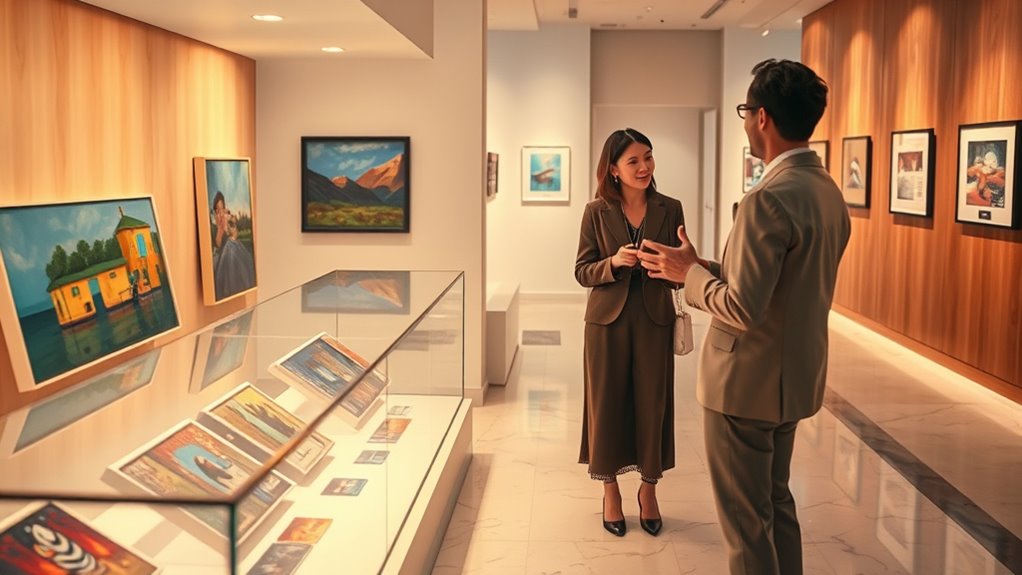
When working with a gallery, understanding the financial terms of their commissions is key to managing your income and expectations. Typically, galleries charge a commission rate that’s a percentage of your sale price, often ranging from 40% to 50%. This fee covers gallery expenses like marketing, exhibition space, and sales support. Here’s a simple overview:
| Sale Price | Gallery Fees (Commission Rate) | Artist Receives |
|---|---|---|
| $1,000 | 50% | $500 |
| $2,000 | 40% | $1,200 |
| $3,000 | 45% | $1,650 |
Knowing these figures helps you plan your pricing and understand your net earnings from each sale.
Do Galleries Limit Your Creative Freedom?
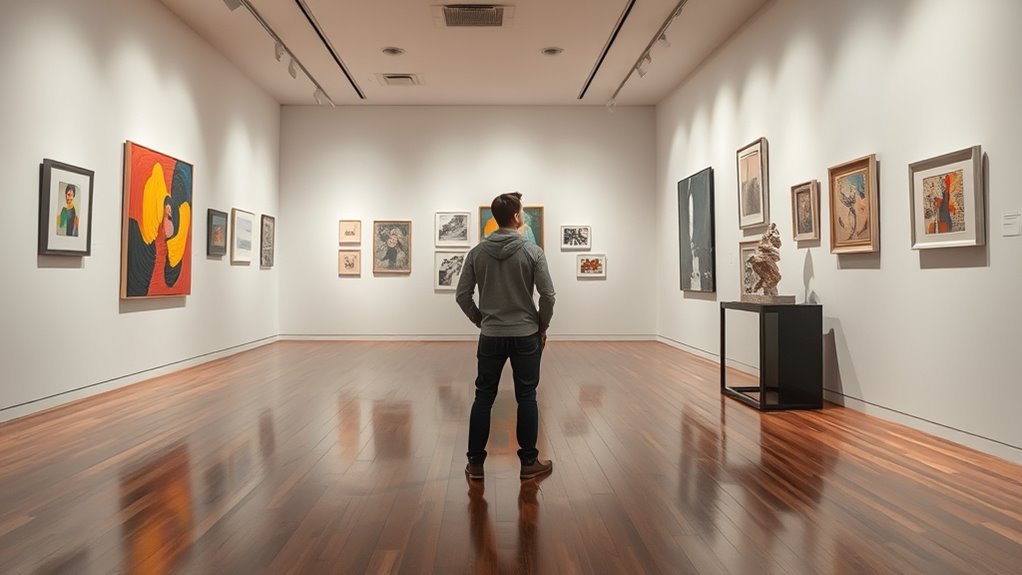
Galleries often set certain boundaries on your creative freedom to guarantee their brand and vision are maintained. While they support your work’s exposure, they may also influence your artistic control, shaping the types of projects they want to showcase.
This can result in restrictions on subject matter, style, or medium, limiting how freely you express yourself. You might find yourself adjusting your ideas to align with the gallery’s preferences or audience expectations.
Although these boundaries are meant to ensure consistent branding, they can feel like constraints on your artistic autonomy. It’s essential to weigh whether the gallery’s vision aligns with your own creative goals or if you prefer to maintain full artistic control without external influence.
What Should You Know About Ownership Rights?
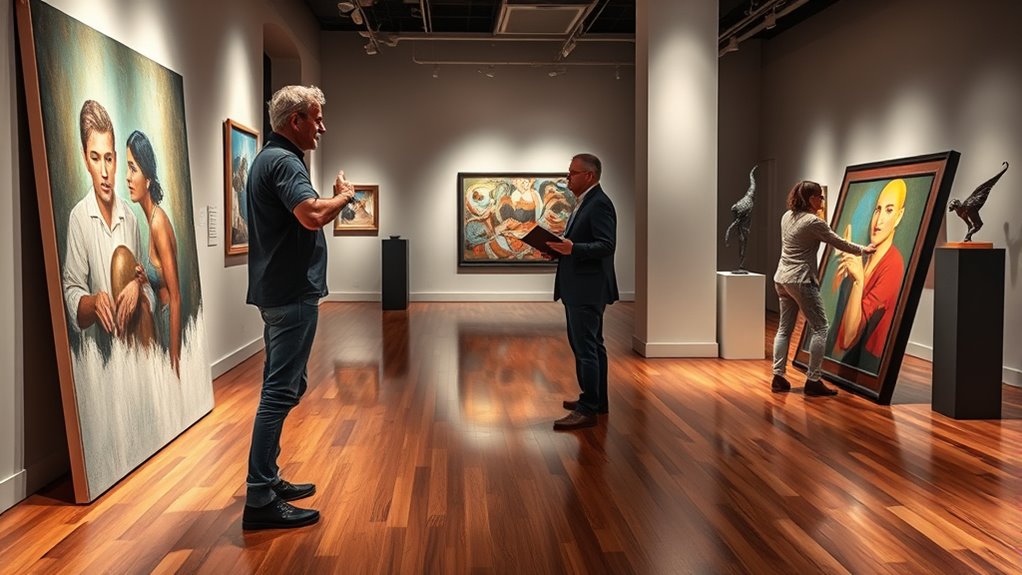
Understanding your ownership rights is essential when working with galleries. You need to know who holds copyright, what rights you keep, and how licensing or usage terms might affect your artwork.
Being clear on these points helps you protect your creative work and control how it’s used.
Copyright Ownership Details
Have you ever wondered who holds the rights to your artwork once it’s created? When working with a gallery, it’s essential to understand ownership rights and how copyright transfer works.
Typically, unless you specify otherwise, you retain copyright ownership of your art. However, some galleries may request a copyright transfer, meaning you give up certain rights, like reproduction or exhibition privileges.
Always read your contract carefully to see what rights you’re granting and what you retain. Clarify whether the gallery has permission to reproduce your work for promotional purposes or sell prints.
Knowing the details about copyright ownership helps you protect your creative rights and ensures you’re fully aware of what you’re giving up or keeping in the gallery agreement.
Rights Retained by Artists
When working with galleries, it’s essential to know which rights you retain over your artwork. Typically, you want to make sure that any exclusive contracts don’t strip you of your artist autonomy.
An exclusive contract might give the gallery sole rights to sell your work within a certain territory or timeframe, but you should clarify that you still hold ownership and the right to create new pieces. Retaining these rights allows you to reproduce, display, or sell your work independently or through other channels.
Be aware of what rights you’re giving up versus what you keep. Protecting your artist autonomy ensures you maintain control over your creative output and future opportunities, even while your work is represented by a gallery.
Licensing and Usage Terms
What exactly do licensing and usage terms mean for your artwork’s ownership rights? When you license your work through a gallery, you’re granting specific rights via image licensing agreements, which detail how your art can be used. These agreements often include usage restrictions, limiting how and where your artwork appears, such as in promotional materials or online platforms.
Understanding these terms is essential because they define whether the gallery can reproduce, display, or sell your art and whether you retain any rights afterward. Sometimes, galleries negotiate rights to use your images for marketing or sales purposes, so it’s important to clarify what rights you’re giving up and what you keep.
Being aware of these licensing and usage terms helps you protect your ownership rights while collaborating effectively with galleries.
How Can Gallery Relationships Boost Your Career?
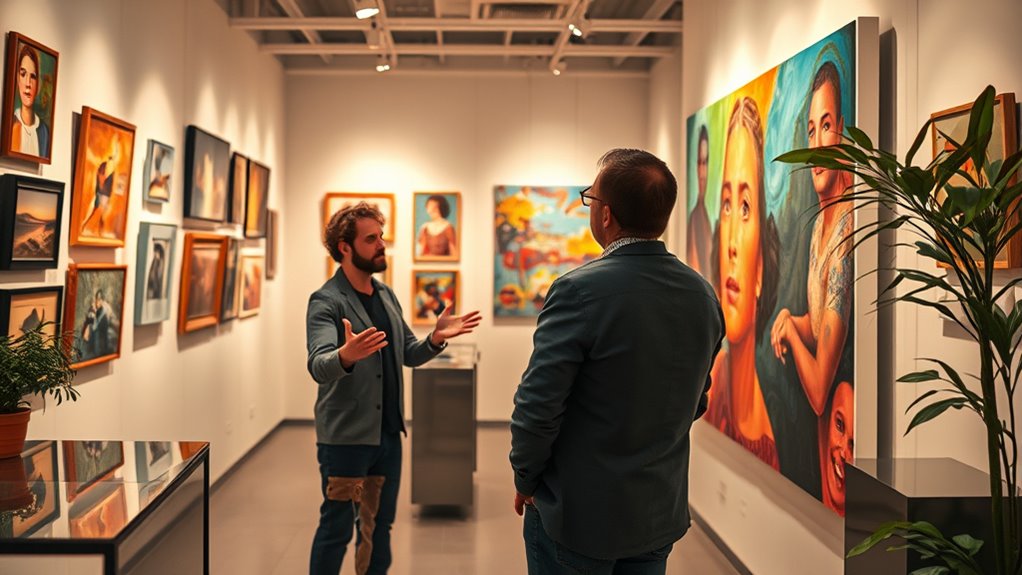
Building strong relationships with gallery owners can substantially boost your artistic career. When you cultivate trust and communication, galleries may actively promote your work, expanding your exposure and sales. This support can lead to more opportunities, such as exhibitions and collaborations, which boost your reputation.
Working with a gallery also helps you navigate the art market more effectively, keeping your artistic independence intact while benefiting from their expertise. Although gallery fees are part of the arrangement, the exposure and credibility gained can outweigh these costs, especially if your work reaches wider audiences.
A positive relationship can also lead to long-term partnerships, providing stability and ongoing support as you grow. Ultimately, a good gallery relationship amplifies your visibility and accelerates your career trajectory.
What Are the Drawbacks of Working With a Gallery?
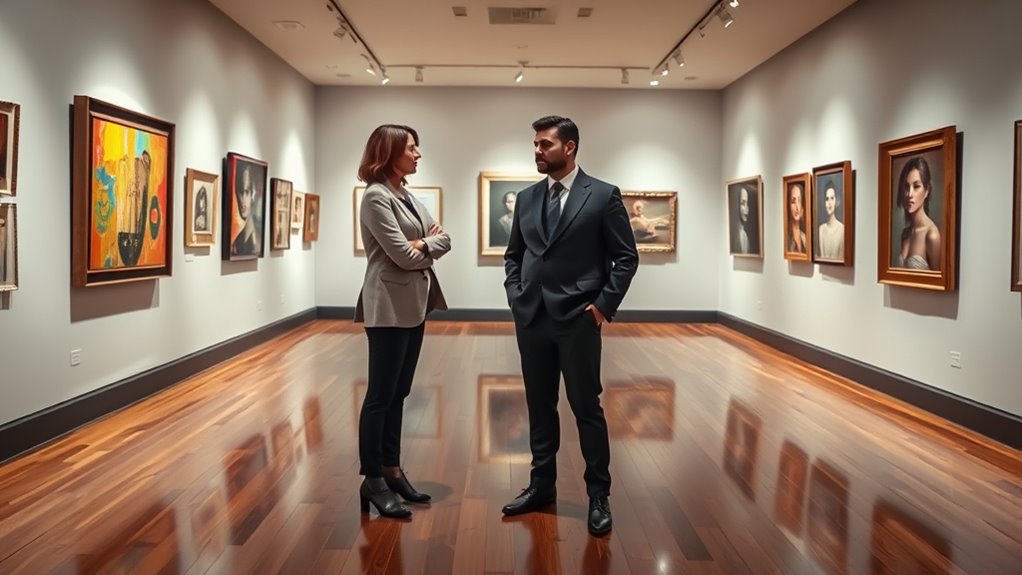
Working with a gallery means sharing your revenue, which can limit your earnings.
You might also lose some control over how your art is presented and sold.
Additionally, contractual restrictions could affect your future opportunities and creative freedom.
Revenue Sharing Limits
One common drawback of working with a gallery is the revenue sharing model, which often limits how much money you can keep from each sale. Your commission structure is typically set up so the gallery takes a percentage of the sale price, reducing your overall earnings.
This revenue sharing approach means you mightn’t see the full value of your work, especially if sales are infrequent or low-priced. While galleries handle marketing and sales, your share can feel unfair if they take a large cut.
Additionally, some galleries have strict policies on pricing and discounts, further impacting your earnings. Understanding these revenue sharing limits helps you weigh whether the benefits of gallery representation outweigh the potential financial drawbacks.
Artistic Control Loss
When you partner with a gallery, you often give up some control over how your work is presented and sold. This can limit your creative independence and artistic freedom. Galleries may influence your choices, from the themes you explore to how your art is displayed. You might not agree with their marketing approach or exhibition decisions, which can feel restrictive. The table below highlights common areas where control is affected:
| Aspect | Your Control | Gallery’s Influence | Impact on Artistic Freedom |
|---|---|---|---|
| Exhibition Themes | Limited | Decides | Reduced |
| Pricing Strategies | Negotiated | Sets | Potential restrictions |
| Artwork Presentation | Owner’s choice | Gallery’s preference | Artistic vision altered |
| Promotion & Marketing | Your input | Main responsibility | Creative independence compromised |
| Sales Channels | Your decision | Gallery’s network | Limited flexibility |
Contractual Restrictions
Have you considered how contractual restrictions can limit your artistic freedom? One common issue is exhibition exclusivity, which means you might be limited to showing your work only through that gallery, restricting your opportunities elsewhere.
This can hinder your growth and exposure if you want to explore different venues. Additionally, marketing restrictions can control how you promote your art, including what you can share on social media or in advertisements.
These restrictions can feel stifling, especially if you’re enthusiastic to build your personal brand independently. While working with a gallery offers benefits, it’s vital to understand these contractual limitations upfront.
They can shape your creative and professional trajectory, so weigh the drawbacks carefully before signing on.
Is Gallery Representation Right for Your Artistic Goals?
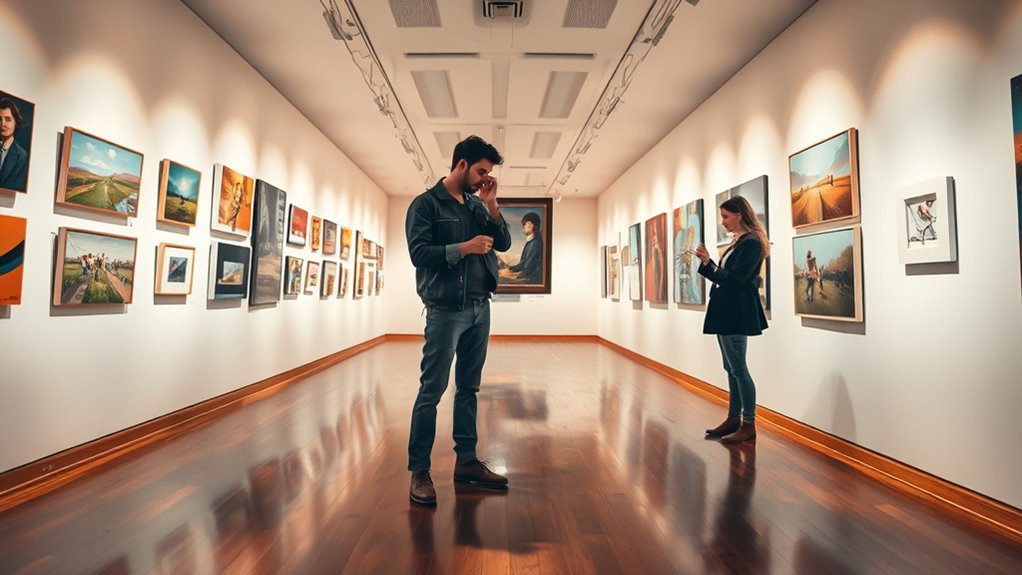
Deciding whether gallery representation aligns with your artistic goals requires careful consideration of what you want to achieve.
If your priority is exposure and building your artist branding, a gallery can provide valuable visibility. However, consider the gallery fees involved, which can vary widely and impact your earnings.
Think about whether you’re comfortable with giving up some control over your work and sales process, as galleries often take commission and influence how your art is marketed.
If your goals focus on independence or direct connections with collectors, representing yourself might suit you better.
Ultimately, weigh the benefits of gallery exposure against the costs and restrictions.
Only then can you determine if gallery representation advances your artistic ambitions or if it might limit your growth.
Frequently Asked Questions
How Do I Find the Right Gallery for My Artwork?
To find the right gallery for your artwork, start by researching galleries known for your style and check their reputation.
Visit openings, attend exhibitions, and observe their artistic compatibility with your work.
Reach out with a professional portfolio that highlights your unique voice.
Trust your instincts—choose a gallery that aligns with your vision and values, ensuring a mutually beneficial relationship that helps you grow as an artist.
What Are the Typical Contract Lengths With Galleries?
Typically, contract durations with galleries range from one to three years, depending on the gallery’s policies and your agreement.
You’ll find that many galleries seek a clear gallery commitment, but some offer more flexible terms.
It’s essential to review the contract length carefully, ensuring it aligns with your career goals.
Be prepared to negotiate the contract duration if you want a shorter or longer gallery commitment that suits your needs.
Can I Work With Multiple Galleries Simultaneously?
Yes, you can work with multiple galleries simultaneously, but be aware of gallery exclusivity clauses in your contracts. Some galleries require exclusivity, limiting your representation to their roster, which can impact your reputation and opportunities with others.
To avoid conflicts, carefully review each gallery’s reputation and exclusivity terms. Clear communication and understanding of these agreements help you maintain a healthy, multi-gallery relationship without damaging your professional image.
How Are Sales Revenue and Royalties Split?
You typically split sales revenue based on commission structures agreed upon with your gallery, often ranging from 50/50 to 70/30.
Royalties from licensing rights are usually negotiated separately, with galleries claiming a percentage of licensing income.
Be sure to clarify these terms upfront, so you understand how your earnings from sales and licensing are divided, protecting your rights while maintaining a fair partnership.
What Happens if I Want to Leave a Gallery?
If you want to leave a gallery, you typically need to follow your agreement’s artist termination rights, which specify notice periods and procedures.
Be aware that many galleries enforce exclusivity, restricting your ability to work with other galleries during the contract.
To exit smoothly, review your contract carefully, communicate openly with the gallery, and guarantee all terms are met to avoid legal issues or conflicts over artwork rights.
Conclusion
Deciding to work with a gallery can boost your exposure and grow your career, but it also requires giving up some control and a portion of your earnings. Carefully weigh the benefits against the drawbacks to see if gallery representation aligns with your artistic goals. Ultimately, it’s about finding the right partnership that supports your growth while respecting your creative vision. Make informed choices to ensure your art thrives in the right environment.