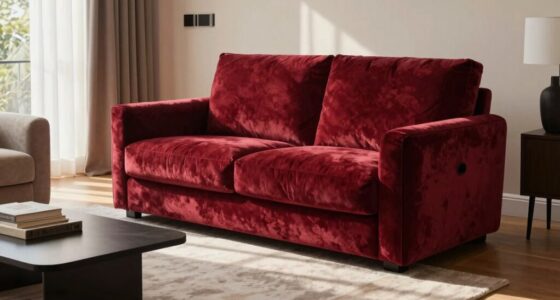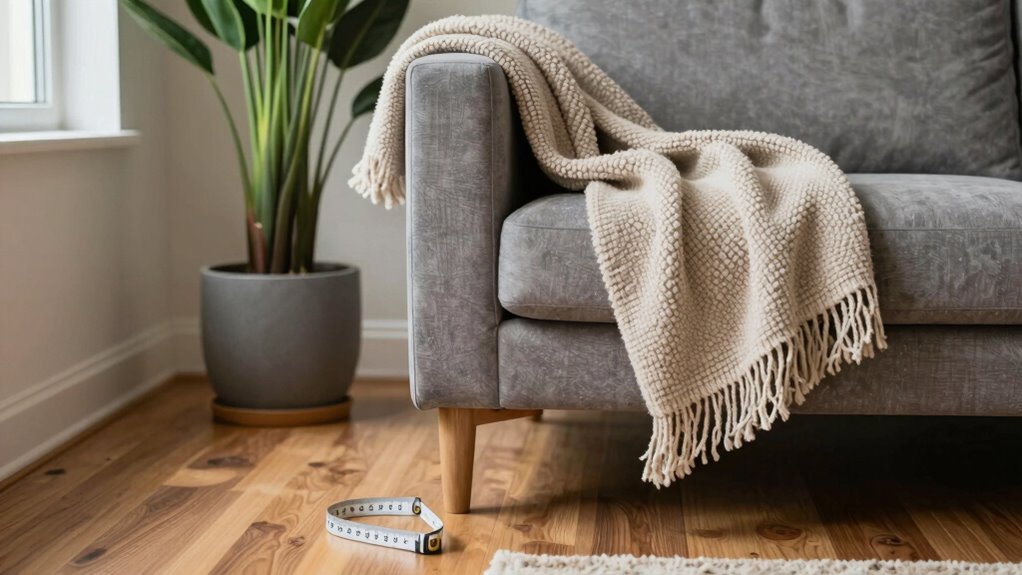

To understand scale before buying online, always check the provided measurements in inches or centimeters, and compare them to familiar objects for better perspective. Use online tools to overlay images onto your room photos or physically hold sketches against your space for a tactile sense of size. Visualize how the piece will fit and balance with your existing decor. If you keep exploring, you’ll learn more about achieving the perfect harmony in your space.

Prime made for students and young adults
- Fast, free delivery for dorm and study essentials
- Prime Video and Amazon Music included
- Member-only deals
Key Takeaways
- Always check provided measurements in inches or centimeters and compare them to familiar objects for context.
- Use online tools or apps to overlay images onto room photos for accurate scale visualization.
- Visualize the piece next to existing furniture or walls to assess how it will fit and complement the space.
- Consider artistic proportions to ensure the item’s size aligns with the room’s size and design harmony.
- Review multiple images from different angles and ask for additional photos if necessary to better understand the scale.

Have you ever purchased a piece of art or furniture online only to be disappointed by how small or large it was in person? It’s a common experience, and it often happens because we don’t fully grasp the concept of scale. Understanding scale before you buy requires paying close attention to artistic proportions and making accurate size comparisons. Without doing this, you risk ending up with a piece that doesn’t fit your space or doesn’t look as expected.
The first step is to look beyond the product images. Photos can be misleading—they might be staged or taken from angles that distort size. Always check if the seller provides dimensions in inches or centimeters. But don’t stop there. To really get a sense of scale, compare those measurements to familiar objects in your home. For example, if you’re buying a sculpture, imagine it next to your coffee table or sofa. Does it seem proportionate? A good way to do this is to visualize or even physically compare the artwork’s size to items you already own. This helps create a mental size comparison, making the piece’s true scale clearer.
Next, consider the artistic proportions involved. Every piece of art or furniture has a visual balance, and understanding this helps you judge how it will look in your space. For instance, a large, bold painting may look perfect over a big fireplace wall but overwhelming in a small room. Conversely, a tiny sculpture might get lost on a large table. By assessing the artistic proportions—how the elements of the piece relate to each other and to the space—you can better decide if the scale matches your environment. Additionally, paying attention to artistic proportions can help you make more informed choices, ensuring harmony in your decor. Recognizing the correct scale of a piece is essential for maintaining visual harmony in your decor. To deepen your understanding, exploring scale in art and design can provide valuable insights into how proportions influence perception. Familiarizing yourself with biodiversity and ecological balance can also enhance your appreciation for natural proportions and harmony in design.
Another helpful tip is to use online tools or apps that allow you to overlay images of furniture or artwork onto photos of your space. Some websites even let you input specific dimensions and see a scaled version of the piece in your room. This is a powerful way to perform a size comparison without leaving your house. If these tools aren’t available, sketching a rough outline of the piece to scale on paper and holding it against your wall can give a tactile sense of how it’ll fit.
Ultimately, understanding scale is about more than just numbers. It’s about visualizing and comparing sizes in context. By paying attention to artistic proportions and doing thorough size comparisons, you can confidently select pieces that will look perfect in your space—without surprises or disappointment when they arrive.
As an affiliate, we earn on qualifying purchases.
Frequently Asked Questions
How Can I Visualize Scale Without Seeing the Item in Person?
To visualize scale without seeing an item in person, compare it to familiar objects or people in an artistic context or historical references. Imagine how the piece would look next to a common chair or a person’s height. You can also use online tools that allow you to overlay images or create life-sized mockups. These methods help you grasp the true size and avoid surprises when the item arrives.
Are There Tools to Help Compare Sizes Online?
Yes, there are virtual measurement and comparison tools online that can help. You can upload images of your space and the item to see how they compare in size, giving you a clearer sense of scale. Some websites offer virtual measurements, allowing you to input dimensions and visualize the piece directly. These tools make it easier to judge if an item will fit and match your space before making a purchase.
Does Screen Size Affect How I Perceive Scale?
Think of the magic of perceptual illusions, where your screen size influences how you perceive scale, much like an artist’s use of artistic proportions. When you view art online, a larger screen can make objects seem more expansive, while a smaller one might shrink them. Your perception of scale is affected by screen size, so always check measurements and consider your display to accurately judge the piece’s true size.
How Accurate Are Online Size Descriptions?
Online size descriptions can vary in accuracy, so you shouldn’t rely solely on them. They often lack measurement consistency, making it hard to judge true size. To guarantee better size accuracy, compare multiple sources, check detailed measurements, and read customer reviews for insights. Using a ruler or measuring tape on your device can also help you visualize scale more effectively. Always double-check before making a purchase to avoid surprises.
What Should I Do if the Piece Doesn’t Match Expectations?
If the piece doesn’t match your expectations, first review the online description carefully, focusing on material quality and size details. Contact the seller to discuss your concerns, especially regarding price considerations and whether the piece’s quality aligns with its cost. If possible, request additional photos or measurements. If you’re unsatisfied, consider returning the item or negotiating a price adjustment, ensuring you’re comfortable with the purchase’s value and scale.
furniture measurement overlay app
As an affiliate, we earn on qualifying purchases.
As an affiliate, we earn on qualifying purchases.
Conclusion
Think of buying art online like planting a seed. Without knowing its true size, you might expect a towering oak but get a tiny sprout instead. By understanding scale beforehand, you make sure your new piece fits perfectly in your space, like a seed growing into the mighty tree you envisioned. So, take those measurements seriously—your room deserves a masterpiece that’s just the right size to inspire and delight, not shrink away or overwhelm.
As an affiliate, we earn on qualifying purchases.
As an affiliate, we earn on qualifying purchases.
Fall Picks
fall essentials
As an affiliate, we earn on qualifying purchases.