Major career milestones like high-profile exhibitions, prestigious awards, and landmark sales boost art prices by increasing visibility, building your reputation, and signaling quality to collectors. Media coverage and critic reviews amplify your profile, attracting demand and elevating perceptions of value. As your reputation grows, demand and prices tend to rise, creating a positive feedback loop. If you want to understand how these moments can transform your art’s market value, keep exploring these key drivers.
Key Takeaways
- Major exhibitions and gallery representation enhance artist visibility, credibility, and perceived market value.
- Winning awards and honors validate authenticity, boost reputation, and increase artwork desirability.
- Critical media coverage and high-profile shows attract collector interest and drive prices upward.
- Artistic collaborations and features alongside renowned artists elevate an artist’s profile and demand.
- Landmark sales and proven provenance create market hype, influencing future valuation and investor confidence.
How Major Exhibitions Boost Art Prices
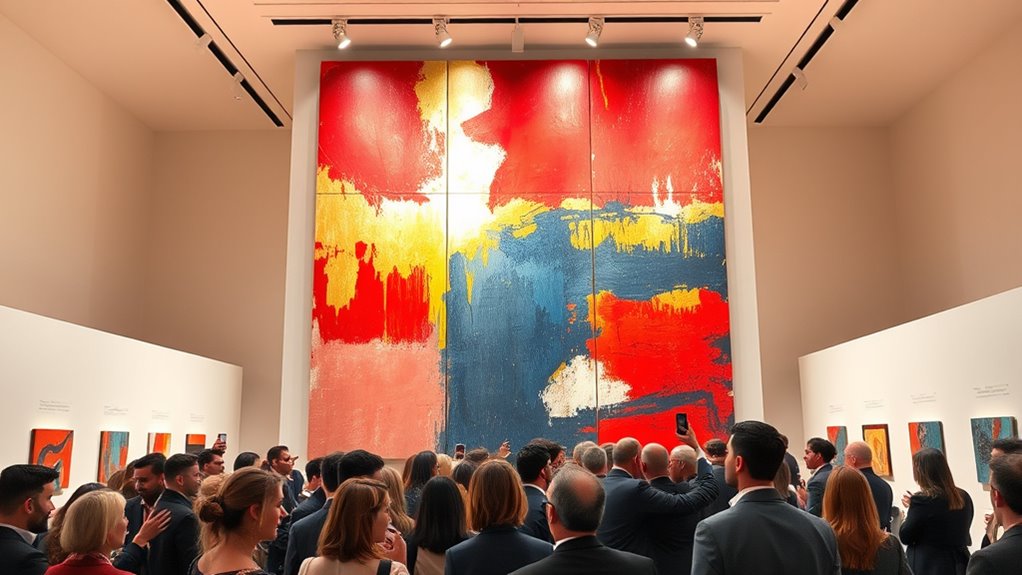
Major exhibitions can substantially elevate an artist’s market value by attracting widespread attention and boosting visibility. When you participate in high-profile shows, gallery collaborations often follow, increasing your exposure to collectors and critics alike. Additionally, these events often generate public interest, which can lead to increased demand for your work. These exhibitions frequently lead to features in prominent art catalog publications, which further amplify your reputation. As your work is showcased alongside established artists, your market demand rises, driving up prices. The media coverage and critical reviews generated during such events create a ripple effect, making your art more desirable. Strategic gallery collaborations and securing features in influential catalogs can help cement your reputation and command higher prices. Turning a major exhibition into a pivotal moment can considerably influence your career trajectory.
Why Awards and Honors Make Art More Valuable
Have you ever wondered how awards and honors can instantly boost an artist’s reputation and market value? When an artist receives a prestigious award, it creates market hype that elevates their work’s desirability. This recognition not only signals quality but also enhances provenance, making their art more attractive to collectors. The prestige associated with honors can transform a piece from just another artwork into a coveted collectible. To see this clearly, consider the table below:
| Award Type | Impact on Market Hype | Provenance Enhancement |
|---|---|---|
| Major Awards | Attracts attention | Validates authenticity |
| Honors | Raises perceived value | Confirms provenance history |
| Recognition Levels | Boosts collector confidence | Reinforces artistic legitimacy |
Additionally, Market hype can be amplified through media coverage and public recognition, further elevating an artist’s profile. Recognitions serve as market catalysts, accelerating interest and demand. Awards, thus, act as catalysts, making artworks more valuable by fostering excitement and strengthening provenance. The perceived value of an artwork can increase substantially following such recognition, further incentivizing collectors and investors.
How Landmark Sales Push Prices to New Heights

When an artwork achieves a landmark sale, it often sets a new benchmark for its value and ignites widespread attention in the art market. This surge in prominence can influence future prices, especially as galleries and collectors take notice. This heightened awareness can also lead to increased market demand, which further drives up prices. Security systems at art galleries or private collections can also play a role in safeguarding valuable pieces during these high-profile transactions. Major sales at renowned auction houses or private deals become headlines, prompting increased interest at gallery openings and art fairs. These events often feature works inspired by or related to the landmark piece, fueling a sense of momentum. As collectors see the high prices paid for a single artwork, they become more willing to invest at higher levels. Landmark sales act as catalysts, pushing prices to new heights and shaping market trends that influence artist reputations and future valuations. Additionally, the market perception of an artist or piece can shift dramatically after a landmark sale, further impacting long-term value. Furthermore, AI-driven analytics are increasingly used by collectors and galleries to assess market trends and predict future price movements, adding a technological edge to art investment strategies.
How Media and Critics Influence Art Prices
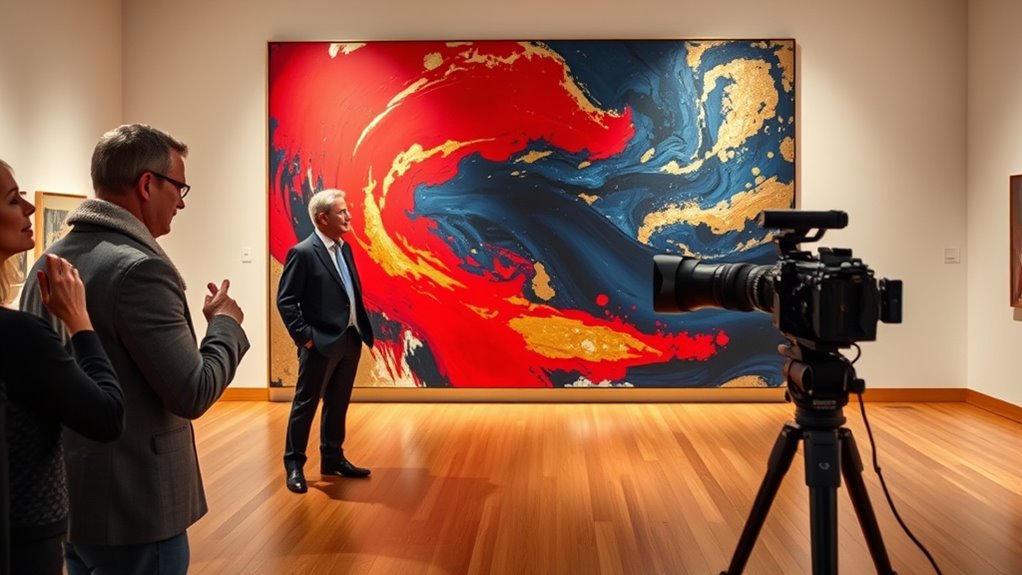
Media coverage and critics’ reviews play a powerful role in shaping art prices by influencing public perception and collector interest. When a gallery collaborates with a renowned artist or hosts high-profile exhibitions, media attention often follows, boosting the artwork’s visibility. Affiliate disclosure Critics’ favorable reviews can elevate an artist’s reputation, making their works more desirable and driving up prices. Social media influence amplifies this effect, as shares and endorsements from influencers or art communities can quickly sway public opinion. A positive buzz online or in respected publications can create a sense of urgency among collectors, pushing prices higher. Additionally, the media environment surrounding an artist can significantly impact their market value, as consistent exposure helps build a lasting reputation. As digital platforms become increasingly important in the art world, their role in shaping market trends and art valuation continues to grow. Moreover, understanding how media influence affects buyer perceptions can help collectors and investors make more informed decisions. Ultimately, media exposure, gallery collaborations, and social media play interconnected roles in elevating an artwork’s perceived value and market price.
Why Collectors and Investors Drive Prices Up
You can see how collector demand suddenly spikes, pushing prices higher as more enthusiasts seek rare pieces. Investor speculation also plays a role, with people buying art expecting its value to increase. The influence of market sentiment can accelerate these trends, creating a feedback loop that drives prices even further up. Additionally, art market dynamics such as auctions and gallery sales can significantly impact pricing trends.
Collector Demand Spikes
Collector demand often fuels rapid price increases in the art market, as passionate buyers compete to acquire sought-after works. When a particular artist or style gains popularity, collector behaviors shift, leading to sudden spikes in demand. These trends can be driven by cultural moments, celebrity endorsements, or renewed interest in specific genres. As more collectors chase limited editions or iconic pieces, prices escalate quickly. You’ll notice that art market trends often amplify these demand surges, creating a feedback loop where rising prices attract even more attention. This heightened demand can push prices beyond previous benchmarks, making certain works highly sought-after and valuable. Understanding collector behaviors helps explain these rapid price jumps, reflecting the dynamic, competitive nature of the art market. Additionally, the influence of digital platforms accelerates these demand cycles by broadening access and visibility for collectors worldwide, while increased biodiversity awareness in society can also influence cultural trends and art themes, subtly affecting market dynamics. Furthermore, shifts in market speculation often amplify these price surges, as investors aim to capitalize on fleeting trends. Recognizing these market dynamics is crucial for understanding the rapid fluctuations in art prices.
Investor Speculation Fuels
Investor speculation often propels art prices upward as investors seek to capitalize on potential gains. They attend auction houses to bid on works they believe will appreciate, driving prices higher through competitive bidding. Support Breakfast events and gatherings can also serve as venues where collectors and investors network and discuss promising acquisitions. Art fairs also attract investors looking for emerging artists or pieces with promising growth prospects. Their enthusiasm creates a sense of scarcity and exclusivity, which fuels demand and pushes prices beyond the intrinsic value of the art. As investors buy with the hope of quick profits, they contribute to a cycle where rising prices attract more speculation, further inflating the market. This dynamic can lead to rapid price surges, making certain artworks seem more valuable than their artistic or historical significance might suggest. Additionally, the Unique Textures present in certain artworks can influence investor perceptions of rarity and desirability, further driving up prices. Recognizing the role of market trends can help investors understand the broader forces impacting art prices, including how market psychology influences bidding behaviors.
Market Sentiment Shifts
When market sentiment shifts, it can substantially influence art prices by shaping perceptions of value and desirability. You might notice a surge in interest after market rumors suggest a rising artist or favorable economic indicators boost confidence. Such shifts often lead collectors and investors to act quickly, driving prices upward. Being aware of market dynamics can help you better understand these fluctuations and make informed decisions. These factors create a feedback loop where positive sentiment snowballs, making art appear more valuable. Staying aware of market rumors and economic indicators helps you anticipate when sentiment might push prices higher. Additionally, understanding art market trends can provide further insight into potential future movements in art prices.
How Career Milestones Build Artist Reputation and Value
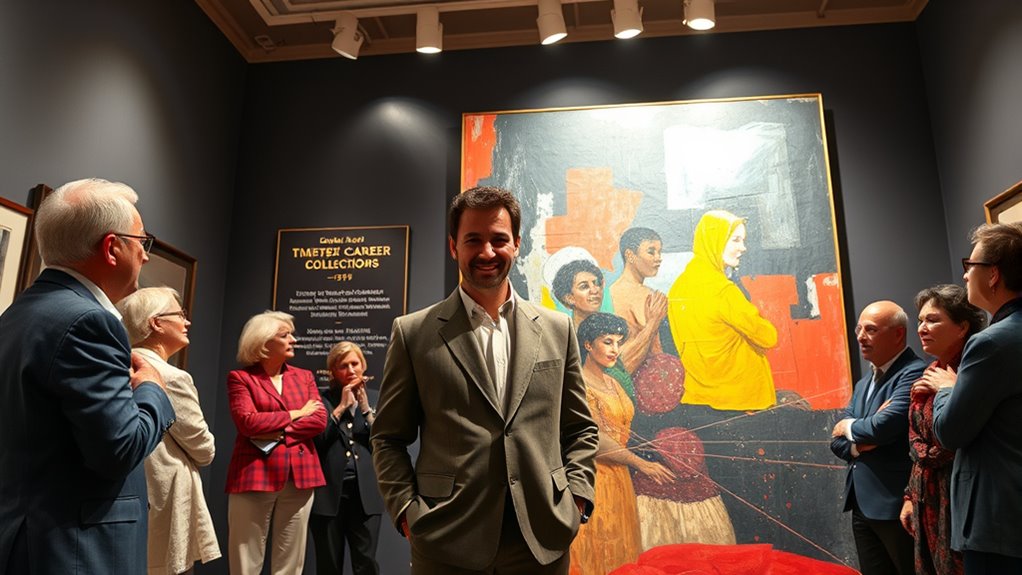
Have you ever wondered how artists build their reputations and increase their market value? One key milestone is gaining gallery representation, which boosts visibility and credibility. When a respected gallery showcases your work, it signals quality and attracts collectors.
Additionally, artistic collaborations with other renowned artists or institutions can elevate your profile. These projects demonstrate your versatility and connect you to new audiences. Such milestones often lead to critical recognition, media coverage, and higher demand for your pieces.
As your reputation expands through gallery representation and collaborations, collectors perceive your work as more valuable, often resulting in increased prices. Ultimately, these career milestones act as tangible proof of your growing stature, fueling the cycle of reputation-building and market value growth.
Frequently Asked Questions
How Do Artist Relationships With Galleries Affect Their Market Value?
Your relationships with galleries markedly impact your market value. Engaging in gallery collaborations boosts your visibility and credibility, enhancing your artistic reputation.
When galleries actively promote your work, it attracts collectors and increases demand. A strong partnership signals professionalism and stability, which can lead to higher prices.
Maintaining positive gallery relationships helps you build a solid reputation, ultimately elevating your market value and opening doors for bigger opportunities and sales.
Can Changes in Art Market Trends Impact an Artist’s Career Milestones?
Yes, changes in art market trends can impact your career milestones. Emerging styles gain popularity quickly, attracting market speculation that boosts an artist’s visibility and value.
If you adapt or align with these trends, you might reach key milestones sooner, increasing your market presence. Staying aware of evolving trends helps you capitalize on market speculation, which can elevate your career achievements and overall market value.
What Role Does Art Provenance Play in Increasing Artwork Prices?
Art provenance plays a vital role in increasing artwork prices because it provides proof of authenticity through art authentication and provenance documentation. When you have clear, verified provenance, buyers trust the piece more, boosting its value.
Provenance confirms the artwork’s history, origin, and ownership, making it more desirable. This transparency reassures collectors and investors, often leading to higher prices at sale or auction.
How Do Shifts in Collector Demographics Influence Art Valuation?
You see that shifts in collector demographics and increasing collector diversity directly impact art valuation. As new demographics emerge, they bring fresh tastes, preferences, and spending habits, which can drive up demand and prices for certain artworks.
Demographic shifts expand the market, attracting different types of collectors, making artworks more desirable and valuable. Your awareness of these changes helps you understand how evolving collector profiles influence overall art prices.
Do Technological Advancements Like NFTS Impact Traditional Art Career Milestones?
Technological advancements like NFTs markedly impact traditional art career milestones. You can use digital authentication to verify provenance instantly, boosting credibility.
Virtual exhibitions expand your reach beyond physical galleries, attracting international collectors and increasing your visibility. These tools accelerate recognition and valuation, often leading to higher prices.
Embracing such innovations helps you stay relevant and competitive in a rapidly evolving art market, ultimately elevating your career milestones and art’s worth.
Conclusion
Understanding how career milestones impact art prices helps you see why certain pieces skyrocket in value. Major exhibitions, awards, landmark sales, and media attention all boost an artist’s reputation and desirability. As a collector or investor, recognizing these key moments can guide your decisions and maximize your investments. By tracking an artist’s career milestones, you stay ahead of market trends and better understand what drives art prices upward over time.