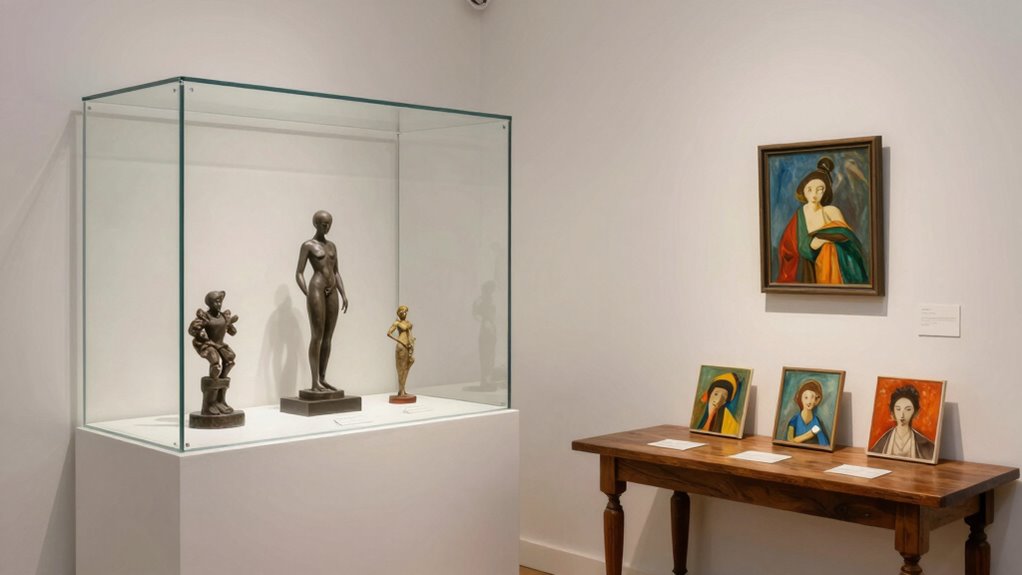

By focusing on fewer, carefully chosen artworks with strong provenance, you can build a more meaningful and valuable collection. This approach allows you to invest in pieces that truly resonate and stand the test of time, rather than cluttering your collection with mass purchases. It also reduces risks like fakes and questionable backgrounds, ensuring lasting value. Keep exploring how this strategy can elevate your collection, and you’ll discover the key to smarter collecting.

Prime made for students and young adults
- Fast, free delivery for dorm and study essentials
- Prime Video and Amazon Music included
- Member-only deals
Key Takeaways
- Focusing on quality over quantity ensures each artwork has strong provenance and personal significance.
- Fewer, well-chosen pieces allow for deeper appreciation and understanding of each work’s history and value.
- Prioritizing provenance reduces risks of fakes and questionable backgrounds, increasing collection credibility.
- A selective approach streamlines collection-building, fostering smarter investments and better resale potential.
- Curating a smaller, meaningful collection reflects refined taste and enhances long-term market and personal value.

In recent years, many art collectors have begun purchasing fewer works, reflecting a shift in their buying habits. Instead of chasing every new piece that catches their eye, they’re focusing on quality over quantity. This change is driven by a desire to make more meaningful art investments. You realize that acquiring fewer, more significant works allows you to build a stronger, more cohesive collection. When you choose to buy fewer pieces, you’re investing your resources in art that truly resonates with you and has lasting value. It’s not about amassing a vast collection but curating a selection that stands the test of time.
One of the key reasons for this shift is the importance of provenance. Provenance significance can’t be overstated when it comes to art investment. Knowing the history of a piece—its origins, previous ownership, and exhibition record—adds layers of value and trustworthiness. When you focus on works with well-documented provenance, you reduce the risk of purchasing fakes or works with questionable backgrounds. This ensures your investment is secure, and your collection gains credibility. Provenance acts as a mark of authenticity, helping you distinguish between high-quality works and less reliable options, which is crucial when your goal is to create a valuable, enduring collection. Additionally, the documentation process involved in verifying provenance can help you develop a deeper understanding of the art market and its intricacies. Recognizing the importance of art market dynamics can further inform your buying decisions and enhance your ability to identify promising opportunities.
Focusing on well-documented provenance ensures authenticity, reduces risk, and enhances your collection’s credibility and lasting value.
By buying fewer works with strong provenance, you also streamline the process of building your collection. You spend less time worrying about the authenticity and more time appreciating and understanding each piece’s significance. This thoughtful approach allows you to develop a more informed eye and deep appreciation for the art you acquire. It’s about making smarter choices, not just more choices. You’re less likely to end up with a cluttered collection of mediocre works and more likely to have a curated assembly of extraordinary pieces that reflect your taste and investment goals. Additionally, focusing on provenance can help in art valuation and future resale, making your collection not only meaningful but also financially prudent.
Furthermore, emphasizing art provenance enhances your ability to tell a compelling story through your collection, which can increase its appeal and value over time. Ultimately, this strategy aligns with the idea that art is an investment—not just financially but in terms of personal fulfillment. You recognize that each carefully selected piece can elevate your collection’s overall value and meaning. When you buy fewer works, you’re able to focus on the provenance significance, ensuring each piece has a story, authenticity, and potential for appreciation. This disciplined approach transforms your collection from a mere accumulation into a reflection of your refined taste and smart investing. In the end, buying fewer, well-chosen art pieces can lead to a collection that’s richer, more valuable, and truly meaningful.
As an affiliate, we earn on qualifying purchases.
Frequently Asked Questions
How Do Collectors Determine the True Value of a Piece?
You determine a piece’s true value by researching the art market, comparing similar works, and considering the artist’s reputation. You also assess the piece’s condition, provenance, and rarity. As part of your investment strategy, you think long-term, focusing on quality over quantity. By staying informed about market trends and consulting experts, you confidently gauge whether a piece’s price aligns with its true worth.
What Role Does Provenance Play in Acquiring High-Quality Works?
Provenance plays an essential role in acquiring high-quality works because it provides authenticity verification and highlights the artwork’s historical significance. When you trace a piece’s history, you guarantee it’s genuine and understand its cultural context. This knowledge boosts your confidence in the authenticity and value of the work, helping you make informed decisions and build a collection rooted in meaningful, verified pieces with rich historical backgrounds.
How Can Collectors Identify Emerging Artists Worth Investing In?
Ironically, spotting emerging talent isn’t about chasing the hottest trend but noticing genuine passion and unique voice. You look for artists whose work resonates deeply and shows growth potential. Attend local galleries, art fairs, and online platforms to observe their progress. Trust your intuition, research their backgrounds, and follow their trajectory. These artists often have the best investment potential, offering both emotional satisfaction and long-term value.
What Are Common Mistakes Made When Choosing Art Pieces?
You often make mistakes in choosing art pieces by ignoring art market dynamics and focusing solely on personal taste. Relying too much on trends or emotional reactions can lead you astray. Instead, you should research the artist’s reputation, consider market stability, and understand collector psychology. This way, you make smarter investments, avoiding impulsive buys and building a more valuable, cohesive collection over time.
How Does Art Conservation Impact the Long-Term Value of a Collection?
Art conservation greatly impacts your collection’s long-term value by preserving its original condition. By applying proper restoration techniques, you guarantee each piece remains authentic and visually appealing over time. Conservation ethics guide your decisions, emphasizing minimal intervention to maintain integrity. This careful approach not only sustains the artwork’s worth but also enhances its desirability and historical significance, ultimately making your collection more valuable and enduring for future generations.
As an affiliate, we earn on qualifying purchases.
Conclusion
By focusing on fewer pieces, you can curate a collection as precise as a master chef’s ingredients. This approach allows you to truly appreciate each work’s value and story, rather than spreading yourself thin. When you buy fewer, better works, your collection becomes a reflection of your true taste and passion. Like a carefully tended garden, it grows richer and more meaningful over time, proving that quality always trumps quantity in the art world.
art collection storage and display
As an affiliate, we earn on qualifying purchases.
As an affiliate, we earn on qualifying purchases.
art appraisal and valuation tools
As an affiliate, we earn on qualifying purchases.
As an affiliate, we earn on qualifying purchases.
Fall Picks
fall essentials
As an affiliate, we earn on qualifying purchases.