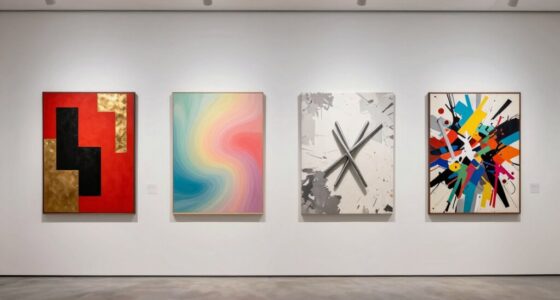

Abstract art might seem like a free-flowing, unpredictable style, but it actually has structure. Artists use shapes, colors, lines, and textures to evoke feelings or ideas without realistic depiction. They balance elements through composition and recognize patterns that guide your eye. This approach invites emotional responses and personal interpretation. If you explore further, you’ll discover how these visual choices create depth and meaning, making abstract art more accessible than it first appears.
Key Takeaways
- Abstract art uses shapes, colors, and textures to evoke feelings and ideas, emphasizing structure without realistic representation.
- It employs geometric forms, patterns, and composition techniques to create visual balance and guide perception.
- Recognizable structures like symmetry and negative space help viewers understand the artwork’s intentional design.
- Color symbolism and deliberate arrangements convey emotions and underlying messages, demonstrating thoughtful structure.
- Recognizing patterns and compositional elements reveals the deliberate organization behind abstract works.
What Is Abstract Art Anyway?
Abstract art is a style that moves away from realistic depictions and focuses instead on shapes, colors, and forms. Its history overview reveals a bold shift in artistic expression, breaking free from traditional representation. You’ll find that early pioneers like Wassily Kandinsky and Piet Mondrian challenged conventions by emphasizing emotion and composition over realism. These famous artists experimented with geometric shapes, vibrant hues, and non-representational forms, paving the way for a new visual language. Abstract art isn’t about copying the world; it’s about evoking feelings and ideas through visual elements. Understanding this history helps you appreciate how artists pushed boundaries, creating works that invite personal interpretation and emotional response, rather than straightforward depiction. Additionally, contemporary abstract artists often incorporate elements of Indigenous wellness practices, such as natural materials and cultural symbolism, to deepen the expressive potential of their work. Recognizing the evolution of artistic styles and how they continue to adapt reflects the ongoing cultural influences shaping abstract art today. Moreover, innovations in artistic technology have expanded the possibilities for creating and experiencing abstract works, allowing for new textures and interactive elements. Exploring techniques like digital manipulation further enhances the ways artists can develop complex visual compositions.
The Building Blocks of Abstract Art
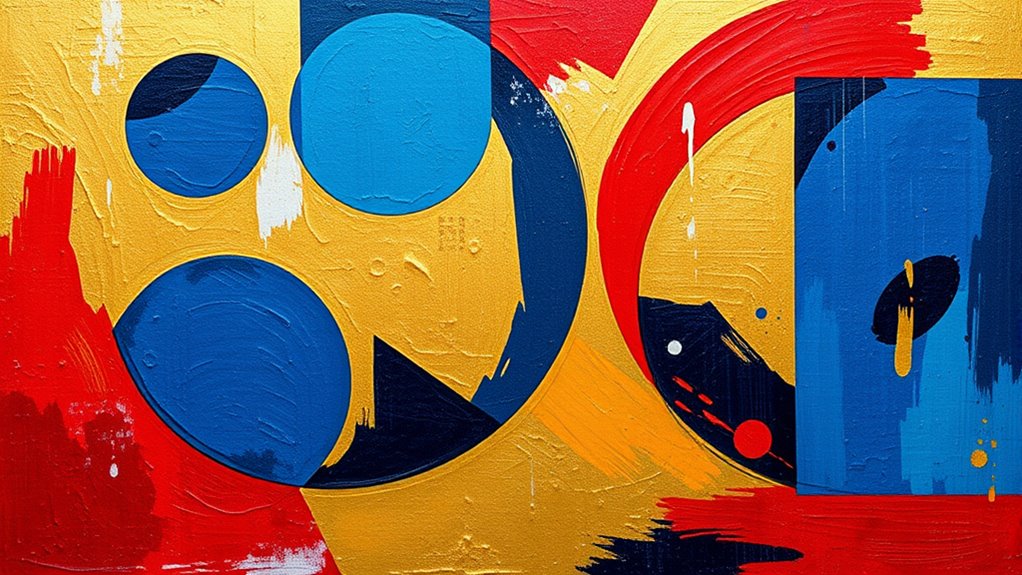
At the core of abstract art are simple but powerful visual elements like shapes, colors, lines, and textures. Texture complexity plays a key role, adding depth and tactile interest to your work. Artists achieve this by varying surface qualities—smooth, rough, glossy, or matte—creating visual intrigue. Material diversity is also essential; using different mediums such as acrylics, pastels, or mixed media expands your expressive options. These elements serve as the building blocks, allowing you to craft compositions that evoke emotion and meaning without representational accuracy. By combining diverse textures and materials thoughtfully, you establish structure and rhythm within your artwork. Understanding these fundamental components empowers you to manipulate visual language effectively, making your abstract pieces engaging and layered. Incorporating pinball machine aesthetics, such as vibrant colors and dynamic forms, can also inspire innovative abstract compositions.
How Artists Use Color and Shapes
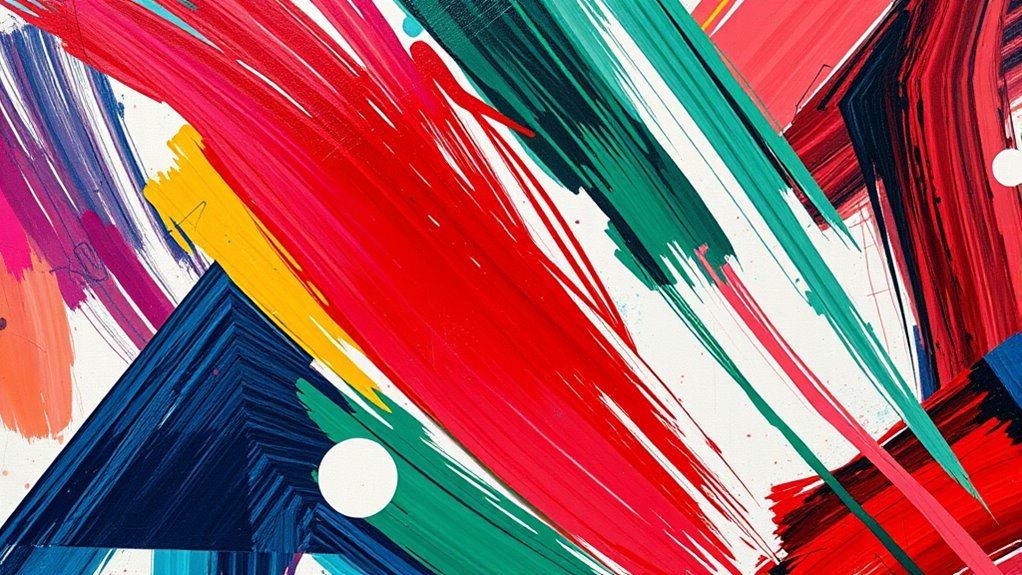
You’ll see artists carefully choose colors and shapes to evoke specific feelings and guide your eye across the piece. They use geometric techniques to create structure and movement within their compositions. By balancing colors and shapes, they craft visual harmony that draws you into the abstract world.
Color Emotion Strategies
Have you ever wondered how artists evoke emotions through their use of color and shapes? They leverage color symbolism to communicate feelings without words, selecting hues that carry specific emotional impacts. Bright reds and oranges often convey energy, passion, or urgency, while cool blues and greens evoke calmness or introspection. Shapes also influence mood; jagged lines suggest tension, while smooth, flowing forms promote serenity. Artists intentionally blend color choices and shapes to create an emotional response in viewers, guiding your perception and feelings. By understanding these strategies, you can better appreciate how abstract artists craft compelling visuals that resonate deeply, even without literal representation. Their mastery lies in manipulating color symbolism and form to evoke powerful emotional impacts effortlessly. Additionally, sound healing science shows that specific frequencies and vibrations can influence brainwave patterns, further enhancing the emotional depth of visual art.
Geometric Composition Techniques
Artists skillfully combine geometric shapes and strategic color placement to shape your perception of a composition. They often use symmetry patterns to create a sense of balance, guiding your eye effortlessly across the artwork. These patterns can be mirrored or repeated, establishing harmony and structure without overwhelming the viewer. Negative space plays a vital role, providing breathing room around shapes and highlighting key elements. By carefully arranging shapes and colors, artists direct your focus, evoke emotions, and create visual rhythm. This deliberate use of geometry transforms simple forms into dynamic compositions, making abstract works feel intentional and cohesive. Through these techniques, they turn basic shapes into powerful tools for storytelling and expression, inviting you to explore the underlying structure behind the seemingly spontaneous chaos. Additionally, understanding color placement helps viewers appreciate how artists evoke specific moods and guide emotional responses within the artwork. Recognizing composition techniques can deepen your appreciation of abstract art, revealing how structure guides your interpretation. Moreover, employing principles like visual hierarchy enhances the clarity and impact of abstract compositions. For example, some artists deliberately use balance to emphasize focal points and create a sense of stability within the piece.
Balancing Colors and Shapes
Balancing colors and shapes is fundamental to creating a harmonious abstract composition. You want to achieve color harmony by choosing hues that complement or contrast effectively, guiding the viewer’s eye smoothly across the artwork. Shape balance involves distributing visual weight evenly, preventing any one area from overpowering others. When you combine these elements thoughtfully, the piece feels cohesive and engaging. For example, using bold, warm colors on one side can be balanced with cooler, softer shapes elsewhere. Pay attention to size, placement, and contrast to ensure the shapes work together visually. Ultimately, balancing colors and shapes helps you create a dynamic yet unified artwork that invites viewers to explore its structure without feeling overwhelmed.
Recognizing Patterns and Composition

Recognizing patterns and understanding composition are essential skills for appreciating abstract art. When you focus on patterns recognition, you notice how shapes, lines, and colors repeat or contrast, creating visual rhythm and coherence. Pay attention to the way elements are arranged — this is compositional balance. It guides your eye across the artwork and establishes harmony or tension. By identifying recurring motifs or intentional placements, you see how the artist directs your attention and builds meaning. Recognizing these patterns helps you move beyond surface appearances and appreciate the underlying structure. Understanding composition allows you to see how different parts interact, making the artwork more engaging. Developing an eye for visual rhythm can enhance your appreciation of how abstract elements are orchestrated. Mastering these skills deepens your connection with abstract art, revealing how it’s thoughtfully organized rather than random.
Emotions and Ideas Behind Abstract Pieces
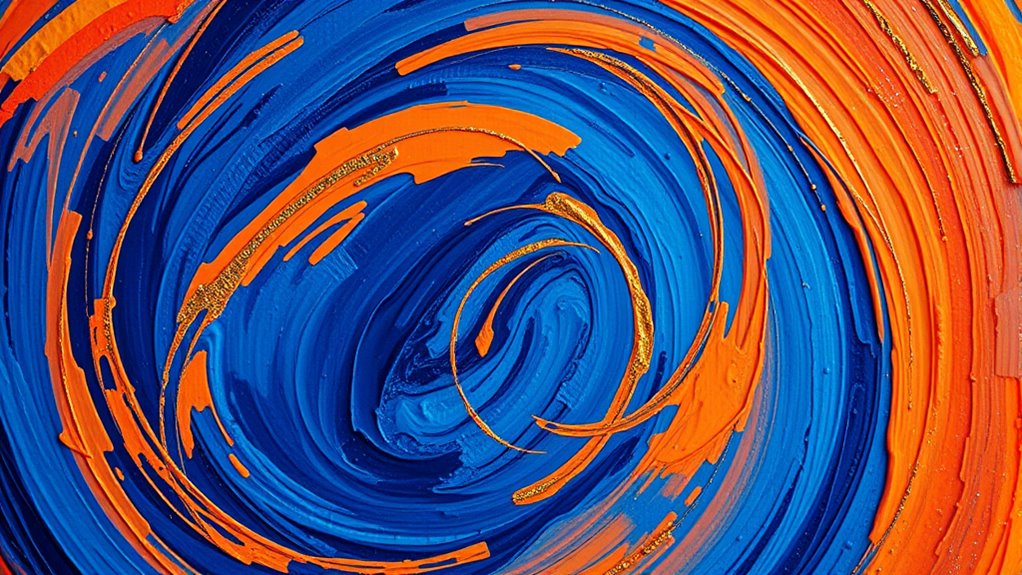
Have you ever felt a surge of emotion or had an idea sparked simply by looking at an abstract piece? That’s the power of emotional resonance in abstract art. These works often bypass literal representation, instead evoking feelings through color, shape, and texture. You might find yourself inspired, contemplative, or even moved to tears—all without clear narrative. Abstract art also embodies conceptual depth, inviting you to interpret meanings beyond the visible. The artist’s intention might be to communicate complex ideas or challenge perceptions, leaving space for your personal understanding. This blend of emotion and thought creates a dynamic dialogue between you and the artwork, making each viewing a unique experience rooted in your reactions and insights. Additionally, understanding Free Floating elements in abstract art can deepen your appreciation by highlighting how unanchored shapes and forms evoke a sense of openness and limitless interpretation. Recognizing artistic intention can help you connect more meaningfully to the artwork’s underlying message or theme.
How to Appreciate Abstract Art in a Gallery
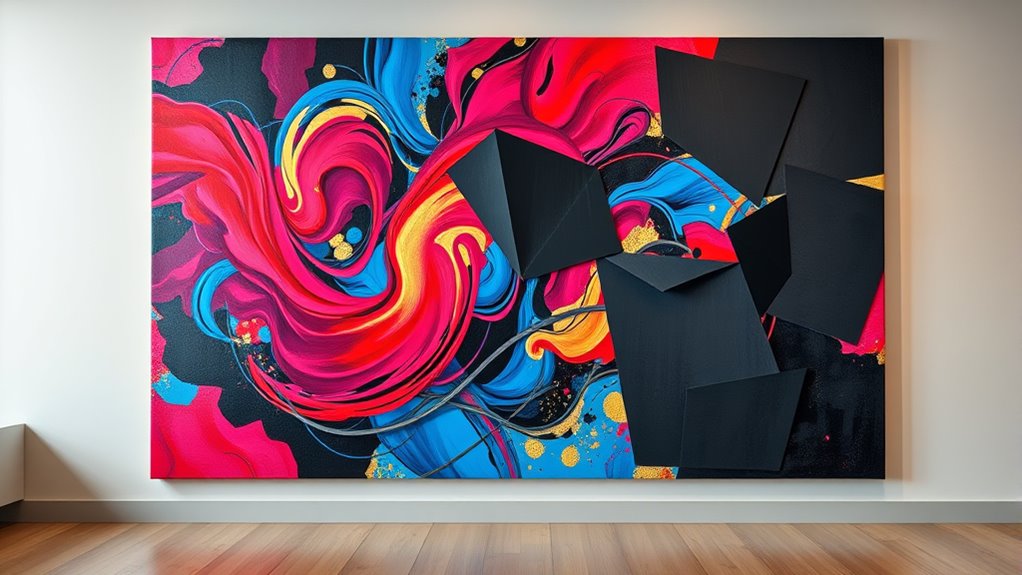
When you step into an abstract art gallery, start by observing the colors and shapes to see what catches your eye. Think about what the artist might have intended and how the piece makes you feel. Trust your personal reactions—they’re a key part of truly appreciating the artwork. Remember that understanding fundamentals—like composition and structure can deepen your appreciation and help you see the intentional design behind abstract pieces.
Observe Color and Form
As you step closer to an abstract painting, focus on the colors and shapes that catch your eye. Notice how the artist uses color harmony to create a mood or emotional response. Observe the form contrast—sharp edges against soft curves—that guides your eye across the canvas. Pay attention to how different hues interact and whether they evoke warmth, calm, or tension. Let these visual cues influence your feelings and understanding of the piece. Recognizing the interplay of color and form helps you connect with the artwork beyond surface appearances. It’s about feeling the balance, discord, or harmony that the artist intended. Engaging with these elements deepens your appreciation and makes the experience more personal and meaningful. Polynesian symbols for strength can also inspire a deeper emotional connection to abstract art, as they embody resilience and power through visual elements.
Consider Artistic Intent
Stepping closer to an abstract painting in a gallery invites you to contemplate what the artist aimed to communicate through their choices of color, shape, and composition. Recognizing the artistic intent behind these elements helps you appreciate the emotional expression embedded in the work. Instead of just observing the surface, ask yourself what feelings or ideas the artist might be trying to evoke. They often use bold colors or dynamic forms to channel specific emotions or concepts, even if you can’t pinpoint them immediately. Considering artistic intent deepens your connection to the piece, shifting your focus from mere aesthetics to understanding the message or mood the artist intended to share. This approach transforms your viewing experience into an active exploration of meaning.
Reflect Personal Feelings
Have you ever found yourself drawn to an abstract painting because it evokes a strong personal feeling? That’s the power of a personal connection and emotional response. When you stand before an abstract piece, let your feelings guide you. Focus on how the shapes, colors, or textures make you feel. Do they evoke nostalgia, excitement, or calm? Trust your instincts rather than trying to interpret meaning. Remember, your emotional response is valid and unique. To deepen your appreciation, consider these aspects:
- The mood created by color choices
- The energy conveyed through brushstrokes
- Personal memories or associations triggered
- How the artwork resonates with your current feelings
- The sense of movement or stillness it imparts
- Understanding that your emotional response is a legitimate way to connect with abstract art.
Additionally, recognizing the structure within abstract compositions can help you appreciate the artist’s intent and technique.
Tips for Creating Your Own Abstract Art
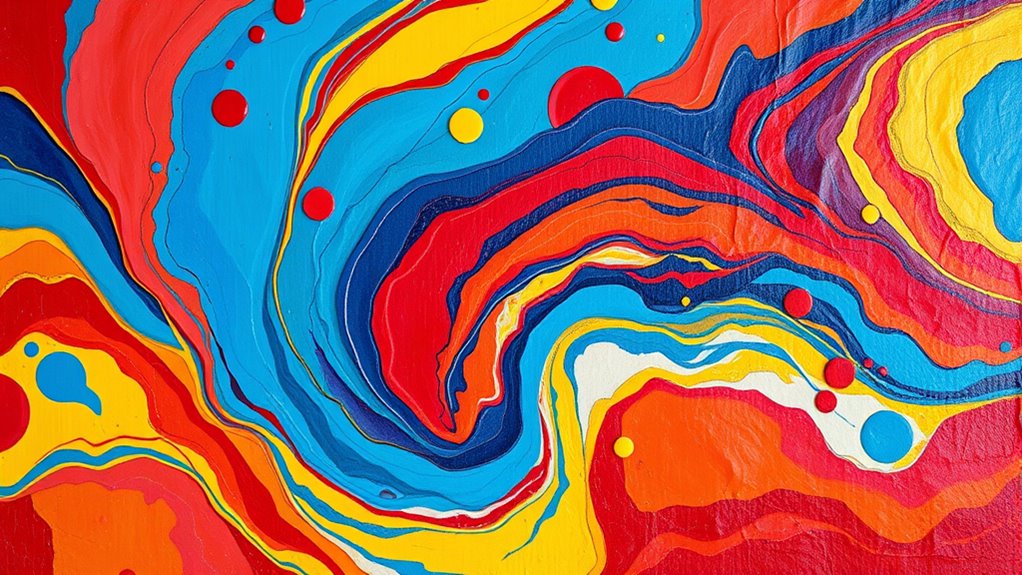
Creating your own abstract art can be an exciting and freeing process, but it helps to start with some practical tips. Embrace artistic experimentation by trying different techniques, tools, and mediums to discover what resonates with you. Use abstract symbolism to convey emotions or concepts without literal representation, adding depth to your work. To guide your process, consider this table:
| Experimentation Approach | Meaning |
|---|---|
| Mix media | Explore textures and effects |
| Play with color | Evoke mood and energy |
| Use spontaneous marks | Capture intuition and emotion |
| Incorporate symbols | Communicate abstract ideas |
| Step back regularly | Gain perspective on your progress |
Frequently Asked Questions
How Do I Start Understanding Abstract Art Without Feeling Overwhelmed?
Start by exploring how colors in abstract art evoke emotional responses; this will help you connect emotionally. Don’t worry about understanding every detail at first—focus on your feelings and reactions. Learn basic color theory to see how different hues work together. Visit galleries or look at online collections, and give yourself time to appreciate the art without pressure. Over time, you’ll naturally develop a deeper understanding and enjoyment.
Can Abstract Art Be Meaningful Without Representing Real Objects?
Yes, abstract art can be meaningful without representing real objects. You can connect with it through color symbolism and emotional expression, which evoke feelings and ideas beyond literal images. When you focus on how colors and shapes make you feel, you’ll discover personal meanings. Abstract art invites you to interpret freely, making it a powerful way to explore your emotions and perceptions without needing recognizable subjects.
What Are Common Misconceptions About Abstract Art?
Many people think abstract art is just random splashes of color, but it’s more like a language with its own grammar. Common misconceptions include believing it has no meaning or that it’s only about aesthetics. In reality, color symbolism and artist intentions shape its message. You might see chaos, but underneath, there’s structure and purpose, making abstract art a thoughtful dialogue, not just visual noise.
How Does Abstract Art Influence Modern Design and Everyday Life?
Abstract art influences your modern design and daily life by using color psychology to evoke emotions and enhance spaces. It guides you in creating visual balance, making environments more engaging and harmonious. You might notice bold shapes and vibrant hues in homes, offices, or branding, helping you feel energized or calm. This art form shapes your surroundings subtly yet powerfully, affecting your mood and perception every day.
Are There Specific Techniques to Help Interpret Abstract Artworks?
You can gently explore abstract artworks by focusing on color theory and composition techniques. Start by observing how colors evoke emotions and how shapes are arranged, guiding your eye across the piece. Look for balance, contrast, and rhythm within the composition. These subtle clues help you interpret meaning without needing to understand complex symbolism. Trust your instincts, and remember, abstract art is about feeling as much as seeing.
Conclusion
Remember, abstract art isn’t about pretension; it’s about feeling and interpretation. Some say it’s just random shapes and colors, but that’s a myth. When you look deeper, you’ll see patterns and emotions that reveal universal truths. Embrace your curiosity and trust your instincts. The more you explore, the more you’ll discover that abstract art invites you to find meaning beyond the surface—proving that perception shapes reality, and art is a reflection of your inner world.