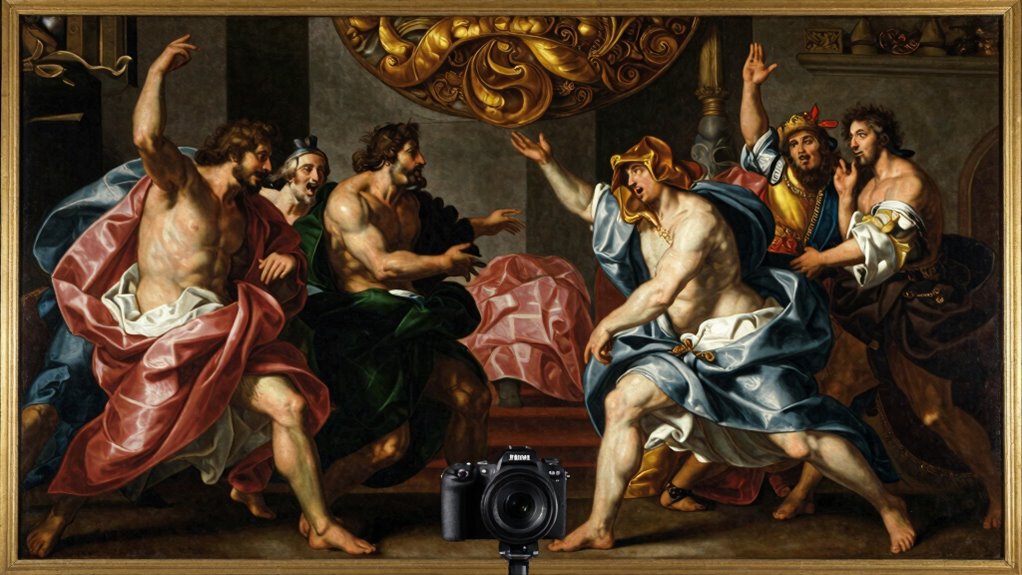

Baroque paintings look like movie scenes because artists used theatrical staging, dramatic lighting, and dynamic compositions to create vivid, emotionally intense visuals. They emphasized expressive gestures, striking facial expressions, and lively movement to heighten drama, much like in films. Rich colors and strategic shadows guide your focus and evoke strong feelings. These techniques make the artworks feel immersive and energetic, giving you a sense of watching a scene unfold — and there’s more to discover behind this dramatic style.
Open a free Amazon Business account
Business pricing, bulk buying and tax-exempt orders.
As an affiliate, we earn on qualifying purchases.
Key Takeaways
- Baroque paintings use theatrical staging, dramatic lighting, and elaborate set designs to create immersive, stage-like scenes.
- Artists employ vivid colors, strong contrasts, and strategic light to evoke intense emotions and focus viewer attention.
- Dynamic poses, expressive gestures, and diagonal compositions convey energy and movement similar to cinematic action.
- Facial expressions and microexpressions communicate complex emotions, enhancing realism and emotional depth.
- Modern cinema draws inspiration from Baroque techniques, blending visual grandeur, staging, and emotional intensity to craft movie scenes.
As an affiliate, we earn on qualifying purchases.
How Theater Influenced Baroque Painting Techniques
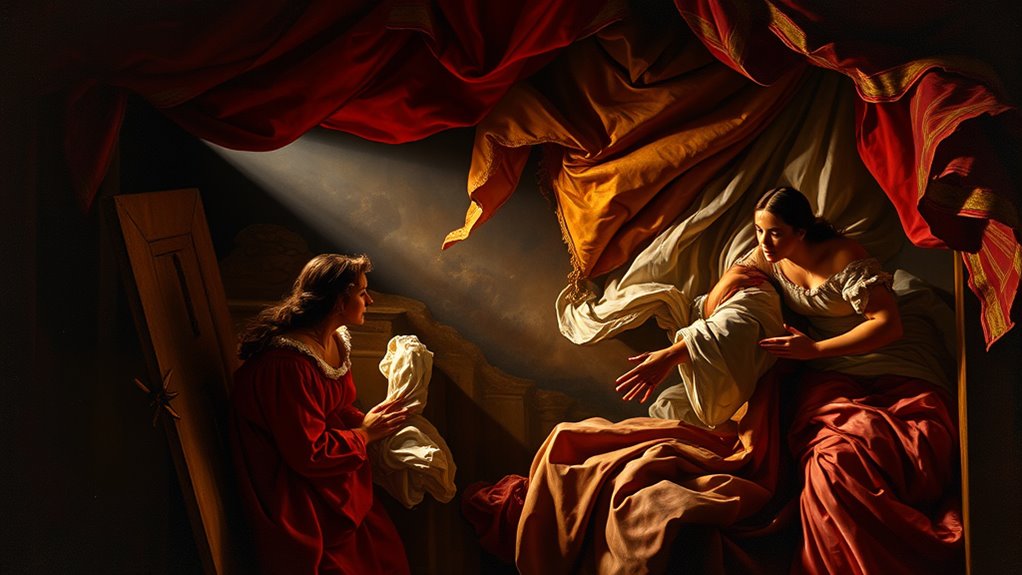
Have you ever noticed how Baroque paintings seem to burst with movement and emotion? This vivid energy comes from theater design, which heavily influenced painters of the era. You’ll see scenes that mimic stage setups, with dramatic backgrounds and dynamic compositions that guide your eye. The attention to costume details is striking, as artists captured the richness of fabrics, intricate patterns, and flowing garments, just like in theater costumes. These elements help create a sense of realism and immediacy, making the viewer feel part of the scene. By borrowing theatrical techniques, painters made their works more lively and theatrical, blurring the line between painting and performance. The use of lighting and shadow techniques from theater further enhanced the dramatic effect, emphasizing emotions and focal points in the artwork. This influence makes Baroque art feel like a snapshot of a dramatic, staged moment, showcasing how theatrical staging played a crucial role in shaping the visual storytelling of the period. Additionally, the concept of dramatic composition was central to both theater and Baroque painting, reinforcing the sense of narrative and emotional intensity in their visual language. The integration of stagecraft elements in painting helped achieve this heightened sense of drama and realism. Moreover, the mastery of visual storytelling techniques was essential for conveying complex narratives and emotions effectively.
As an affiliate, we earn on qualifying purchases.
How Light and Shadow Create Dramatic Effects
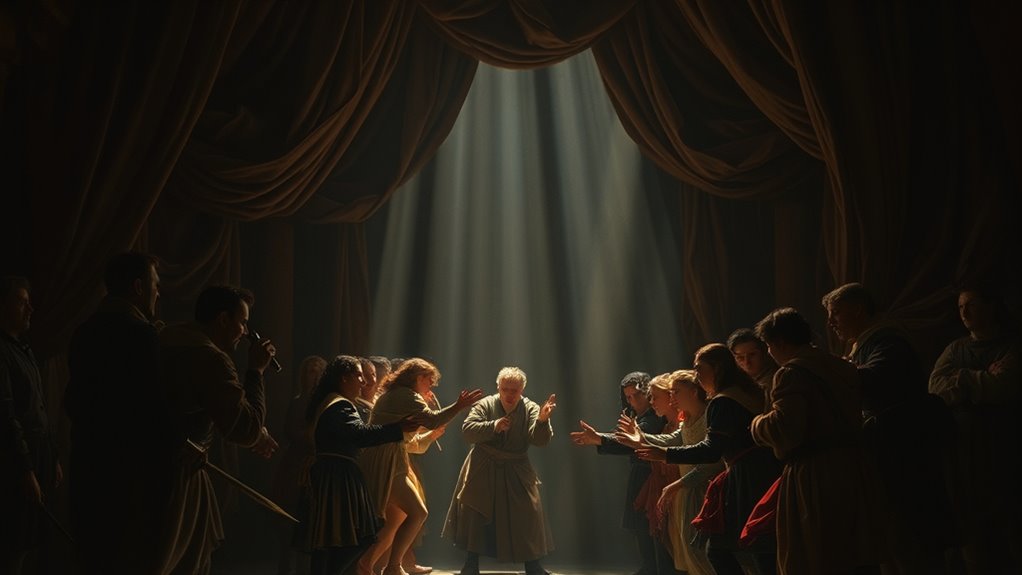
The theatrical influence on Baroque painting extends beyond composition and costumes; it also relies heavily on the dramatic use of light and shadow. Artists use chiaroscuro techniques to create striking contrasts, emphasizing depth and emotion. Additionally, the visual storytelling aspect is enhanced by this play of light, making scenes more compelling. By applying theatrical lighting, they spotlight key figures or moments, guiding your eye and intensifying the scene’s mood. This interplay of light and dark adds a sense of realism and immediacy, making the scene feel alive. The shadows hide details, creating mystery, while the illuminated areas draw your focus. This technique not only enhances the visual drama but also heightens emotional impact, making the painting resemble a stage set ready for a performance. It’s the mastery of light that transforms static images into dynamic, movie-like scenes. Additionally, the use of contrast ratios can greatly influence the overall emotional tone and visual clarity of the scene. Furthermore, lighting techniques are carefully chosen to evoke specific feelings and highlight narrative elements, reinforcing the scene’s overall dramatic effect. Incorporating an understanding of light manipulation can further deepen the viewer’s emotional engagement with the artwork.
theatrical stage lighting fixtures
As an affiliate, we earn on qualifying purchases.
As an affiliate, we earn on qualifying purchases.
How Compositions Capture Movement and Energy
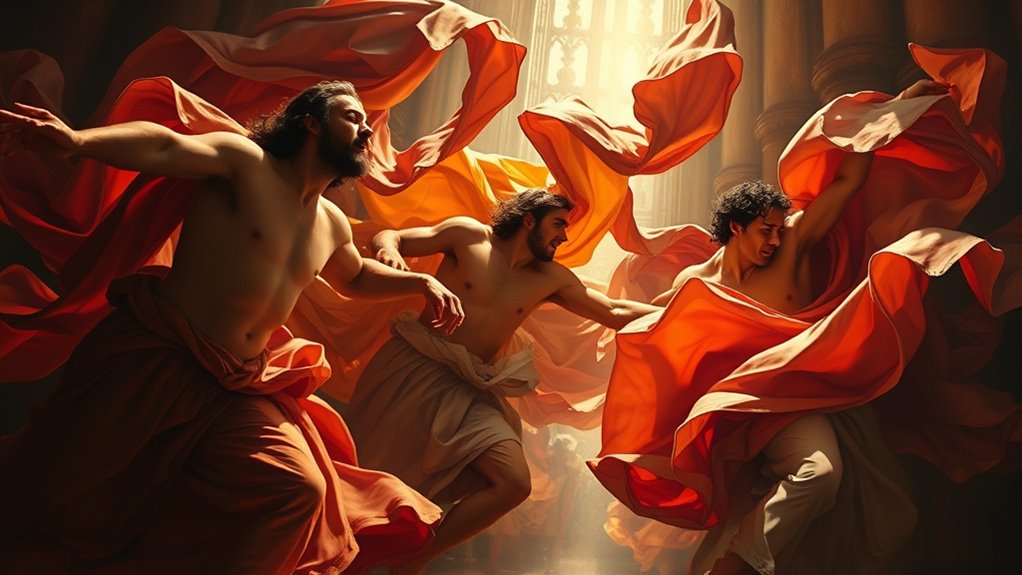
You can see movement and energy through figures striking dynamic poses and expressive gestures that draw your eye. Diagonal lines and clever composition guide your gaze, creating a sense of action and momentum. Bright light and vivid colors heighten this effect, making the scene feel alive and full of motion. Incorporating visual rhythm techniques can further emphasize the lively energy captured in these paintings. Additionally, the use of composition principles helps to balance these elements and enhance the overall sense of movement. Recognizing how spatial arrangement influences viewer perception can deepen your appreciation of these energetic scenes. Understanding how artistic techniques are employed can also shed light on the artist’s intent to convey vitality and motion. Paying attention to dynamic balance can reveal how artists intentionally create tension and harmony within the scene.
Dynamic Poses and Gestures
How do artists convey movement and energy in Baroque drama? They use gesture exaggeration and dynamic figure positioning to create vivid, lively scenes. By stretching limbs or twisting bodies, artists emphasize action, making figures seem ready to leap off the canvas. These exaggerated gestures evoke emotion and draw your eye through the composition, mimicking the spontaneity of live performance. Additionally, understanding visual cues can enhance appreciation of these dynamic compositions. Recognizing composition techniques and movement emphasis helps viewers interpret the intended drama and energy within each artwork. A keen eye for artistic symbolism further deepens the understanding of these expressive scenes.
Diagonal Lines and Composition
Diagonal lines serve as dynamic tools in Baroque composition, guiding your eye across the scene and creating a sense of movement. They break away from static symmetry by forming energetic pathways through geometric patterns, emphasizing action and tension. Additionally, the strategic use of visual elements enhances the overall energy and directs viewer engagement. Artists often use perspective techniques to enhance this effect, leading your gaze toward a focal point or along the implied motion. These lines direct attention and suggest energy flowing through the scene, making it feel alive and immediate. Whether through the tilt of a figure or the angle of architectural elements, the diagonal composition infuses paintings with vitality. By skillfully employing these elements, artists capture fleeting moments of drama, making static images resemble the motion and energy of movie scenes. Incorporating cultural influence, such as the Hopi’s spiritual connection to land, can also inspire compositions that evoke a sense of movement and energy. Furthermore, understanding artistic techniques allows for more deliberate and impactful use of diagonals to amplify the scene’s dynamism. For example, mastering light and shadow can further enhance the sense of depth and movement within the composition. Recognizing how these techniques connect to broader art history helps deepen our appreciation of their power to evoke emotion and storytelling.
Use of Light and Color
Light and color in Baroque compositions are powerful tools that heighten the sense of movement and energy. You notice how artists use color symbolism to evoke emotion—rich reds and golds symbolize passion and divinity, while darker hues suggest mystery or tension. Additionally, the careful manipulation of lighting contrast enhances the dramatic effect, guiding the viewer’s eye and emphasizing key elements within the scene. Light contrast is essential: dramatic highlights carve out figures, creating a sense of immediacy and motion. By sharply contrasting illuminated areas with shadowed backgrounds, artists direct your eye and amplify the dynamic feel of the scene. This interplay of light and color doesn’t just set the mood; it heightens emotional impact and immerses you in the action, making the scene vivid and alive. The strategic use of light contrast and color symbolism transforms static images into scenes bursting with movement and energy, especially when combined with an imaginative mindset that helps interpret the scene’s emotional depth.
As an affiliate, we earn on qualifying purchases.
How Facial Expressions Convey Deep Emotions
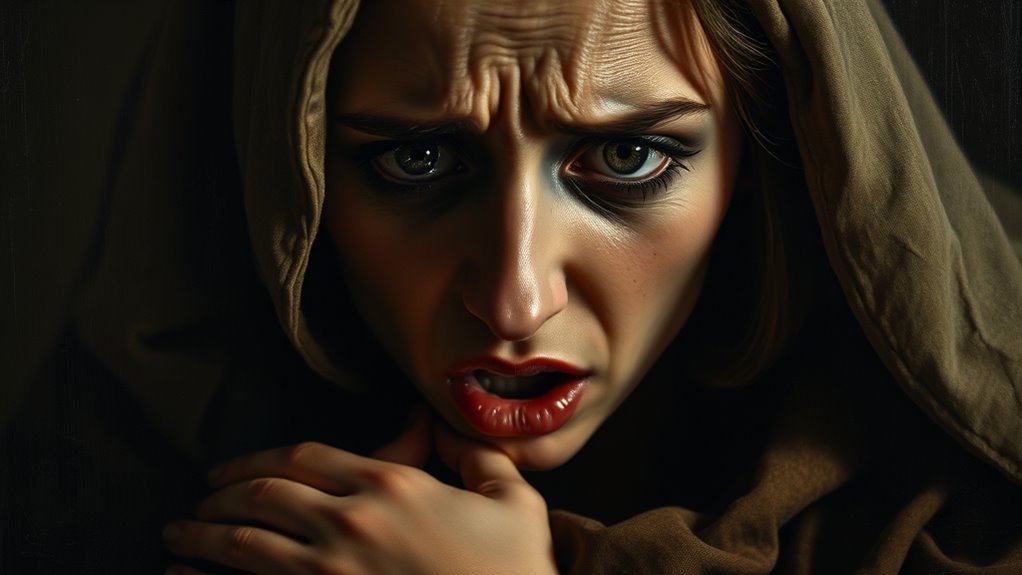
Your gaze can reveal intense feelings that words can’t express, drawing viewers into the character’s inner world.
Microexpressions, fleeting and subtle, expose emotions even when the face tries to hide them. By noticing these details, you see how powerful facial cues are in conveying deep, complex emotions in baroque drama.
Intensity Through Gaze
Facial expressions serve as powerful tools in Baroque drama, allowing performers to communicate intense emotions without words. The gaze, in particular, creates an emotional connection that draws you into the scene. A piercing stare or averted look can convey longing, anger, or despair instantly. The intensity through gaze amplifies the drama, making the audience feel what the characters are experiencing. Consider how different looks evoke specific feelings:
| Gaze Type | Emotional Effect | Scene Impact |
|---|---|---|
| Direct, unwavering | Intense focus, confrontation | Builds tension |
| Downcast | Shame, sorrow | Evokes sympathy |
| Side glance | Suspicion, intrigue | Adds mystery |
This visual language heightens the drama, making old paintings look like vivid movie scenes.
Subtle Microexpressions
Have you ever noticed how a tiny twitch of the lip or a slight raise of an eyebrow can reveal what someone is truly feeling? These subtle microexpressions are fleeting emotional cues that happen in a fraction of a second, often unnoticed by the untrained eye.
They serve as powerful signals, exposing authentic feelings beneath spoken words or conscious control. In art and drama, capturing these microexpressions adds depth, making characters more relatable and scenes more intense.
How Stagecraft Shaped Baroque Visual Storytelling
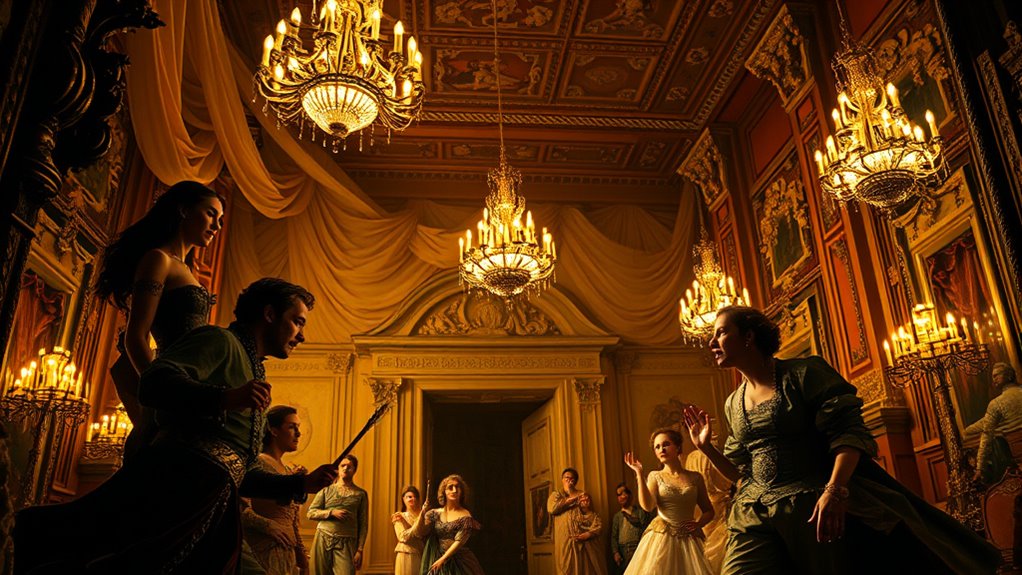
Stagecraft played an essential role in shaping how Baroque drama conveyed its stories visually. You notice how theatrical staging creates dynamic depth and focus, guiding the audience’s eye to key moments and characters.
Elaborate set designs, with their dramatic use of perspective and illusion, make scenes feel larger than life. Costume design also plays a fundamental role, with rich fabrics and vibrant colors emphasizing character status and emotional states.
These visual elements work together to heighten the drama and evoke strong emotional responses. Baroque stagecraft transforms simple storytelling into immersive spectacles, blurring the line between reality and art.
As a viewer, you’re drawn into a meticulously crafted world that amplifies the narrative’s intensity and grandeur, making each scene feel like a vivid, cinematic moment.
How Baroque Art Inspires Modern Cinema

Baroque art continues to influence modern cinema by inspiring filmmakers to craft visually stunning and emotionally intense scenes. You notice this in the use of dramatic lighting, rich colors, and dynamic compositions similar to Baroque paintings.
Modern CGI brings these visual elements to life, creating immersive, almost theatrical worlds that evoke the grandeur of Baroque art. Film editing also plays a vital role, allowing editors to manipulate pace and focus, heightening emotional impact much like a Baroque artist guides your eye across a canvas.
These techniques help filmmakers evoke a sense of drama, movement, and depth, making scenes feel like living paintings. As a result, movies today often resemble cinematic paintings, echoing the grandeur and emotional complexity characteristic of Baroque art.
Frequently Asked Questions
How Did Baroque Painters Choose Their Dramatic Color Palettes?
You see, baroque painters choose their dramatic color palettes by focusing on color symbolism and emotional intensity. They select bold, contrasting colors to evoke strong feelings and highlight key moments.
Deep reds symbolize passion or danger, while dark shadows add mystery. By deliberately using these colors, they draw viewers into the scene, making the emotional impact more powerful and immersive, much like a gripping movie scene.
What Specific Techniques Distinguished Baroque From Renaissance Art?
You notice that Baroque art distinguishes itself from Renaissance through techniques like dynamic chiaroscuro and emotional realism.
You see how artists use intense light and shadow contrasts to create depth and movement, making scenes feel alive. They also focus on capturing raw emotion, drawing you into the subject’s true feelings.
This approach results in dramatic, powerful images that seem to jump off the canvas, unlike the balanced serenity of Renaissance works.
How Did Baroque Artists Influence Later Cinematic Visual Styles?
You can see how Baroque artists influence cinematic visual styles through their use of theatrical lighting and emotional storytelling. They masterfully create dramatic contrasts and focus, guiding your eye to key moments, just like filmmakers do.
Their intense emotion and dynamic compositions inspire directors to craft scenes that evoke strong feelings, making movies feel like living paintings. This connection helps you experience stories more vividly, blending art and cinema seamlessly.
Were There Any Key Patrons Who Promoted Baroque Dramatic Art?
You should know that key patrons, like influential collectors and members of patronage networks, played a vital role in promoting Baroque dramatic art. These patrons commission and support artists, encouraging the creation of emotionally intense, dynamic works.
Their influence helps spread the dramatic style, ensuring that masterpieces reflect the grandeur and theatricality characteristic of Baroque art. Without their patronage, many iconic works might never have come into being.
How Do Baroque Themes Reflect the Societal Values of the Period?
You see that Baroque themes reflect societal values through their use of religious symbolism and political propaganda. The art emphasizes emotional intensity and divine authority, aligning with the period’s focus on faith and power.
Conclusion
You can see how baroque paintings feel like movie scenes because they draw you into intense emotions, dynamic movement, and dramatic lighting. The techniques used in theater and stagecraft influenced artists to craft vivid, energetic visuals that tell powerful stories. Today, modern cinema continues this tradition, making old paintings feel surprisingly alive and cinematic. By understanding these connections, you gain a deeper appreciation for how art and film both capture life’s drama.
Flea & tick season Picks
flea and tick prevention
As an affiliate, we earn on qualifying purchases.