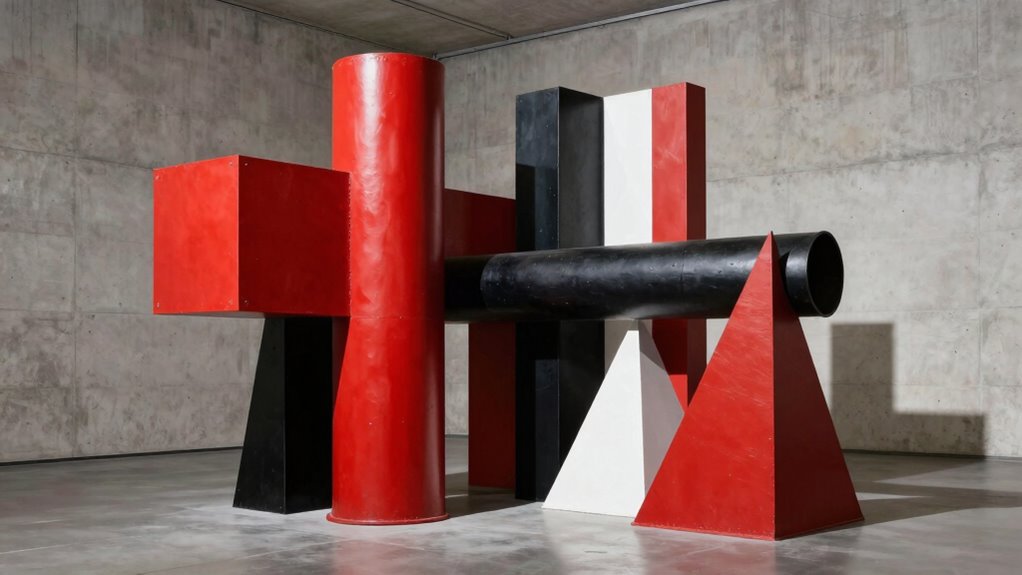

Constructivism became engineering-inspired when artists and architects started merging art with industrial materials and engineering principles in the early 20th century. They focused on functionality, geometric forms, and innovative techniques, transforming art into practical, social tools. With pioneers like Tatlin and Rodchenko pushing boundaries, the movement emphasized design that serves a purpose. If you continue exploring, you’ll discover how this revolutionary approach shaped modern architecture and design today.
Key Takeaways
- Constructivism emerged by merging artistic creativity with engineering principles, emphasizing functional design and industrial materials.
- Artists like Tatlin integrated engineering concepts into art, exemplified by projects such as the Tatlin Tower.
- The movement prioritized structural clarity, practicality, and the use of industrial materials, blurring art and engineering boundaries.
- Architectural designs adopted engineering techniques, focusing on stability, efficiency, and innovative structural solutions.
- Technological advancements like digital fabrication and 3D printing continue the engineering-art integration pioneered by constructivists.
Explore the Origins of Constructivism
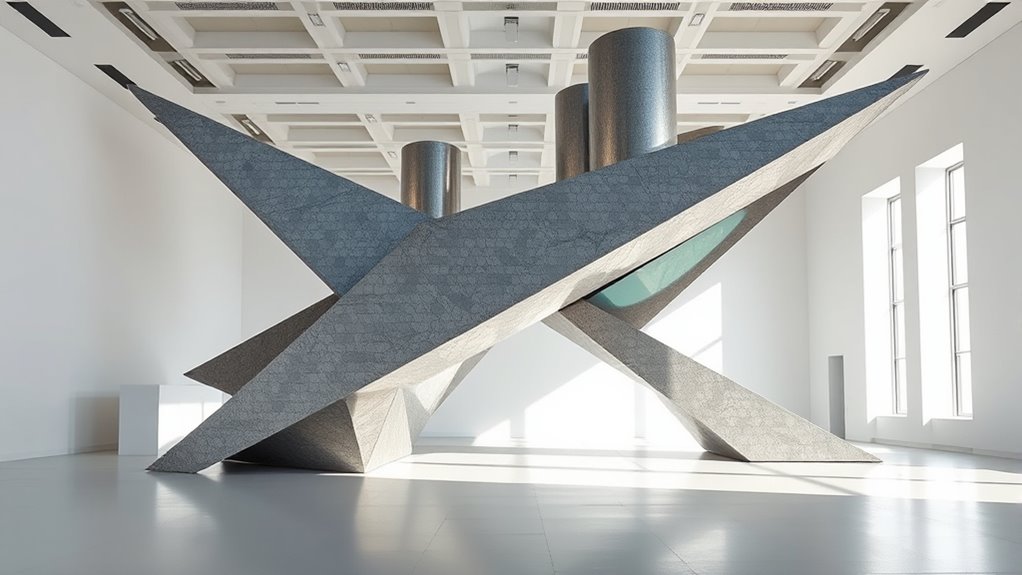
Constructivism emerged in Russia in the early 20th century as a response to the social and political upheavals of the time. Its origins are deeply rooted in the broader context of art history, where artists sought new ways to reflect modern life and technological progress. You’ll find that the movement was influenced by revolutionary ideals and a desire to merge art with industry and engineering. During this period, artists like Tatlin and Gabo pioneered ideas that challenged traditional aesthetic norms, emphasizing functionality and abstract forms. This shift marked a departure from conventional art, aiming to serve societal change. Recognizing the importance of technological innovation in shaping its principles helps you understand how constructivism sought to integrate art with engineering and industry. The movement’s emphasis on functionalism demonstrated a commitment to practicality and efficiency in design. Additionally, the movement was characterized by a focus on material experimentation, reflecting its desire to utilize new industrial materials and techniques. The emphasis on innovative construction techniques further exemplifies how constructivism aimed to revolutionize artistic and architectural practices. The integration of wave and wind dynamics into structural design reflects the movement’s interest in harnessing natural forces and modern engineering principles. Understanding the origins of constructivism helps you appreciate how it redefined art’s role within a rapidly transforming society and highlights its significance in art history.
Discover the Core Principles of Constructivist Art
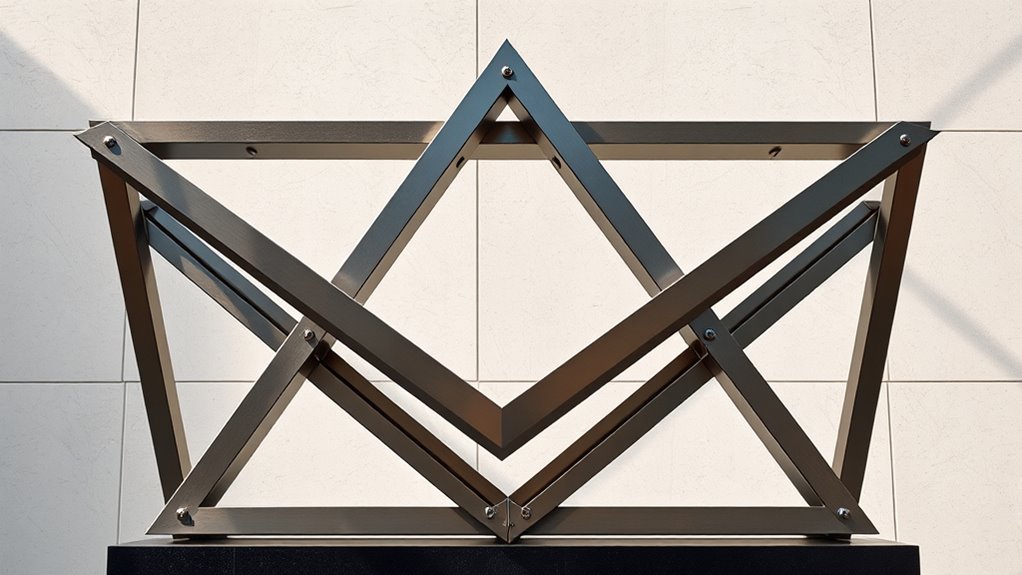
At the heart of constructivist art lie principles that emphasize functionality, experimentation, and a break from traditional aesthetics. You focus on clear geometric shapes, often using bold lines and primary colors informed by color theory to evoke emotion and meaning.
Artistic symbolism replaces decorative elements, conveying ideas through simplified forms. Constructivists prioritize practicality, creating art that serves a purpose beyond mere beauty—whether in architecture, design, or social commentary.
You’re encouraged to explore how color interacts with space and form, enhancing the message without unnecessary embellishments. This approach fosters a sense of unity between art and engineering, making every element serve a specific function.
Meet the Key Artists and Architects of the Movement
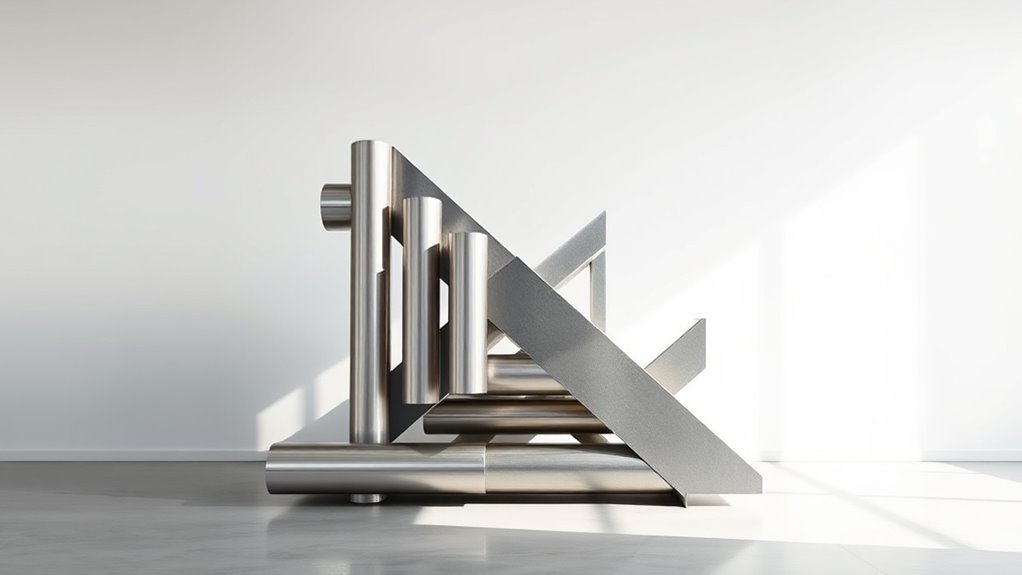
You’ll want to get familiar with the pioneers who shaped Constructivism, like Vladimir Tatlin and Aleksandr Rodchenko. These influential artists and architects pushed boundaries and redefined modern art and design. Their innovative use of visual and auditory cues in their work exemplifies their commitment to integrating art and engineering principles, which continues to influence creative fields today. By emphasizing functional design and experimental materials, they foreshadowed the outdoor-kitchen essentials movement in contemporary craftsmanship. Their emphasis on Free Floating elements exemplifies the movement’s focus on dynamic and adaptable forms that challenge traditional aesthetics. Additionally, their work often incorporated collaborative techniques to promote innovative ideas without compromising artistic integrity.
Pioneers of Constructivism
Among the key figures of the Constructivist movement, Vladimir Tatlin stands out as a pioneering artist whose innovative approach reshaped modern art and design. His work embodies the Constructivist philosophy, emphasizing functionality, industrial materials, and a break from traditional aesthetics. His emphasis on practicality and collaboration influenced many subsequent artists and architects. Tatlin’s designs focus on visual abstraction, simplifying forms to their core elements to serve a clear purpose. You’ll notice his famous model, the Tatlin Tower, exemplifies this ethos—combining engineering principles with artistic expression. These pioneers prioritized practicality and collaboration, blurring the lines between art, architecture, and technology. Their goal was to create art that reflected the modern industrial age, transforming artistic creation into a form of engineering, and revolutionizing how we understand and produce visual culture today.
Influential Artistic Figures
Several key artists and architects shaped the Constructivist movement, each bringing unique ideas and innovations that defined its character. Vladimir Tatlin, with his focus on geometric abstraction, pushed boundaries by integrating industrial materials into dynamic, functional designs. Luggage & Bags El Lissitzky contributed to the avant-garde movement through his experimental use of geometric forms and innovative architectural concepts that blurred art and engineering. Alexander Rodchenko emphasized bold shapes and structural clarity, creating works that merged aesthetic appeal with practical purpose. These figures prioritized technology and modern materials, transforming art into an engineering-like discipline. Their contributions helped establish Constructivism as a revolutionary movement that bridged art and industry, inspiring future generations to see creative expression as a form of technological innovation and structural exploration. Additionally, the movement’s emphasis on modern materials and industrial techniques reflected a broader cultural shift towards embracing technology as a vital element of artistic practice. The adoption of body jewelry measurements and materials in their designs exemplifies how precise specifications and innovative materials can influence structural integrity and aesthetic appeal in modern art and architecture.
See How Constructivism Prioritized Functionality

You’ll notice that constructivism emphasizes practical use over decorative details, ensuring every element serves a purpose. The movement also advocates for practical and multi-functional gear as a means to understand individual differences and enhance collaborative design efforts.
Emphasis on Practical Use
Constructivism in art places a strong emphasis on practicality, prioritizing functionality over decorative appeal. You’ll notice that artists focus on abstract forms that serve a purpose, stripping away unnecessary ornamentation.
Instead of purely aesthetic expression, the goal is to create works that are useful and efficient. This approach aligns with the movement’s belief that art should contribute directly to society and everyday life.
By emphasizing practical use, constructivist artists challenge traditional boundaries, blending art with engineering and design. Their work aims to solve real problems and improve usability, demonstrating that art can be more than visual pleasure—it can be a tool for innovation.
This focus transforms the role of art from mere decoration to a functional, integral part of modern life.
Form Follows Function
In constructivist art, the idea that form should follow function guides the entire creative process. You focus on material innovation to create new possibilities, emphasizing functionality over decorative details. Incorporating structural efficiency into your designs ensures that each piece is both functional and resilient, reflecting the engineering principles that underpin constructivism. This approach demands aesthetic simplicity, stripping away unnecessary ornamentation to highlight the object’s purpose. As you design, you prioritize practicality, ensuring each element serves a clear role. The use of innovative materials allows for structural efficiency and durability, reinforcing the belief that function shapes form. Your goal isn’t to produce ornate art but to craft purposeful, efficient works that merge engineering principles with artistic expression.
Simplified Structural Design
Have you ever noticed how constructivist art emphasizes clean, straightforward structures that prioritize function? This approach leads to simplified structural design, where form follows function becomes practical.
You focus on achieving maximum structural stability with minimal material use, ensuring durability without excess. By simplifying shapes and avoiding unnecessary ornamentation, you make structures more efficient and easier to assemble.
Material efficiency is key; you select materials that provide strength while reducing waste. This approach results in lightweight yet strong frameworks that serve their purpose effectively.
Constructivism’s emphasis on simplified design doesn’t compromise safety—it enhances it. You design with clarity and purpose, demonstrating how engineering principles can merge seamlessly with artistic intent, creating structures that are both functional and aesthetically straightforward.
Understand the Role of Industrial Materials in Design
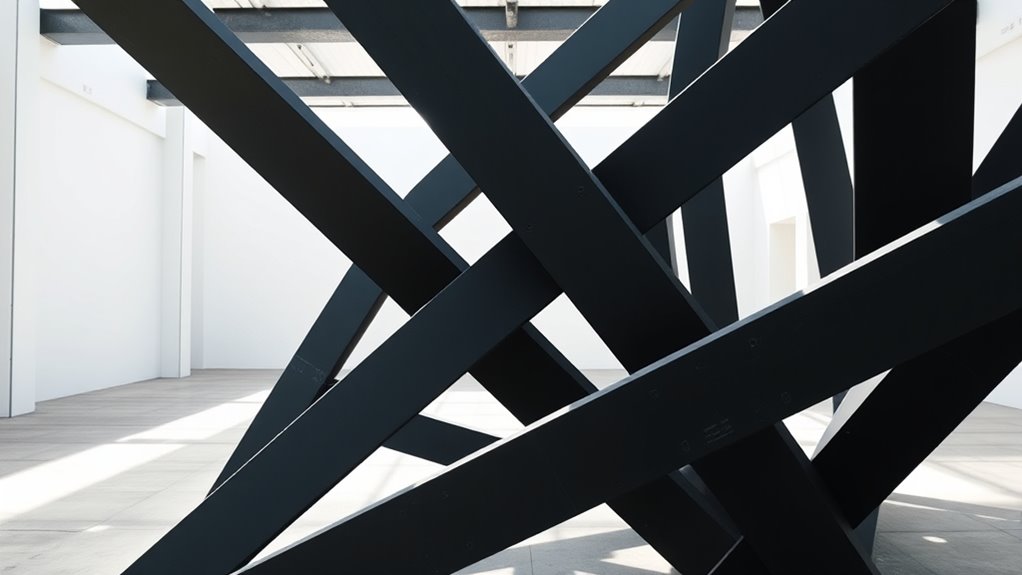
Industrial materials have revolutionized the way artists and designers approach their work, offering new possibilities for form, function, and expression. With the rise of industrial aesthetics, you can now incorporate raw, utilitarian elements that emphasize simplicity and honesty in design. Material innovation plays a key role, enabling you to experiment with metals, plastics, glass, and concrete to create structures that blend art and engineering seamlessly. These materials allow for precise fabrication and durability, expanding your creative options beyond traditional media. Exploring the astrological traits associated with certain materials can further inspire innovative design choices. Additionally, understanding material properties helps you select the most suitable materials for specific projects, ensuring both form and function are optimized. Recognizing the technological advancements in material processing can lead to more sustainable and efficient production methods. Incorporating modern manufacturing techniques can also enhance your ability to realize complex designs with precision. As a result, you can craft works that reflect modernist ideals—embracing functionality while maintaining aesthetic appeal. Understanding the role of industrial materials helps you push boundaries, making your designs more innovative, efficient, and aligned with the constructivist ethos of merging art with industrial progress.
Learn How Constructivism Changed Architecture and Public Spaces
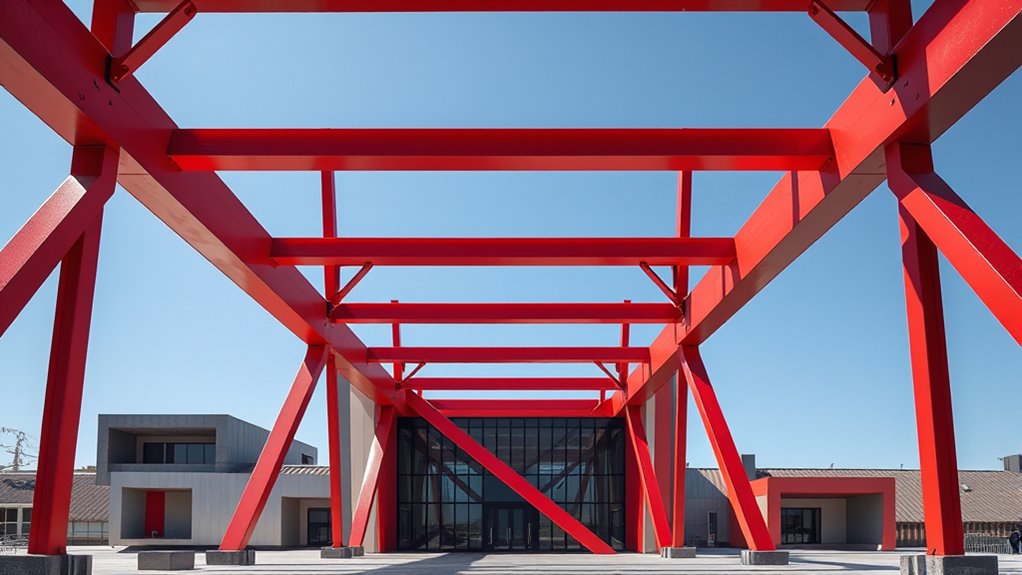
How did constructivism transform architecture and public spaces? You see, it emphasized functionalism and the integration of art with everyday life, shaping urban planning to serve social activism. Constructivist architects prioritized practicality, creating structures that promoted community engagement and accessibility. They believed public spaces should foster interaction and reflect societal progress. This approach led to innovative designs that broke away from traditional aesthetics, emphasizing geometric forms and industrial materials. As a result, cities transformed into dynamic environments that encouraged social change and collective participation. Constructivism’s influence pushed architects to think beyond beauty, focusing on how architecture could act as a social activism tool and improve urban living. Additionally, sustainable design practices played a role in ensuring that public infrastructure remained functional and environmentally friendly. The movement also championed the use of industrial materials, which allowed for more cost-effective and durable structures. You now understand how this movement reshaped the very fabric of public spaces and urban development, incorporating modern building techniques that continue to influence architecture today.
Find Out How Art, Technology, and Society Intersected

Art and engineering often came together to create innovative designs during the Constructivist movement. Technological advancements made it possible to explore new materials and methods in artistic expression. The use of essential oils in design and daily life reflects how art and science can intersect to improve wellbeing and aesthetics. Society’s changing needs and ideas directly influenced how artists approached their work, shaping the intersection of art, tech, and community.
Art Meets Engineering
Have you ever wondered how creative expression and technological innovation come together to shape society? When art meets engineering, it transforms digital aesthetics into powerful tools for communication.
Artists of the constructivist era used technology to emphasize functional design, blending form with purpose. Cultural symbolism played a vital role, as artworks reflected societal ideals and political messages through innovative mediums.
This intersection pushed boundaries, making art not just visual but interactive, engaging viewers in new ways. You see this in how technological advances influence artistic styles, shaping societal values and cultural identity.
The fusion of art and engineering created a new language—one that combines aesthetics with utility, ultimately redefining how society perceives and interacts with creative works.
Technological Innovations in Art
Technological innovations have revolutionized the way artists create and engage with their audiences, forging new pathways for expression and interaction. Digital fabrication allows you to turn complex designs into tangible artworks quickly and precisely, expanding creative possibilities.
With tools like 3D printing and CNC machining, you can produce intricate structures that reflect innovative ideas rooted in constructivist principles.
Interactive installations take this a step further by inviting viewers to become active participants in the art. These installations use sensors, projection mapping, and real-time data to create dynamic experiences, blurring the line between artist and audience.
As technology advances, your ability to experiment with new mediums and methods grows, transforming traditional art into immersive, experiential encounters that mirror society’s evolving relationship with innovation.
Society’s Influence on Design
Society’s values and challenges have continuously shaped the way artists and designers approach their work, creating a dynamic interplay between cultural context and innovation. Social dynamics influence design choices, reflecting shifting priorities and collective identities.
As society evolves, so does the cultural impact on art, pushing creators to address issues like politics, technology, and social justice. You’ll notice how these influences drive the integration of functionalism and aesthetic considerations, transforming art into a tool for communication and societal change.
This relationship fosters a feedback loop: societal needs inspire new forms of expression, which in turn shape public perception and cultural narratives. Recognizing this connection helps you understand how art becomes more than just visual; it embodies the spirit and struggles of its time.
Examine Notable Constructivist Works and Their Significance
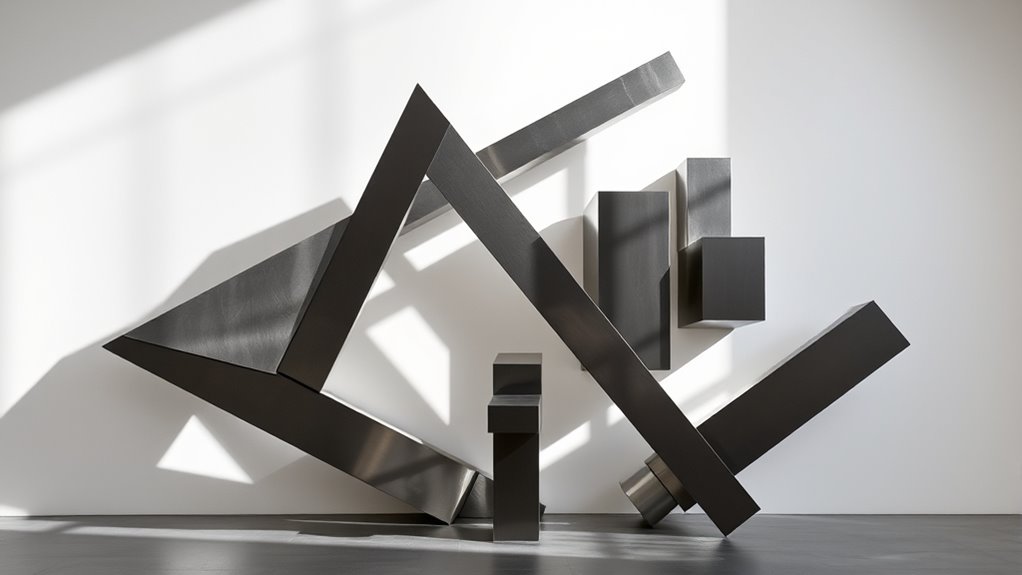
Constructivist art is best understood through its most influential works, which embody the movement’s emphasis on function, industrial materials, and geometric abstraction. Artists like Vladimir Tatlin and El Lissitzky created pieces that highlight the importance of color theory, using bold hues to evoke emotional and ideological responses.
Their works often incorporate cultural symbolism, reflecting revolutionary ideals and Soviet identity. For example, Tatlin’s “Monument to the Third International” combined practical engineering with artistic vision, illustrating how form serves purpose. These works challenged traditional aesthetics, emphasizing materials like metal and glass to communicate transparency and progress.
Their significance lies in demonstrating how art can merge with engineering principles, shaping a new visual language rooted in societal transformation and technological optimism.
Trace the Evolution and Decline of Constructivism
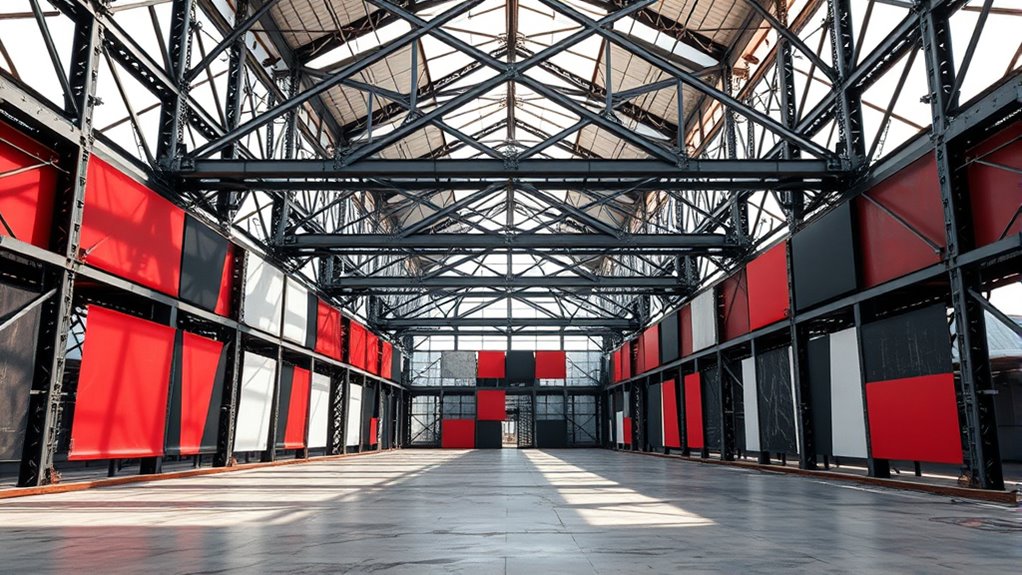
As the early 1920s progressed, the innovative energy of Constructivism began to evolve and face new challenges. The Constructivism philosophy, which prioritized functionality and industrial aesthetics, started to shift as political and artistic climates changed.
Artistic collaborations, once vibrant and experimental, became more constrained by ideological expectations and national agendas. The movement’s focus on utilitarian design and engineering principles led to a decline in its prominence, as other avant-garde styles gained favor.
Many artists moved away from strict constructivist ideals, seeking personal expression or embracing new movements like Surrealism and Dada. Despite its decline, the principles of Constructivism influenced later design and architecture, but its unified vision of art as a tool for social change diminished over time.
Recognize the Legacy and Modern Influence of Constructivism

Although Constructivism declined as a dominant movement in the early 20th century, its ideas continue to influence modern design and art practices. You can see its legacy in digital aesthetics, where geometric forms and functional simplicity dominate. Constructivism’s emphasis on cultural symbolism remains relevant, inspiring contemporary artists and designers to embed meaning into their work. This influence bridges past and present, fostering innovative approaches. The table below highlights how Constructivism’s core principles persist:
| Principle | Modern Application | Cultural Impact |
|---|---|---|
| Geometric Forms | Digital interfaces & branding | Symbolism & identity |
| Functional Design | User-centered tech design | Cultural language & communication |
| Material Use | Sustainable, modular materials | Reflects societal values |
You recognize its modern influence by observing these enduring ideas shaping today’s visual culture.
Frequently Asked Questions
How Did Constructivism Influence Modern Technological Design?
Constructivism influences your approach to modern technological design by emphasizing functional aesthetics and industrial innovation. You’re encouraged to blend practical use with visual appeal, creating designs that are both efficient and striking.
This movement pushes you to rethink traditional art forms, integrating engineering principles that lead to smarter, more innovative products. As a result, your work becomes a seamless fusion of form and function, driving forward contemporary design with a focus on utility and creativity.
What Was the Political Impact of Constructivist Art?
You see how constructivist art shaped political impact by fueling propaganda campaigns and emphasizing political symbolism. Its bold, geometric designs conveyed messages of unity, progress, and industrial strength, aligning with state ideologies.
Are There Contemporary Movements Inspired by Constructivism?
Yes, contemporary movements draw inspiration from constructivism, especially in digital aesthetics and material innovation. You’ll see this in digital art, where artists embrace geometric forms and functional design.
Movements like new media art and design think about how technology and materials can create engaging, innovative experiences. These artists prioritize experimentation with digital tools and materials, echoing constructivist principles of combining art, engineering, and social purpose.
How Did Constructivism Differ From Other Avant-Garde Movements?
You see that constructivism differs from other avant-garde movements by emphasizing industrial aesthetics and functional abstraction.
Unlike movements focused on emotional expression or pure form, constructivists prioritize practical design, often merging art with engineering.
You notice its focus on utilitarian objects and geometric forms, reflecting a belief that art should serve social and technological progress rather than just aesthetic ideals.
This pragmatic approach sets it apart from more traditional or purely expressive movements.
What Challenges Did Constructivists Face During Their Development?
You face challenges like material resistance, which makes it hard to implement innovative ideas, and ideological conflicts that create tensions within the movement.
Constructivists often struggle to balance artistic vision with engineering practicality, pushing against traditional boundaries. These obstacles test your ability to adapt and innovate, forcing you to find new ways to unite art and technology despite resistance from existing social and political structures.
Conclusion
You’ve seen how constructivism transformed art into engineering, blending function with innovation. Its emphasis on industrial materials and technology pushed boundaries, shaping modern design and architecture. Even as the movement declined, its legacy endures in today’s functional, tech-inspired creations. By understanding its origins and principles, you can appreciate how art and engineering continue to intersect, inspiring new generations to create with purpose and precision.