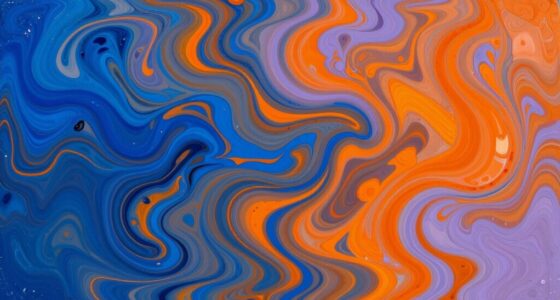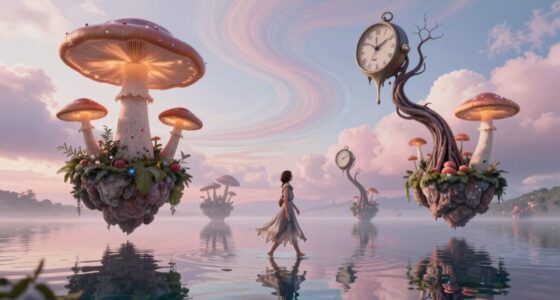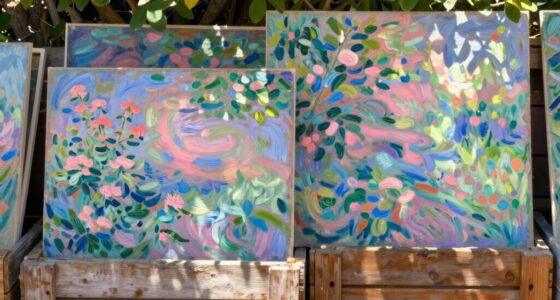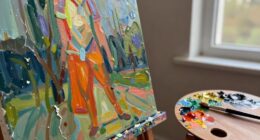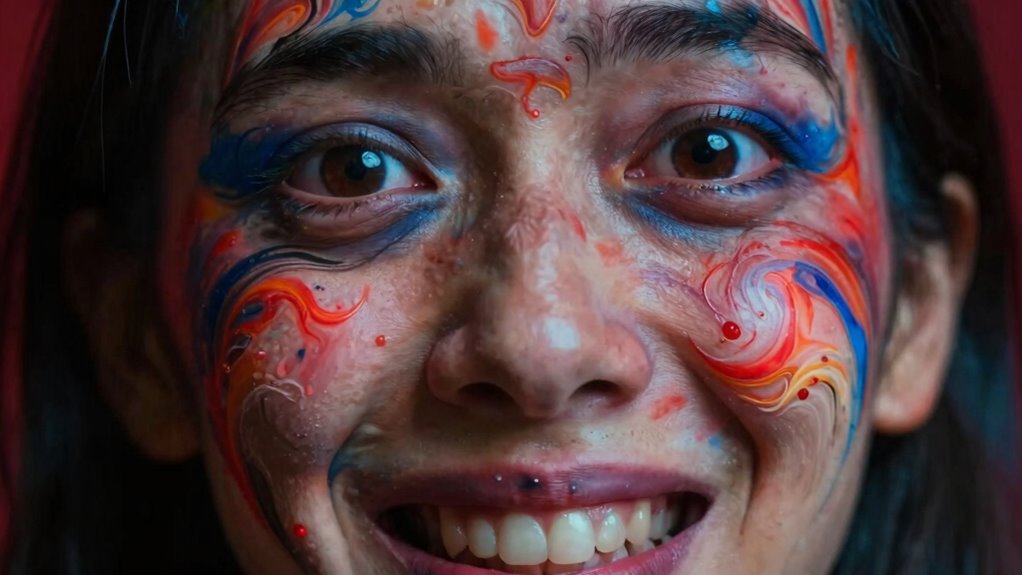
In expressionism, distortion is a powerful tool that helps you see beyond surface appearances and understand deep emotional truths. Artists intentionally warp shapes and exaggerate colors to communicate feelings like passion, fear, or anguish. This challenge to traditional realism makes you connect more personally with the artwork’s inner world. If you continue exploring, you’ll discover how these creative choices reveal raw, authentic human experiences that words or realistic images can’t fully express.
Key Takeaways
- Distortion in expressionism reveals inner emotional truths that realistic depictions often conceal.
- Exaggerating forms and colors communicates complex feelings beyond surface appearances.
- Artistic distortion challenges societal norms, serving as a form of cultural and personal critique.
- It creates visceral, immersive experiences that evoke authentic emotional responses from viewers.
- Distortion prioritizes inner truth over external accuracy, uncovering subconscious and psychological depths.
What Is Expressionism and Why Does It Challenge Traditional Art
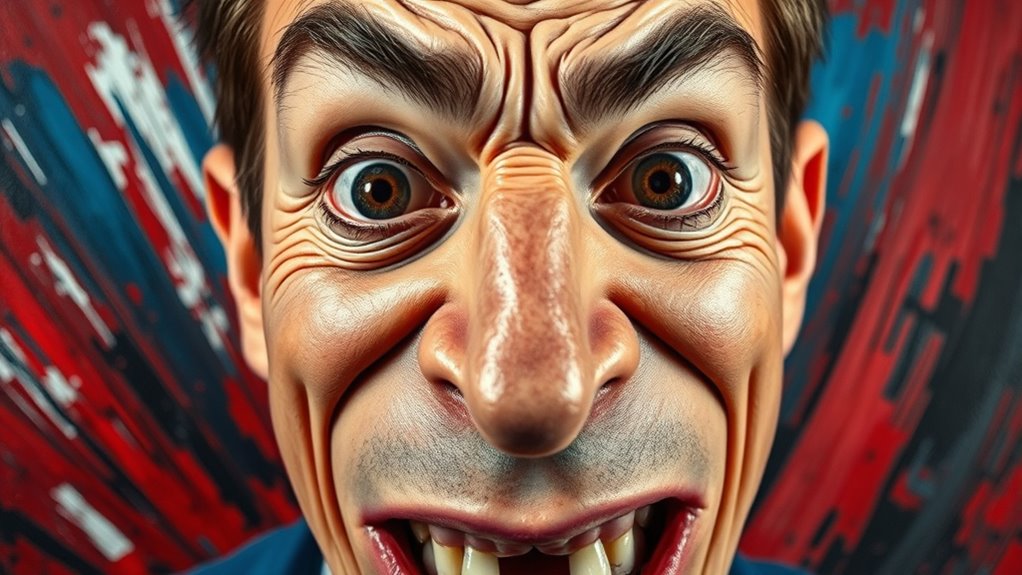
Expressionism is an art movement that emphasizes emotional experience and personal interpretation over realistic representation. You’re encouraged to see beyond surface appearances and explore deeper feelings and truths. A key aspect of this movement is the use of Free Floating elements that are not anchored by traditional perspective or realistic detail, allowing for greater emotional expression. This approach reflects artistic innovation, pushing boundaries of traditional techniques to evoke strong emotional responses. Expressionists often challenge societal norms, making their work a form of cultural critique. They reject the polished, idealized images of academic art, favoring raw, visceral portrayals that highlight inner turmoil and anxiety. By distorting forms and exaggerating colors, they communicate complex human emotions more powerfully. Additionally, the movement often embraces distortion and exaggeration as tools to convey deeper emotional truths that surpass literal accuracy. This movement isn’t just about creating visually striking art; it’s about questioning the status quo and giving voice to personal and collective struggles. It fundamentally reshapes how art can reflect the human condition, especially through emotional expression techniques that emphasize the subjective experience of the artist. Moreover, the use of imaginative techniques allows expressionists to further explore inner worlds and subconscious themes, fostering a richer understanding of human psychology and artistic innovation.
How Does Distortion Help Convey Emotional Depth
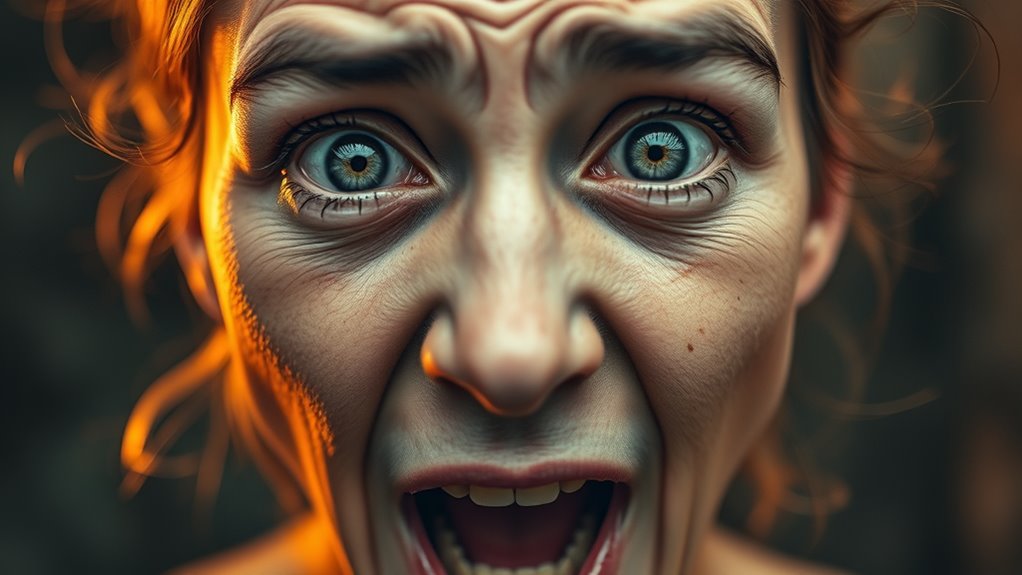
By distorting shapes and exaggerating features, artists can tap directly into your emotions, making feelings more immediate and intense. This technique amplifies emotional depth by manipulating viewer perception, guiding you to see the subject’s inner turmoil or joy. Additionally, the use of body jewelry measurements can influence how the artwork’s themes of transformation and self-expression are perceived. Color symbolism also plays a crucial role; bold, unnatural hues evoke specific feelings—reds for passion or anger, blues for melancholy. These distortions challenge traditional realism, forcing you to interpret meaning beyond literal appearances. Recognizing the role of artistic distortion helps deepen your appreciation of how emotional expression is conveyed. As a result, you don’t just observe the image—you feel it. The exaggerated features and vibrant colors create an emotional resonance, making the artwork’s message more powerful. This approach allows you to connect deeply with the artist’s inner world, experiencing raw, honest emotion that’s often hidden in more realistic portrayals. Furthermore, some artists intentionally utilize visual exaggeration to emphasize particular themes or messages within their work. Incorporating knowledge of artistic techniques can enhance your understanding of how these distortions evoke emotional responses.
What Techniques Do Expressionists Use to Distort Images
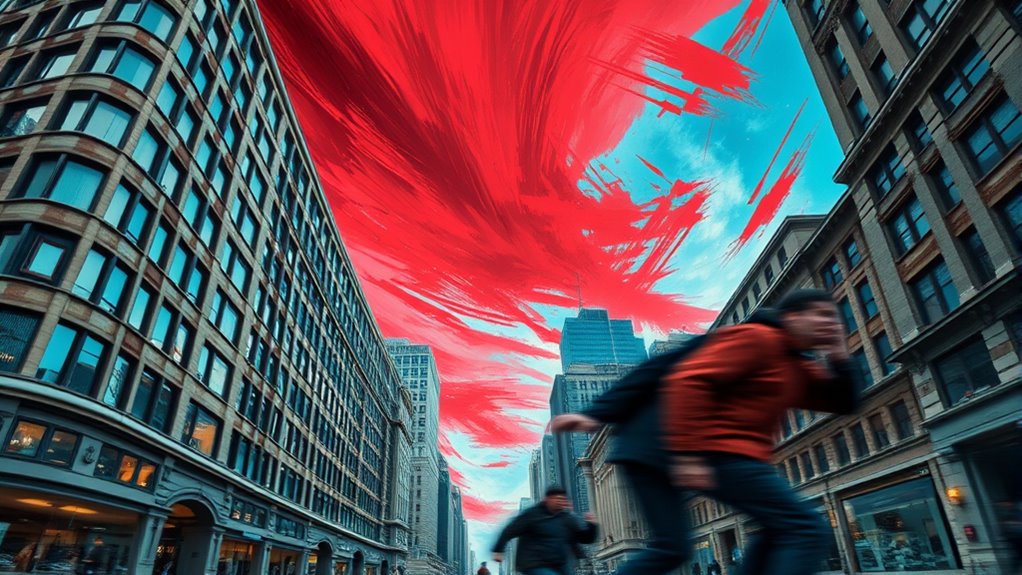
Artists intentionally manipulate proportions, shapes, and perspectives to create striking distortions that evoke emotion. They often use abstract forms to break away from realistic representation, emphasizing emotional impact over accuracy. Additionally, some artists incorporate sound vibrations or rhythmic patterns to influence viewer perception and deepen emotional resonance. By distorting figures and objects, they guide your focus toward feelings rather than details. Color symbolism plays a crucial role, as bold and unconventional hues express mood and intensity. Bright reds may symbolize passion or anger, while muted tones evoke melancholy. These techniques distort the natural, helping you connect with the artist’s inner world. The exaggeration of features, skewed perspectives, and vibrant or unsettling colors all work together to challenge your perception and reveal deeper emotional truths beyond surface appearances. Furthermore, the use of Suprem fabric can enhance the expressive qualities of garments, adding texture and movement that amplify emotional impact. Incorporating artistic innovation allows expressionists to push boundaries and create more impactful visual experiences. Additionally, embracing visual experimentation enables artists to explore new methods of distortion and emotional expression. Exploring techniques for emotional impact can further deepen your understanding of how these artistic choices influence viewer perception.
How Does Distortion Reveal Inner Truths Beyond Realism
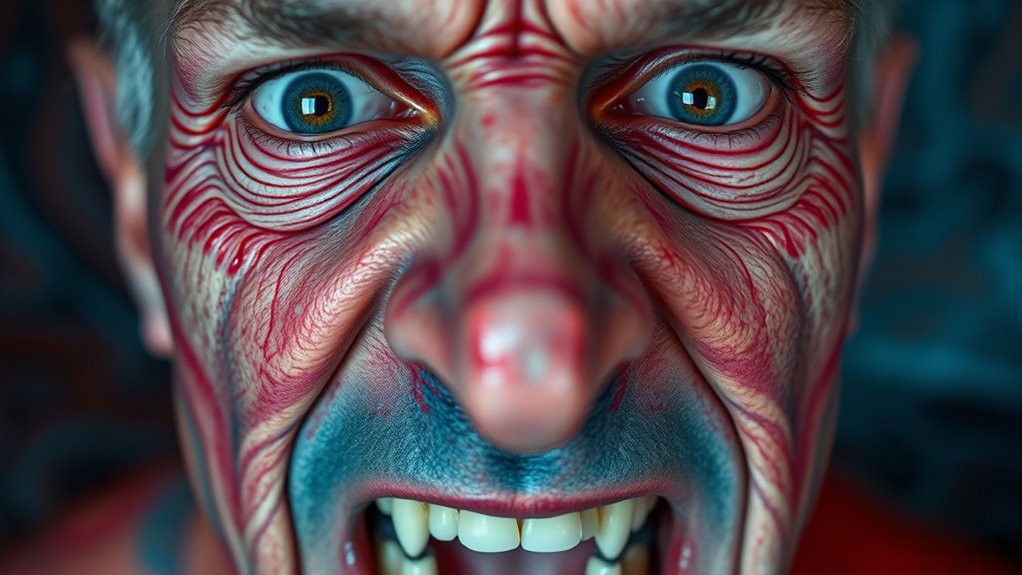
When you use distortion, you prioritize emotions over accuracy, making inner feelings more visible than realistic details. Symbolic exaggeration techniques help you express complex ideas and inner struggles beyond what’s true to life. Through this, you reveal inner worlds that words or realistic images can’t fully capture. Recognizing the importance of individual evidence in understanding personal experiences can deepen the emotional resonance conveyed through expressionism. Engaging in artistic expression can further enhance this process by allowing artists to explore and communicate their unique perspectives and emotional truths. For example, artists like Kate from Breaking Amish have used their personal journeys to inform their creative expressions, emphasizing the significance of personal histories in art. Additionally, understanding cultural influences can provide a richer context for interpreting distorted imagery and its emotional impact. Appreciating the role of artistic techniques can also shed light on how artists manipulate form to evoke stronger emotional responses.
Emotions Over Accuracy
Distortion in expressionism isn’t about mimicking reality; it’s a deliberate tool to convey raw emotional truths that words often fail to capture. You use exaggerated forms and vivid colors to evoke feelings rather than precise depictions.
Color symbolism plays a vital role—bright reds or intense blues can express anger, passion, or despair more powerfully than realistic shading. Cultural influences shape these choices, guiding how certain colors and distortions evoke specific emotional responses.
Instead of striving for accuracy, you prioritize the inner experience over external appearances. This approach allows you to communicate complex feelings directly to viewers, bypassing literal interpretation.
Your distortion becomes a bridge to authentic human emotion, revealing truths that mere realism could never fully express. Understanding artistic techniques such as color symbolism enhances your appreciation of how these distortions serve as powerful tools for emotional expression.
Symbolic Exaggeration Techniques
By amplifying certain features or exaggerating proportions, you create symbolic meanings that go beyond realistic depiction. This technique, known as symbolic exaggeration, allows you to emphasize specific emotions or ideas directly.
For example, enlarging a figure’s eyes can symbolize heightened awareness or vulnerability, while elongating limbs might express tension or struggle. These distortions serve to amplify emotional impact, making inner states visually palpable.
Through this process, you communicate complex feelings that words often fail to capture. Instead of endeavoring for accuracy, you focus on conveying the essence of an experience.
This emotional amplification invites viewers to connect deeply with your work, revealing inner truths that transcend literal representation. Ultimately, symbolic exaggeration makes your art a powerful tool for expressing authentic human emotion.
Inner Worlds Manifested
Inner truths often lie beneath surface appearances, and through deliberate distortion, artists reveal these hidden aspects. By manipulating form and scale, they tap into dream symbolism and subconscious influences, exposing emotional realities beyond realistic depiction. Distortion becomes a bridge to the inner world, allowing you to see beneath the façade and understand deeper truths. These visual shifts evoke feelings and ideas that words can’t capture. To illustrate:
| Surface Appearance | Inner Reality |
|---|---|
| Literal representation | Emotional essence |
| Realistic proportions | Subconscious influences |
| External features | Inner conflicts |
This approach helps you recognize that distortion in expressionism isn’t randomness but a tool for *uncovering*, the truths buried within the mind’s depths. Additionally, understanding herbal plant parts can be essential for effective remedies and recognizing how external factors influence personal and business decisions. Recognizing the benefits of glycolic acid exfoliation can also deepen your appreciation for how transformative processes reveal hidden layers, whether in skincare or in understanding the inner self. Exploring the rendering of fats like lard demonstrates how traditional techniques uncover qualities not immediately visible on the surface, paralleling how art reveals truths beyond appearances. Moreover, applying scientific principles can enhance your insight into how distortions serve as tools for clarity.
Which Artists Used Distortion to Define Expressionism
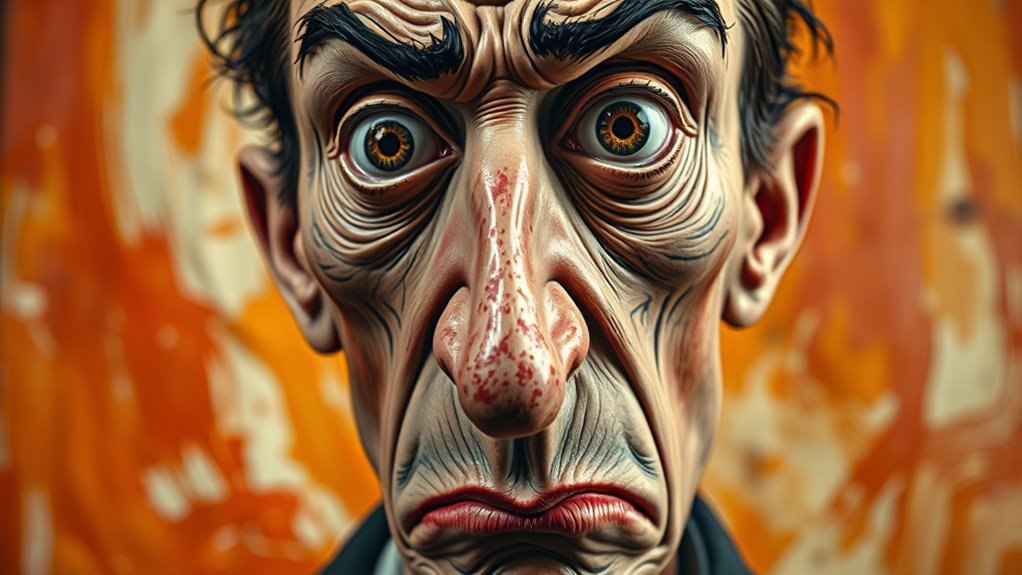
You’ll see how Edvard Munch’s warped forms evoke intense emotion, capturing inner turmoil. Vincent van Gogh’s swirling brushstrokes express raw feelings that go beyond realistic scenes. Egon Schiele’s distorted figures challenge viewers to confront raw human vulnerability and psychological depth. Furthermore, these artists utilized visual distortion as a deliberate technique to communicate complex emotional states beyond literal representation.
Edvard Munch’s Warping Style
Edvard Munch’s distinctive style employs distortion to evoke intense emotion and psychological depth. You notice how he uses abstract forms to break away from realistic representation, focusing instead on emotional expression.
His figures often appear elongated or warped, emphasizing feelings of anxiety, despair, or passion. Munch’s skillful color manipulation enhances these effects, using bold, contrasting hues to heighten mood and tension.
This distortion isn’t random; it serves a purpose—drawing you into the subject’s inner world. By blending abstract forms with deliberate color choices, Munch creates a visceral experience that communicates raw human emotion.
His warped style captures the turbulence of the human mind, making his work a powerful example of how distortion can reveal profound truths beneath surface appearances.
Vincent Van Gogh’s Emotional Swirls
Vincent van Gogh’s distinctive use of swirling, distorted forms plays a pivotal role in defining Expressionism’s emotional impact. His bold brushstrokes and vivid color symbolism convey intense feelings and inner turmoil.
Van Gogh didn’t shy away from artistic innovation; instead, he used distortion to express raw emotion, making viewers feel the depth of his experience. The swirling patterns in works like “Starry Night” evoke turbulence and longing, emphasizing the emotional power behind his artistic choices.
Egon Schiele’s Distorted Figures
Egon Schiele’s mastery of distorted figures challenges traditional notions of beauty and form, using exaggeration to convey raw emotion. His figures often feature elongated limbs and contorted postures, representing symbolic exaggeration of inner worlds. This distortion reveals personal vulnerability and intense psychological states, inviting you to see beyond surface appearances. Schiele’s focus on inner turmoil transforms his subjects into powerful symbols of human emotion and fragility. His bold lines and unsettling proportions evoke a visceral response, emphasizing that truth can lie in emotional distortion.
| Artistic Technique | Purpose |
|---|---|
| Symbolic exaggeration | Expresses inner emotional states |
| Distorted anatomy | Reveals psychological depth |
| Exaggerated features | Highlights raw human vulnerability |
Are Distorted Images Flaws or Powerful Artistic Choices

Distorted images in expressionism often spark debate: are they flaws that compromise realism, or deliberate choices that deepen emotional impact? You might see these distortions as flaws, but they serve a purpose—shifting perception to reveal inner truths.
These artistic choices challenge traditional standards, representing an aesthetic rebellion against realism’s limits. When you encounter exaggerated forms and warped perspectives, it’s not a mistake but a conscious effort to evoke raw emotion and personal perspective.
The distortion forces you to look beyond surface appearances, encouraging a deeper understanding of the subject’s emotional state. Far from flaws, these images are powerful tools that communicate complex feelings, making the viewer question what’s real and what’s perceived.
Ultimately, distortion becomes a means to express truth more honestly.
How Do Viewers Feel When Encountering Expressionist Distortion
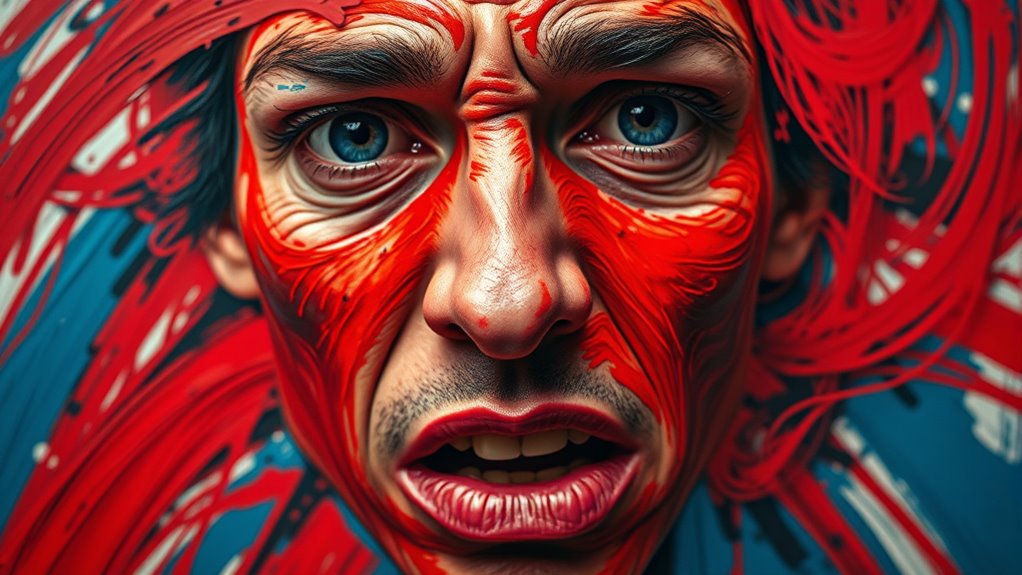
When you encounter expressionist distortions, your emotional response can be immediate and visceral. These exaggerated forms and vivid colors disrupt your usual perception, forcing you to see the world through a raw, unfiltered lens.
Instead of feeling detached, you might experience a sense of intensity or even discomfort, as the distortions evoke strong feelings or memories. Your perception shifts from objective observation to a more emotional engagement, making the artwork feel personal and urgent.
This reaction is intentional; the artist aims to stir your inner emotions and challenge your understanding of reality. In this way, expressionist distortion doesn’t just alter what you see—it profoundly influences how you feel, creating an immersive and emotionally charged experience.
Frequently Asked Questions
Can Distortion Be Used Effectively in Modern Digital Art?
Yes, distortion can be used effectively in modern digital art. You can leverage digital manipulation to creatively distort images, emphasizing emotion or abstract ideas.
This technique allows for aesthetic innovation, making your work more compelling and unique. By intentionally distorting elements, you evoke deeper feelings and engage viewers on a visceral level, demonstrating how distortion remains a powerful tool for artistic expression in the digital age.
How Does Cultural Context Influence Interpretation of Distorted Images?
You see, cultural context shapes how you interpret distorted images by highlighting cultural symbolism and offering interpretive flexibility.
What appears as unsettling or abstract in one culture might hold deep meaning or familiarity in another. Your background influences whether you see distortion as expressive, revealing inner truth, or simply as artistic style.
Is There a Psychological Basis for Viewers’ Emotional Reactions?
Yes, there’s a psychological basis for your emotional reactions to distorted images. When you view these images, your brain interprets the exaggerated features, triggering a psychological impact that amplifies feelings like anxiety, empathy, or discomfort.
Your emotional perception is influenced by how the distortion challenges your expectations and taps into subconscious fears or desires, making the artwork resonate deeply and evoke strong emotional responses.
Are There Ethical Considerations in Deliberately Distorting Subjects?
Yes, there are ethical considerations when deliberately distorting subjects. You must prioritize artistic integrity by honestly representing your intent, avoiding manipulation that could mislead viewers.
Consent considerations are vital if your work depicts real people; you need their permission to avoid exploitation or harm.
Balancing creative expression with these ethical aspects ensures your art respects subjects’ dignity while conveying powerful, truthful emotion through distortion.
How Does Distortion in Expressionism Compare to Other Art Movements?
You’ll find that distortion in expressionism emphasizes emotional exaggeration more than abstract realism found in other movements. Unlike abstract realism, which seeks to simplify or stylize forms, expressionism distorts subjects to evoke feelings and personal truths.
You notice that this approach prioritizes emotional impact over realistic accuracy, making it more intense and subjective. This contrast highlights how expressionism uses distortion not just for style but to reveal deeper human experiences.
Conclusion
When you experience expressionism’s distorted images, you tap into raw emotion and inner truths beyond realistic appearances. These artistic choices aren’t flaws—they’re powerful tools that reveal genuine human feelings. By embracing distortion, you connect more deeply with the artist’s emotional world, seeing beyond surface flaws. So next time you encounter this style, remember: it’s not about perfection, but about capturing the authentic, often imperfect, reality of the human experience.