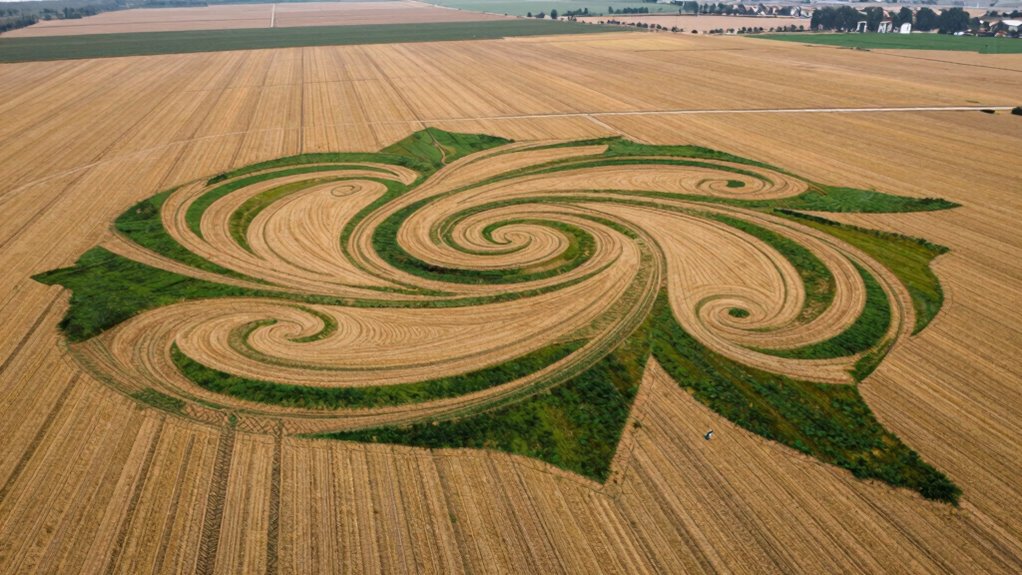

Land art is a movement that transforms natural landscapes into artworks by using Earth’s materials as a canvas. Artists create site-specific, often temporary, installations by shaping soil, rocks, and vegetation to challenge traditional art boundaries and connect people with nature. This movement emphasizes environmental awareness and sustainability. If you want to explore how these works blend art with ecology and discover iconic sites around the world, there’s plenty more to uncover.
Key Takeaways
- Land art emerged in the late 1960s as a movement creating site-specific, environmentally integrated earth sculptures and installations.
- Artists used natural materials like soil, rocks, and vegetation to shape landscapes and challenge traditional art boundaries.
- Pioneers such as Robert Smithson, Nancy Holt, and Michael Heizer created iconic works like Spiral Jetty and Sun Tunnels.
- The movement emphasizes ecological awareness, minimal environmental impact, and the connection between art and nature.
- Land art influences contemporary environmental and conceptual art, promoting sustainability and ecological activism.
How Did Land Art Get Started?
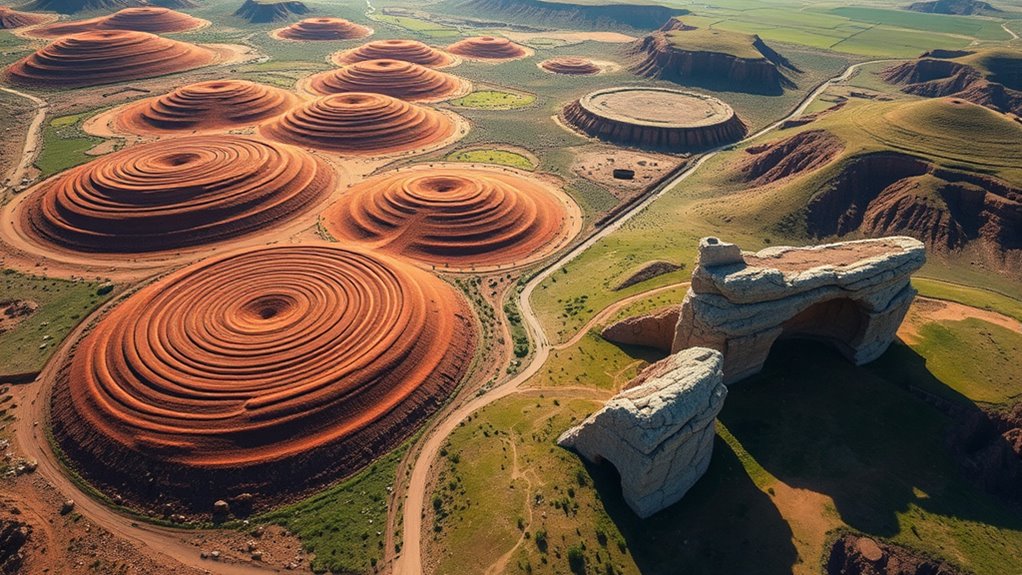
Have you ever wondered how Land Art first emerged as a movement? It all began in the late 1960s when artists started creating earth sculptures and natural installations directly within the landscape.
Instead of traditional galleries, they used the environment itself as their canvas, emphasizing the relationship between art and nature. These artists sought to challenge conventional art forms, making their work site-specific and temporary.
They wanted to reconnect people with the natural world, highlighting its beauty and fragility. By shaping the earth and working with natural materials, they created a new form of expression that was both conceptual and physical.
This movement was a bold step away from traditional art, focusing on interaction with the environment and the landscape’s inherent qualities.
Who Are the Pioneers of Land Art and Their Key Works
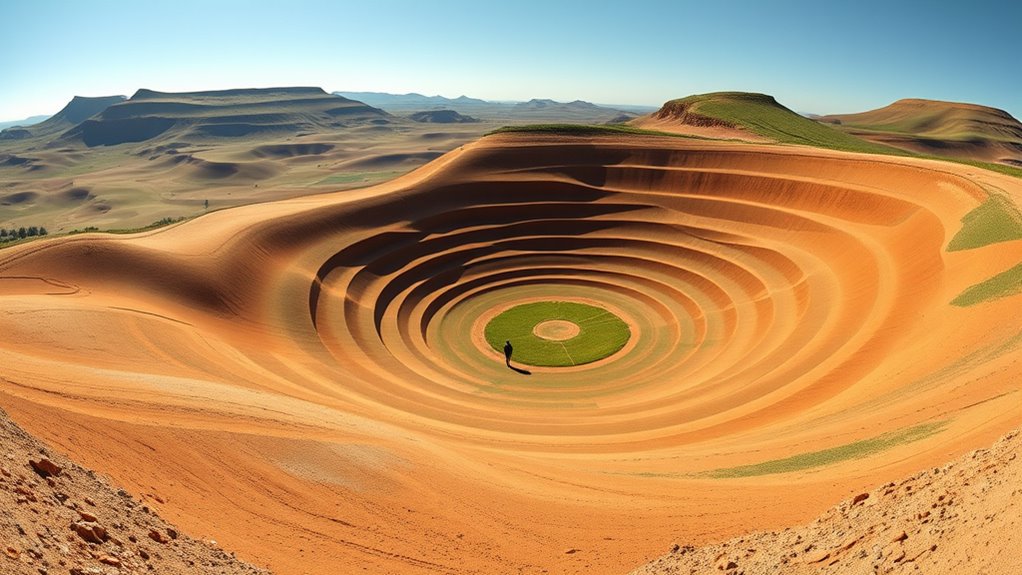
You’ll want to learn about the key figures who shaped Land Art and their most famous works. These artists challenge traditional boundaries, creating immersive pieces that blend nature and art.
Their philosophies and innovations continue to influence contemporary environmental and conceptual art.
Notable Land Artists
Who truly pioneered land art, shaping it into the dynamic movement it’s today? Artists like Robert Smithson, Nancy Holt, and Michael Heizer are key figures. They drew deep inspiration from nature, transforming natural landscapes into monumental artworks. Their creative process often involved innovative artistic techniques, blending sculpture, landscape, and environmental awareness. Smithson’s Spiral Jetty, for example, uses earth and rocks to create a spiral that interacts with the surrounding environment. Holt’s Sun Tunnels manipulate natural light, while Heizer’s Double Negative carves vast trenches into mesas. These artists pushed boundaries, exploring the relationship between humans and nature through their work. Their groundbreaking approach laid the foundation for future generations of land artists, cementing their place in art history. Environmental engagement was central to their innovative methods and thematic focus. Additionally, their work often emphasizes earth as a canvas, highlighting the importance of natural landscapes as integral components of their art. Recognizing the influence of nature-based art practices helps us appreciate the profound connection between art and the environment in land art. Furthermore, their techniques often involved site-specific interventions, making each piece unique to its location and context. Understanding the landscape as a medium reveals the depth of interaction between the artwork and its environment, emphasizing the immersive experience of land art.
Iconic Land Art Works
Among the pioneering figures of land art, several works stand out as defining examples of the movement’s innovative spirit. You’ll recognize earth sculptures like Robert Smithson’s “Spiral Jetty,” a massive coil extending into Utah’s Great Salt Lake, and Nancy Holt’s “Sun Tunnels,” which align with the sun during solstices. These natural installations transform landscapes into art, emphasizing the relationship between environment and human intervention. Michael Heizer’s “Double Negative” cuts into Nevada’s desert, creating dramatic trenches that challenge perceptions of space. These iconic works demonstrate how artists used the earth itself as a canvas, blurring boundaries between sculpture and landscape. Their creations inspire you to see nature not just as a backdrop but as an artistic medium, highlighting the potential for creative expression directly within the environment. Additionally, the innovative use of imagination in planning and executing these projects highlights how mental potential can be mobilized to create transformative works in the natural world. This approach often involves collaborative efforts that bring together artists, engineers, and environmentalists to realize complex land art projects. The movement also emphasizes the importance of environmental awareness, encouraging us to consider our impact on natural landscapes while engaging in artistic endeavors. Furthermore, many of these projects have gained recognition for their cultural significance, illustrating how land art can reflect societal values and environmental concerns.
Artistic Philosophy & Impact
| Pioneer | Key Work |
|---|---|
| Robert Smithson | Spiral Jetty |
| Nancy Holt | Sun Tunnels |
| Michael Heizer | Double Negative |
| Walter De Maria | The Lightning Field |
| Kimiyo Mishima | Earth’s Embrace |
| Land Art pioneers often integrated earth as canvas into their creative process to challenge traditional art boundaries. They sought to expand the definition of art by incorporating natural landscape features, creating site-specific installations that blend seamlessly with their environment. Their innovative use of natural materials exemplifies how the earth itself became a vital element of artistic expression.
What Techniques and Materials Do Land Artists Use?
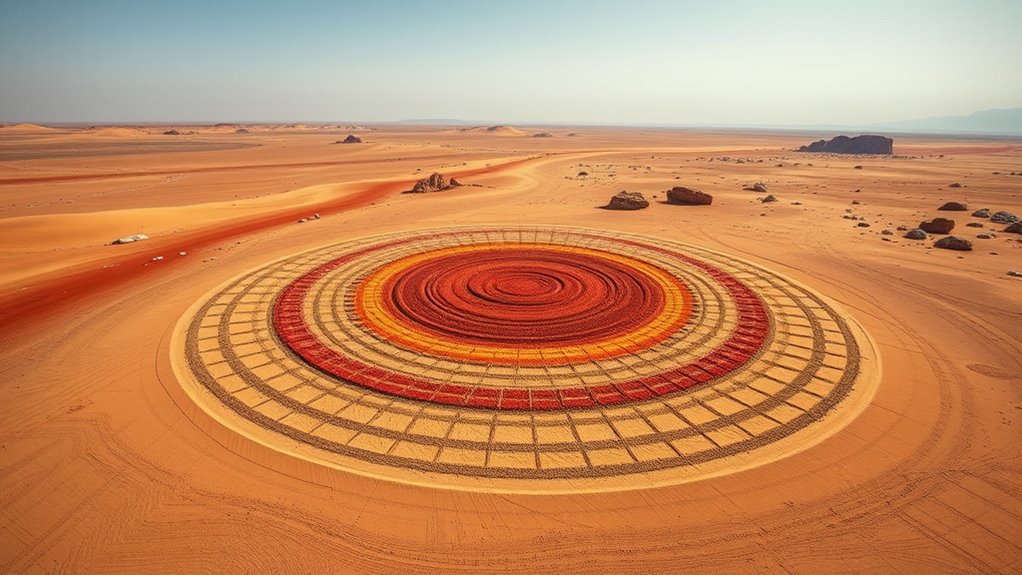
What techniques and materials do land artists use to transform natural landscapes into their creative expressions? They often employ earthworks techniques, shaping the environment by moving soil, rocks, or vegetation.
Natural pigments play a key role, allowing artists to add color without harming the environment—using materials like ochre, charcoal, or clay. These pigments can be applied as paint or incorporated into arrangements to highlight specific areas.
Some artists work with organic materials like leaves, stones, or wood to create temporary or enduring installations.
The approach emphasizes harmony with the landscape, using readily available natural resources to craft striking visual statements that blend seamlessly with nature.
Additionally, land artists often consider the environmental impact of their work, ensuring their techniques align with sustainable practices and minimize ecological disruption. They may also incorporate sustainable practices to prevent long-term environmental damage. Moreover, understanding ecological harmony helps artists create works that respect and enhance the natural surroundings rather than detract from them. Exploring innovative methods can further reduce ecological footprints and promote sustainable artistry.
How Does Land Art Connect With Environmental Issues?
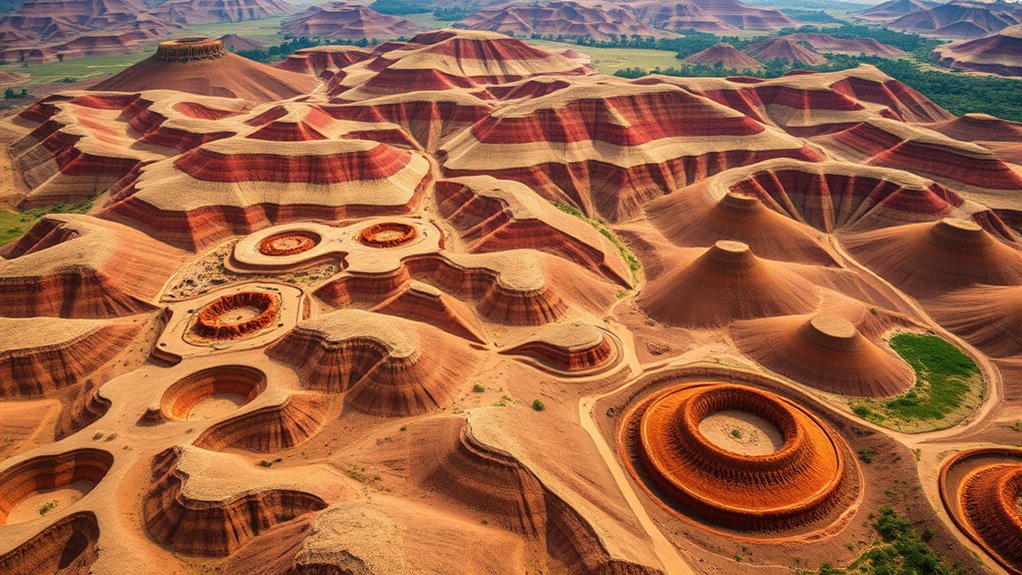
Land artists often harness natural materials and techniques that emphasize harmony with the environment, which naturally aligns their work with environmental concerns. By using materials like earth, rocks, and plants, they highlight the importance of conservation efforts and sustainable practices. Their creations often serve as powerful statements about climate change, drawing attention to ecological issues and human impact on nature. Land art encourages viewers to reflect on the fragility of ecosystems and the need to protect our planet. Many artists intentionally create works that blend into the landscape, promoting awareness and respect for the environment. In this way, land art becomes more than just aesthetic; it becomes a form of ecological activism, inspiring change and fostering a deeper connection with nature. Incorporating ethical considerations into their practice, land artists aim to minimize environmental harm while maximizing their message’s impact. Additionally, the integration of sustainable practices ensures that their work does not contribute to ecological degradation, reinforcing their commitment to environmental stewardship. Furthermore, the use of eco-friendly materials helps reduce the ecological footprint of their projects, emphasizing responsible artistic processes. Some artists also engage in community involvement, which fosters greater understanding and collective responsibility for ecological issues. Overall, these practices demonstrate the vital role of art in promoting environmental awareness, encouraging society to adopt more sustainable behaviors.
Where Are the Most Famous Land Art Sites Around the World?
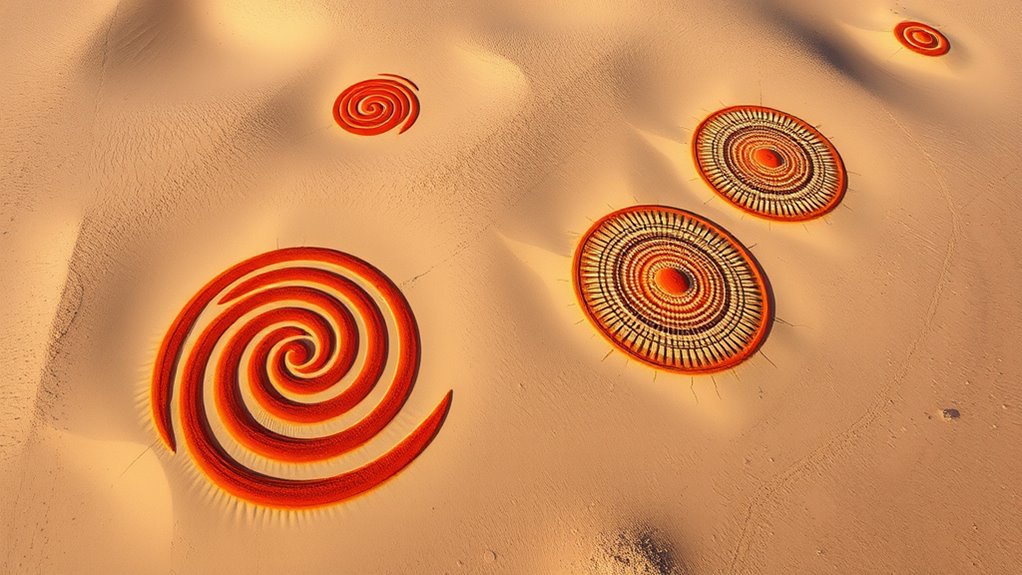
Some of the most renowned land art sites are located in remote and breathtaking locations around the world, drawing visitors who want to experience art integrated directly into nature. These sites often require careful site preservation to maintain their original form and environmental harmony. Flat Iron Bike innovations have also influenced how artists approach sustainable and eco-friendly art projects in natural settings. Notable examples include the Nevada’s Black Rock Desert, home to Robert Smithson’s “Spiral Jetty,” and the Sonoran Desert’s Organ Pipe Cactus National Monument, where landscape artists create works that reflect local ecology. These locations hold deep cultural significance, connecting viewers to both natural history and artistic expression. Their remote settings can challenge preservation efforts, but safeguarding them ensures future generations can appreciate the profound relationship between land and art. Proper site preservation ensures these remarkable works continue to inspire and educate. Additionally, understanding the environmental impact of land art is crucial for balancing artistic expression with ecological sustainability. These sites exemplify how land art transforms natural landscapes into cultural landmarks and demonstrate the importance of environmental sustainability in preserving natural beauty for future generations. Furthermore, implementing effective filtration and pump protection methods can help maintain the integrity of art installations in sensitive environments.
What Challenges Do Land Artists Face?
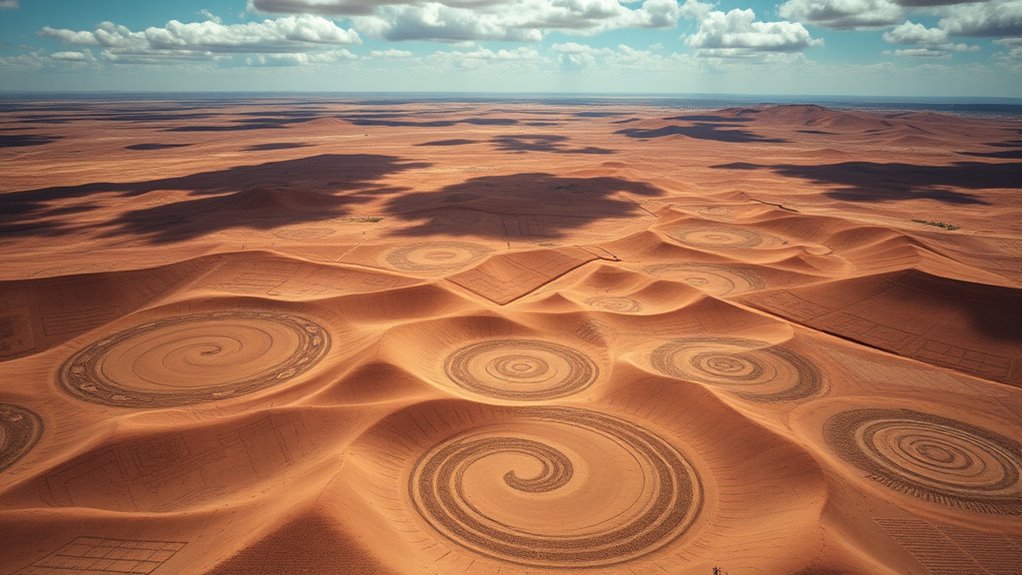
As a land artist, you often face concerns about how your work impacts the environment and the local ecosystem.
Traveling through permitting processes and adhering to regulations can also slow down or complicate your projects.
These challenges require careful planning to balance artistic vision with environmental responsibility and legal requirements.
Environmental Impact Concerns
Environmental impact concerns pose significant challenges for land artists, who must balance creative expression with the responsibility to preserve natural landscapes. When designing land art, you need to take into account how your work might disturb local ecosystems or harm native plants and wildlife.
Making sure natural preservation means minimizing disruption and avoiding long-term damage. Sometimes, your projects require ecological restoration afterward to repair any harm caused. You might also face criticism if your work unintentionally alters the landscape or affects water flow.
As a land artist, you’re responsible for planning carefully, using sustainable methods, and respecting the environment. By prioritizing ecological restoration and natural preservation, you help make certain that your art enhances rather than harms the land, preserving its beauty for future generations.
Permitting and Regulations
Land artists often face complex permitting and regulatory hurdles before starting their projects. Permitting hurdles can delay or even halt your creative process, as you’ll need to navigate land use regulations that vary by location.
These regulations aim to protect public interests and the environment but can be restrictive for large-scale or unconventional works. You may need to secure permissions from multiple authorities, such as local governments, landowners, or conservation agencies.
The process can be time-consuming and require extensive documentation. Sometimes, you’ll encounter resistance due to concerns about environmental impact or land degradation.
Understanding and complying with these land use regulations is essential to avoid legal issues and ensure your artwork can remain intact and accessible for the long term.
How Has Land Art Influenced Contemporary Art and Environmental Movements?
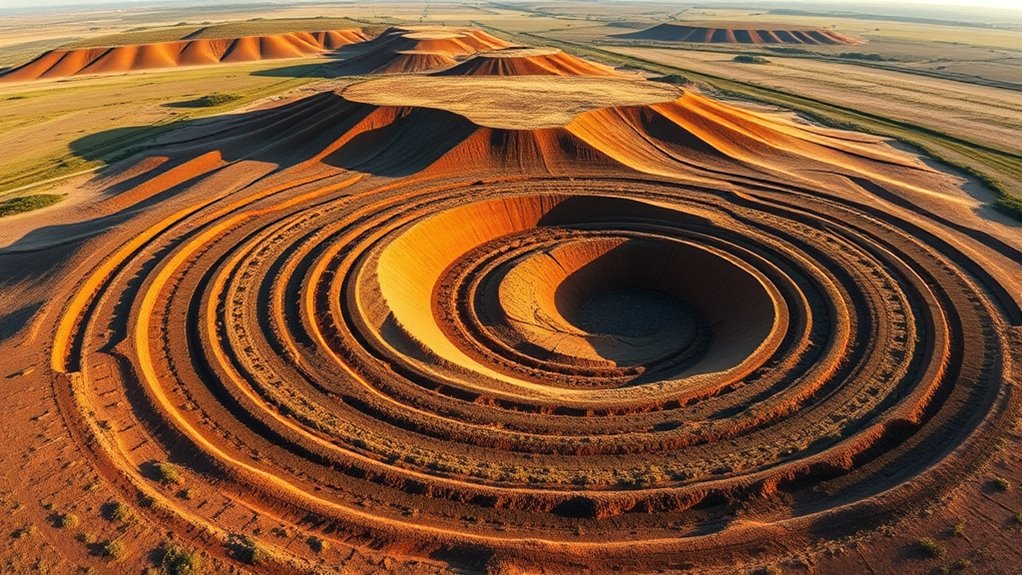
Land art has profoundly shaped the way contemporary artists approach the environment, inspiring them to create works that engage directly with natural landscapes rather than traditional gallery spaces. This movement encourages ecological sustainability by emphasizing harmony with nature and minimizing environmental impact.
Artists today incorporate innovative techniques that challenge conventional art forms, pushing boundaries through large-scale installations and site-specific projects. Land art’s emphasis on environmental consciousness influences ecological activism, inspiring movements that prioritize preservation and responsible stewardship of ecosystems.
Its legacy fosters artistic innovation by blending creativity with ecological awareness, prompting artists and viewers alike to reconsider humanity’s relationship with the Earth. As a result, land art continues to inspire contemporary art and environmental initiatives that champion sustainability and innovative engagement with the natural world.
How Can You Experience Land Art in Person?
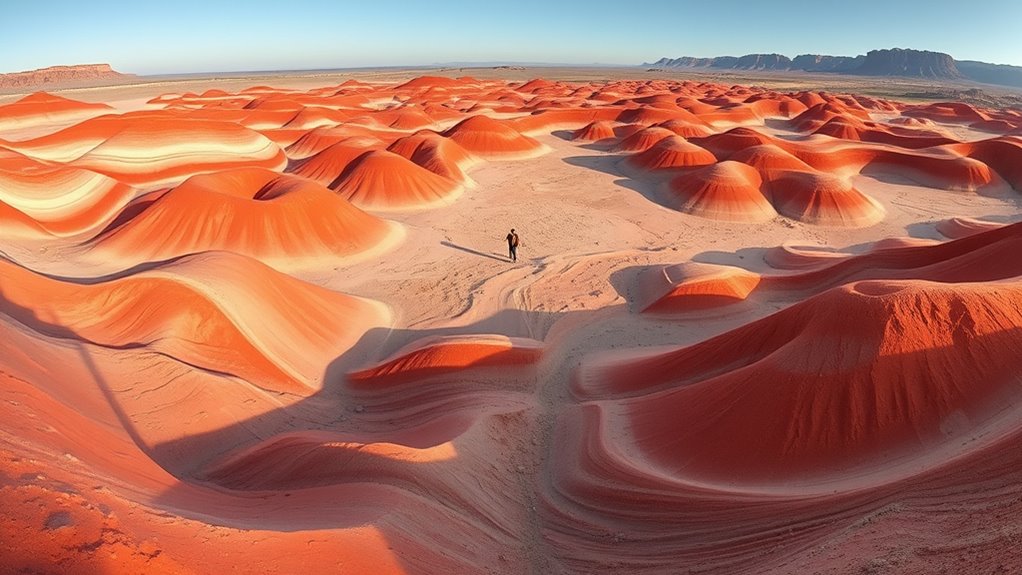
Wondering how you can experience land art firsthand? The best way is to join land art tours that take you directly to iconic outdoor installations. Visiting these sites allows you to immerse yourself in the artwork’s natural environment, creating a personal connection. Many tours are guided, offering insights into the artist’s intent and history behind each piece. To plan your visit, consider these factors:
| Aspect | Details |
|---|---|
| Location | Remote deserts, forests, or open plains |
| Accessibility | Guided tours or self-guided visits |
| Best Time to Visit | Seasonal considerations for ideal experience |
| Equipment Needed | Comfortable shoes, sun protection, water |
| Duration | Ranges from a few hours to full-day excursions |
Engaging with outdoor installations through land art tours offers a unique, tangible encounter with this earth-centered movement.
Frequently Asked Questions
How Do Land Artists Choose Locations for Their Projects?
You choose sites for land art projects by considering site selection carefully, prioritizing locations that complement your concept and enhance the artwork’s message.
You assess environmental impact to guarantee your work respects nature and minimizes damage.
You look for unique natural features or landscapes that inspire you, and you often visit potential sites to observe their conditions, making sure the location aligns with your artistic vision and sustainability goals.
What Role Does Community Involvement Play in Land Art?
Community participation plays a crucial role in land art, as it helps guarantee the work reflects local values and stories. By involving community members, you foster a sense of ownership and cultural significance, making the artwork more meaningful.
Your engagement allows for authentic collaboration, which enriches the project and deepens its connection to the land and its people. This shared creation process strengthens cultural bonds and highlights collective identity.
Are There Legal Restrictions on Creating Land Art Installations?
You need to be aware of legal regulations and land ownership before creating land art. Many areas have restrictions to protect natural landscapes, requiring permits or approvals.
If you don’t respect these rules, you risk legal consequences or damaging the environment. Always research local laws and obtain necessary permissions, especially when working on private or protected land, to make certain your artwork is both legal and sustainable.
How Has Digital Technology Impacted Land Art Creation?
Digital technology has transformed your land art creation process by providing digital tools that allow for precise planning and design.
You can now use virtual galleries to showcase your work globally, reaching wider audiences.
These innovations enable you to experiment with concepts before executing them physically, reducing risk and enhancing creativity.
Can Land Art Be Preserved for Future Generations?
You can help guarantee land art is preserved for future generations by promoting environmental sustainability and cultural preservation. Supporting initiatives that respect the natural environment, avoid damage, and document artworks through photography or digital archives makes a difference.
Conclusion
Land art transforms landscapes into living artworks, blending creativity with nature. By exploring its pioneers, techniques, and global sites, you see how artists use the earth as their canvas to challenge perspectives and address environmental concerns. Whether visiting famous sites or creating your own, you can connect deeply with this movement. Embrace the opportunity to experience land art firsthand and appreciate its powerful blend of art, nature, and activism.