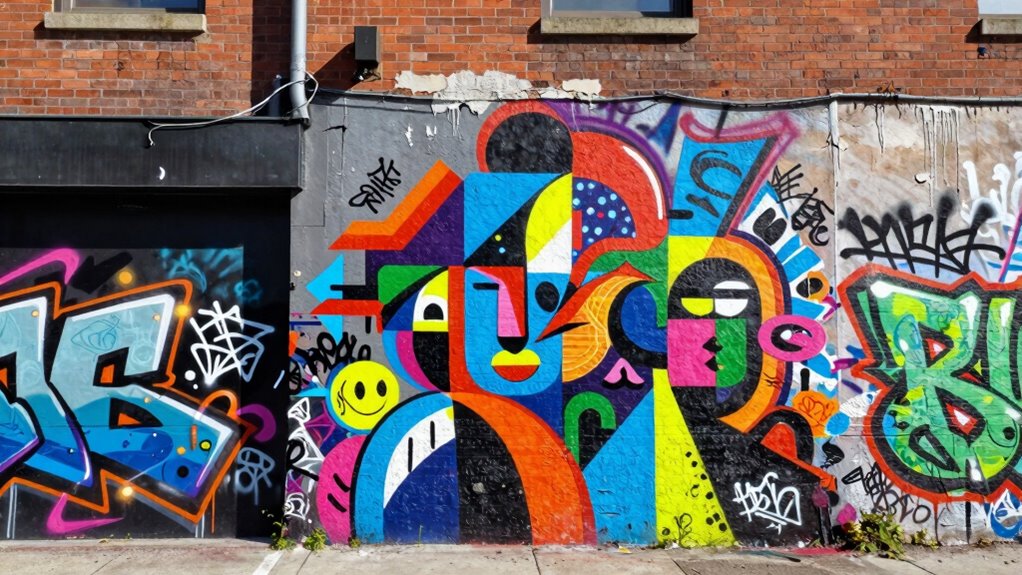

Street art and graffiti often get mixed up because both have urban roots and bold visuals, but they have different histories and purposes. Graffiti started with ancient symbols and evolved into rebellious tags and murals, often illegal and underground. Street art, on the other hand, gained recognition through murals, stenciling, and social messages, becoming a mainstream cultural movement. To understand what truly sets them apart, keep exploring how each influences cities and society.
Key Takeaways
- Graffiti is primarily illegal, focusing on lettering and tags, while street art includes murals and imagery often created legally.
- Both originated from ancient visual expressions but evolved differently; graffiti has roots in underground urban culture.
- Street art gained mainstream recognition through galleries and social media, whereas graffiti remains mostly associated with vandalism.
- Techniques differ: graffiti uses spray paint for lettering, while street art employs stencils, wheatpaste, and murals.
- Their social and cultural impacts vary; graffiti often challenges authority, while street art promotes community and social messages.
How Graffiti Began: From Ancient Symbols to Modern Vandalism
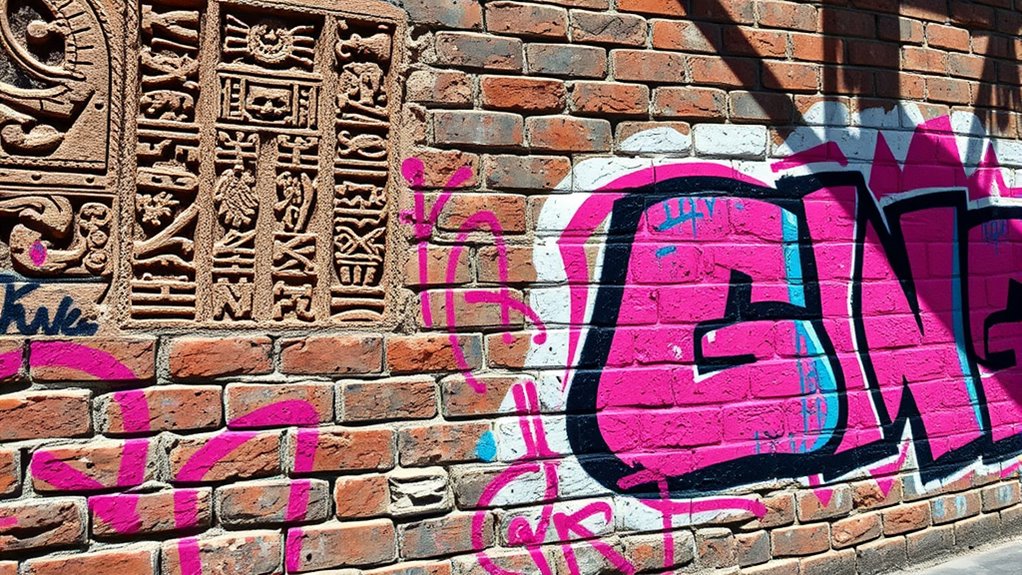
Graffiti has ancient roots that trace back thousands of years, long before it became associated with modern vandalism. Its historical origins reveal that early humans used symbols and markings to communicate, mark territory, or express beliefs. These early forms of graffiti often carried symbolic meanings, representing spiritual or social messages.
For example, cave paintings and carvings served as visual stories or rituals, linking the past to today’s street art. Over time, these symbols evolved from simple markings to complex designs, reflecting cultural identities. While modern graffiti is often seen as vandalism, its roots highlight a long history of using visual expression to convey meaning.
Understanding this history shows that graffiti has always been a form of human communication and cultural expression, not just destruction.
How Street Art Gained Recognition and Became Mainstream
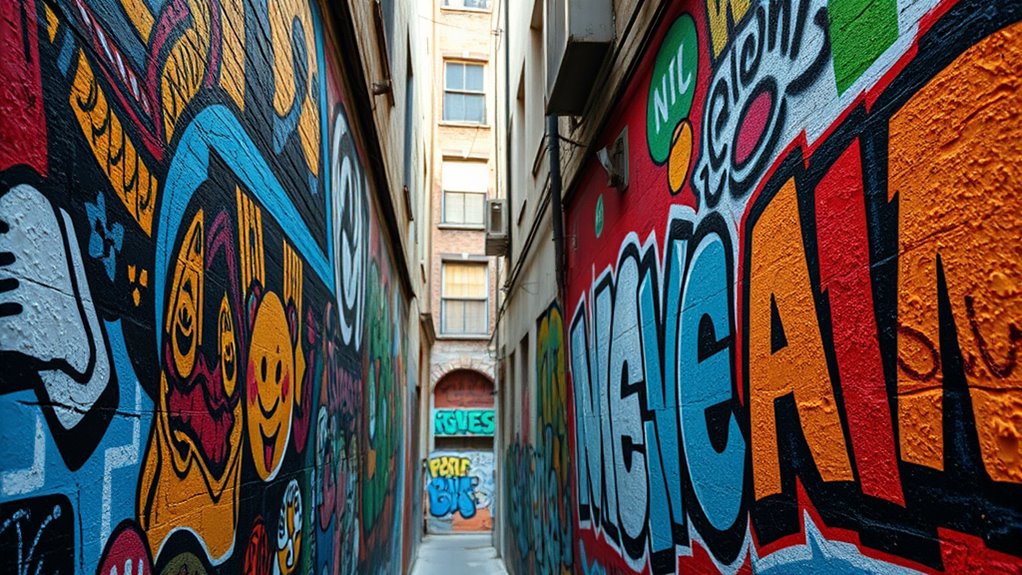
You’ve probably noticed street art appearing in galleries and on city walls, reflecting its growing acceptance. As more people see it as a legitimate form of expression, its status shifts from vandalism to art. This shift is also supported by public perception and increased recognition within the art community. Trends in the art world and urban culture now increasingly legitimize street art as a respected creative movement. Additionally, the development of specialized tools and techniques, such as high-quality spray paints and innovative stencils, has elevated the craft and further contributed to its mainstream acceptance. Moreover, the influence of Youngster Choice and other artists who transition from underground scenes to mainstream platforms has helped enhance street art’s credibility and visibility. The integration of European cloud innovation and energy-efficient solutions in art dissemination platforms further supports the global spread and acceptance of street art as a powerful cultural expression. The ongoing evolution of digital platforms has also played a significant role in amplifying street art’s reach and impact worldwide.
Urban Acceptance Rise
As street art increasingly gained visibility, communities and institutions began recognizing its cultural value beyond mere vandalism. The public perception shifted as more people saw it as a legitimate form of artistic expression rather than just defacement. This change helped reduce the stigma associated with street art, encouraging cities to embrace it as part of their urban landscape. Additionally, some cities have implemented legal frameworks to support and regulate street art, further integrating it into the cultural fabric. These frameworks often involve designated spaces and permissions, which foster a more organized environment for artists to showcase their work legally. Despite this, legal challenges remained a hurdle, with many works still considered illegal under local laws. The increasing acceptance also led to public art initiatives that promote community involvement and appreciation. As street art gained mainstream exposure, its influence extended into commercial spaces and gallery exhibitions, further legitimizing the genre. Increasing public awareness about the cultural significance of street art has helped shift perceptions and foster greater appreciation. Despite the progress, ongoing debates about artistic legitimacy continue to shape public and institutional attitudes. As a result, street art moved into the mainstream, influencing galleries and commercial spaces. Its rise in urban acceptance transformed it from an underground activity into a recognized cultural phenomenon.
Artistic Legitimization Trends
The journey of street art toward artistic legitimization has been driven by a combination of cultural shifts, institutional recognition, and increased visibility. As public perception shifted, more people began to see street art as a legitimate form of expression rather than vandalism. Evidence-based insights have played a crucial role in changing perceptions and supporting the recognition of street art within the broader art community. Galleries, museums, and major brands started showcasing works by street artists, cementing their status in the art world. Additionally, the rise of social media platforms has significantly contributed to the visibility and appreciation of street art globally, allowing artists to reach wider audiences. The development of high-quality projectors and display technology has also enabled street art to be showcased in digital exhibitions, further enhancing its legitimacy. Furthermore, the integration of design thinking principles in curating and presenting street art exhibits has fostered a deeper understanding and appreciation for this art form. The public acceptance of street art has grown as communities recognize its cultural and social relevance. However, legal challenges remain a hurdle, as authorities often view street art as illegal activity. Despite this, artists have gained recognition through exhibitions, awards, and collaborations with mainstream entities. This trend reflects a broader acceptance, transforming street art from underground rebellion into celebrated cultural commentary. Your understanding of these developments highlights how societal attitudes and legal frameworks shape the ongoing legitimization process.
What Sets Graffiti Apart From Street Art
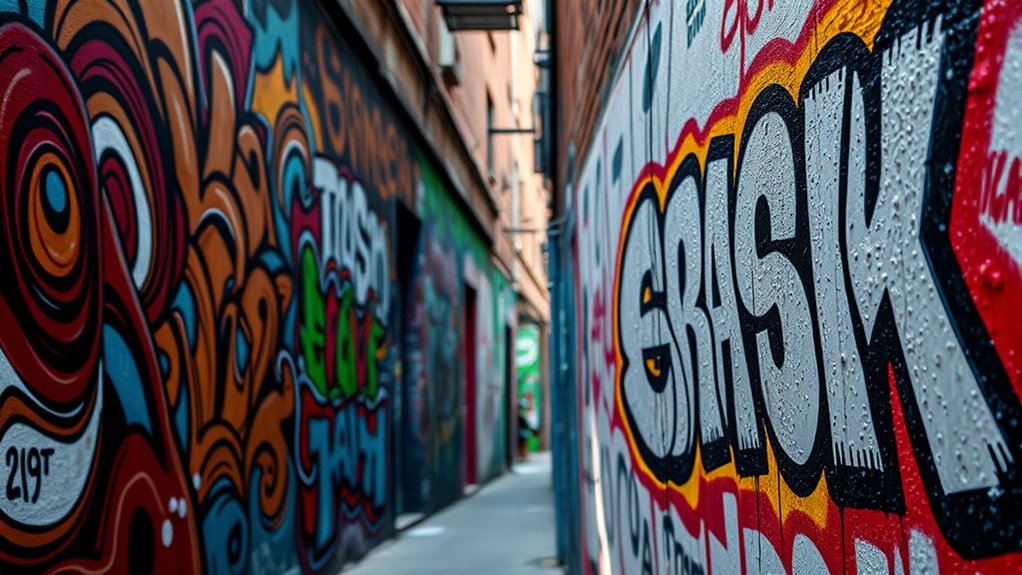
You’ll notice that graffiti often has a clear purpose and focuses on personal or political messages, while street art tends to aim for broader artistic expression. Power tools and equipment used by artists can influence the scale and complexity of their work, especially when creating larger murals or installations. Location also plays a role, as graffiti usually appears in hidden or less visible spots, whereas street art is more public and accessible. Techniques and styles differ too, with graffiti relying on bold lettering and street art embracing diverse images and concepts. Additionally, street art often involves public engagement that fosters community interaction and dialogue around social issues. Incorporating creative storytelling can further deepen the impact of street art, making it a powerful tool for social commentary and community building.
Artistic Intent and Purpose
While both street art and graffiti involve bold expressions in public spaces, their underlying intentions often differ considerably. Graffiti primarily aims to claim territory, showcase skill, or send a personal message, often existing outside traditional art venues. In contrast, street art seeks to engage viewers through murals collaborations and often aspires to be part of gallery exhibitions, emphasizing social commentary or aesthetic beauty. This purpose shapes their approach: graffiti is about individual reputation, while street art aims to inspire or provoke thought. To evoke emotion:
| Graffiti | Street Art |
|---|---|
| Personal expression | Social commentary |
| Territory marking | Community engagement |
| Skill showcase | Aesthetic dialogue |
| Rebellious spirit | Cultural conversation |
Your understanding of these intents reveals what truly sets them apart.
Location and Visibility
Graffiti often occupies hidden or less visible locations, such as alleyways, train cars, and abandoned buildings, where it can go unnoticed by the mainstream public. These locations limit its public visibility, making it more discreet and harder to access legally. Because of legal restrictions, artists usually choose secluded spots to avoid fines or arrest, which shapes graffiti’s clandestine nature. In contrast to street art, which aims for broad exposure and often appears in open, highly visible areas, graffiti tends to stay out of plain sight. This positioning reflects its rebellious origins and the need to operate within legal boundaries. The choice of location defines graffiti’s character as an underground, often illegal, form of expression. Additionally, urban environments play a significant role in shaping where graffiti and street art appear, influencing their accessibility and visibility. Understanding the legal landscape surrounding graffiti helps explain why its locations are typically less accessible to the public. Furthermore, the cultural context of graffiti supports its tendency to be found in less accessible areas, reinforcing its identity as a form of resistance and self-expression. Moreover, the technology and tools used by artists also impact where graffiti is placed, as certain spray paints and stencils are easier to conceal in less visible areas.
Techniques and Styles
One of the key differences between graffiti and street art lies in their techniques and styles. Graffiti often relies on spray paint to create bold, quick-lettering or intricate designs. It emphasizes tags, throw-ups, and large murals. Street art, however, incorporates diverse methods like stencil art, which allows for detailed, repeatable images, and mixed media. The styles also differ: graffiti features stylized lettering, while street art focuses on imagery and messages. Here’s a quick comparison:
| Technique | Style | Common Use |
|---|---|---|
| Spray paint | Bold lettering and murals | Graffiti |
| Stencil art | Precise, repeatable images | Street art |
| Wheatpaste | Collage and posters | Street art |
| Freehand spray | Dynamic, expressive lines | Both |
| Stenciling | Detailed, layered visuals | Street art |
Your choice of technique shapes each art form’s unique identity. Additionally, the evolution of these styles reflects changing cultural influences and the increasing acceptance of street art as a legitimate art form. As techniques continue to develop, artists are pushing the boundaries of traditional styles, integrating new tools and methods. The technology involved in creating street art has also evolved, allowing for more detailed and innovative works. Over time, innovations and technological advances have expanded the possibilities for artists in both traditions.
Artists and Movements That Shaped Each Style
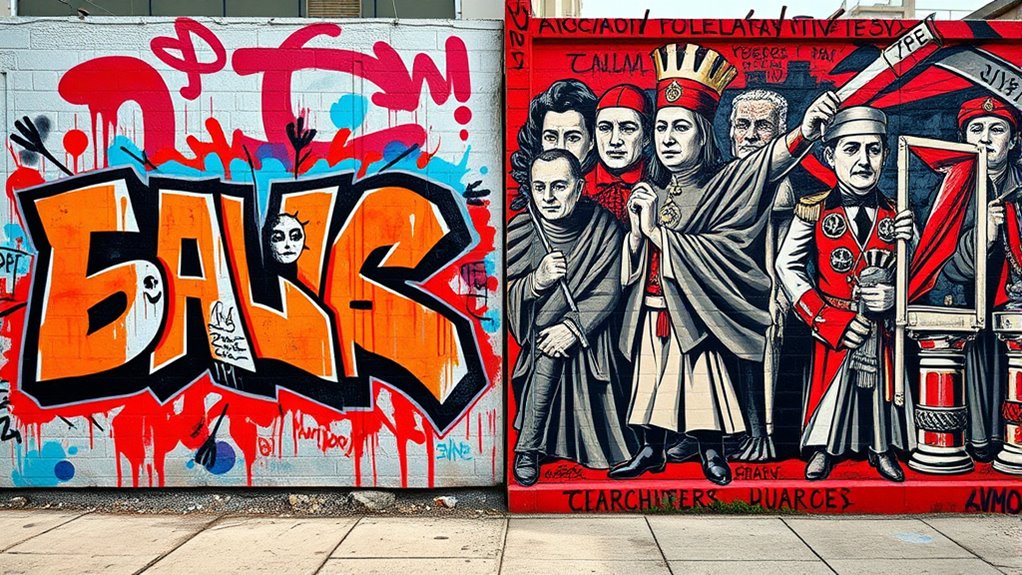
Several influential artists and movements have considerably shaped the distinct identities of street art and graffiti. Urban legends like Jean-Michel Basquiat and Keith Haring pushed boundaries, blending fine art with street culture and inspiring a new generation.
Graffiti’s roots are tied to iconic crews like the Zulu Kings and artists such as SEEN, who popularized elaborate lettering styles.
Meanwhile, street art gained momentum through movements like the Brooklyn-based Legendary New York City Murals, emphasizing public murals and social messages.
Celebrity collaborations, such as Shepard Fairey’s Obama “Hope” poster, helped elevate street art’s legitimacy and visibility.
These artists and movements created a foundation that continues to influence contemporary practices, blurring the lines between rebellious vandalism and respected art forms.
How Graffiti and Street Art Changed Culture and Perceptions
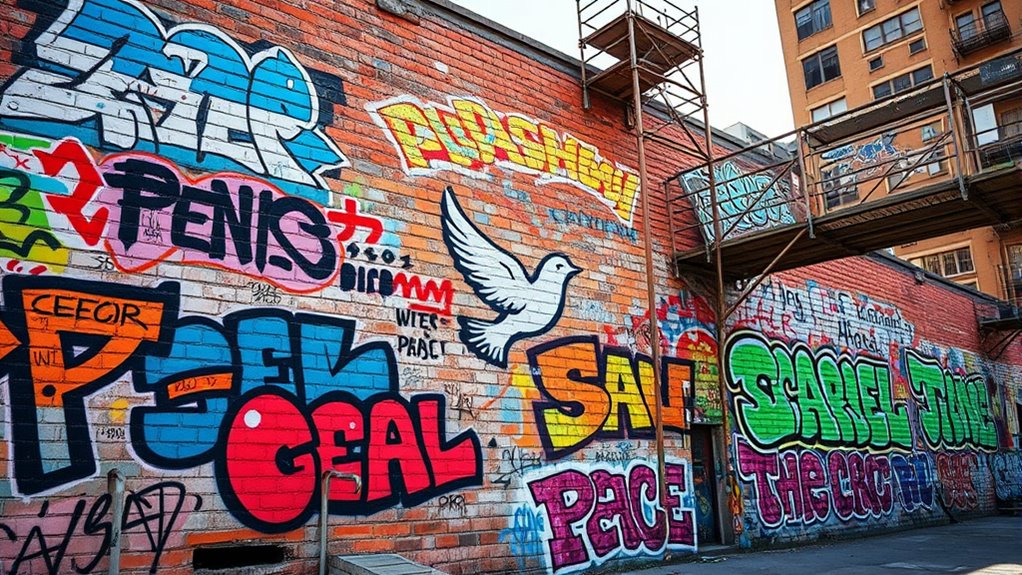
As graffiti and street art became more prominent in urban landscapes, they challenged traditional notions of art and authority, prompting society to reconsider what counts as valuable or legitimate expression. These art forms sparked perception shifts, reshaping cultural influence by blurring lines between vandalism and activism. They made art accessible, transforming empty walls into powerful statements. This shift encouraged you to see street art as a voice for marginalized communities and social issues, rather than vandalism. Below is a table illustrating these cultural impacts:
| Impact | Description |
|---|---|
| Cultural influence | Promoted new artistic voices in public spaces |
| Perception shifts | Changed attitudes toward urban art forms |
| Accessibility | Broadened audience engagement with street art |
| Legitimacy | Gained recognition as a serious artistic movement |
| Social commentary | Became a tool for activism and dialogue |
How Urban Landscapes Are Transformed by Graffiti and Street Art
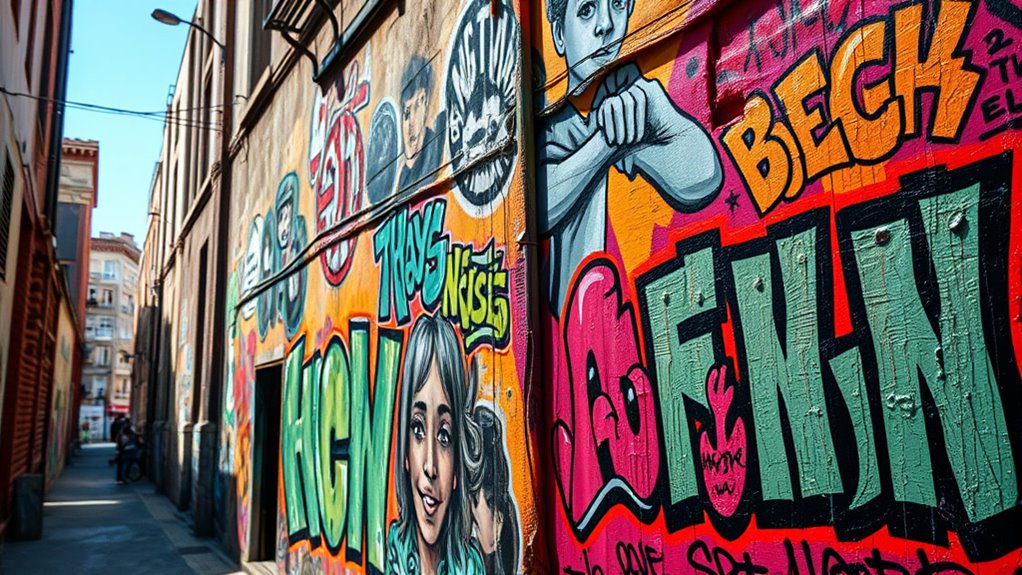
Graffiti and street art have the power to dramatically transform urban landscapes by turning blank walls and neglected spaces into vibrant canvases. They redefine public space, making it more engaging and reflective of the community’s identity.
Graffiti and street art transform dull walls into vibrant, community-reflective urban canvases.
Bold murals and intricate tags add visual interest and challenge the monotony of city environments. These artworks create a unique visual identity for neighborhoods, turning dull facades into open-air galleries.
As you walk through the city, you notice how street art injects color, storytelling, and cultural expression into everyday life. It can highlight social issues or celebrate local history, making urban spaces more meaningful.
Ultimately, graffiti and street art reshape how you experience and perceive the city, turning ordinary areas into dynamic, expressive environments.
Frequently Asked Questions
How Do Legal and Illegal Street Art Differ in Societal Impact?
Legal street art often gains cultural acceptance because it showcases artistic authenticity and is supported by communities or authorities. It can inspire dialogue and beautify neighborhoods.
Illegal graffiti, however, may be seen as vandalism, undermining societal trust and fostering negative perceptions. While both influence society, legal art tends to have a more positive societal impact by promoting creativity and respect, whereas illegal graffiti risks perpetuating conflict and disrespect.
What Are the Economic Effects of Street Art on Local Communities?
You’ll find that street art boosts economic revitalization by attracting visitors and tourists, which benefits local businesses. When vibrant murals and creative installations appear, they draw people in, increasing foot traffic and sales at nearby shops, cafes, and galleries.
This positive economic impact can transform rundown neighborhoods into lively cultural hotspots, fostering community pride and encouraging further investments. Overall, street art plays a key role in energizing local economies and supporting small businesses.
How Does Technology Influence Contemporary Graffiti and Street Art Practices?
Technology influences your street art and graffiti practices by providing digital tools that enhance your creativity and precision. You can now design and plan your artwork using software before executing it physically.
Social media allows you to share your work instantly, gaining exposure and connecting with a broader audience. These tools help you experiment, refine your style, and build a community, making your art more impactful and accessible in contemporary urban landscapes.
Can Street Art Be Considered a Form of Political Activism?
Yes, street art can definitely be considered a form of political activism. You use it as a powerful tool for political expression and social critique, making bold statements that challenge the status quo.
Through your murals and stencils, you draw attention to issues that matter, inspiring dialogue and change. It’s a way for you to engage with the community and amplify marginalized voices, turning public spaces into platforms for activism.
What Are the Environmental Impacts of Graffiti and Street Art Materials?
You should know that graffiti and street art can impact the environment through the materials used. Traditional spray paints contain volatile organic compounds (VOCs) that harm air quality.
Eco-friendly materials promote environmental sustainability. By choosing eco-friendly paints and sustainable supplies, you reduce pollution and support greener practices.
Using biodegradable markers or natural pigments can further lessen your artwork’s environmental footprint, making your street art more sustainable.
Conclusion
Understanding the difference between graffiti and street art helps you appreciate their unique origins and cultural impact. While graffiti often started as rebellious vandalism, street art has evolved into a powerful form of expression and social commentary. Both transform urban landscapes and challenge perceptions, but each carries its own history and purpose. By recognizing their distinct roles, you can better appreciate the creativity and messages behind these vibrant art forms shaping our cities today.