
Surrealism unseals the hidden logic of dreams and the unconscious mind, transforming bizarre images into powerful visuals and stories. You’ll see artists break free from logic, using techniques like automatic drawing, collage, and dream symbolism to access subconscious thoughts. Their artworks reveal hidden desires, fears, and emotions through strange juxtapositions, visual paradoxes, and symbolic imagery. If you want to explore how dream logic guides surrealist creativity, there’s much more to discover beyond the surface.
Key Takeaways
- Surrealism employs dream logic by combining unrelated objects and images to create paradoxical, irrational scenes that mimic subconscious thought processes.
- Artists use techniques like automatic drawing and collage to bypass rational control, revealing deeper, instinctive layers of the mind.
- Dream imagery and symbolic juxtapositions evoke emotional truths and hidden desires rooted in the unconscious.
- Surrealist works challenge perceptions of reality, employing visual paradoxes and bizarre combinations that mirror the irrationality of dreams.
- The movement emphasizes spontaneity and improvisation, mirroring the free-flowing, non-linear logic of dreams and subconscious narratives.
The Origins and Evolution of Surrealism
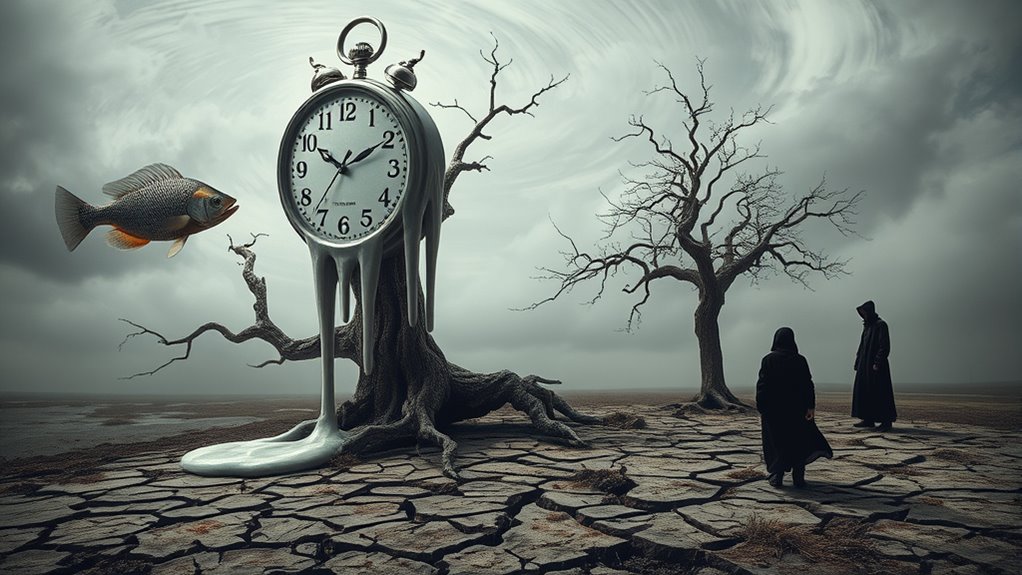
Surrealism emerged in the early 20th century as a bold response to the chaos and disillusionment caused by World War I. During this period, artists sought to break free from traditional forms, influenced by the historical context of upheaval and psychological trauma. They experimented with innovative artistic techniques like automatic drawing, collage, and dream imagery to tap into the subconscious mind. These methods allowed you to access raw, unfiltered thoughts and feelings, creating works that defy logical explanation. Surrealists aimed to challenge perceptions of reality and reveal hidden truths beneath everyday life. This evolution marked a shift from conventional art to a movement that prioritized spontaneity, imagination, and the exploration of dreams, laying the foundation for the surrealist legacy that continues today. Incorporating techniques to access subconscious was essential to their creative process and helped define the movement’s distinctive style. Additionally, the development of dream imagery served as a powerful tool for artists to explore the depths of their psyche and challenge rational thought. Recognizing the importance of psychological trauma was crucial in understanding their motivation to explore the unconscious mind. Furthermore, the use of automatic drawing enabled artists to bypass rational control and express their innermost thoughts freely. The movement’s emphasis on spontaneity and improvisation further distinguished it from traditional artistic approaches.
Key Artists and Their Iconic Works
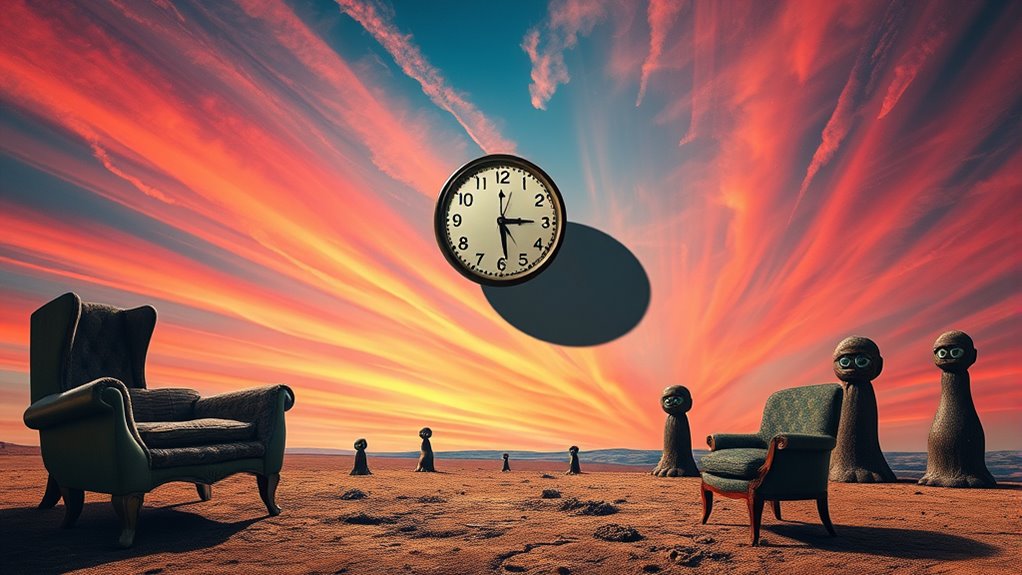
Several key artists shaped the surrealist movement with their groundbreaking works that continue to captivate viewers today. You’ll encounter artists like Salvador Dalí, whose dream symbolism manifests in melting clocks and distorted landscapes, pushing artistic innovation to new heights. André Breton’s writings laid the foundation, but it’s Dalí’s surreal imagery that embodies the movement’s essence. You might also explore Max Ernst’s inventive techniques, such as frottage, which reveal subconscious worlds through textured surfaces. Joan Miró’s playful forms and bold colors evoke a sense of dreamlike wonder, emphasizing subconscious inspiration. Each artist challenged traditional boundaries, using dream symbolism and artistic innovation to *unseal* the mysteries of the mind. Their iconic works remain a *testament* to surrealism’s ability to transform subconscious thought into visual reality. Additionally, the influence of Haute Couture can be seen in how surrealists incorporated intricate details and luxurious fabrics into their visual narratives, blending fashion with artistic expression, as they often drew upon fashion design to enhance their surreal compositions.
The Role of Dream Imagery in Surrealist Art
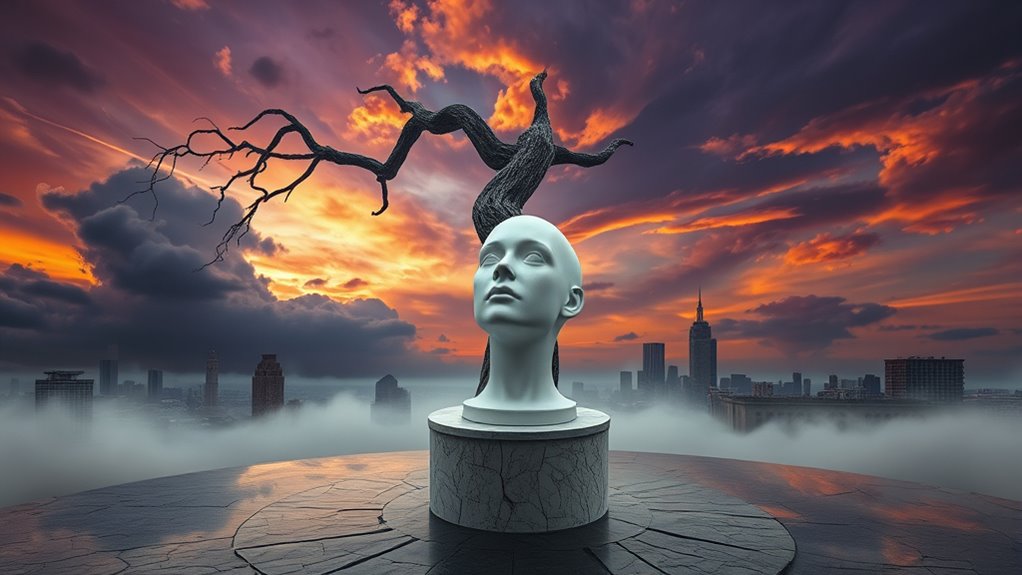
You’ll notice how surrealist artists combine odd objects to create striking juxtapositions that challenge your perceptions. They include symbolic elements from dreams to evoke deeper meanings and emotions. By exploring these dream imagery techniques, they express the hidden workings of the unconscious mind. Incorporating dream analysis can deepen our understanding of these surreal compositions.
Juxtaposition of Oddities
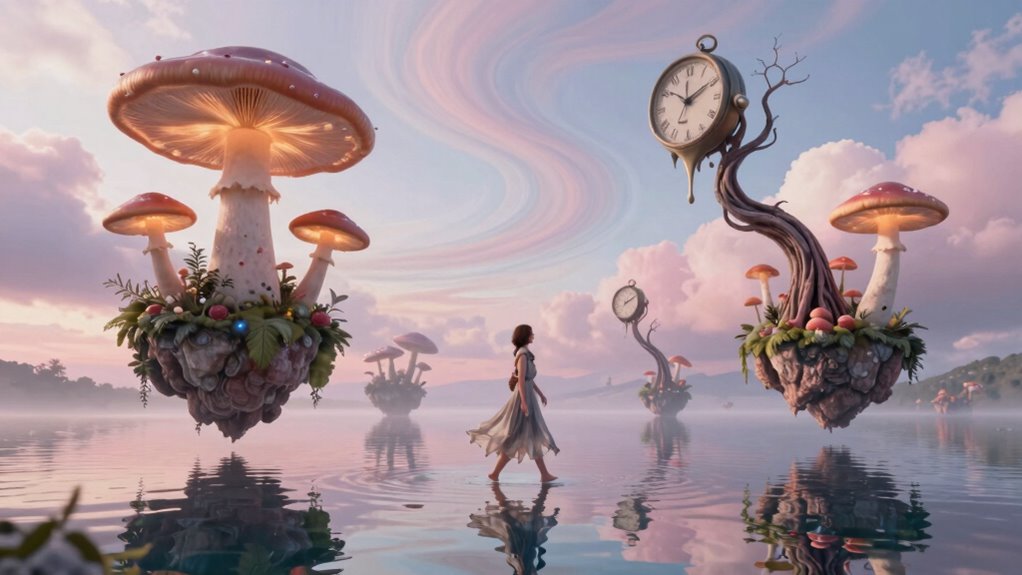
How do artists create a sense of the uncanny by placing unrelated objects together? They tap into dream symbolism, blending elements that don’t normally coexist, creating visual paradoxes that challenge your perception. By juxtaposing oddities—like a melting clock beside a barren tree—they evoke the surreal quality of dreams where logic dissolves. The technique of visual paradoxes amplifies the mysterious atmosphere, making familiar objects seem strange or unsettling. The clash of contrasting images sparks subconscious associations, stirring a sense of unease or wonder. These visual paradoxes defy everyday expectations, encouraging you to question reality’s boundaries. Ultimately, this deliberate pairing of unrelated items deepens the dreamlike quality of surrealist art, pulling you into a world where the bizarre feels both familiar and uncanny.
Symbolic Dream Elements
Dream imagery plays a pivotal role in surrealist art by tapping into the subconscious mind’s symbols and motifs. These images serve as visual representations of your inner thoughts, desires, and fears, often layered with hidden meanings. Recognizing dream symbolism helps you decode the emotional and psychological messages behind surrealist works. Subconscious imagery guides artists in expressing complex ideas beyond rational language. You might notice recurring symbols like clocks, mirrors, or animals, each loaded with personal or cultural significance. These elements evoke a sense of mystery and invite interpretation. By exploring such imagery, you connect more deeply with the surrealist intent to reveal inner truths through visual language. Incorporating crochet styles for locs into creative projects can inspire new ways of expressing surrealist themes through tactile art forms. Engaging with symbolic imagery can deepen your understanding of the emotional layers conveyed in surrealist art. Exploring diverse cultural symbols can enrich your interpretation of surrealist works. Recognizing the influence of eco-friendly travel practices can expand your appreciation for sustainable themes often subtly woven into artistic expressions. Additionally, understanding the Gold IRA Rollovers process can offer insights into how financial security and long-term planning serve as modern symbols of stability and future security, mirroring the layered symbolism in surrealist art. Embrace the symbolic dream elements to access the deeper, often hidden, messages embedded in surrealist art.
Unconscious Mind Expression
Surrealist artists harness dream imagery as a direct gateway to the unconscious mind, revealing truths that lie beneath rational thought. By exploring subconscious symbolism, they tap into hidden emotions and desires often inaccessible through ordinary perception. Dream analysis becomes a essential tool, allowing you to decode the layered meanings behind surreal images. These artworks serve as visual expressions of the unconscious, where logic dissolves and free association reigns. You’ll notice that surrealists intentionally evoke strange, disjointed scenes to challenge your understanding and provoke introspection. Through this process, they bypass conscious filters, giving voice to raw, unfiltered psychic material. Interestingly, understanding the psychological basis of dream imagery can deepen your appreciation of surrealist art’s intent. Ultimately, the use of dream imagery becomes a powerful method for expressing the complexities of the subconscious mind, unleash a world beyond everyday reality.
Techniques That Bring Surrealism to Life
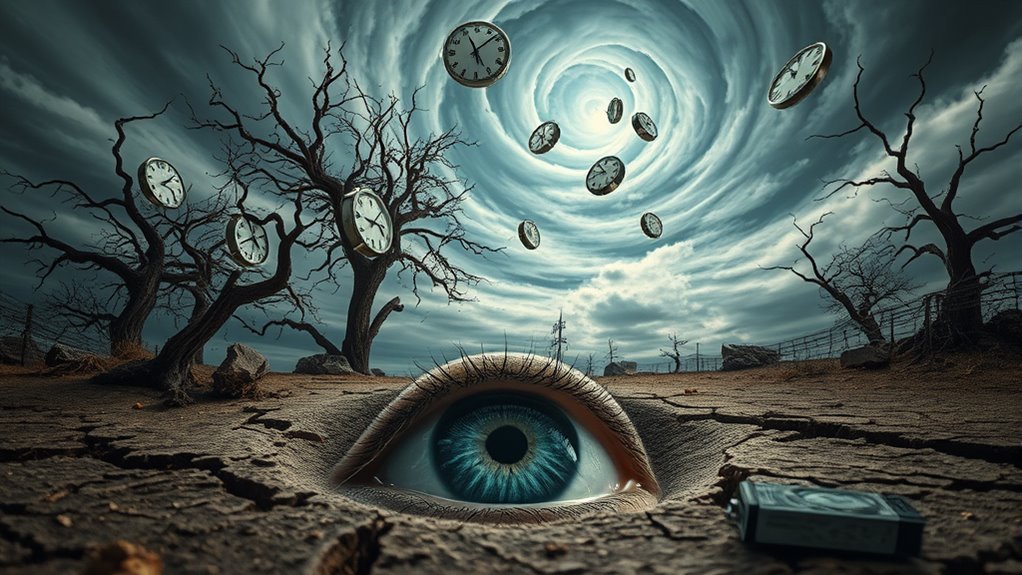
Artists employ a variety of innovative techniques to create surreal imagery that challenges reality. One key method is automatic drawing, where your hand moves freely to reveal subconscious thoughts, producing unpredictable forms. Biomorphic forms are another technique, using shapes resembling living organisms to evoke organic, dreamlike structures. These methods blur the line between conscious control and spontaneous creation, allowing the subconscious to surface. Incorporating smart design principles can enhance the viewer’s experience by subtly guiding perception and fostering comfort within surreal spaces. Additionally, integrating Indigenous wellness practices into the design can deepen the sense of harmony and balance, enriching the surreal experience.
The Influence of the Subconscious Mind
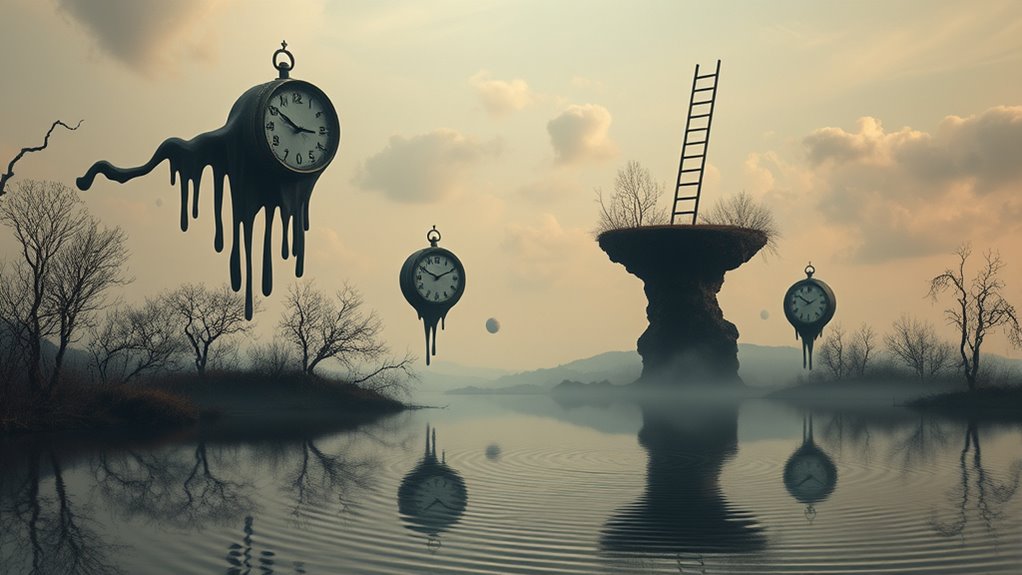
Techniques like automatic drawing and biomorphic forms tap into the subconscious, making it a powerful tool for creating surreal imagery. By practicing dream journaling, you can access hidden thoughts and emotions that reveal subconscious symbolism. These methods help you bypass logical filters, allowing raw, unfiltered ideas to surface. When you record your dreams, you notice recurring symbols and themes that reflect deeper parts of your mind. Incorporating these insights into your art or perception enriches your understanding of how your subconscious influences creativity. This process emphasizes how the mind’s hidden layers shape the surreal, *reveal* a well of inspiration that feels both spontaneous and deeply personal. Embracing this influence enables you to craft work rooted in the mysterious logic of your subconscious. Understanding subconscious processes can deepen your connection to these creative insights, especially when you explore dream symbolism as a pathway to unlocking hidden meanings. Recognizing symbolic representations in dreams can further enhance your interpretive skills and creative output. Exploring neuroscientific insights can also shed light on how subconscious patterns manifest in surreal art and perception.
Surrealism in Literature and Film
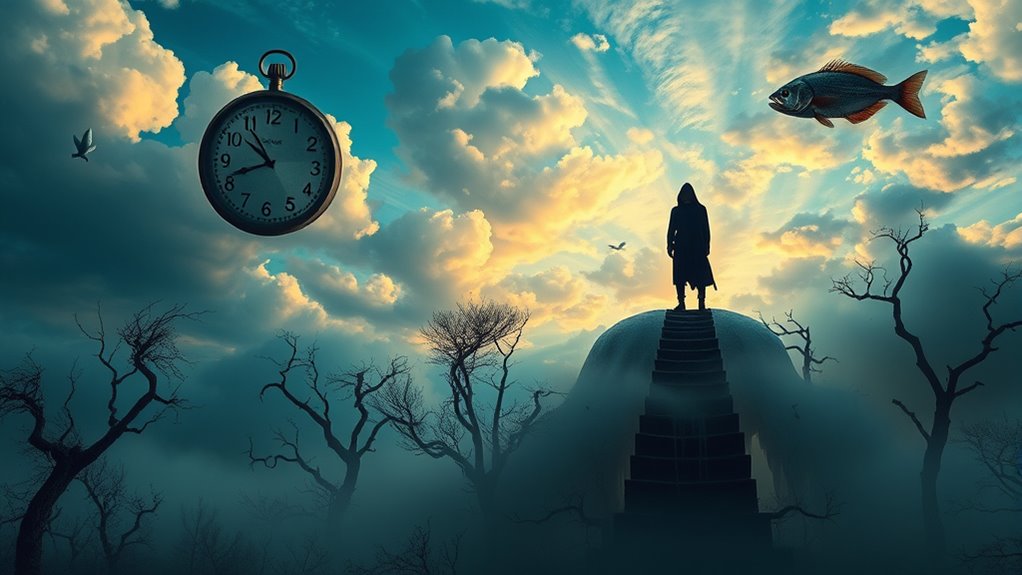
In literature and film, surrealist artists use dream imagery to evoke a sense of otherworldliness and challenge perceptions. Juxtaposition and symbolism play key roles in creating surprising connections that deepen meaning. As you explore these works, you’ll notice how these techniques blur reality and unseal hidden depths. Incorporating evidence-informed guidance can enhance your understanding of how these artistic choices influence perception and emotional impact. Recognizing the importance of visual symbolism can further clarify how surrealist visuals communicate complex ideas beyond words. For example, the use of symbolic odors in visual storytelling can subtly suggest underlying themes or emotions without explicit explanation. Additionally, understanding how cross-platform integration in modern media can mirror surrealist techniques offers new perspectives on how these artistic elements can be adapted and appreciated across different formats. Furthermore, examining interior design basics such as mood boards and narratives may provide insightful parallels to how surrealists organize and communicate their dreamlike worlds across different mediums.
Dream Imagery Usage
Dream imagery serves as a powerful tool in surrealist literature and film, allowing creators to evoke the subconscious and blur the line between reality and imagination. You notice how dream symbolism often frames the narrative, revealing hidden truths or fears beneath the surface. Subconscious imagery transports you into a world where logic dissolves, and emotions take center stage. By using vivid, strange visuals, artists tap into universal themes and personal fears alike. Additionally, the use of dream brightness can intensify the surreal atmosphere, emphasizing emotional states or symbolic significance. Recognizing emotional readiness is also crucial when interpreting or creating surrealist works, as it influences how viewers or readers connect with the underlying messages.
Juxtaposition and Symbolism
Juxtaposition and symbolism serve as essential tools in surrealist literature and film, creating striking contrasts that challenge your perceptions and provoke deeper thought. Through dream symbolism, you connect disparate images and ideas, revealing hidden meanings beneath surface appearances. Visual juxtaposition places unlikely elements side by side, intensifying their surreal impact and forcing you to reconsider ordinary reality. These techniques evoke subconscious associations, blending familiar objects with bizarre contexts to unlock new interpretations. By combining vivid imagery and symbolic contrasts, surrealist creators push you beyond logical boundaries, encouraging you to explore the subconscious mind. This interplay of contrasting symbols and unexpected visual pairings forms the core of surrealism’s power to unsettle, inspire, and deepen your engagement with the strange worlds it constructs.
Symbolism and Hidden Meanings in Surrealist Pieces
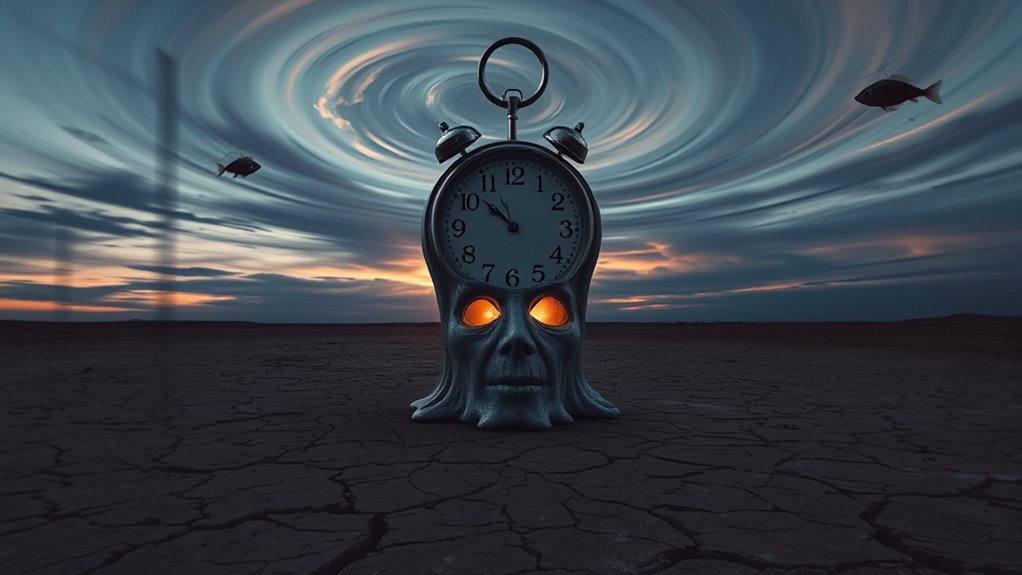
Surrealist artists embed symbolism and hidden meanings into their works to evoke subconscious thoughts and challenge viewers’ perceptions. You might notice dream symbolism or hidden motifs designed to tap into your inner psyche. These symbols often serve as gateways to deeper understanding or personal reflection. Look for recurring images, such as clocks or animals, that carry layered meanings. They can represent concepts like time, transformation, or desire. Some common symbols include:
Surrealist art uses hidden symbols like clocks and animals to unlock subconscious thoughts and deeper meanings.
- Melting clocks symbolizing the fluidity of time
- Birds representing freedom or the soul
- Doors and windows as gateways to other domains
- Snakes indicating transformation or danger
- Disjointed body parts revealing fractured identity
Through these symbols, surrealist art encourages you to interpret the unconscious messages woven into each piece, revealing truths beyond the surface.
The Impact of Surrealism on Contemporary Art
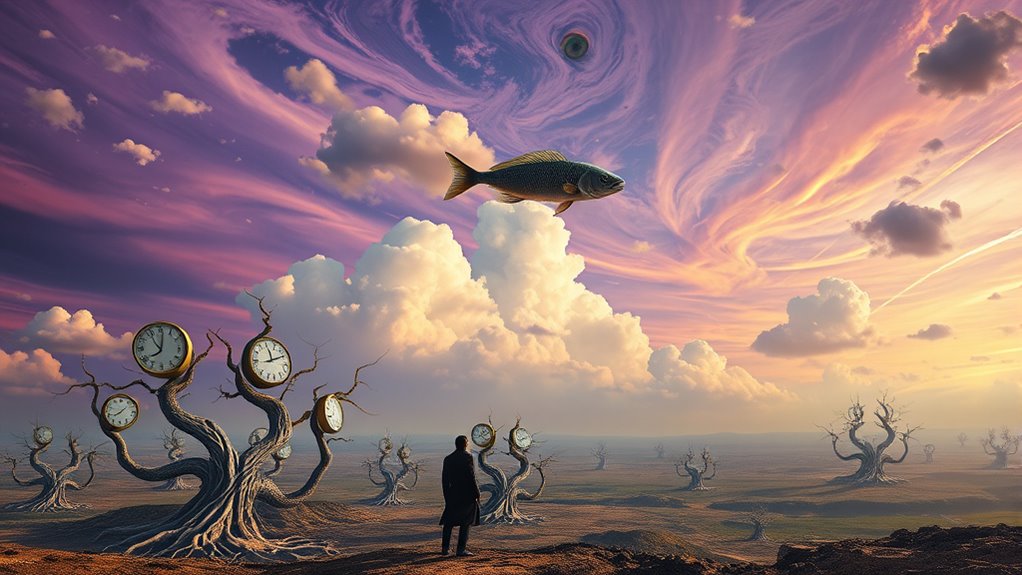
Have you noticed how contemporary artists often incorporate surrealist elements to challenge perceptions and spark new interpretations? Surrealism influences everything from abstract landscapes to surrealist fashion, pushing boundaries and redefining creativity. Artists blend dream-like imagery with bold colors and unexpected forms, creating a sense of wonder and curiosity. This movement encourages exploring subconscious ideas, often resulting in innovative visual experiences. Below is a quick comparison:
| Aspect | Surrealist Influence |
|---|---|
| Abstract landscapes | Dream-inspired, fluid forms |
| Surrealist fashion | Unconventional, symbolic accessories |
| Artistic techniques | Juxtaposition, unexpected combinations |
| Cultural impact | Inspires new genres and aesthetics |
You see, surrealism’s impact persists, inspiring exploration beyond traditional boundaries.
Exploring the Psychological Roots of the Surrealist Movement

The imaginative and often uncanny visuals of surrealist art stem from deeper psychological currents that influence creative expression. Psychoanalytic theory reveals that artists tap into their subconscious, exposing hidden thoughts through surreal images. Your mental associations, shaped by childhood experiences and repressed desires, become the foundation of surrealist imagery. These creators explore unconscious drives by:
- Uncovering repressed memories
- Connecting disparate symbols
- Challenging rational thought
- Expressing suppressed emotions
- Revealing inner conflicts
Frequently Asked Questions
How Does Surrealism Influence Modern Advertising and Branding?
You notice how surrealism influences modern advertising and branding by using dream imagery and subconscious symbolism to grab your attention. Marketers create visuals that seem bizarre or dreamlike to evoke curiosity and emotional responses. They tap into your subconscious, making products feel more memorable and intriguing. This approach makes brands stand out by blending reality with the surreal, appealing to your imagination and deeper desires without you even realizing it.
Are There Cultural Differences in How Surrealism Is Interpreted Globally?
Imagine a kaleidoscope that shifts colors and shapes based on where you’re looking. Cultural perceptions and regional influences shape how surrealism is interpreted worldwide, making it feel like a different dream in each place. In some cultures, it’s a playful escape, while in others, it’s a profound reflection of subconscious fears. These diverse lenses color surrealism’s meaning, proving it’s a universal language, yet uniquely understood through local stories and traditions.
What Is the Connection Between Surrealism and Other Avant-Garde Movements?
You see that surrealism connects closely with other avant-garde movements through its focus on dream symbolism and artistic rebellion. It challenges traditional norms by exploring subconscious imagery and pushing boundaries, inspiring movements like Dada and abstract art. You realize that these movements share a common goal: breaking conventions and revealing deeper truths through unconventional, often provocative, artistic expressions driven by a desire to subvert societal expectations.
Can Surrealist Art Be Understood Purely Through Rational Analysis?
You can’t fully understand surrealist art through rational critique or logical analysis alone. Its essence lies in exploring subconscious imagery and dreamlike states that defy logical structure. While rational critique helps you analyze technique and symbolism, it misses the emotional and intuitive depths. To truly appreciate surrealism, you need to embrace its irrational, spontaneous qualities, allowing your imagination to interpret the weirdness beyond mere logical analysis.
How Do Surrealist Techniques Vary Across Different Mediums Like Sculpture and Film?
You see that surrealist techniques differ across mediums like sculpture and film by emphasizing psychoanalytic symbolism and dream state visualization. In sculpture, you might notice distorted forms representing subconscious fears, while in film, dream sequences use vivid imagery and editing to evoke unconscious thoughts. Both mediums tap into the dream logic, creating an immersive experience that reveals hidden desires and anxieties through visual storytelling and symbolic elements.
Conclusion
As you step back from surrealism’s dreamlike tapestry, you realize it’s like peering through a foggy window—where familiar shapes gently blur into mysterious forms. This movement softly guides you through hidden landscapes of the mind, inviting curiosity without revealing all. In embracing its gentle ambiguity, you find a space where imagination dances freely, weaving the subconscious into art’s quiet symphony—reminding you that beauty often lies just beyond clarity’s reach.