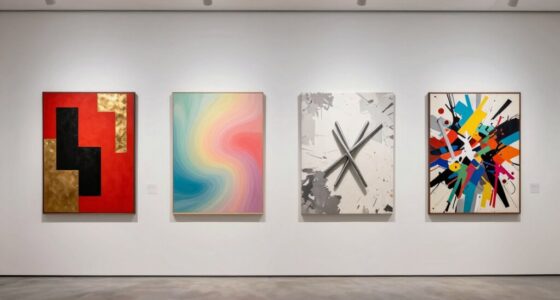
Contemporary art is defined by its reflection of current social, cultural, and technological shifts, often created from the mid-20th century onward. It emphasizes innovation, experimentation, and diverse media, challenging traditional boundaries. Global influences and audience participation also shape its meaning and value. Its fluidity makes categorization tricky, but this adaptability keeps it relevant. To understand what truly makes art “contemporary,” it helps to explore how these factors interact and evolve over time.
Key Takeaways
- Contemporary art is characterized by its focus on innovation, experimentation, and the use of diverse media and techniques.
- It reflects ongoing social, political, and cultural shifts, often engaging audiences through interactivity and participation.
- The term is fluid, emphasizing ideas and concepts over traditional aesthetics or strict genre boundaries.
- Technological advances like digital tools, virtual reality, and social media heavily influence contemporary artistic practices.
- Its classification is dynamic, influenced by market trends, globalization, and evolving perceptions of authenticity and value.
Defining the Timeframe of Contemporary Art

Contemporary art generally refers to artwork created from the mid-20th century onward, but pinpointing an exact start date can be challenging. This period is marked by diverse historical periods and artistic movements that reflect rapid social and technological changes. You’ll find that it overlaps with late modernism and the rise of postmodernism, making the timeframe fluid. Unlike earlier eras with clear boundaries, contemporary art resists strict categorization, blending styles and ideas from different movements. It’s shaped by global influences and innovative practices that continue to evolve. Understanding its timeframe helps you see how artistic movements and cultural shifts influence current work, making it a dynamic and ever-changing reflection of current society. Additionally, the concept of cultural context plays a crucial role in understanding the diversity and complexity of contemporary art. Recognizing the technological advances that underpin many modern works can further deepen appreciation for its evolution and scope. The integration of digital tools and new media has become increasingly prominent in contemporary art, illustrating its ongoing adaptation to technological progress. Furthermore, awareness of art market developments can provide insight into how contemporary art is produced, valued, and disseminated today.
The Role of Cultural and Social Contexts
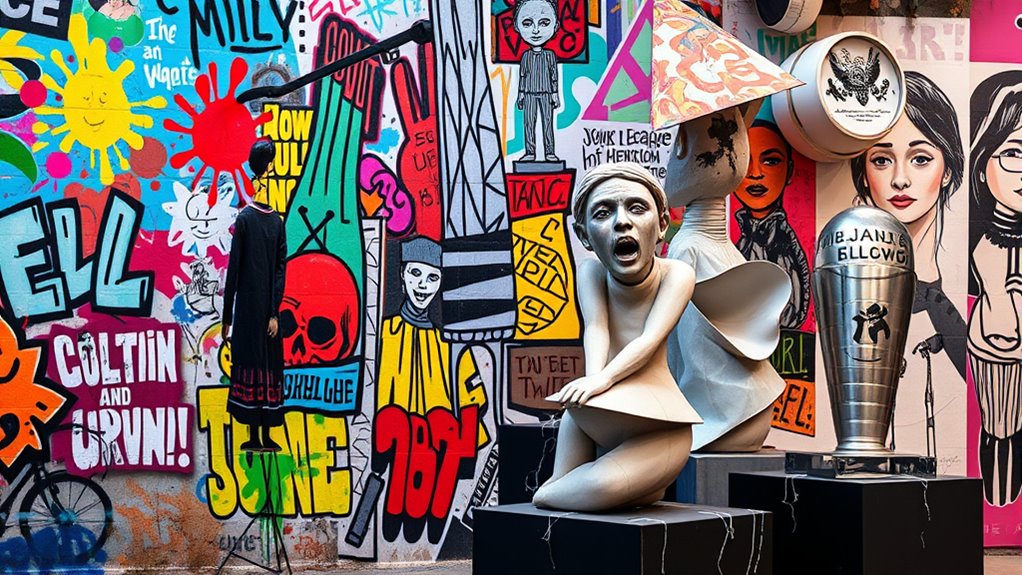
Cultural and social contexts deeply influence contemporary art, shaping how you interpret and create works that reflect current issues. Artists often draw on cultural symbolism to communicate complex ideas, using familiar motifs to connect with viewers’ shared experiences. Social activism plays a major role, inspiring works that challenge injustices and advocate for change. You’ll notice that contemporary artists frequently incorporate elements from diverse cultures, highlighting global interconnectedness and social disparities. These contexts push artists to respond directly to societal debates, making their work more than aesthetic expression—it becomes a form of engagement and commentary**. By understanding the cultural and social backgrounds surrounding a piece, you gain deeper insight into its meaning, intent, and significance within the broader landscape of contemporary art. Understanding cultural symbolism helps viewers interpret the layered messages embedded in modern works, particularly when combined with auditory and visual cues, which can deepen emotional response. Additionally, awareness of energyLast can shed light on the physical and material aspects that influence the creation and perception of contemporary art. Recognizing these artistic influences** allows for a more comprehensive appreciation of how societal factors shape artistic innovation and dialogue.
Technological Influences and New Media

Technological advances are transforming how artists create and share their work, with digital innovations leading the way. Interactive installations engage audiences more directly, blurring the line between viewer and creator. Social media amplifies these trends, allowing art to reach wider audiences instantly and shaping new artistic practices. The use of high-pressure spray technology has also enabled artists to experiment with new textures and finishes, expanding the possibilities within contemporary art. Additionally, tools like digital art platforms facilitate collaboration and distribution, further redefining what it means for art to be “contemporary.”
Digital Art Innovations
Digital art innovations have transformed how artists create and share their work, fueled by rapid advances in technology and new media platforms. You now have access to virtual galleries that showcase art globally, breaking down geographic barriers. Digital collaborations enable artists to work together across borders, exchanging ideas instantly. Here are key points to contemplate:
- Virtual galleries expand audience reach and accessibility.
- Digital tools facilitate real-time collaboration among artists.
- Blockchain technology ensures provenance and authenticity.
- Augmented reality enhances viewer engagement with artworks.
These innovations push contemporary art beyond traditional boundaries, making it more interactive and inclusive. As a result, digital art continues to evolve, reflecting the rapid pace of technological change and expanding possibilities for creators and audiences alike.
Interactive Installations Rise
How have new media and technological advances fueled the rise of interactive installations in contemporary art? You now encounter works like interactive sculptures that respond to your movements or touch, creating a dialogue between viewer and artwork. These innovations enable artists to craft immersive environments that engage multiple senses, blurring the line between audience and artist. Technologies such as sensors, projection mapping, and real-time data processing power these experiences, allowing for dynamic, changing displays. You’re no longer a passive observer but an active participant, shaping the art through your presence. This shift reflects a broader move toward experiential art, where audience interaction is integral to the piece’s meaning. As a result, contemporary art becomes more engaging, personalized, and technologically driven. Drone insights have also influenced the development of new media art, providing artists with innovative tools for creation and interaction, especially through technological innovations.
Social Media’s Role
Social media has transformed contemporary art by providing artists with new platforms to share, promote, and engage audiences worldwide. It amplifies viral trends and fuels influencer culture, shaping how art is perceived and consumed. With social media, you can:
- Reach global audiences instantly, breaking traditional gallery boundaries
- Create viral trends that elevate artworks quickly
- Build personal brands through influencer collaborations
- Engage directly with fans, fostering community and dialogue
This digital landscape encourages artists to experiment with new media and innovative ideas, often driven by viral moments. Influencer culture accelerates recognition, making art more accessible and immediate. As a result, social media blurs the lines between creator and audience, constantly redefining what it means to be a contemporary artist today.
The Evolution From Modern to Contemporary Art

Have you ever wondered how the art world shifted from the structured, idealistic visions of Modernism to the diverse, boundary-pushing practices of Contemporary art? This *changeover* happened gradually through various historical movements that challenged traditional ideas. Modernist movements like Abstract Expressionism and Minimalism emphasized innovation and personal vision, often shaped by influential artistic biographies. As time progressed, artists began questioning established norms, incorporating new techniques and perspectives. The evolution wasn’t linear but marked by a series of responses to social, political, and technological changes. These shifts created a broader, more inclusive artistic landscape, setting the stage for the eclectic, experimental nature of contemporary art today. Understanding this evolution helps clarify how art continually adapts to reflect our changing world. Evolutionary shifts in art styles demonstrate how artistic practices respond to external influences and societal developments. Additionally, AI tools have started playing a role in contemporary art creation, reflecting ongoing technological influences. The influence of Western art movements is also evident in many contemporary practices, further illustrating how global interactions shape current artistic trends. Moreover, philosophical insights into authenticity and existence have inspired contemporary artists to explore new themes and mediums. Recognizing the impact of cultural exchange reveals how cross-cultural interactions have enriched contemporary artistic expressions.
Key Characteristics of Contemporary Artistic Practices

Contemporary artistic practices focus heavily on innovation, encouraging artists to experiment with new ideas and techniques. They also embrace a wide range of media, from digital art to installation and performance. By doing so, artists challenge traditional boundaries and redefine what art can be. Additionally, many contemporary artists draw inspiration from ourmindandbody.com, integrating themes of wellness and holistic health into their work to reflect current societal interests. Moreover, the technical reference to diverse media forms helps artists stay adaptable and relevant in a rapidly evolving cultural landscape. Furthermore, the emphasis on artistic experimentation and diversity is what truly sets contemporary art apart from previous movements. These practices often incorporate evidence‑informed approaches that align with ongoing societal shifts toward health and well-being. Embracing interdisciplinary approaches allows artists to connect with broader audiences and address complex social issues.
Emphasis on Innovation
What makes contemporary art stand out is its relentless pursuit of innovation. You’ll find artists constantly pushing boundaries with experimental techniques and innovative materials, creating fresh visual languages. This continuous evolution is often supported by a calm, science-aware approach that embraces new ideas without fear. This drive for novelty manifests in several key ways:
- Using unconventional tools and methods to challenge traditional aesthetics
- Incorporating new materials like digital media, recycled objects, or bio-art
- Blending disciplines such as technology, sculpture, and performance
- Encouraging experimentation without fear of failure or repetition
- Leveraging AI-generated content to explore new creative possibilities and expand artistic horizons
Embracing Diverse Media
One of the defining features of contemporary art is its willingness to embrace a wide range of media, breaking free from traditional boundaries. You’ll find artists working with mixed media, combining painting, sculpture, digital elements, and more to create layered, dynamic works. Performance art is another powerful form, where you become part of the artwork itself, blurring the lines between artist and audience. This diversity allows you to explore ideas in innovative ways, engaging multiple senses and challenging conventional notions of art. By using different media, artists push the limits of expression and foster new dialogues. Additionally, attention to detail is crucial for artists to accurately convey complex concepts and evoke emotional responses. Incorporating artistic techniques helps deepen the impact of their work and demonstrates mastery of various media. Embracing these varied approaches makes contemporary art vibrant, flexible, and reflective of the complex world we live in today.
The Significance of Concept and Idea
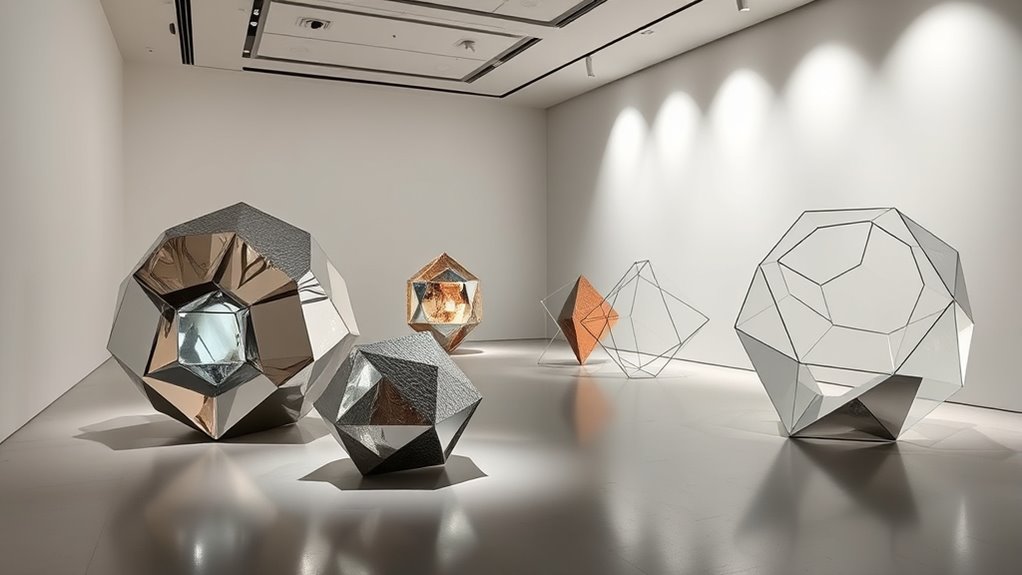
In contemporary art, the concept and idea behind a piece often hold more weight than its visual execution. This focus on conceptual significance transforms art into a dialogue, emphasizing meaning over aesthetics. As an artist or viewer, you recognize that idea-driven art challenges perceptions and invites reflection. To understand its importance:
- It prioritizes message over form, making the idea central.
- It encourages viewers to engage intellectually, not just visually.
- It allows for diverse interpretations, enriching the experience.
- It pushes boundaries, fostering innovation and new perspectives.
The Impact of Globalization on Artistic Identity

Globalization has profoundly reshaped artistic identity by connecting artists across borders and exposing them to diverse cultural influences. This process of artistic globalization allows you to blend different traditions, ideas, and techniques, leading to hybrid works that challenge traditional notions of cultural identity. As artists draw inspiration from global sources, their work becomes a reflection of multiple cultural layers, fostering a more inclusive and interconnected artistic landscape. You might find yourself incorporating motifs from different regions or questioning cultural boundaries altogether. However, this interconnectedness also raises questions about authenticity and cultural preservation. Ultimately, globalization pushes you to rethink what it means to maintain a unique artistic voice while engaging with a global community. Your work becomes both a personal expression and a dialogue with the wider world.
How Audience Engagement Shapes Contemporary Art

As artists embrace diverse cultural influences and create hybrid works, they increasingly recognize the importance of engaging audiences in meaningful ways. Your participation transforms the art experience, making it interactive and personal. Audience participation isn’t just passive observation; it shapes the artwork’s meaning through your involvement. Viewers’ interpretations become part of the piece, allowing for multiple perspectives and deeper connections. To foster this engagement, artists often:
Audience involvement transforms art into a personal, dynamic experience shaping its meaning and fostering deeper connections.
- Encourage direct interaction with the work
- Invite feedback and dialogue
- Use shared spaces for collective creation
- Design open-ended pieces that invite varied viewer interpretations
This approach shifts the focus from static objects to dynamic exchanges, emphasizing that contemporary art thrives on your active role in shaping its meaning and impact.
Challenges in Categorizing and Recognizing Contemporary Art
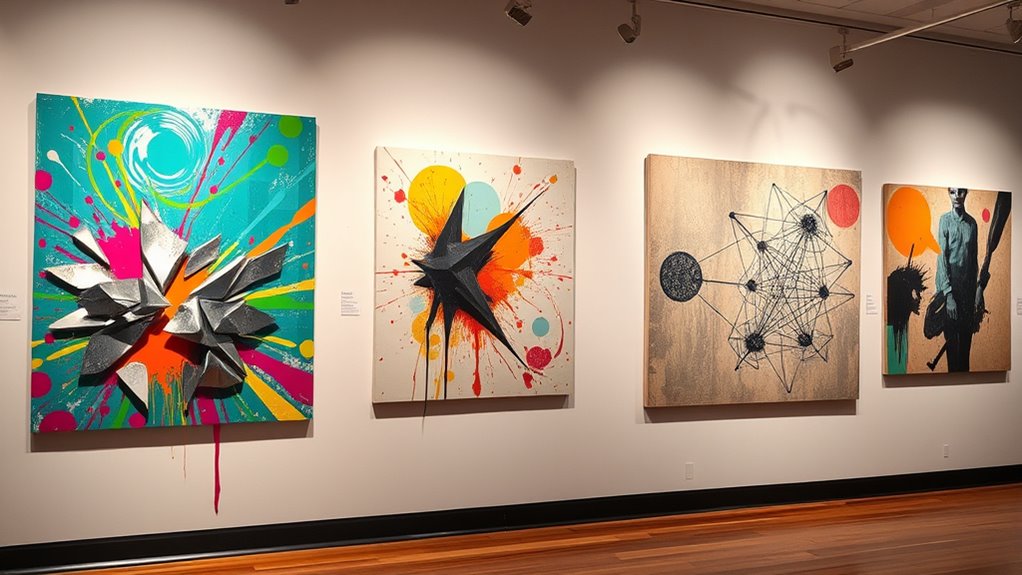
Categorizing and recognizing contemporary art remains a complex challenge because the boundaries between styles, mediums, and concepts often blur, making it difficult to assign works to specific categories. Market trends and collector interests influence perceptions, yet the fluidity of contemporary practice resists strict labels. This ambiguity complicates authentication and valuation, impacting how collectors and institutions approach art. To understand these dynamics better, consider the following:
| Aspect | Impact |
|---|---|
| Style and Medium | Overlapping and evolving categories create confusion |
| Market Trends | Drive demand and influence categorization |
| Collector Interests | Shift perceptions and valuation priorities |
Flexibility in definitions reflects the genre’s essential nature but also underscores its challenges.
Frequently Asked Questions
How Do Collectors Influence What Is Considered Contemporary Art?
You influence what is considered contemporary art through your collector influence, shaping artists’ careers and gallery choices. Your purchasing decisions and investments impact market trends, making certain styles or artists more prominent. As a collector, you help define what’s valued and trendy in the art world, guiding public perception and gallery focus. Your role is vital in establishing the evolving landscape of contemporary art and its perceived significance.
Can Traditional Art Forms Be Classified as Contemporary?
Did you know that 60% of art experts believe traditional art forms can be considered contemporary if they reflect current societal issues? Yes, traditional art can be classified as contemporary when it aligns with the ongoing artistic evolution and fits within the historical context of today’s culture. You see, contemporary art isn’t limited to new media; it’s about engaging with present-day ideas, regardless of the medium or style.
What Role Do Art Critics Play in Defining Contemporary Art?
You should know that art critics influence how we define contemporary art through their aesthetic judgments and commentary. Their opinions shape public perception, highlight innovative works, and challenge traditional boundaries. By evaluating new art forms and trends, critics guide viewers in understanding what makes art “contemporary.” Their influence helps frame the evolving landscape, ensuring that societal, cultural, and aesthetic shifts are recognized within the broader art world.
How Do Economic Factors Affect Contemporary Art Production?
You notice how market trends and funding sources unexpectedly shape your art world. Economic factors directly influence contemporary art production; when funding flows into certain styles or themes, artists adapt to meet these demands. Market trends can accelerate or limit creativity, while grants and sponsorships steer projects. You might find yourself creating work that aligns with financial opportunities, revealing how economics silently guide the evolution of contemporary art.
Is There a Universal Standard for Identifying Contemporary Art Globally?
You won’t find a universal standard for identifying contemporary art globally because it varies with cultural context and stylistic diversity. Different regions and communities interpret what’s current through their unique perspectives, styles, and issues. This diversity means contemporary art is constantly evolving, reflecting local identities and global influences. So, instead of a fixed standard, you should look at the cultural context and stylistic diversity to understand what makes art “contemporary” in any part of the world.
Conclusion
Understanding what makes art “contemporary” helps you appreciate its evolving nature. Did you know that over 50% of contemporary artworks now incorporate digital media? This shift highlights how technology shapes artistic expression today. By staying aware of cultural shifts and audience engagement, you can better grasp the ever-changing landscape of contemporary art. Embrace its diversity and innovation—after all, it reflects the world you live in, constantly redefining what art can be.