TL;DR

Prime made for students and young adults
- Fast, free delivery for dorm and study essentials
- Prime Video and Amazon Music included
- Member-only deals
The Vesuvius Challenge awarded Liam Warner and Nicola Bodill its $50,000 First Letters Prize for recovering readable text from PHerc. 306B, a carbonized scroll buried in the AD 79 eruption of Vesuvius. The agreed reading includes the Greek phrase for “that which is in itself desirable,” though the scroll’s full contents and the passage’s meaning remain unknown.
The Vesuvius Challenge has awarded its $50,000 First Letters Prize to Liam Warner and Nicola Bodill for identifying ink and recovering readable Greek text in PHerc. 306B, a carbonized scroll buried in the AD 79 eruption of Mount Vesuvius. The reading marks the first reported recovery of legible writing from this portion of the scroll, offering evidence from a manuscript that has remained unread since its excavation.
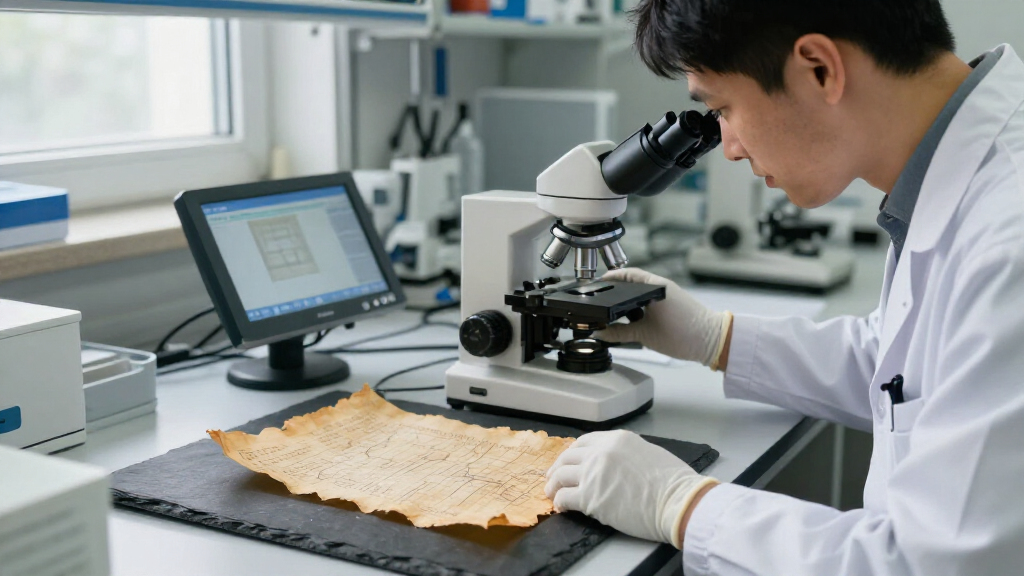
Warner and Bodill’s submission met the prize target of 10 readable characters within a 4-square-centimeter area. According to the Vesuvius Challenge, the ink appears on a papyrus sheet deep within the scroll’s compressed windings. Researchers used micro-CT scans to examine the scroll virtually, rather than physically unrolling or separating its fragile layers.
The text sequence includes τὸ δι᾽ αὑτὸ αἱρ̣ε̣τ̣όν̣, which the report translates as “that which is in itself desirable.” The papyrology team had already identified the opening sequence, τοδιαυτο, in several submissions, but could not agree on the letters that followed. Warner and Bodill’s image made a faint middle stroke visible, allowing the team to read the next letters as αι with greater confidence.
The challenge said it reviewed 25 submissions on PHerc. 306. Several teams worked on the same segment and came close to the requirement, recovering seven, eight or nine readable characters. The report credited those efforts alongside the winning entry, describing the scroll as particularly difficult because its papyrus is severely distorted and compressed.
A New Route Into Herculaneum Texts
The result shows that virtual examination can recover text from a scroll whose physical layers are too damaged and tightly wound for ordinary reading. The ink was detected within the material, and the writing was interpreted from scan data; the achievement does not mean that the scroll has been physically opened or that its complete text is now available.
The phrase may also offer a lead for identifying the work or its subject. The Vesuvius Challenge report says similar language appears in philosophical writing, including works associated with Aristotle and Sextus Empiricus, as well as Philodemus’ treatise On Anger. Those parallels are clues, not a confirmed identification of PHerc. 306B’s author or contents.
The finding also adds value to the scroll’s other surviving piece. Identifying the direction of the script allowed researchers to determine that PHerc. 306B is the upper section of the original roll and the smaller PHerc. 306A is the lower part. The remaining section can now be targeted for scanning and virtual analysis with a better understanding of how it fits the original scroll.
Popular right now

Ninja Foodi Dual Zone Smart XL Air Fryer, 10 Qt, 6-in-1, Black (DZ550)

Ninja Foodi 10-Qt DualZone Air Fryer, 6-in-1, Black (DZ302)

eufy C28 Robot Vacuum Cleaner and Mop for Pet Hair, 15,000 Pa
As an affiliate, we earn on qualifying purchases.
From Excavation to Virtual Reading
PHerc. 306 was excavated in the 1750s at the Villa of the Papyri in Herculaneum, near present-day Naples. The eruption in AD 79 carbonized the papyrus, leaving it brittle and vulnerable to damage. The scroll is now divided into two portions, designated PHerc. 306A and PHerc. 306B, and is held at the Biblioteca Nazionale di Napoli.
The Vesuvius Challenge team micro-CT scanned the scroll in the previous year, according to its report. The scans provide cross-sections that let researchers model papyrus layers and search for ink without unrolling the physical object. Contestants then submitted proposed readings and images for review. In this case, a subtle improvement in the visibility of one stroke helped distinguish alpha from letter forms that can look similar in ancient majuscule script.
The challenge’s First Letters Prize is intended to reward readable text recovered from a Herculaneum papyrus. For PHerc. 306B, the stated threshold was 10 characters in a defined area. The prize decision followed review of multiple attempts, rather than a single initial reading.
““that which is in itself desirable””
— The Vesuvius Challenge report
The Scroll’s Full Text Remains Unknown
The prize-winning passage is a short reading, not a transcription of the whole scroll. The Vesuvius Challenge says the phrase is plausible and has parallels in philosophical works, but its report does not establish which author wrote PHerc. 306B or identify the passage’s larger argument. The precise surrounding text and how it changes the interpretation remain unknown.
The reading is more confident than earlier submissions, but it is based on interpretation of scan images and letter forms. The report describes the papyrology team’s agreement on αι and points to the visible diagonal stroke as evidence. It does not provide a full scholarly edition or state that every character in the phrase is equally clear.
It is also not yet clear from the report when PHerc. 306A will be scanned or whether analysis will recover text from that lower portion. The scroll’s extreme compression and distortion may continue to limit what can be read.
Scanning the Scroll’s Lower Portion
The Vesuvius Challenge says PHerc. 306A has become more valuable to scan and virtually unroll now that researchers know which portion of the original roll PHerc. 306B represents. The source report does not announce a schedule for that work or a specific next prize milestone.
Further analysis of PHerc. 306B could test the proposed reading against additional visible letters and search for more text around the recovered phrase. Any broader identification of the work will depend on recovering enough surrounding writing to compare its vocabulary and argument with known ancient texts. For now, the confirmed advance is a small, readable passage and a clearer understanding of the scroll’s structure.
Key Questions
What was recovered from PHerc. 306B?
Researchers identified ink and recovered a sequence of Greek letters, including a phrase translated by the Vesuvius Challenge as “that which is in itself desirable.” The result does not reveal the complete contents of the scroll.
Who received the First Letters Prize?
Liam Warner and Nicola Bodill received the Vesuvius Challenge’s $50,000 prize after their submission met the target of 10 readable characters within a 4-square-centimeter area.
Was the scroll physically unrolled?
No. The reading came from micro-CT scan data and virtual analysis. The report describes the papyrus sheet as deep within the scroll’s compressed windings; it does not say the physical scroll was opened.
No. The phrase has parallels in ancient philosophical texts, including works associated with Aristotle, Sextus Empiricus and Philodemus, but those similarities do not confirm the author or title of PHerc. 306B.
What may happen next?
The Vesuvius Challenge says the scroll’s lower portion, PHerc. 306A, is now a more valuable target for scanning and virtual unrolling. The report gives no timetable for that work.
Source: scrollprize.substack.com