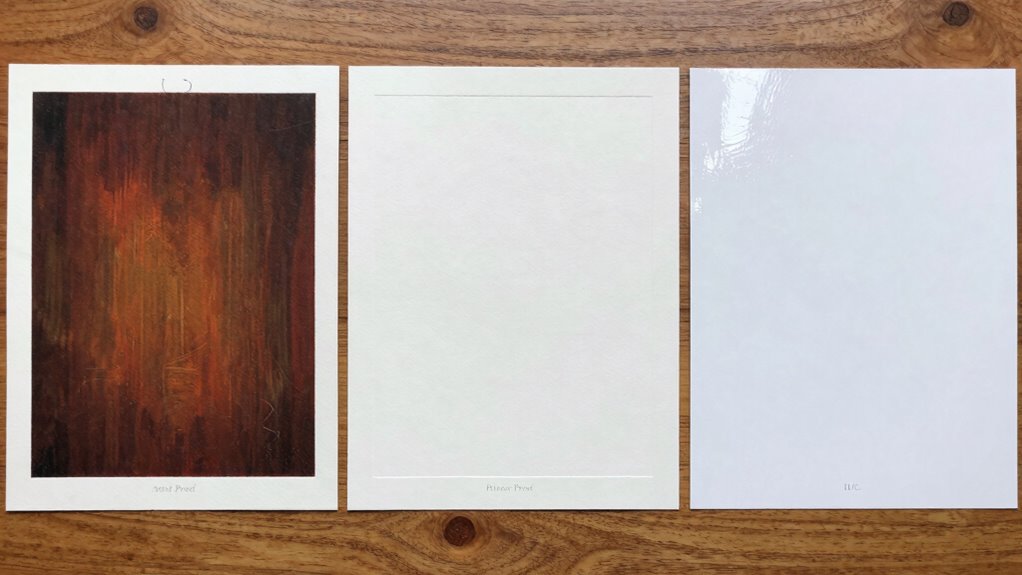

Understanding the differences between artist proofs (A/P), printer proofs (P/P), and hors commerce (H/C) editions helps you appraise artwork’s rarity and value. Artist proofs are limited, usually signed, and often more valuable due to their exclusivity and artistic significance. Printer proofs confirm print quality checks and are more common. H/C editions are reserved for display or promotional use, making them highly exclusive. Knowing these codes enhances your ability to identify and evaluate collectible prints—if you want to uncover more, keep exploring.
Key Takeaways
- Artist proofs (A/P) are limited, signed by the artist, and often more valuable due to their early, unique status.
- Printer proofs (P/P) are used for quality control, marked as “P/P,” and generally less rare or collectible.
- H/C (Hors Commerce) copies are not for sale, reserved for artists or exhibitions, adding exclusivity and rarity.
- Edition codes like “A/P,” “P/P,” and “H/C” help verify authenticity, provenance, and rarity of the print.
- Recognizing physical traits and markings aids in distinguishing proof types and assessing their market value.
What Are Edition Codes and Why Are They Important?

Have you ever wondered what distinguishes one limited edition print from another? That’s where edition codes come in. These codes indicate the specific print run, helping to identify each piece’s place within the edition. Understanding edition markings is crucial because they reveal the edition’s scarcity—fewer prints mean higher value and exclusivity. Edition codes often include details like the total number of prints and the individual print’s number within that run, such as 10/100 or 50/200. This information guides collectors in understanding how rare a piece truly is. Decoding these marks can also enhance the artwork’s provenance, providing a clearer record of its origin and authenticity. Properly interpreting these codes can assist in verifying the authenticity of artwork, which is essential for collectors and investors alike. By decoding these marks, you can assess an artwork’s worth and significance. Without edition codes, it’s much harder to determine a print’s authenticity and rarity, making them a crucial part of the collectible’s story.
What Is an Artist Proof (A/P) and Why Does It Matter?

Ever wonder what sets an artist proof apart from the standard print? An artist proof (A/P) holds unique artistic significance because it’s the artist’s personal test piece before mass production. These proofs often showcase the artist’s initial ideas and craftsmanship, making them highly collectible. Collector considerations include rarity and authenticity, as A/P editions are usually limited and less common. They may carry a higher value due to their special status. Here’s a quick comparison:
| Aspect | Artist Proof (A/P) |
|---|---|
| Artistic significance | Shows the artist’s original vision |
| Rarity | Limited, less produced |
| Collector value | Generally more valuable |
| Production stage | Early, pre-edition |
| Authenticity | Confirmed by artist’s sign |
How Do Printer Proofs (P/P) Differ From Artist Proofs?

While artist proofs are prized for their connection to the creator’s original vision, printer proofs serve a different purpose in the production process. Printer proofs focus on checking print quality, ensuring colors, tones, and details meet the desired standards before mass production. They’re used to identify any flaws or inconsistencies that could affect the final edition.
Unlike artist proofs, which are often rare and highly valued due to their limited availability, printer proofs are typically more common and less collectible. Their primary role is quality control rather than exclusivity.
This means printer proofs help maintain edition consistency and ensure each print matches the intended appearance, making them essential for producing high-quality, uniform editions.
What Does H/C (Hors Commerce) Mean in Limited Editions?
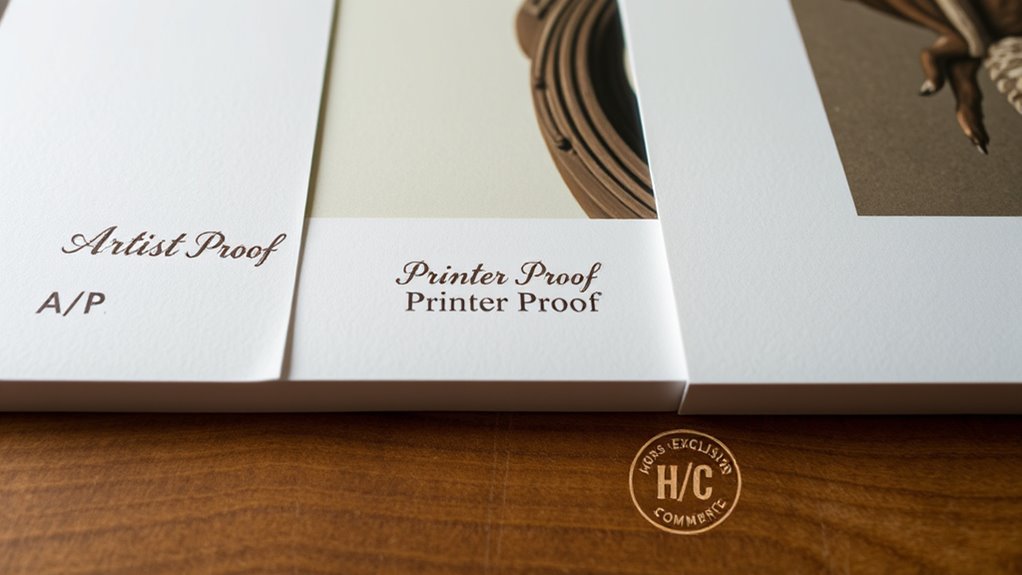
H/C, which stands for Hors Commerce, refers to copies of a limited edition that aren’t for sale to the public. These are usually part of the print run but are reserved for the artist, gallery, or promotional use. Because they aren’t available for purchase, H/C copies often carry a lower edition rarity compared to the numbered editions. They can include artist proofs or special copies used for exhibitions or promotional purposes. Free Floating While they’re technically part of the print run, H/C editions are considered more exclusive and less common, adding a unique aspect to the overall edition. Knowing what H/C means helps you understand the overall value and rarity of a limited edition, especially when evaluating its significance within the print run. Additionally, understanding the distinction between edition codes like Artist Proofs and H/C copies can greatly influence the perceived value of collectible prints. Recognizing these edition distinctions is important for collectors seeking authenticity and rarity. Furthermore, awareness of net worth levels can sometimes correlate with access to exclusive art editions or special releases, enhancing the value of such collectibles.
How Can You Tell the Difference Between Proofs and Edition Types?

To tell proofs from edition types, start by examining the markings and labels on each piece. Look closely at visual and physical traits, like paper quality and signature placement, to spot differences. Being aware of authenticity verification methods can also help confirm whether a piece is a proof or part of a numbered edition. Recognizing these details helps you identify whether you’re viewing a proof or an edition.
Markings and Labels
Understanding the markings and labels on proofs and editions is essential to distinguish their types. You’ll notice different annotations, stamps, or handwritten notes that indicate proof status or edition details.
For example, artist proofs often feature unique markings like “A.P.” or handwritten annotations, while printer proofs might include specific notes about print quality or paper texture. Labels may also specify the edition number, total copies, or special designations like “H/C” for hors commerce.
These labels help identify whether a print is a proof or part of the edition. Pay attention to subtle differences, such as the placement or style of markings, which can reveal the print’s purpose and rarity.
Clear markings ensure you understand the print’s authenticity and position within the edition.
Visual and Physical Traits
Different proof types often have distinctive visual and physical traits that help you tell them apart from the finished editions. One key aspect is print quality; proofs may show slight variations in ink density or color accuracy, reflecting their preliminary nature. A proofing process can also lead to differences in print consistency, further aiding identification. The paper texture also differs—proofs sometimes use thicker, rougher, or less refined paper than the final print, which aims for a smooth, uniform surface. Artist proofs might have a more tactile feel, with visible brush strokes or pencil marks, while printer proofs tend to be cleaner but may have subtle irregularities. H/C copies often resemble the final edition but can exhibit slight differences in paper texture or print clarity. Observing these traits helps you identify proofs from finished editions accurately.
Tips for Collectors: Identifying and Valuing Edition Codes
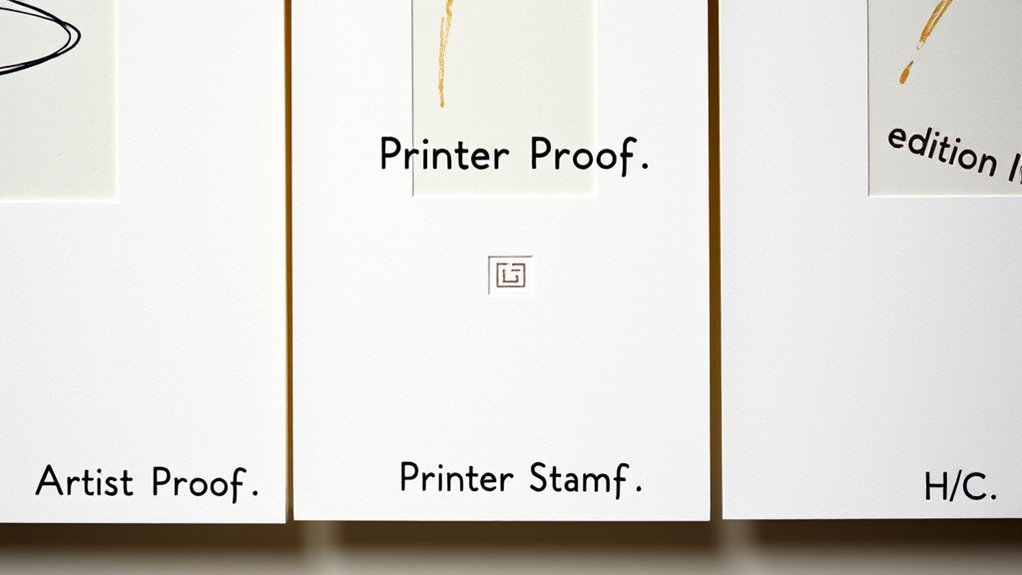
Ever wonder how to distinguish between different edition codes and determine their value? Many collectors’ misconceptions come from confusing edition codes or overestimating their significance. To accurately identify edition rarity, start by examining the markings on the artwork or print, such as “A/P” for Artist Proof or “H/C” for Hors Commerce. Check the publisher’s documentation or certificate of authenticity, which often provides details about the edition. Keep in mind that rarity doesn’t always equate to higher value—authenticity and condition matter more. Educate yourself on the specific codes used by artists or publishers, and compare similar editions to gauge worth. Consistent storytelling reinforces brand values and mission, which can influence perceived value and desirability among collectors. Understanding auditory processing can also enhance your knowledge of how individuals interpret and value different editions based on their sensory experiences.
Frequently Asked Questions
Are There Legal Restrictions on Using Certain Proof Types for Resale?
Yes, there are legal restrictions on using certain proof types for resale. You need to guarantee authenticity verification, especially with artist proofs or H/C editions, as counterfeit or misrepresented proofs can lead to legal issues.
Resale restrictions often stem from copyright laws or specific gallery policies. Always verify the provenance and proper documentation of proofs before reselling to avoid legal complications and ensure your transaction complies with relevant laws.
How Does the Condition Affect the Value of Proofs and Editions?
You’ll find that the condition of proofs and editions greatly impacts their value. Proper artwork preservation guarantees your pieces stay in prime condition, boosting their worth.
Provenance documentation provides a clear history, which collectors highly value. When a proof or edition is well-maintained without damage or deterioration, it retains higher market value.
Always keep your proofs in a controlled environment to protect their condition and maximize their investment potential.
Can Edition Codes Change Over an Artwork’s Lifespan?
Edition codes can change over an artwork’s proof lifespan, especially if the artist or publisher updates the edition status or adds new proofs. You might see a change in edition code if a new print run occurs or if an artist reclassifies certain proofs.
These changes can influence the artwork’s rarity and value, so it’s important to verify edition details with each new proof or print to understand its current status.
Do Artists or Publishers Control the Distribution of Proofs?
You control proof distribution, especially when it comes to artist proofs, which are usually kept or sold by the artist themselves.
Publishers often handle printer proofs and H/Cs, but artists can set limits on how proofs are distributed.
Your control over proof distribution depends on your rights and agreements with the publisher, allowing you to decide whether proofs stay private or are shared with collectors and galleries.
What Are the Risks of Purchasing Unverified Proofs or Editions?
Buying unverified proofs or editions risks counterfeit issues and authenticity concerns that could lead you to pay more for fake or misrepresented artwork.
Without proper verification, you might acquire a piece that’s not genuine, which diminishes its value and your trust.
Always verify proofs through reputable sources to avoid counterfeit risks and guarantee you’re investing in authentic, collectible artworks.
Conclusion
Understanding the differences between artist proofs, printer proofs, and H/C editions helps you make smarter collecting decisions. By knowing what each code signifies, you can better assess an artwork’s rarity and value. Pay attention to edition codes and labels when buying, and don’t hesitate to ask sellers for clarification. Mastering these details ensures you build a more informed collection that’s both meaningful and potentially more valuable over time.