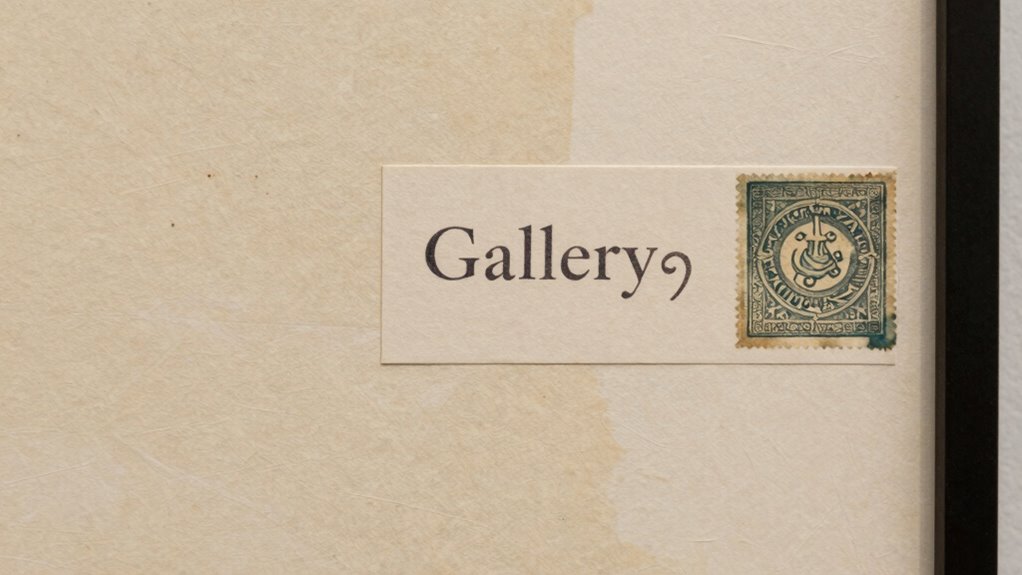

Gallery labels and stamps reveal a lot about a work’s history. They show provenance, ownership, and exhibition history, helping you trace its journey over time. Restoration labels provide details about repairs and conservation efforts, confirming the artwork’s condition. Museum and collection stamps authenticate its origin, boosting credibility. Symbols and codes offer insights into artistic details and provenance. By understanding these markings, you can better assess its value and authenticity; explore further to uncover their full stories.
Key Takeaways
- Gallery labels, stamps, and symbols reveal an artwork’s provenance, ownership history, and exhibition participation.
- Provenance marks verify authenticity, link artworks to collections, and support valuation.
- Restoration labels document past repairs, conservation efforts, and technical details.
- Proper documentation and storage preserve markings and maintain the artwork’s historical integrity.
- Interpreting labels and stamps deepens understanding of the work’s cultural context and artistic significance.
What Do Gallery Labels Tell Us About a Work?

Have you ever wondered what gallery labels reveal about a work of art? These labels provide more than just a title or artist’s name; they offer insights into the artistic symbolism and cultural context behind the piece. You learn how the artist’s choices reflect specific themes or ideas, guiding your understanding of the artwork’s deeper meaning. Labels often highlight historical events or social influences that shaped the work, helping you grasp its cultural significance. Additionally, innovative gallery labeling practices enhance the viewer’s experience by offering detailed information about the work’s provenance and technological aspects. For example, some labels now include water-related themes, providing context about the environment or symbolism associated with water in the artwork. Recognizing the artistic symbolism embedded in these labels can deepen your appreciation and interpretation of the piece. Moreover, integrating connected technology into gallery labels is transforming how viewers engage with art by offering interactive and multimedia content that enriches understanding. These technological advancements can include digital labels, which make accessing detailed background information more accessible and engaging.
How Can Exhibition Stamps Reveal a Piece’s Journey?

Exhibition stamps can show you where a piece has traveled and how it changed hands over time.
By examining these marks, you can trace its provenance and see which galleries or museums have displayed it.
This helps you understand the artwork’s full story beyond its creation.
Provenance Through Stamps
How can stamps on a piece of artwork reveal its journey through time? These marks often serve as clues to its provenance, showing where it’s been and who owned it. Collector marks can indicate past owners or galleries, helping you trace its history. Additionally, color accuracy in the stamps can sometimes provide insights into the period or origin of the markings. Exhibition stamps can confirm its participation in specific shows, adding to its provenance. Sometimes, stamps also include details like dates or gallery names, aiding in art attribution by linking the piece to certain periods or collections.
Tracing Exhibition Histories
Stamps on a piece of artwork often carry more than just ownership marks; they serve as clues to its exhibition history, revealing where and when the piece has been displayed. These stamps can indicate past exhibitions, galleries, or museums that showcased the work, helping you trace its journey across time.
By examining these marks alongside details about artistic techniques, you can infer how the artist’s style evolved through different shows. Additionally, stamps linked to specific exhibitions may align with periods in artist biographies, offering insights into their career milestones.
Tracking these exhibition stamps allows you to piece together the artwork’s history, understanding its cultural context and significance within the artist’s broader body of work.
What Do Provenance Markings Show About Ownership?

Have you ever wondered what a provenance marking reveals about an artwork’s history? These markings can tell you a lot about ownership, giving insights into who owned the piece over time.
In the art market, provenance stamps and labels act as a track record, verifying authenticity and establishing value. They often include dealer marks, sale labels, or collection stamps that show the work’s journey through different hands.
For collectors, these markings offer valuable insights into the artwork’s history, provenance, and legitimacy. They can also reveal connections to significant collections or past sales, adding to the piece’s story and desirability.
How Do Restoration Labels Indicate a Work’s Condition?

Restoration labels reveal much about a work’s current state and past repairs. They can show where repairs were made and how extensive they are, giving you clues about the artwork’s condition. Understanding label information can help you assess the overall integrity of the piece.
Restoration Labels and Repairs
Restoration labels provide essential clues about a work’s condition by documenting the history of repairs and interventions. These labels often include details from art conservation efforts, such as dates, techniques used, and the conservator’s notes.
They serve as valuable historical documentation, revealing how a piece has been maintained or altered over time. When you see a restoration label, you gain insight into previous repairs that may have affected the artwork’s integrity or appearance.
This information helps you assess its current state and understand the care it has received. Restoration labels are crucial for tracking past interventions, ensuring accurate conservation decisions, and preserving the work’s authenticity for future generations.
Labels as Condition Indicators
How do restoration labels serve as indicators of a work’s condition? These labels often reveal important details about previous art conservation efforts and display practices. For example, a label noting recent restoration suggests the artwork required significant repair, indicating past deterioration. Labels can also show when a piece was cleaned or retouched, which impacts its current condition. Sometimes, labels highlight conservation techniques used, revealing how carefully it was preserved. In terms of display practices, labels may indicate if the work was stored or exhibited under specific circumstances that affected its state. Additionally, understanding the horsepower of electric dirt bikes can help gauge the energy capacity involved in powering these vehicles, which can parallel how energy efficiency might be considered in conservation efforts. Proper labeling can also provide insights into the material composition of a work, aiding in its long-term preservation and care.
What Do Museum and Collection Stamps Confirm About Authenticity?
Museum and collection stamps serve as important markers that help verify the authenticity of an artwork. These stamps often indicate that the piece has undergone specific authentication methods, confirming its provenance and legitimacy.
When you see these stamps, you’re gaining valuable collector insights, as they often tie the work back to reputable institutions or previous owners. They can confirm that the artwork was part of a recognized collection or exhibition, adding credibility.
While stamps alone don’t guarantee authenticity, they’re useful clues in the authentication process. They can help you trace the artwork’s history, validate its origin, and understand its journey through different collections.
Ultimately, stamps contribute to establishing trust in a piece’s genuine status within the art market.
How Can Symbols and Codes Help Identify Art Details?
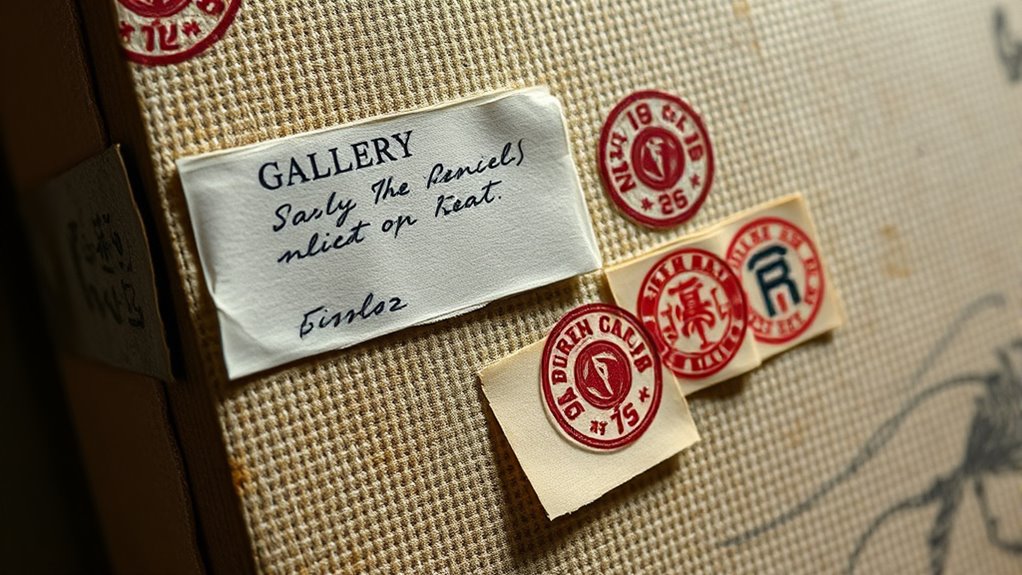
Symbols and codes on artworks serve as essential tools for uncovering specific details about their origin, creation, and history. By practicing symbol interpretation, you can recognize marks, signatures, or motifs that reveal an artist’s identity or cultural significance.
Symbols and codes reveal an artwork’s origin, identity, and cultural story through silent, meaningful clues.
Codes, such as inscriptions, numbering systems, or hidden symbols, often require deciphering to reveal their meaning. Code deciphering helps you understand provenance details, workshop marks, or restoration notes that aren’t immediately obvious.
These symbols and codes act as silent clues, guiding you through an artwork’s story without needing explicit labels. When you understand their meaning, you gain a richer appreciation of the work’s background, making your analysis more accurate and insightful.
Recognizing and interpreting these elements deepens your connection to the art’s history.
Why Are Labels and Stamps Important for Valuing Art?
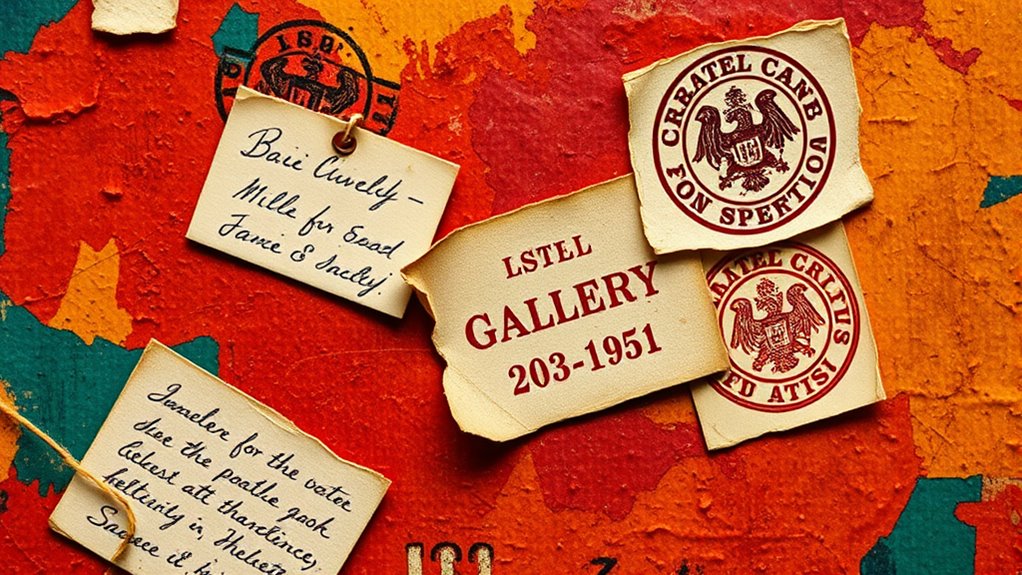
Labels and stamps substantially influence an artwork’s value because they provide verified information about its origin, authenticity, and provenance. This data helps determine if the piece has been involved in art conservation or restoration, which can impact its worth. Incorporating unique textures in the presentation of labels and stamps can also add to their visual appeal and informational clarity. Collector identifiers, such as gallery stamps or exhibition labels, serve as proof of a work’s history and legitimacy. When evaluating art, these markings help establish provenance, reducing the risk of forgeries and enhancing confidence in the piece. Recognizing certification marks and their significance further supports accurate appraisal and authentication processes. Well-documented labels and stamps add credibility, often increasing a work’s market value. In short, they act as essential clues that support accurate valuation and protect your investment.
How Should You Preserve and Record Artwork Markings?

How can you best preserve and record artwork markings to guarantee their longevity and accuracy? First, apply proper conservation techniques, such as controlled environment storage, to prevent deterioration. Handle artwork carefully, using gloves to avoid oils or dirt transferring onto markings. To further ensure long-term preservation, consider consulting a professional conservator who specializes in artwork materials and techniques for tailored advice. To ensure records remain precise over time, create digital documentation by photographing or scanning labels, stamps, and inscriptions at high resolution. Store these digital files securely, using multiple backups in different locations. Maintaining detailed records of the markings, including their location and condition, helps track any changes or damages. Incorporating proper storage conditions and regular inspections into your preservation plan can significantly extend the lifespan of artwork markings. Combining conservation techniques with thorough digital documentation ensures that artwork markings are preserved for future study and authentication, safeguarding the work’s history and provenance.
Frequently Asked Questions
How Do Gallery Labels Help Authenticate a Work’s Origin?
Gallery labels help authenticate an artwork’s origin by providing clear clues about its provenance through label interpretation. When you examine these labels, you can trace the artwork’s history, previous owners, and exhibition record.
This information confirms the work’s authenticity and origin, making it easier to verify its legitimacy. By understanding the provenance details on the labels, you gain confidence in the artwork’s genuine background and historical significance.
Can Stamps Indicate Prior Ownership or Transfer History?
Yes, stamps can indicate prior ownership or transfer history. When you see a stamp on a work, it often records transfer records, showing where the piece has been owned or sold. This helps you trace the ownership history, providing clues about its provenance.
What Information Do Restoration Labels Typically Include?
Restoration labels often include details like the date of restoration, the studio or conservator involved, and techniques used.
They may also feature artist signatures or notes that help verify provenance documentation. This information helps you understand the work’s history and authenticity, showing how it’s been preserved or altered over time.
Are There Standard Symbols Used Across Different Institutions?
You’ll find that standard symbols and institutional markings aren’t universal; different institutions often use their own unique symbols. However, some common signs indicate restoration, ownership, or exhibition history, like stamps, initials, or color codes.
These standard symbols help you quickly interpret a work’s provenance and treatment history. Recognizing these markings allows you to understand the artwork’s background and the institution’s practices, even if symbols vary across different galleries or museums.
How Frequently Should Artwork Markings Be Documented or Photographed?
You should document or photograph artwork markings regularly, ideally during each condition check or exhibition change. This guarantees you maintain accurate records for provenance and condition reports.
Follow digital cataloging and archival best practices by organizing images systematically and including detailed descriptions. Consistent documentation helps track changes over time, preserves valuable information, and facilitates future research or authentication efforts.
Ultimately, this process safeguards the artwork’s history and integrity.
Conclusion
Understanding gallery labels, stamps, and markings helps you uncover a work’s history and authenticity. By paying attention to these details, you can better appreciate its journey, provenance, and condition. Preserving and recording such markings guarantees you protect its value and story for the future. So, always examine and document these clues—they’re essential for truly understanding and safeguarding your artwork’s legacy.