
To interpret the back of an artwork like an insider, start by inspecting for labels, stamps, signatures, and handwritten notes that reveal ownership history and authenticity. Look for signs of restoration, damage, or tampering, and note any markings like inventory or price tags that add context. Materials and condition also tell stories about age and handling. By paying close attention to these clues, you’ll gain a deeper understanding of the artwork’s provenance and value; stay tuned for more tips.
Listen free for 30 days with Audible
Thousands of audiobooks and originals — cancel anytime.
As an affiliate, we earn on qualifying purchases.
Key Takeaways
- Examine labels, stamps, and handwritten notes for provenance, exhibition history, and previous ownership details.
- Check for artist signatures, noting placement, style, and consistency with verified examples.
- Look for markings indicating gallery, auction house, or conservation studio involvement.
- Assess materials, condition, and signs of restoration or damage for authenticity clues.
- Identify tampering, unusual markings, or signs of repair that may impact authenticity or value.

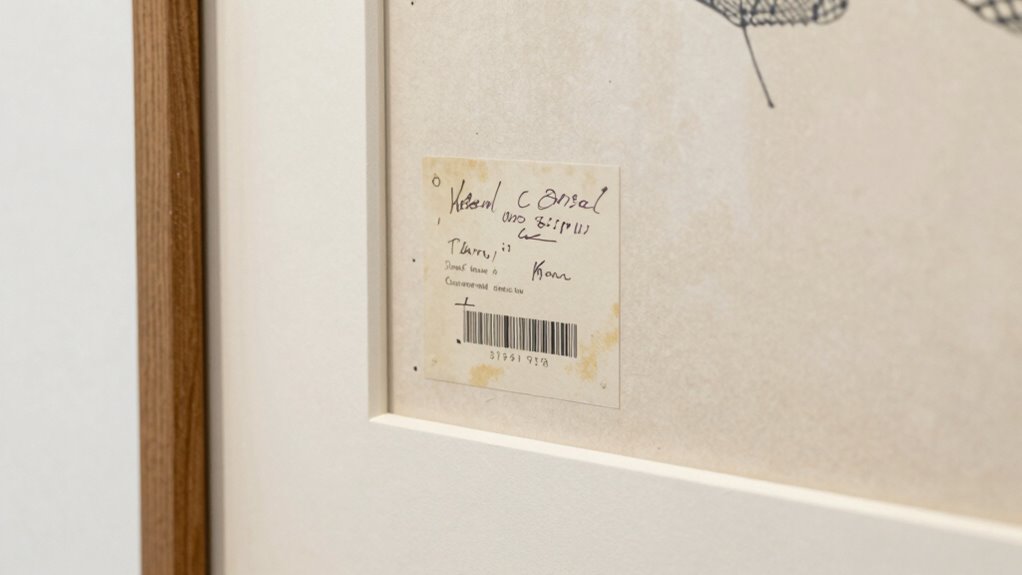
Have you ever wondered what clues an artwork’s back can reveal? When you turn a piece over, you’re not just inspecting the surface; you’re uncovering a story that might have been hidden for years. The back of an artwork can hold essential information about its history, authenticity, and journey through time. The provenance of the artwork, which traces its ownership history, is often documented through labels, stamps, or written notes that indicate previous galleries, collectors, or exhibitions. These details help establish whether the piece is genuine and can greatly influence its value. Sometimes, you’ll find old gallery labels or handwritten notes that reveal the artwork’s journey across generations, giving you insight into its origins and how it was appreciated in different eras. Examining the authenticity of signatures on the back can also provide crucial clues about the work’s legitimacy. Another key element to examine is the artist’s signature. Many artists sign their work on the back, either as a way to authenticate it or to add a personal touch. An artist signature on the back can be more genuine than one on the front, especially if the front is heavily restored or has been altered. Look closely for signs of authenticity, such as consistent handwriting style, specific signature placement, or unique markings that match known examples from the artist. Sometimes the signature is accompanied by a date or a brief note, which can help you establish when the artwork was created. If you’re unsure about the signature’s authenticity, compare it with verified examples from reputable sources or consult an expert. Additionally, inspect the back for any labels or stamps from galleries, auction houses, or conservation studios. These can provide clues about the artwork’s history and previous ownership. Labels might also include inventory numbers, exhibition details, or price tags, adding layers to the artwork’s provenance. Keep an eye out for any markings that seem out of place, as they could be signs of forgery or tampering. Also, consider the materials used on the back, as they can reveal information about the artwork’s age and authenticity. The condition of the back itself is also a vital aspect to assess, as signs of restoration or damage can tell you about the artwork’s preservation history and potential value. Finally, consider the condition of the back itself—look for signs of restoration, damage, or repair. These can influence the artwork’s story and value. If the back shows evidence of extensive restoration, it might suggest a complex history worth exploring further. By paying close attention to these details, you’ll gain a richer understanding of the artwork’s provenance, authenticity, and overall story—just like a seasoned insider.
As an affiliate, we earn on qualifying purchases.
Frequently Asked Questions
What Materials Are Commonly Used on the Back of Artworks?
You’ll find materials like paper labels, written notes, and stamps on the back of artworks. Artists often use adhesives or mounting methods such as staples or tacks to secure the piece, especially on canvas with textured surfaces. The canvas texture influences the choice of materials, and examining these clues helps you understand the artwork’s history, provenance, or restoration. Always note how these materials interact with the mounting methods used.
How Can the Back of an Artwork Indicate Its Authenticity?
You can determine an artwork’s authenticity by examining the back for artist signatures and collector marks. An authentic piece often bears the artist’s signature or initials, confirming its origin. Collector marks, stamps, or labels also help verify provenance and history. Look for consistent placement, style, and age of these markings, as genuine signatures and marks typically match known examples from the artist or previous owners, validating the artwork’s authenticity.
Are There Specific Signs of Restoration on the Back?
Think of the back of an artwork as a secret diary revealing its history. You’ll spot signs of restoration through hidden markings, irregular textures, or newer materials that stand out from the original. Conservation clues might include overpainting, patched areas, or inconsistencies in the backing. These details help you understand the artwork’s journey, showing where restorations occurred and if the piece has been preserved or altered over time.
What Do Different Types of Labels on the Back Mean?
Artwork labels on the back often indicate provenance, exhibition history, or ownership details, helping you understand its journey. Artist signatures may appear on or near labels, confirming authenticity or identifying the creator. These labels can also include gallery stamps or inventory numbers, providing clues about the artwork’s history. By examining these labels carefully, you gain insight into the artwork’s background, making it easier to assess its value and significance.
How Can the Back of an Artwork Reveal Its Provenance?
Did you know that nearly 60% of artworks have provenance details on their back? You can uncover an artwork’s history through labels, stamps, or inscriptions, revealing its previous owners and exhibitions. Look for signatures or marks that may tie to specific collectors or artists. Signature analysis, combined with historical context from labels, helps authenticate pieces and trace their journey over time, providing a richer understanding of their provenance.
artist signature verification tools
As an affiliate, we earn on qualifying purchases.
As an affiliate, we earn on qualifying purchases.
Conclusion
By examining the back of an artwork, you uncover stories, authenticate origins, and understand the artist’s intentions. You read the marks, analyze the labels, and interpret the signs. You connect the dots, trace the history, and reveal the context. You see the craftsmanship, acknowledge the journey, and appreciate the process. In reading the back, you deepen your understanding, expand your perspective, and amplify your appreciation—because every detail tells a story waiting to be discovered.
As an affiliate, we earn on qualifying purchases.
artwork restoration inspection kit
As an affiliate, we earn on qualifying purchases.
As an affiliate, we earn on qualifying purchases.
Fall Picks
fall essentials
As an affiliate, we earn on qualifying purchases.