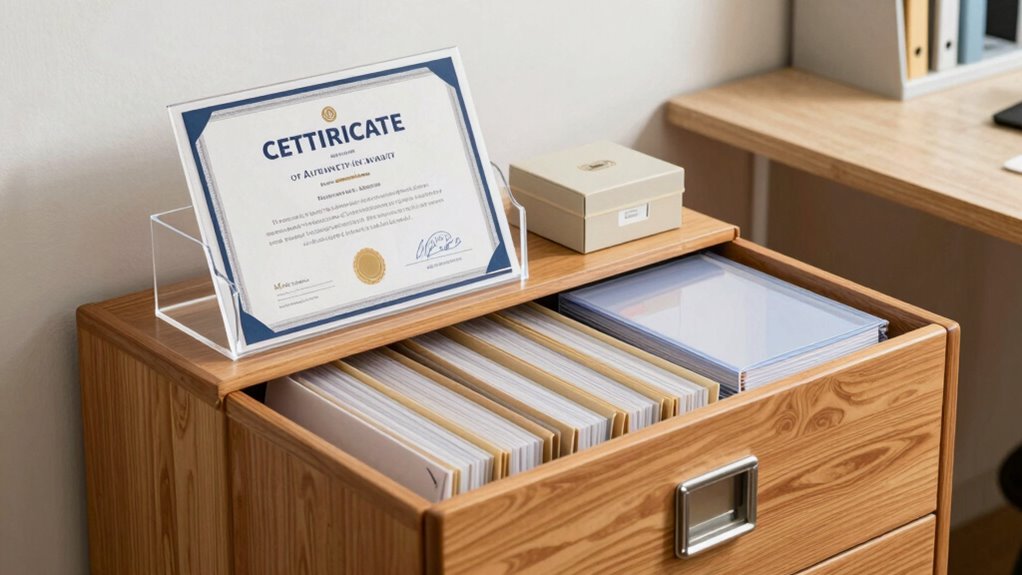

To prevent loss or damage, store your COAs and documents in waterproof, fireproof containers or safes, away from sunlight, moisture, and heat. Use acid-free folders and organize everything with labels or color-coded tabs for easy access. Make digital backups and keep them secure online or in encrypted cloud storage. Handle documents carefully with clean gloves and regularly inspect your storage areas. Continuing will help you discover expert tips to keep your records safe and well-maintained.
Key Takeaways
- Use waterproof, fireproof safes or containers with labeled folders for organized, secure storage.
- Create digital backups of all documents and store them securely online or in encrypted cloud services.
- Handle documents with clean gloves and avoid folding or tearing during transfer or inspection.
- Regularly inspect storage conditions and documents for damage, pests, or misfiling, updating as needed.
- Follow industry retention rules and keep detailed records of storage locations and access logs.
Choose the Best Storage Materials for Your Documents
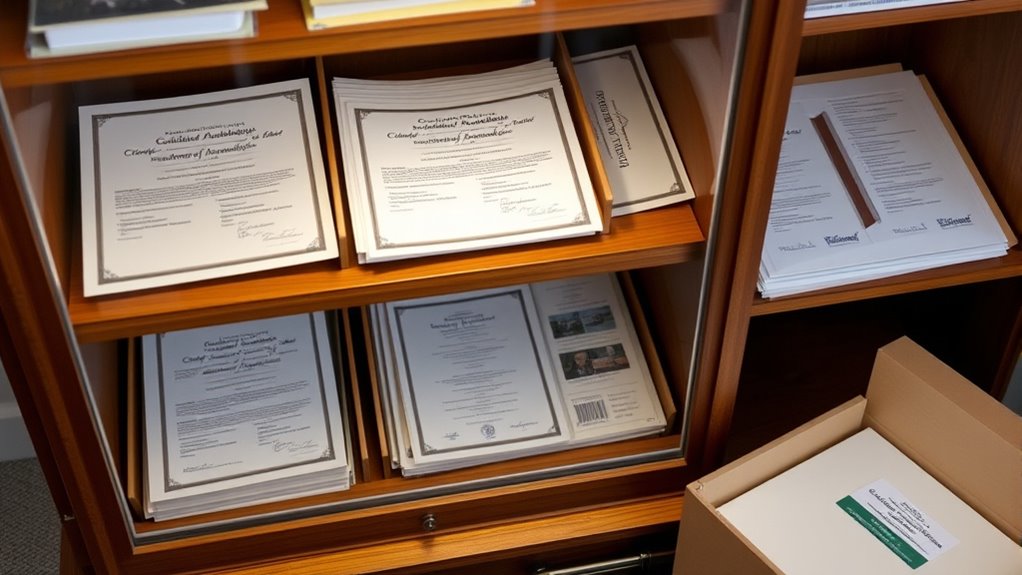
Choosing the right storage materials is essential to keep your Certificates of Analysis (COAs) and documents safe and well-preserved. You want materials that prevent damage from environmental factors and aging.
Acid-free folders are an excellent choice because they won’t degrade or discolor your documents over time. They provide a sturdy, chemical-free barrier that protects your COAs from acids that can cause deterioration. Using archival-quality materials can further enhance long-term preservation. Incorporating proper storage techniques can significantly reduce the risk of accidental damage or loss.
Acid-free folders protect documents from deterioration and discoloration over time.
Waterproof sleeves are also crucial, especially if there’s a risk of exposure to moisture or spills. These sleeves keep your documents dry and shield them from water damage, mold, and dirt. Properly storing your documents in these protective materials can help prevent physical deterioration over time.
Combining acid-free folders with waterproof sleeves offers ideal protection, ensuring your important records stay intact, legible, and in pristine condition for years to come. Additionally, understanding document preservation techniques can further extend the lifespan of your records.
Organize Your COAs and Documents Clearly and Efficiently
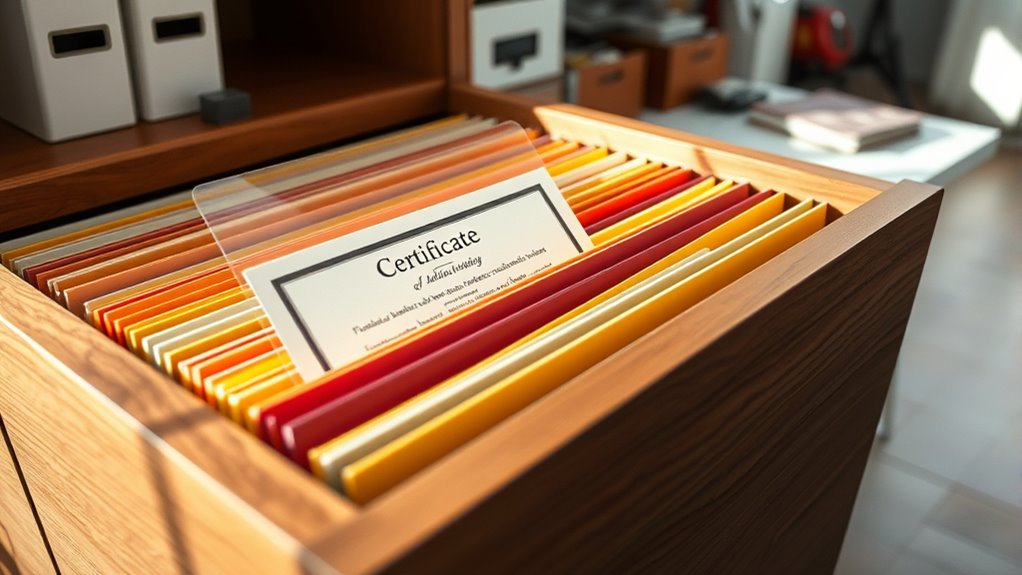
To keep your COAs and documents easily accessible and protected, organizing them clearly and efficiently is essential. Use labeling strategies to categorize each document by date, type, or importance, making retrieval quick and stress-free. Establish a dedicated folder or binder for physical copies, and create digital backups stored securely online or on an external drive. Consistent labeling and systematic organization prevent confusion and loss. Consider color-coded labels or tabs to distinguish different categories instantly. Maintain a master index for quick reference. Here’s an example:
| Category | Physical Location | Digital Backup |
|---|---|---|
| Certificates | File Box A | Cloud Folder 1 |
| Invoices | Binder B | External Drive |
| Insurance Docs | Drawer C | Cloud Folder 2 |
| Warranties | Folder D | Local Computer |
| Correspondence | File Box E | Email Archive |
Staying organized guarantees your documents are protected and easy to find. Implementing a consistent filing system helps ensure you can locate files swiftly and reduces the risk of misplacement. Additionally, incorporating secure storage practices can further safeguard sensitive information from potential damage or theft.
Protect Your Documents From Environmental Damage
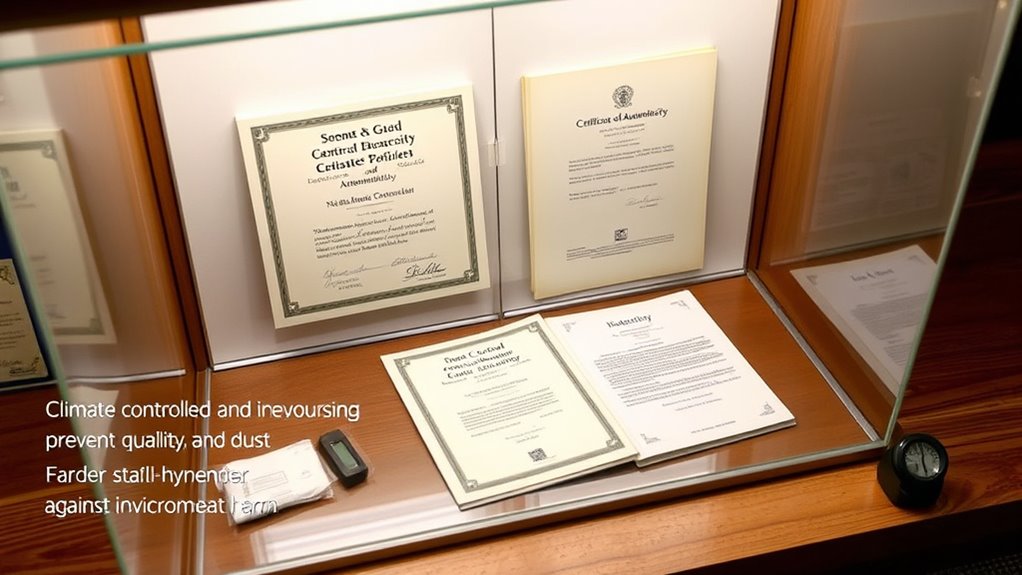
Environmental factors like moisture, heat, light, and pests can quickly damage your important documents if you don’t take proper precautions. To protect your COAs and documents, consider creating digital backups stored securely online or in encrypted cloud services. This guarantees you have a copy even if the physical documents are compromised. Additionally, store original documents in secure locations away from exposure to sunlight, humidity, or fluctuating temperatures—think fireproof safes or climate-controlled cabinets. Use acid-free folders and waterproof containers to further shield your documents from environmental harm. Incorporating document preservation techniques, such as lamination or specialized storage materials, can also extend the lifespan of your important papers. Regularly inspect your storage areas for signs of damage or pests, and keep them organized to prevent loss or deterioration. Practicing proper document storage practices helps ensure your records remain intact over time. Implementing environmental controls like dehumidifiers or UV filters can further reduce the risk of damage. Additionally, be aware that humidity levels play a crucial role in the longevity of paper documents and should be carefully monitored. Using appropriate storage materials can further enhance protection against environmental factors. Taking these steps helps preserve your documents for the long term and safeguards your critical information.
Handle and Transfer Your Documents Carefully
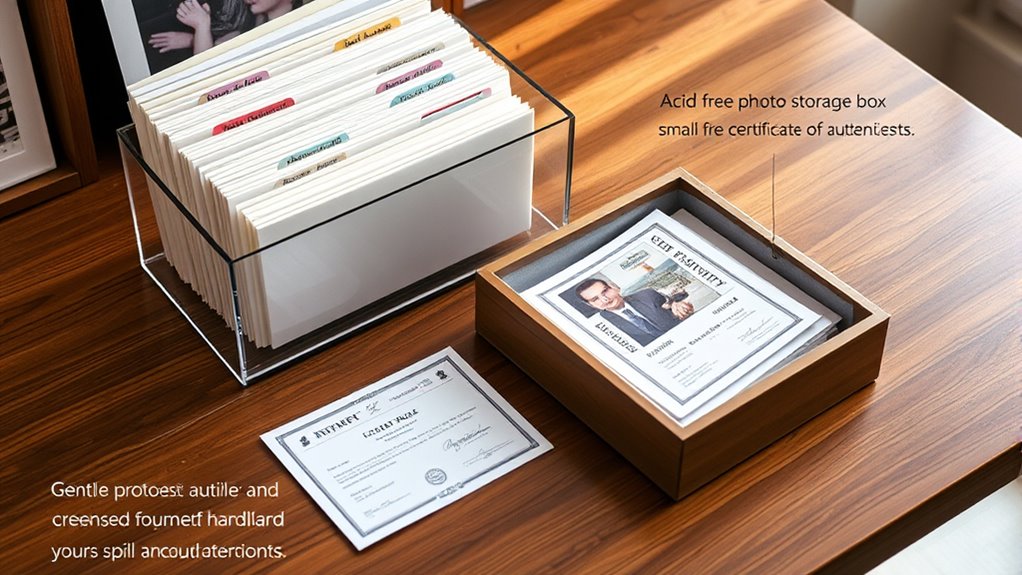
Handling and transferring your documents with care is crucial to prevent damage or loss. Always use clean, dry hands or wear gloves to avoid smudges and tears. When moving documents, avoid folding or bending them sharply. Proper document labeling makes it easier to identify and organize files during transfers. Consider creating digital backups of important documents to guarantee you have copies if originals are misplaced or damaged. Utilizing visual language in your documentation can help convey information more clearly during sharing or transfer. Use standardized formats to maintain consistency and clarity across your files. Storage methods that account for thermal behavior and environmental conditions can help preserve document integrity over time. Store digital backups securely in encrypted cloud storage or external drives, and keep them updated regularly. When sharing or transporting physical documents, use sturdy folders or protective sleeves to prevent tears and spills. Additionally, paying attention to color accuracy and contrast ratios can help ensure that digital copies are as clear and true to the original as possible, reducing the chance of misinterpretation. Incorporating proper environmental controls can further safeguard your documents from humidity, light, and temperature fluctuations, ensuring long-term preservation. Taking these precautions ensures your COAs and essential documents stay intact and accessible, reducing the risk of loss or damage during handling.
Maintain Your Collection With Regular Checks
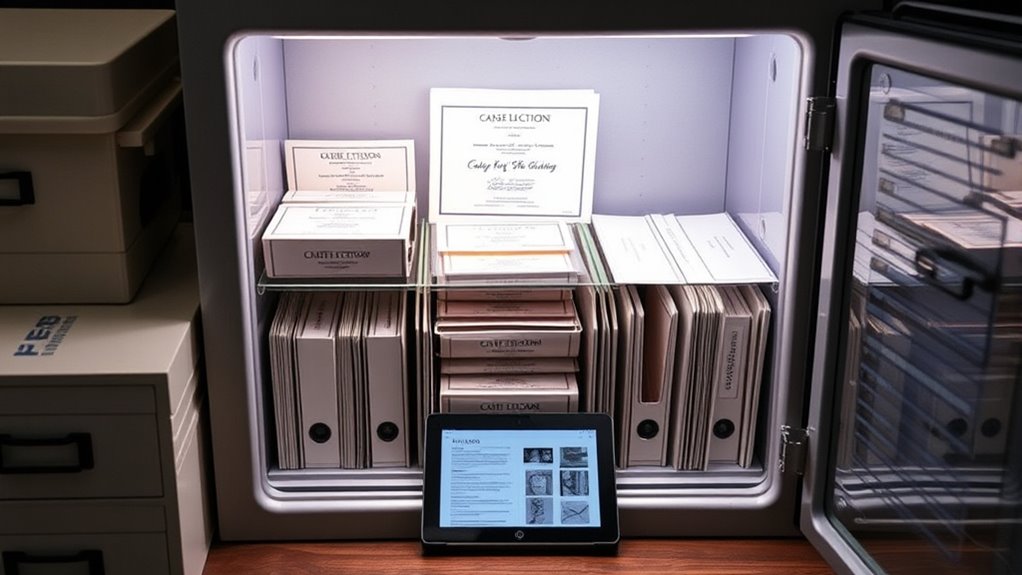
Regularly inspecting your collection is essential to guarantee everything remains in good condition. During these checks, verify that your COAs and documents are intact, legible, and properly stored. Make digital backups of important files to prevent loss from physical damage or misplacement. This practice ensures your information remains trustworthy and accessible, even if the originals get damaged or lost, you’ll have secure copies. Also, verify label consistency across your storage system so you can quickly identify and locate documents when needed. Regular inspections help catch issues early, such as tears, fading, or misfiled papers, allowing you to address them promptly. Developing a routine for these checks keeps your collection organized, safe, and easily accessible, minimizing the risk of losing valuable documentation. Incorporating document preservation techniques into your routine can further extend the lifespan of your valuable papers and help maintain their integrity over time. Additionally, understanding water-resistant storage options can protect your documents from water damage in case of accidental spills or flooding.
Frequently Asked Questions
How Do I Digitize My COAS and Documents Effectively?
To digitize your COAs and documents effectively, start by scanning them using best practices like high resolution and proper lighting.
Save digital backups in organized folders with clear labels, ensuring easy retrieval later.
Use secure cloud storage or external drives for redundancy.
Regularly update and verify your files to prevent data loss.
This way, your documents stay safe, accessible, and well-protected against damage or loss.
What Are the Signs My Documents Are Deteriorating?
You’ll notice paper deterioration signs like yellowing, brittleness, or crumbling edges, indicating your documents are aging and weakening.
Mold growth appears as fuzzy, discolored patches that can stain and damage paper further. If you see any of these signs, it’s urgent to handle the documents carefully, clean mold safely, and consider professional preservation methods to prevent further damage.
Regular inspections help catch issues early.
Can I Store COAS With Other Collectibles Safely?
Yes, you can store COAs with other collectibles safely by using proper storage containers and archival materials. Make certain they’re kept in acid-free folders or sleeves within sturdy, labeled boxes.
Avoid direct sunlight, humidity, and temperature fluctuations. Place the containers in a cool, dry place, and handle the documents with clean hands to prevent damage.
Proper storage helps preserve your COAs alongside other collectibles securely and in good condition.
What Should I Do if My Documents Get Wet or Stained?
If your documents get wet or stained, act quickly to prevent further damage. Gently blot water with a soft cloth—don’t rub—and let the paper air dry flat in a cool, dry place.
For stains, try light stain removal techniques like dabbing with a damp cloth or mild cleaning solution, but avoid harsh chemicals.
Keep the documents away from humidity and direct sunlight to preserve them better.
How Often Should I Review and Update My Storage Methods?
You should review and update your storage methods annually to stay organized. Incorporate digital backups to guarantee documents are protected from physical damage or loss.
Establish regular organizational routines, like sorting and digitizing new COAs and documents promptly. This way, you keep everything current, secure, and easy to access, reducing the risk of misplacing important records and maintaining a reliable system that adapts to your evolving needs.
Conclusion
Storing your COAs and documents properly keeps them safe and in great condition. Use quality materials, stay organized, and protect your papers from environmental damage. Handle them with care when transferring or inspecting, and check on your collection regularly. By following these simple tips, you’ll ensure your important documents stay intact and easy to access whenever you need them. Proper storage is key to preserving your collection for the long term.