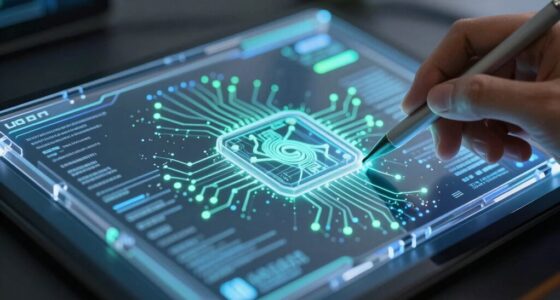

Physical tools are still essential in a digital-first art workflow because they give you tactile feedback and sensory engagement that digital tools can’t match. Using pencils, brushes, or other traditional materials helps you develop muscle memory, refine skills, and explore textures more intuitively. They also keep you grounded, reducing distractions and encouraging mindfulness. Maintaining a connection to physical art forms enriches your overall creativity, and if you keep exploring, you’ll discover even more ways these tools boost your artistic process.

Prime made for students and young adults
- Fast, free delivery for dorm and study essentials
- Prime Video and Amazon Music included
- Member-only deals
Key Takeaways
- Physical tools provide tactile feedback that enhances sensory connection and influences artistic decision-making.
- They help develop muscle memory, confidence, and experimentation beyond digital constraints.
- Using traditional tools offers grounding, mindfulness, and immediate physical records of creative progress.
- Incorporating natural materials preserves historical techniques and deepens understanding of artistic heritage.
- Combining tactile methods with digital workflows fosters organic textures, inspiration, and a richer, versatile creative process.
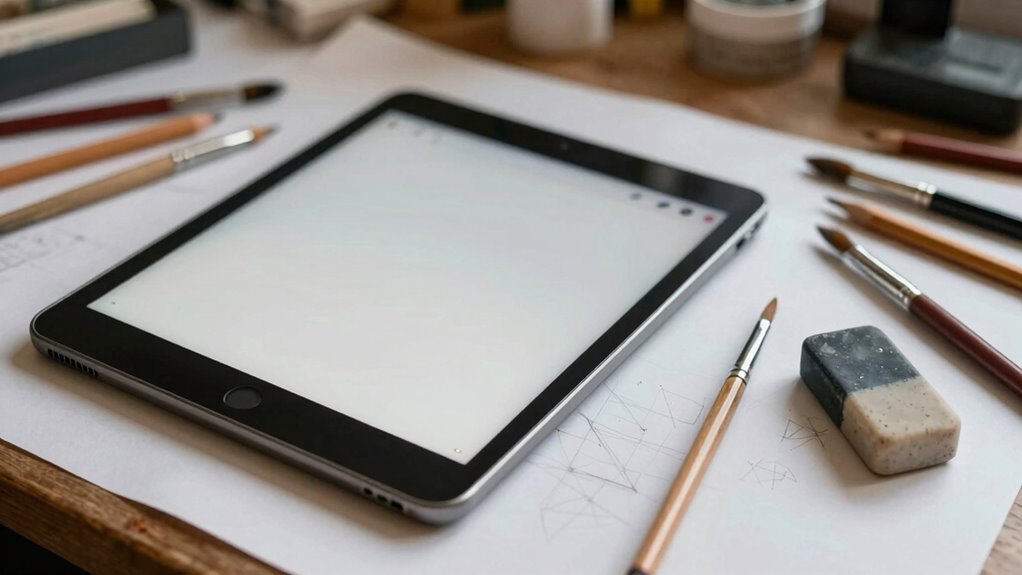
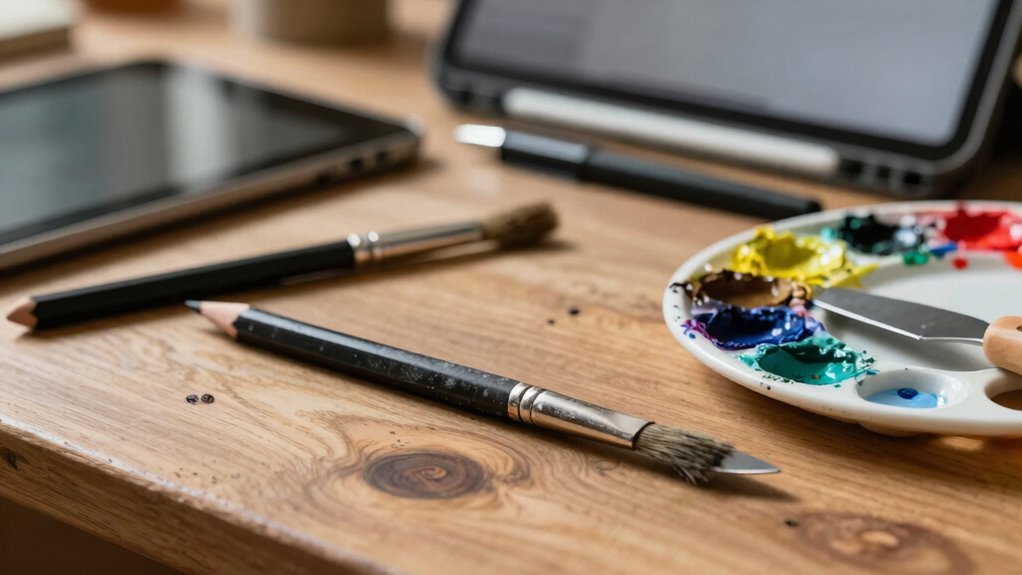
Have you ever wondered what tools artists rely on to bring their digital creations to life? Even in an era dominated by screens and pixels, traditional techniques still play an essential role in a digital art workflow. While digital tools have revolutionized how you create, the importance of physical tools remains undeniable. They provide a tactile feedback that’s hard to replicate on a tablet or computer screen. When you sketch with a pencil or paint with brushes, you feel the texture of the paper or canvas beneath your fingertips. That sensory connection influences your drawing and coloring decisions, making your work more intuitive and expressive.
Using physical tools allows you to engage with your art in a way that promotes a deeper understanding of form, light, and shadow. For instance, the resistance of a graphite pencil on paper offers a different experience than clicking a mouse or tapping a stylus. This tactile feedback helps you develop muscle memory, refine your hand-eye coordination, and build confidence in your skills. It also encourages experimentation — blending traditional techniques with digital methods can lead to unique textures and effects that might be difficult to achieve solely through digital means. Additionally, physical tools help preserve a sense of biodiversity within your creative process, connecting you to the natural materials and methods that have shaped art for centuries. Incorporating a variety of tools can also enhance your overall artistic versatility, allowing for more dynamic and diverse expressions. The tactile nature of physical tools can also serve as a creative catalyst, inspiring new ideas and approaches that you might not consider when working solely digitally.
Physical tools deepen understanding of form and shadow, fostering muscle memory, confidence, and unique textures through tactile exploration.
Moreover, physical tools serve as a grounding element in your creative process. They can act as a mental reset, pulling you away from potential distractions of digital devices. When you work with tangible materials, you’re more present in the moment, which can boost your focus and inspire new ideas. Traditional techniques also provide an immediate, physical record of your progress, unlike digital files that can be lost or corrupted. Holding a finished sketch or a painted canvas in your hands gives a sense of accomplishment that’s hard to match with digital files. Plus, working physically can help develop your sensory awareness, which can translate into more nuanced digital work.
Many artists find that integrating physical tools into their workflow enhances their digital work. For example, sketching ideas on paper before transferring them to a digital platform allows for more spontaneous, freehand exploration. Using physical brushes and inks can inspire digital color palettes, making your digital art feel more organic and textured. This blend of traditional techniques and digital tools creates a richer, more versatile creative process. Ultimately, physical tools matter because they connect you to the tactile feedback that fuels your artistic intuition, grounding your digital creations in a tangible, human experience.
professional graphite pencil set
As an affiliate, we earn on qualifying purchases.
As an affiliate, we earn on qualifying purchases.
Frequently Asked Questions
How Do Physical Tools Influence Creative Thinking in Digital Art?
Physical tools influence your creative thinking by providing tactile feedback and sensory stimulation that digital tools often lack. When you use traditional media, you can feel the texture of your brushes or pencils, which sparks ideas and intuition. This hands-on experience encourages experimentation and spontaneous creativity, helping you think more freely and develop unique concepts. The physical connection fosters a deeper engagement with your art process, enriching your overall creative flow.
Can Physical Tools Improve Technical Skills for Digital Artists?
Yes, physical tools can substantially improve your technical skills as a digital artist. The tactile feedback from traditional tools sharpens your hand-eye coordination, making digital precision easier. Material diversity pushes your understanding of textures and forms, translating into more realistic digital work. You might think digital mastery is enough, but the subtle nuances learned through physical tools create a foundation that elevates your entire creative process. Don’t underestimate their power.
What Are the Environmental Impacts of Using Physical Versus Digital Tools?
Using physical tools often has a greater environmental impact than digital tools due to the production of sustainable materials and higher energy consumption. You might think digital tools are greener, but they consume significant energy through data centers and device manufacturing. Physical tools, especially when made from eco-friendly materials, can be reused and recycled, reducing waste. Balancing both helps you minimize your environmental footprint while pursuing your art.
How Do Physical Tools Affect Collaboration in Digital Art Projects?
Physical tools enhance collaboration by fostering tactile engagement and emphasizing material authenticity, which digital tools often lack. Studies show artists working with tangible media report better communication of ideas and stronger team cohesion. When you incorporate physical tools into digital projects, you create a shared creative experience, encouraging more spontaneous feedback and innovation. This hands-on approach helps teams connect on a deeper level, making collaboration more dynamic and authentic.
Are Physical Tools Necessary for Mastering Digital Art Techniques?
Physical tools aren’t strictly necessary for mastering digital art techniques, but they considerably enhance your skills. Tactile feedback from traditional tools helps you understand material properties and develop your hand-eye coordination. Material familiarity gained through physical tools creates a strong foundation, making it easier to translate techniques into digital media. This hands-on experience boosts your confidence, allowing you to experiment more creatively and refine your digital art skills effectively.
As an affiliate, we earn on qualifying purchases.
Conclusion
Despite the digital revolution, physical tools remain essential in your creative process. They serve as a tangible bridge, grounding your ideas before they go digital, much like the artist’s trusty palette or a vintage drafting set. Think of it as wielding a sword in a world of laser guns—you preserve craftsmanship and intuition that screens alone can’t provide. Embracing both worlds ensures your artistry stays rich, authentic, and undeniably yours.
As an affiliate, we earn on qualifying purchases.
As an affiliate, we earn on qualifying purchases.
Fall Picks
fall essentials
As an affiliate, we earn on qualifying purchases.