
Artists use clever tactics to guide your eye directly to focal points. They employ contrasting colors, strategic placement, and guiding lines to make certain areas pop. Brightness, texture, and lighting highlight key parts, while visual cues like perspective and shape create pathways for your gaze. By mastering composition and visual hierarchy, they make sure your focus stays exactly where they want it. Discover these techniques and learn how artists manipulate your focus with each detail.
Key Takeaways
- Artists use contrast, placement, and size to create visual hierarchy and guide the viewer’s eye toward focal points.
- Bright, saturated colors and strategic contrast attract attention and emphasize key areas effectively.
- Guiding lines, shapes, and perspective distortions create visual pathways that direct focus naturally.
- Lighting, texture, and material contrasts highlight specific areas, enhancing their prominence.
- Psychological tricks like depth cues, color symbolism, and visual hierarchy manipulate perception and focus.
Discover How Focal Points Make Art Pop

Focal points are the secret to making your artwork instantly grab attention and feel dynamic. The focal point significance lies in its ability to direct viewer engagement, ensuring your audience instinctively focuses on the most important part of your piece. When you create a strong focal point, you guide the eye effortlessly, making your artwork more compelling. You can achieve this through contrast, placement, or size, which naturally draws the viewer’s gaze. Incorporating Free Floating elements can help emphasize certain areas without overwhelming the composition. These techniques are rooted in an understanding of visual composition principles, which guide artists in creating balanced and engaging artwork. A clear focal point also helps establish visual hierarchy, making it easier for viewers to interpret and appreciate your work. Without a clear focal point, your artwork may feel scattered or confusing. Instead, use strategic elements to highlight the area you want viewers to explore first. Mastering visual flow ensures your composition guides the viewer smoothly through your artwork, enhancing engagement. This intentional focus transforms your work from ordinary to mesmerizing, making sure your message resonates and leaves a lasting impression.
How Artists Use Color to Guide Your Gaze

Colors are powerful tools artists use to direct your gaze and create visual flow. Through color psychology, they evoke emotions that pull your attention toward specific areas. Bright, saturated hues naturally stand out, establishing a clear visual hierarchy that guides your eye across the piece. For example, a vivid red or yellow acts as a focal point amid more muted surroundings. Artists strategically use contrast between colors to emphasize important elements, making them impossible to ignore. Subtle shifts in hue can also lead your gaze smoothly from one part of the artwork to another. Additionally, the use of vetted color combinations can enhance the effectiveness of visual guidance and ensure the artwork’s message resonates clearly. Incorporating color harmony principles into their work allows artists to craft cohesive compositions that subtly direct viewer focus. Understanding how color contrast influences visual perception enables artists to manipulate viewer attention more intentionally. Recognizing the impact of color symbolism helps artists choose hues that reinforce the emotional tone and narrative of the artwork. Moreover, visual hierarchy plays a crucial role in guiding viewers through complex compositions by emphasizing key elements.
Master Composition Techniques to Steer Attention

You can direct viewers’ attention by strategically using color, making certain areas pop. Guiding lines and shapes naturally lead the eye to your focal point, creating a clear visual path. Incorporating Halloween decorations into your composition can also enhance the overall atmosphere and direct focus effectively. Increasing contrast and brightness around key elements also helps them stand out instantly, especially when considering color accuracy and its impact on visual appeal. Understanding how different electric bike conversion kits are designed for various riding needs can inspire you to create more engaging and targeted compositions that resonate with viewers interested in outdoor activities. Additionally, employing proper load calculations ensures your visual elements are balanced and safe within the design, helping to maintain viewer focus without distraction. Being aware of Soul Sanctuaries and their significance can also add a layer of depth and meaning to your artistic work, subtly guiding viewers to interpret your composition thoughtfully.
Strategic Use of Color
Strategic use of color can dramatically influence where viewers’ eyes land within a composition, guiding their attention effortlessly. By understanding color psychology, you can evoke specific emotions and direct focus to key areas. Bright, warm colors like reds and oranges naturally attract the eye, making them ideal for highlighting focal points. Conversely, cooler, muted tones recede into the background, creating contrast and emphasis. Achieving color harmony ensures your palette feels cohesive, preventing distractions and keeping the viewer’s gaze on the intended spot. When you skillfully combine contrasting colors with harmonious schemes, you steer attention without overt cues. Mastering this technique allows you to control the visual flow, making your focal points more compelling and ensuring your message resonates clearly. Additionally, employing energy-efficient color schemes aligns your design principles with sustainable practices, subtly reinforcing your message through environmentally conscious choices. Understanding how color contrast functions can further enhance your ability to direct attention precisely where you want it, and incorporating visual hierarchy principles ensures that your most important elements stand out effectively. Incorporating color psychology into your compositions can also influence viewers’ emotional responses, strengthening the overall impact of your artwork.
Guiding Lines and Shapes
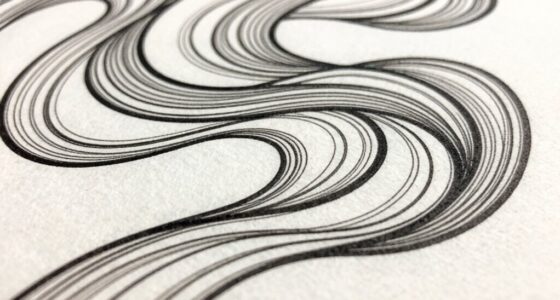
Guiding lines and shapes are powerful tools for directing viewers’ attention and creating a clear visual path through your composition. Using perspective distortion can exaggerate lines, leading the eye toward your focal point.
While geometric abstraction simplifies forms to emphasize directionality. Straight or curved lines act as visual highways, guiding viewers naturally through the artwork. Shapes, whether sharp or flowing, can frame or point toward key areas, reinforcing focus.
By intentionally manipulating perspective distortion, you can elongate or compress space to draw attention. Geometric abstraction helps create bold, recognizable forms that direct the eye without distraction.
Combining guiding lines and shapes effectively ensures your viewer’s gaze flows exactly where you want it, making your focal point unmistakable.
Contrast and Brightness
Have you ever noticed how a splash of bright light or a stark contrast can instantly draw your eye to a specific area? That’s the power of contrast and brightness in your artwork. By manipulating lighting effects, you can create focal points that demand attention. Incorporating elements like visual hierarchy helps to organize these contrasts effectively. Bright areas naturally attract viewer perception, making them the first thing someone notices. Conversely, darker regions recede, guiding the eye toward the illuminated spot. Using high contrast around your focal point enhances its prominence, while softer shifts keep the viewer engaged without distraction. Adjusting brightness levels allows you to control the mood and emphasis, making sure your main subject stands out effortlessly. Mastering contrast and brightness techniques guarantees your art directs viewer perception exactly where you intend, reinforcing your focal point effectively.
Use Contrast and Brightness to Capture the Eye

Ever wonder how a simple adjustment in contrast and brightness can make your focal point stand out instantly? By tweaking lighting effects, you can create focal point illusions that draw the viewer’s eye.
Increasing contrast around your main subject makes it pop against the background, guiding attention naturally. Brightness can also highlight your focal area, making it appear more vibrant and prominent.
These subtle shifts manipulate how the eye perceives depth and importance. Use high contrast and strategic brightness to direct focus precisely where you want it.
Enhance Focal Points With Detail and Texture

You can make your focal point stand out by adding intricate surface details that invite closer inspection. Varying texture intensity across the area creates visual interest and guides the viewer’s eye. Using contrasting materials to highlight specific features further emphasizes the focal point and adds depth. Incorporating energy-efficient options can also subtly draw attention to certain areas by enhancing their visual appeal with controlled lighting and ambiance. Additionally, considering lighting techniques that highlight surface textures can significantly impact how viewers perceive your focal area. Employing smart lighting systems allows for dynamic adjustments that accentuate texture variations and create mood-enhancing effects. For optimal results, employing appropriate tools such as adjustable light fixtures and textured surface treatments can help achieve the desired emphasis. Incorporating modern kitchen technology can also streamline these processes, making it easier to fine-tune focal point details with precision.
Add Intricate Surface Details
Adding intricate surface details is essential for making focal points truly stand out and feel alive. By incorporating ornamental motifs and surface ornamentation, you draw the viewer’s eye to specific areas. These details add richness and depth, encouraging closer inspection. Use fine lines, patterns, or textured elements to emphasize the focal point’s uniqueness. Surface ornamentation can include elaborate carvings, delicate patterns, or subtle textures that contrast with surrounding areas, creating visual interest. Remember, these details should complement the main subject without overpowering it. Carefully chosen ornamental motifs can evoke emotion or cultural significance, further engaging your audience. Incorporating surface ornamentation techniques can help achieve a layered and tactile appearance. Additionally, understanding how sticking wall decor can influence the overall aesthetic may inspire you to enhance your focal points creatively. Exploring cultural symbolism within surface details can deepen the viewer’s connection and appreciation. Ultimately, the goal is to make the focal point feel layered and tactile, encouraging viewers to explore it more deeply.
Vary Texture Intensity
Varying texture intensity is a powerful technique to make focal points more dynamic and engaging. By adjusting tactile surface differences, you draw viewers’ attention precisely where you want it. Using high detail and rich textures on your focal point creates contrast with smoother, less detailed surroundings. This variation guides the eye naturally, emphasizing the main subject. To understand this better, consider the table below, which illustrates how texture variation impacts visual emphasis:
| Texture Type | Effect on Focal Point | Example |
|---|---|---|
| Rich, detailed textures | Attracts immediate attention | Face in portrait |
| Smooth surfaces | Pushes background away | Sky or water background |
| Rough textures | Adds tactile interest | Tree bark or fabric |
| Fine details | Enhances focal clarity | Eyes or jewelry |
| Minimal texture | Creates subtle background | Wall or distant landscape |
Vary texture intensity to keep your focal points fascinating and visually compelling.
Highlight With Contrasting Materials
Highlighting focal points with contrasting materials can dramatically increase their visual impact, making them stand out amid the surrounding elements. Use contrast techniques by selecting different material choices that differ in texture, sheen, or thickness.
For example, pairing smooth, glossy surfaces with rough, matte textures creates a striking visual difference that draws the eye. You can also combine materials with varying densities or reflectivity to emphasize your focal point. The key is to intentionally choose materials that stand apart from the background or supporting elements, guiding viewers directly to the intended area.
Create Impact With Leading Lines

Have you ever noticed how leading lines naturally draw your eye to a focal point in a photograph? They guide your visual flow, creating a clear path that directs attention exactly where you want it.
By strategically incorporating lines—like roads, fences, or shadows—you establish a strong focal hierarchy that emphasizes your main subject. These lines act as visual signals, compelling viewers to follow them toward the intended point of interest.
The power of leading lines lies in their ability to create depth and movement, making your composition more dynamic. When used effectively, they not only enhance the overall impact but also guarantee your audience’s eye stays focused on what matters most.
Mastering this technique helps you control the viewer’s experience with precision.
Position Elements Strategically for Maximum Focus
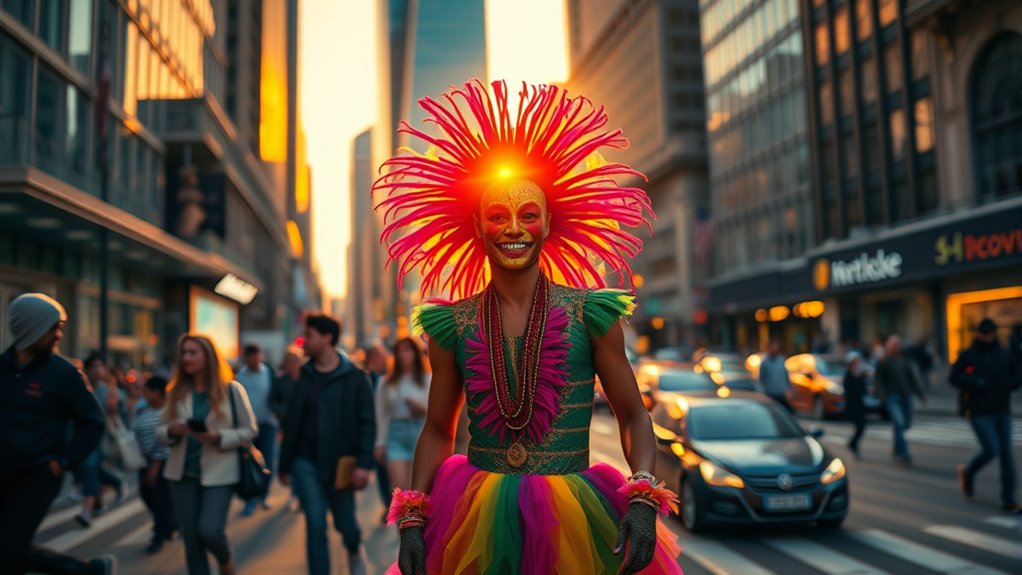
Building on how leading lines guide viewers’ eyes, the next step is to position your elements deliberately to maximize focus. Achieving balance harmony assures your composition feels stable and pleasing, directing attention naturally without chaos.
Use focal symmetry to create a mirror-like arrangement around your main point, making it stand out more prominently. Place your subject slightly off-center for a dynamic feel, but maintain visual equilibrium with supporting elements.
Consider foreground and background placements so your focal point remains clear and unobstructed. By thoughtfully positioning elements, you keep the viewer’s gaze fixed where you want it, enhancing the impact of your focal point.
Strategic placement is the key to guiding eyes effortlessly and emphasizing your main visual message.
Apply Psychological Tricks to Draw Your Gaze
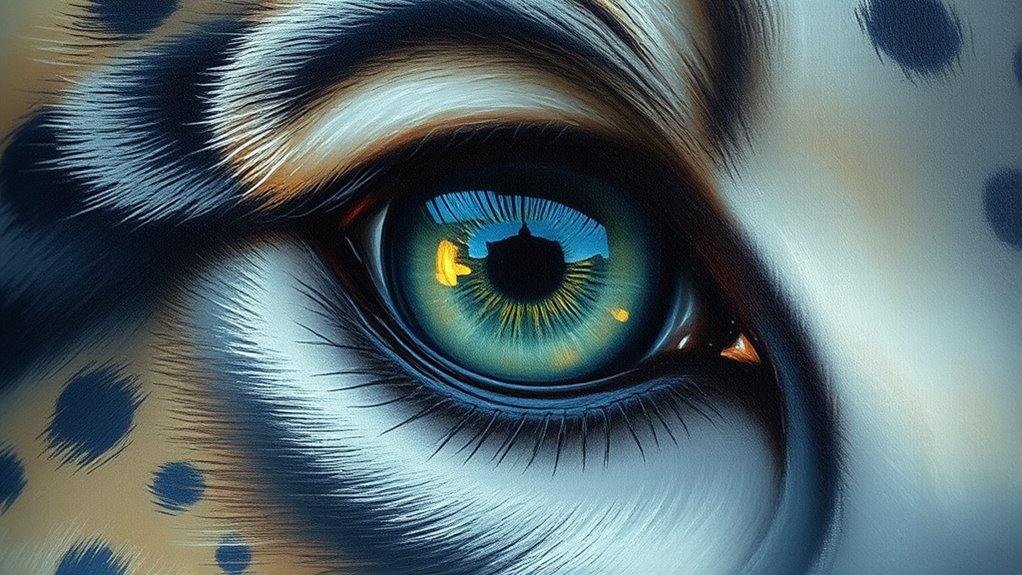
To effectively draw your viewer’s gaze, leverage psychological tricks that tap into natural human instincts and perceptions. Perspective illusions can create depth and focus, guiding the eye toward a specific point by manipulating visual cues that seem to recede or advance.
Emotional cues, such as facial expressions or color choices, evoke feelings that naturally attract attention. For example, a subtle shift in perspective can make a subject appear larger or more prominent, while contrasting colors highlight focal areas.
Frequently Asked Questions
How Do Focal Points Influence Viewer Emotion and Interpretation?
Focal points shape your emotional response and interpretation by guiding your attention within a composition. They create a clear visual hierarchy, emphasizing what’s most important, which intensifies the emotional impact.
When an artist strategically uses color, contrast, or placement, you naturally focus there, evoking feelings or thoughts aligned with the artwork’s message. This intentional focus helps you connect deeply and understand the artist’s intended mood or story.
Can Focal Points Be Effective Without Bright or Contrasting Colors?
Yes, focal points can be effective without bright or contrasting colors. Using color psychology, you can create subtle contrasts or harmonious tones that guide your viewer’s eye through a strong visual hierarchy.
This technique emphasizes the focal point through composition, shape, or placement rather than color alone. By carefully balancing these elements, you guarantee your focal point draws attention naturally, engaging your audience without relying solely on vivid or contrasting hues.
What Role Does Perspective Play in Directing Focus?
Perspective plays a vital role in directing your focus by enhancing depth perception and guiding your eye through spatial arrangement. Artists use techniques like linear perspective to make certain elements appear closer or farther away. This naturally draws your attention.
How Do Cultural Differences Affect Focal Point Perception?
Cultural differences markedly influence how you perceive focal points through cultural symbolism and visual hierarchy. You might focus on symbols that hold particular meaning in your culture, guiding your eye naturally.
Artists from different backgrounds use visual hierarchy uniquely, affecting where you look first. By understanding these cultural cues, you can better interpret artwork and recognize how cultural symbolism shapes your attention and perception of focal points.
Are There Digital Tools to Analyze Focal Points in Artwork?
Yes, there are digital tools to analyze focal points in artwork. AI analysis uses machine learning algorithms to identify key areas that draw viewers’ attention, helping you understand composition better.
Many composition software programs include features that highlight focal points, guiding you in creating balanced and engaging art. These tools save time and provide valuable insights, making it easier for you to refine your work and direct viewers’ eyes exactly where you want them.
Conclusion
By mastering these focal point secrets, you can make your art truly stand out. Use color, contrast, and detail strategically to guide viewers’ eyes effortlessly. Incorporate leading lines and thoughtful positioning to create focus and impact. Remember, subtle psychological tricks can deepen engagement. When you apply these techniques, your artwork will naturally draw attention where you want it, making every piece more compelling and memorable. Keep experimenting, and watch your art captivate like never before.