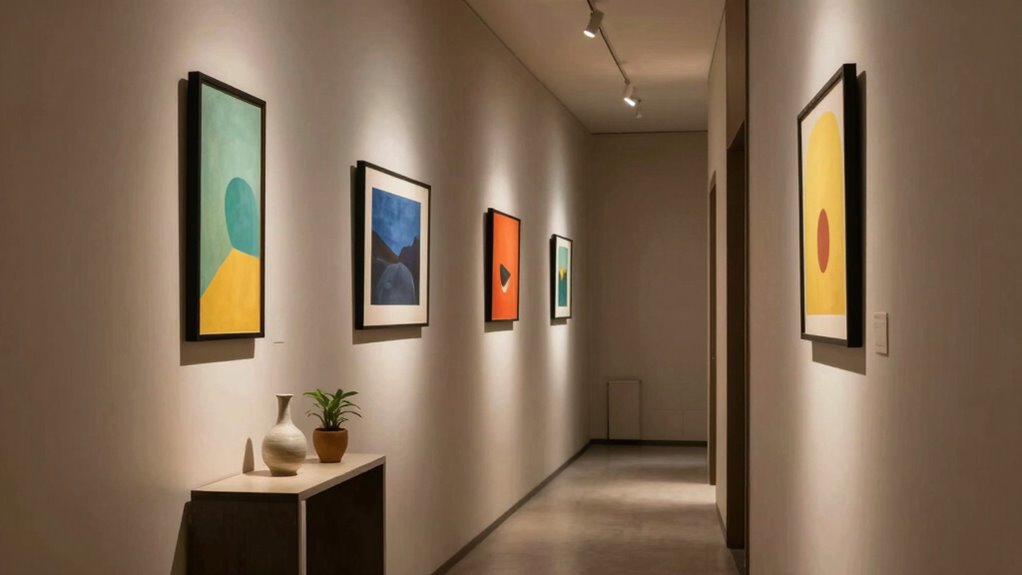
When choosing art for narrow walls, opt for pieces with a vertical orientation to emphasize height and create a sense of space. Use light, bright colors to make the area feel more open, or dark hues for depth. Select sleek frames for a modern look or go frameless for a clean, contemporary vibe. Arrange artwork in a single line with balanced spacing for an organized feel. To discover more tips on transforming awkward spaces, keep exploring the options.
Key Takeaways
- Opt for vertical or narrow artwork to emphasize height and fit the space without clutter.
- Use light, bright colors to create an open, airy feel in small or narrow walls.
- Choose sleek, minimal frames or frameless pieces for a modern, unobtrusive look.
- Maintain consistent spacing and proportion to achieve visual balance and harmony.
- Select artwork that reflects personal style while complementing the space’s size and decor.
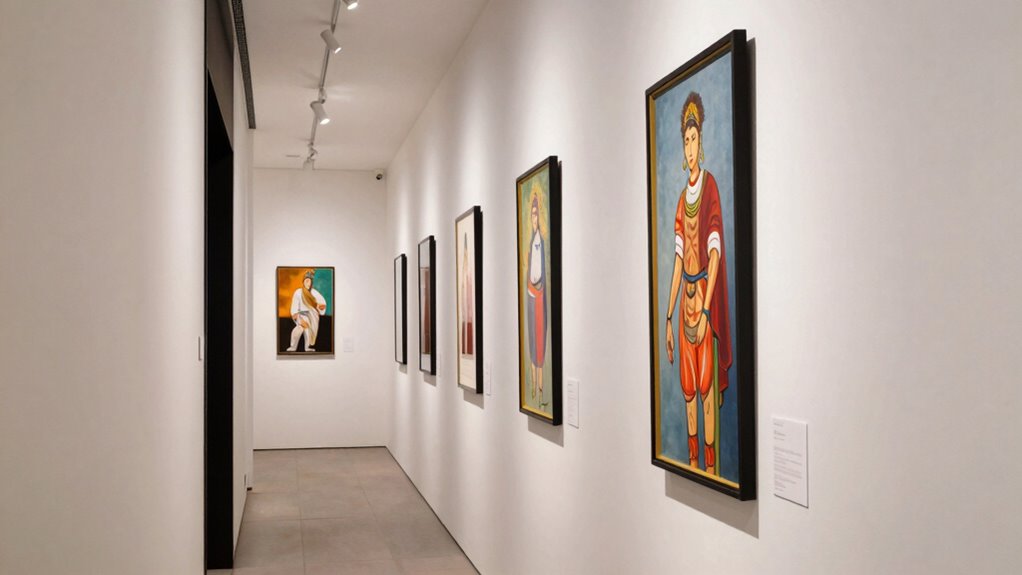
When dealing with narrow walls, selecting the right artwork can transform a tight space into a striking focal point. Your goal is to create visual interest without overwhelming the limited space, and that starts with thoughtful choices around color coordination and frame styles. First, consider how the artwork’s colors will interact with the wall and surrounding decor. Light, bright colors can open up a small area, making it feel more spacious, while darker hues can add depth and sophistication. If your walls are neutral, you have the flexibility to incorporate bold, vibrant pieces that draw the eye without cluttering the space. Conversely, if your walls are already busy with patterns or other decor, opt for artwork with more subdued tones or a limited color palette to maintain balance.
Frame styles also play an essential role in how your art complements narrow walls. Thin, sleek frames tend to create a modern, unobtrusive look that keeps the focus on the artwork itself, making the space feel less crowded. Metal or minimalist frames work well here because they don’t add bulk, helping the piece breathe within the tight area. If you prefer a more traditional or eclectic vibe, you might choose ornate or chunky frames, but be mindful not to overpower the artwork or make the space feel cluttered. Sometimes, skipping a frame altogether—using frameless art—can give a clean, contemporary effect that enhances the sense of openness. Additionally, understanding art placement principles can help you optimize the visual flow and balance in narrow spaces. A carefully curated composition can make a significant difference in how the art interacts with the limited space and surrounding elements.
Size and placement are equally important. Since the wall is narrow, choose artwork that’s proportional to the space—it shouldn’t be so large that it dominates or so small that it gets lost. Vertical pieces are often better for hallways or skinny walls, as they draw the eye upward and emphasize height. When hanging multiple pieces, align them in a single vertical line or create a narrow gallery wall with carefully curated art pieces, ensuring each piece has enough space around it to stand out without crowding. Keep the spacing consistent to maintain a clean, organized look.
Ultimately, your choices should reflect your personal style while respecting the constraints of the space. By carefully coordinating colors, selecting suitable frame styles, and considering size and placement, you can turn a narrow, awkward wall into an eye-catching visual feature that enhances your entire home. This approach guarantees your artwork feels intentional, balanced, and perfectly suited to its environment.
vertical wall art for narrow spaces
As an affiliate, we earn on qualifying purchases.
As an affiliate, we earn on qualifying purchases.
Frequently Asked Questions
Can I Mix Different Art Styles in Narrow Spaces?
Yes, you can mix different art styles in narrow spaces. Embrace eclectic contrasts by combining various styles to create visual interest. Style blending works well in hallways and awkward areas, making the space feel dynamic and personalized. Just make certain the pieces share a common element, like color or theme, to maintain harmony. This approach adds character and prevents the space from feeling cluttered or disconnected.
What Lighting Options Enhance Art in Hallways?
Think of your hallway as a stage, where gallery lighting becomes your spotlight. You should use adjustable track lighting or wall-mounted fixtures to direct beams precisely, highlighting each artwork’s details. Proper spotlight placement draws attention and creates depth, turning a narrow corridor into an engaging gallery. By choosing warm, focused lighting, you enhance colors and textures, ensuring every piece shines and your space feels inviting rather than cramped.
How Tall Should Artwork Be Hung in Hallways?
You should hang hallway art at eye level, typically about 57-60 inches from the floor to the center of the piece. Follow art height guidelines to guarantee proper hallway art placement, creating a balanced and inviting look. If your hallway has a high ceiling, consider slightly higher placement, but keep it consistent. This approach makes your narrow walls feel more proportional and visually appealing.
Are There Specific Frame Styles for Narrow Walls?
Think of narrow walls as delicate whispers needing gentle framing. Opt for slim, sleek frame materials like metal or light wood to avoid overwhelming the space. Decorative borders can add charm without crowding. Choose minimalist styles that echo elegance and simplicity, allowing your artwork to breathe. By selecting these frames, you invite a sense of harmony, turning a tight corridor into a mesmerizing story that beckons viewers to pause and reflect.
How Do I Prevent Art From Overwhelming Small Spaces?
To prevent art from overwhelming small spaces, focus on space optimization and maintaining visual balance. Choose smaller, thoughtfully curated pieces instead of large, busy artworks. Use sleek, minimal frames to avoid clutter, and arrange art at eye level to create harmony. Incorporate a few well-placed pieces rather than overcrowding the wall. This approach keeps the space feeling open, balanced, and inviting without feeling overwhelming or crowded.
minimalist metal picture frames
As an affiliate, we earn on qualifying purchases.
As an affiliate, we earn on qualifying purchases.
Conclusion
Now that you know how to select art for narrow walls, hallways, and awkward spaces, you’re all set to turn those tricky spots into eye-catching features. Remember, it’s not about fitting art into every inch but making the space work for you. Sometimes, less truly is more, and a well-chosen piece can make all the difference. So go ahead, trust your instincts, and don’t be afraid to think outside the box—beautiful things often come from unexpected places.
frameless modern artwork
As an affiliate, we earn on qualifying purchases.
As an affiliate, we earn on qualifying purchases.
narrow hallway wall decor
As an affiliate, we earn on qualifying purchases.
As an affiliate, we earn on qualifying purchases.