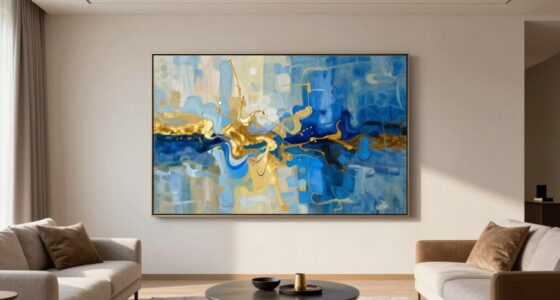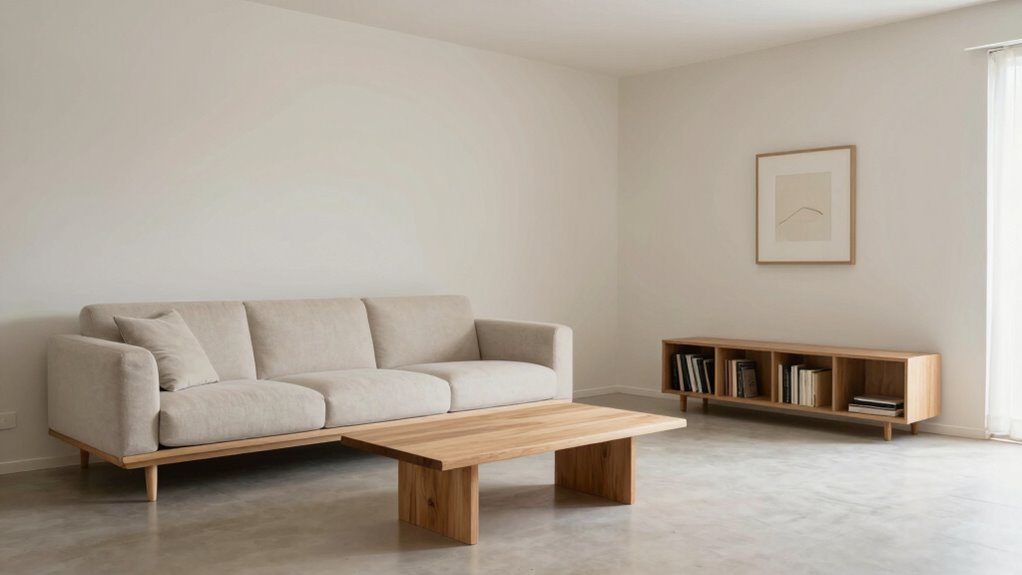
You’ll notice a room needs fewer pieces when it feels cluttered, cramped, or chaotic despite having lots of furniture. Look for pathways blocked, spaces feeling smaller, or furniture not highlighting the room’s focal point. Excess items create visual noise and make the space hard to enjoy. Simplifying the layout can improve flow and openness. Keep exploring how small changes can transform your space into a calm, inviting environment.

Prime made for students and young adults
- Fast, free delivery for dorm and study essentials
- Prime Video and Amazon Music included
- Member-only deals
Key Takeaways
- The room feels overcrowded or cluttered, making movement and visual flow difficult.
- Furniture blocks pathways or obscures focal points, indicating excessive pieces.
- The space appears smaller or chaotic due to poor arrangement and too many items.
- Colors and patterns compete, creating visual noise instead of harmony.
- Removing unnecessary furniture enhances openness, focus, and overall room balance.
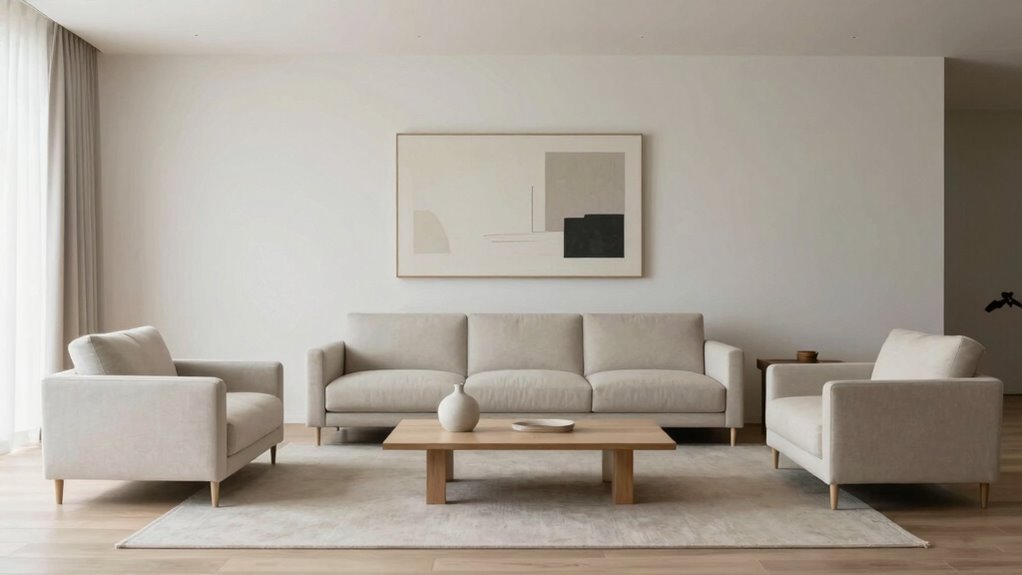
Have you ever felt overwhelmed by a cluttered room, wondering if adding more furniture or decorations is the answer? Sometimes, the problem isn’t that your space needs more; it’s that it needs less. When a room feels chaotic, the solution often lies in simplifying what’s already there. One of the first signs you need fewer pieces is when your furniture arrangement feels crowded or awkward. Instead of cramming in more furniture, step back and evaluate how your current pieces are positioned. Are they blocking pathways or making the room feel smaller? Creating an open, balanced furniture arrangement can give your space room to breathe. Think about the flow of movement and the focal point of the room. Rearranging furniture to highlight the main feature—like a fireplace or a window—can make the space feel larger and more inviting without adding anything new.
Another key indicator that fewer pieces are needed involves color contrast. If your room has too many competing colors or patterns, it can create visual noise, making the space feel cluttered even if it’s not physically crowded. Simplifying your color palette can make a significant difference. Use a few complementary shades to create harmony and let your eye rest. When you reduce the number of different hues and patterns, the room appears more cohesive and less chaotic. This visual clarity can make your existing furniture and decorations stand out more, giving the impression of a larger, more organized space. Recognizing the importance of visual harmony can help you create a more balanced environment. Additionally, understanding the principles of spatial perception can further enhance your ability to design a room that feels open and inviting. Paying attention to furniture placement can also help you optimize the available space and avoid unnecessary clutter. Being mindful of visual balance can guide you in choosing which pieces to keep and how to arrange them effectively.
You’ll also notice that when you have too many pieces, your eye doesn’t know where to focus. The clutter of furniture and décor can divert attention from the room’s best features. Instead of adding more, consider removing or repurposing what’s already there. This process helps you identify what’s essential and what’s just filling space. Often, a few well-chosen pieces arranged thoughtfully can transform the room into a calming retreat. Remember, minimalism isn’t about stripping your space down but about creating an environment where each piece has purpose and room to shine.
As an affiliate, we earn on qualifying purchases.
Frequently Asked Questions
How Can I Tell if My Room Feels Overcrowded?
If your room feels overcrowded, you’ll notice it through cluttered surfaces and a lack of open space. To confirm, check if your color coordination feels chaotic or overwhelming and consider if lighting enhancement helps create a sense of openness. When fewer pieces are better, simplifying furniture and decor, along with strategic lighting, can make the room feel more spacious and inviting. Trust your instincts and aim for a balanced, calming atmosphere.
What Are Signs of Clutter Overload in a Space?
You might notice clutter overload if your decorating style feels chaotic, making it hard to focus or relax. When storage solutions are insufficient, piles of items take over surfaces and corners, creating visual chaos. If your space feels overwhelming despite trying to organize, it’s a sign you need to simplify. Removing excess items and adopting a cohesive decorating style can restore balance, making your room feel calm and inviting again.
How Does Furniture Placement Affect Room Spaciousness?
Furniture placement greatly impacts your room’s spaciousness. You’ll want to arrange pieces to maximize natural light, avoiding blocking windows or light sources. Use color contrast thoughtfully—lighter shades make furniture blend seamlessly, creating an open feel, while bold contrasts can sometimes make a space feel cramped. Keep pathways clear and avoid overcrowding. Proper placement guarantees your room feels airy, inviting, and functional, emphasizing open space over clutter.
Can Removing Furniture Improve Room Functionality?
Yes, removing furniture can improve your room’s functionality. By adjusting your furniture arrangement and embracing minimalist decor, you create open space that’s easier to navigate and more inviting. Less furniture means fewer obstacles, helping you focus on essential pieces that serve multiple purposes. This not only enhances movement but also makes your room look more spacious and organized, ultimately making it more comfortable and practical for everyday use.
What Tools Can Help Measure Room Balance?
You can rely on tools like a color wheel and a light meter to achieve perfect room balance. A color wheel helps you visualize color balance, ensuring harmony between hues, while a light meter measures lighting harmony, preventing too much brightness or shadow. Using these tools, you’ll prevent your room from feeling overwhelming or dull, making your space feel just right—like a masterpiece in perfect harmony.
minimalist furniture for living room
As an affiliate, we earn on qualifying purchases.
As an affiliate, we earn on qualifying purchases.
Conclusion
Remember, a room isn’t a crowded stage demanding more actors, but a carefully curated gallery where each piece tells a story. When space feels tight and your eyes dart for room to breathe, it’s time to pare down, not pile up. Like a garden in bloom, a well-edited space flourishes with simplicity, allowing your personality to shine through like sunlight piercing through leaves. Less truly becomes more, revealing beauty in the quiet, spacious moments.
room decluttering storage solutions
As an affiliate, we earn on qualifying purchases.
As an affiliate, we earn on qualifying purchases.
As an affiliate, we earn on qualifying purchases.
Fall Picks
fall essentials
As an affiliate, we earn on qualifying purchases.