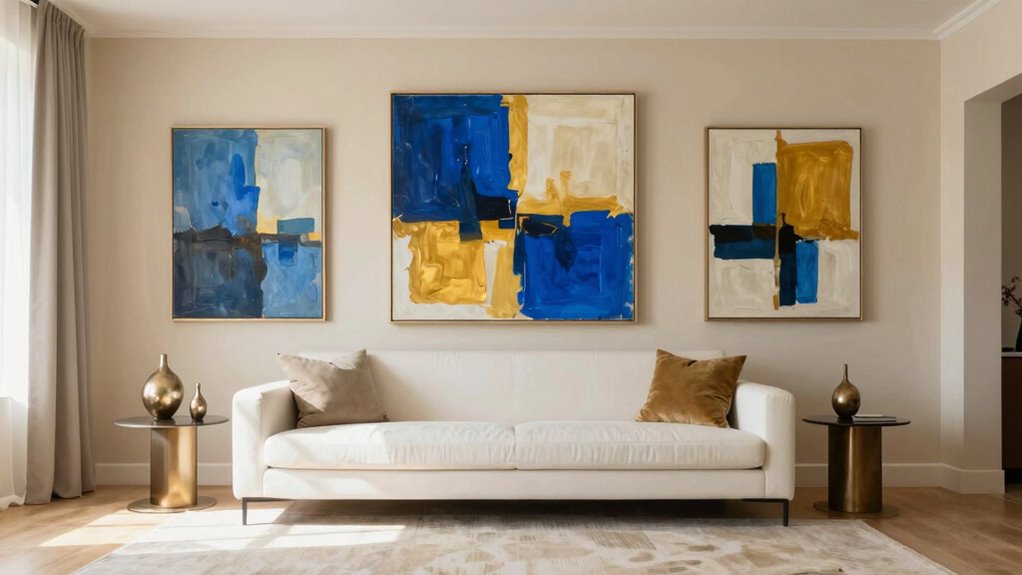

To anchor a room without overcrowding, choose a large, striking piece that naturally becomes the focal point, and place it where it’s highly visible, like above the sofa or on a main wall. Keep accessories minimal around the artwork to avoid clutter, and use lighting to highlight it effectively. Balance and simplicity are key—position art thoughtfully to create harmony. Soon, you’ll discover more tips to perfect your space.

Prime made for students and young adults
- Fast, free delivery for dorm and study essentials
- Prime Video and Amazon Music included
- Member-only deals
Key Takeaways
- Choose a large, statement artwork as the focal point to naturally anchor the room without clutter.
- Surround the art with minimal accessories and simple framing to maintain a clean, balanced look.
- Position the artwork thoughtfully on main walls or above furniture for maximum impact without overcrowding.
- Use appropriate lighting to highlight the art, creating emphasis while keeping the space open.
- Limit the number of additional decorative pieces around the art to preserve openness and visual harmony.
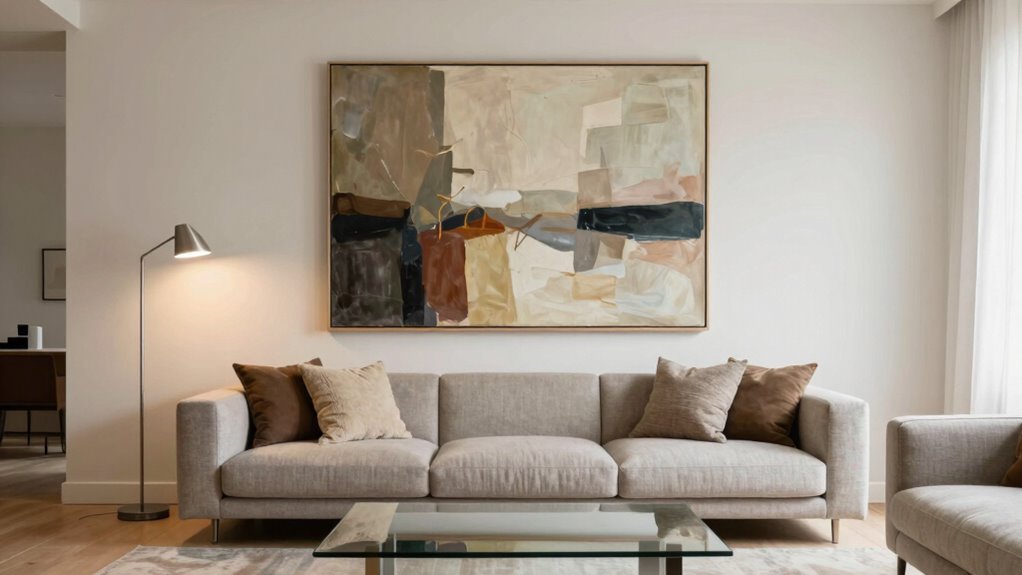
Have you ever wondered how to make a room feel complete and inviting? One of the best ways is by thoughtfully using art to anchor the space. When you choose the right pieces, art can add personality and depth without overwhelming the room. The key is to strike a balance—using art as a focal point that draws attention, all while maintaining a clean, uncluttered look.
Start by selecting a piece that naturally becomes the focal point. This could be a large painting, a striking photograph, or a unique sculpture. Position it where it can be appreciated, such as above a sofa, on a main wall, or across from the entryway. This focal point anchors your room, giving your eye a place to settle and creating a sense of harmony. Remember, the size of your artwork should match the space; too small, and it gets lost, too large, and it can feel overpowering.
Choose a statement piece to create a focal point and balance your space.
Color coordination plays an essential role in ensuring your art complements the room rather than clashing with it. Choose artwork that echoes the room’s color palette, or features accent colors already present in your decor. If your room has neutral tones, a vibrant piece can serve as a lively anchor. Conversely, if your space is already colorful, opt for art with more subdued hues or subtle patterns to avoid visual chaos. When your artwork harmonizes with your overall color scheme, it enhances the cohesion and makes the room feel thoughtfully curated. Paying attention to visual balance helps ensure your art enhances rather than overwhelms the space, and considering decorative accessories thoughtfully can further refine the visual flow and prevent clutter. Incorporating biodiversity-inspired artwork or natural elements can also bring a sense of calm and connection to nature, enriching the room’s atmosphere. Additionally, selecting artwork with meaningful symbolism can add depth and personal significance to your decor.
To prevent overcrowding, keep the surrounding decor simple. Surround your focal art with minimal accessories—perhaps a few well-chosen decorative objects or a sleek frame. This allows the artwork to stand out without competing with other elements. If you’re hanging multiple pieces, consider creating a gallery wall with carefully spaced artwork, but avoid filling every inch of the wall. Be selective and curate a few impactful pieces that enhance your room’s style while maintaining openness. Additionally, incorporating art placement carefully can make a significant difference in how your space feels—balanced and inviting rather than crowded.
Lighting also plays a fundamental role. Use directed lighting, like picture lights or spotlights, to highlight your focal art. Proper lighting not only emphasizes the piece but also adds warmth and ambiance to the space. By thoughtfully integrating art through color coordination, strategic placement, and lighting, you create a room that feels inviting, complete, and visually balanced—without feeling crowded or chaotic.
Popular right now

Samsung 75-Inch Class The Frame QLED 4K Art TV (LS03HE, 2026)

Apple AirPods Pro 3 Wireless Earbuds with Active Noise Cancellation

Ninja Foodi Smart 6-in-1 Indoor Grill and Air Fryer, 4 Qt, Black/Silver, FG551
As an affiliate, we earn on qualifying purchases.
Frequently Asked Questions
What Types of Art Are Best for Small Spaces?
For small spaces, opt for statement pieces that catch the eye without overwhelming, like bold paintings or unique sculptures. Gallery walls work well if you keep the frames simple and spaced out, creating visual interest without clutter. Choose art that reflects your personality and complements your decor, ensuring it anchors your room. Keep the scale appropriate and avoid overcrowding, so your space feels inviting and balanced.
How Do I Choose the Right Frame Size?
Did you know that properly sized frames can increase perceived art value by up to 30%? To choose the right frame size, consider your wall placement and the art’s dimensions. Use framing techniques that complement your space, such as a wider frame for larger pieces and slim profiles for smaller ones. Always leave enough space around the art to prevent overcrowding, ensuring it becomes a focal point without overwhelming your room.
Should Art Match My Room’s Color Scheme?
Matching your art to your room’s color scheme can create a cohesive look, but don’t be afraid to play with contrasting shades for visual interest. Focus on color coordination by choosing artwork that complements or highlights existing hues. Incorporate various artistic styles to add depth and personality. This balance keeps your space lively without feeling overcrowded, ensuring the art anchors your room beautifully while reflecting your unique style.
How Many Pieces Should I Display?
You should display 3-5 pieces for a balanced look, especially if you’re creating a gallery wall or highlighting statement pieces. Too many can clutter the space, while too few may not make enough impact. Use a mix of gallery walls and statement pieces to anchor your room effectively. Keep spacing consistent, and let each piece breathe to avoid overcrowding, ensuring your room remains inviting and stylish.
What Lighting Enhances Art Without Clutter?
You should use accent lighting to highlight your art pieces without cluttering the space, creating focused points of interest. Combine this with gentle ambient illumination to softly fill the room, avoiding harsh shadows or glare. Adjustable wall sconces or track lighting work well, allowing you to direct light precisely where needed. This balanced lighting enhances your artwork’s details and colors while maintaining a clean, uncluttered aesthetic.
Conclusion
By choosing the right art and placing it thoughtfully, you turn your room into a welcoming harbor amid life’s chaos. Think of your artwork as a lighthouse guiding the eye and grounding the space without overwhelming it. With a delicate balance, your art becomes the heartbeat of the room—setting the tone and anchoring your decor like a steady anchor in a stormy sea. Now, step back and admire your beautifully balanced sanctuary.