
Art that decorates a room subtly enhances the space using harmony, colors, and textures, creating a calming and inviting atmosphere without overpowering. In contrast, art that directs grabs your attention as a focal point, often through bold colors or striking compositions, shaping the room’s style and visual flow. If you want to discover how to choose and position these art types effectively, there’s more to explore that can elevate your space.

Prime made for students and young adults
- Fast, free delivery for dorm and study essentials
- Prime Video and Amazon Music included
- Member-only deals
Key Takeaways
- Decorative art subtly enhances ambiance without dominating, focusing on harmony, color, and texture.
- Art that directs acts as a focal point, capturing attention with bold, striking features.
- Decorative art supports the overall mood and aesthetic, allowing other design elements to stand out.
- Art that directs influences the room’s style, color scheme, and visual hierarchy as a centerpiece.
- Proper selection of either type depends on the space’s purpose, desired atmosphere, and design goals.
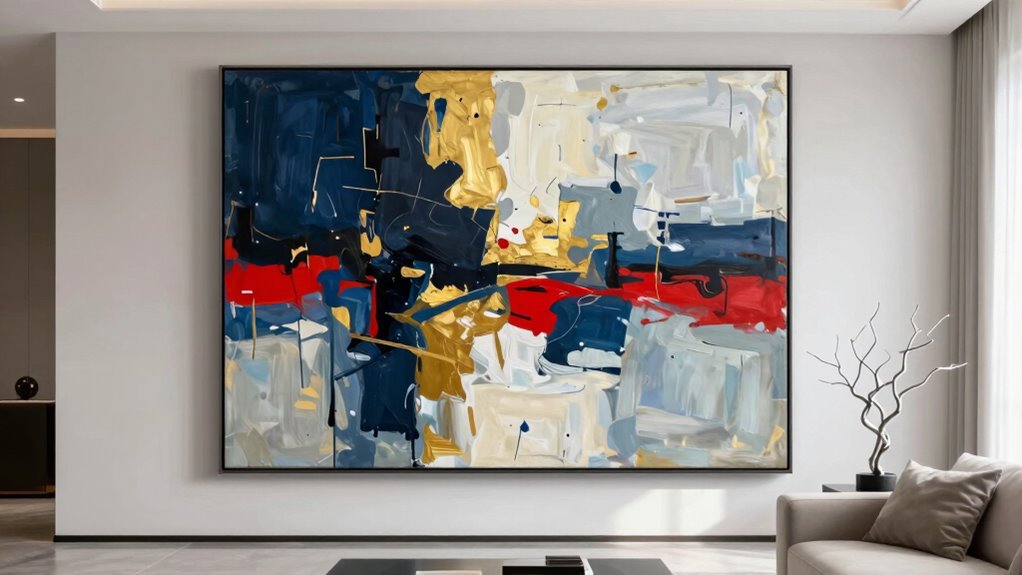
Art has the power to transform any space, but not all pieces serve the same purpose. Some artworks simply enhance the room’s aesthetic, blending seamlessly into the background, while others act as bold statements that command attention and set the tone. When you’re choosing art for your space, it’s essential to understand the difference between art that decorates and art that directs. This understanding helps you select pieces that either subtly complement your existing color schemes or become focal points that define the room’s character.
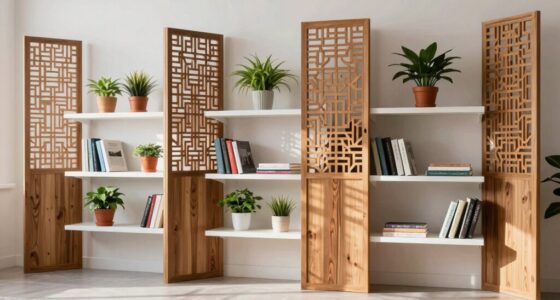
Decorative art typically emphasizes harmony and balance. It’s chosen to enhance the overall ambiance without overpowering the space. When you opt for art that decorates, you pay close attention to how the colors, patterns, and textures interact with your room’s color schemes. For example, a landscape painting with soft, muted tones can unify a neutral palette, creating a calming environment. These pieces often serve as background elements that make the room feel complete, cozy, and inviting. They don’t demand your attention; instead, they support the room’s mood and aesthetic, allowing other design features to shine. Understanding the role of art in interior design can help you better decide what kind of piece will best serve your space’s purpose and aesthetic.
Decorative art enhances ambiance through harmony, subtlety, and thoughtful color, pattern, and texture choices.
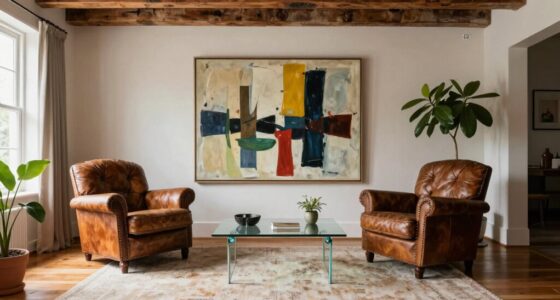
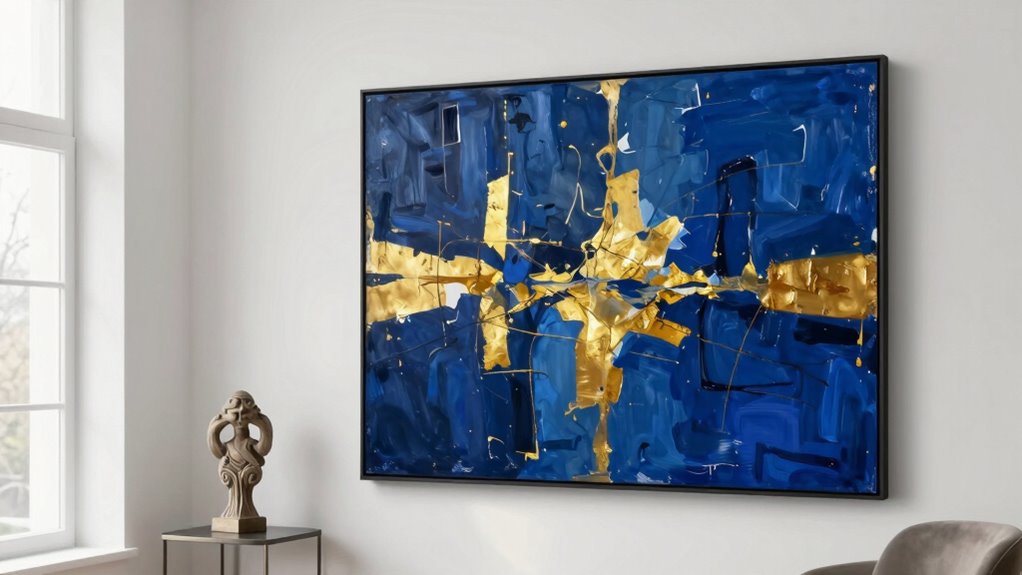
In contrast, art that directs the room functions as a focal point, capturing your eye immediately. You use these pieces intentionally to anchor the space and guide the visual flow. When selecting art that directs, you look for striking compositions, bold colors, or unique forms that stand out. These artworks often become the centerpiece around which the rest of the décor revolves. For example, a large, vibrant abstract piece can serve as the room’s visual anchor, shaping the overall style and influencing surrounding furniture and accessories. The key here is to choose an artwork that highlights specific color schemes or contrasts sharply with the walls or other décor elements, ensuring it draws attention and establishes a clear visual hierarchy. Incorporating visual hierarchy in your art choices ensures the space feels intentional and well-balanced.
decorative wall art for living room
As an affiliate, we earn on qualifying purchases.
As an affiliate, we earn on qualifying purchases.
Frequently Asked Questions
How Can I Identify if a Piece Is Decorative or Directive?
You can identify if a piece is decorative or directive by observing its emotional impact and visual focus. Decorative art adds charm and complements the space without dominating it, creating a subtle emotional connection. In contrast, directive art acts as a visual focus, guiding your eye and setting the tone for the room. Look for boldness, placement, and how it influences your mood to determine if it’s meant to decorate or direct.
Can Artwork Serve Both Decorative and Directive Purposes Simultaneously?
Yes, artwork can serve both decorative and directive purposes simultaneously. It makes a functional statement by defining space, setting the tone, or guiding movement, while also creating an emotional impact through color, subject, or style. You can choose pieces that align with your aesthetic goals, blending visual appeal with practical influence. In doing so, your art becomes a powerful tool that enhances the room’s beauty and function effortlessly.
What Are Common Mistakes When Choosing Art for a Room?
When choosing art for a room, you often make mistakes like ignoring color harmony, which can clash with your decor, or selecting pieces that don’t serve as a focal point. You might also pick artwork that’s too small, making it lose impact, or too large, overwhelming the space. To avoid these, consider how the art complements your room’s palette and guarantees it draws attention as a visual anchor.
How Does Room Size Influence Art Selection?
Room size heavily influences your art selection by guiding scale considerations and focal point choices. In smaller spaces, opt for smaller or medium-sized pieces to avoid crowding, ensuring a balanced look. For larger rooms, choose bigger artwork that commands attention and creates a focal point. Always think about proportion and how the art fits within the overall layout, making sure it enhances the room without overwhelming or underwhelming the space.
Are There Specific Styles That Tend to Be More Decorative or Directive?
Ever wonder if certain styles lean more toward decoration or direction? Abstract expression often serves as a bold centerpiece, commanding attention and guiding the room’s energy. Minimalist design, on the other hand, tends to be more decorative, blending seamlessly into the surroundings. So, if you want art that directs, consider abstract expression; for a subtle touch, minimalist pieces work beautifully without overwhelming the space.
As an affiliate, we earn on qualifying purchases.
Conclusion
So, now you see there’s more to art than meets the eye. Whether it’s simply enhancing a space or guiding its entire vibe, each piece holds unseen power. But what if your next choice blurs the line between decoration and direction? Will you play it safe or take a bold step toward transforming your room’s soul? The answer lies in your vision—ready to discover what’s truly possible? The next piece you choose might just change everything.
As an affiliate, we earn on qualifying purchases.
bold colorful art for focal point
As an affiliate, we earn on qualifying purchases.
As an affiliate, we earn on qualifying purchases.
Fall Picks
fall essentials
As an affiliate, we earn on qualifying purchases.