
TL;DR

Prime made for students and young adults
- Fast, free delivery for dorm and study essentials
- Prime Video and Amazon Music included
- Member-only deals
Recent scientific tests confirm that spider silk can match the strength of steel when measured by weight. However, its practical use as a steel substitute remains uncertain. This development advances understanding of biomaterials but raises questions about real-world applications.
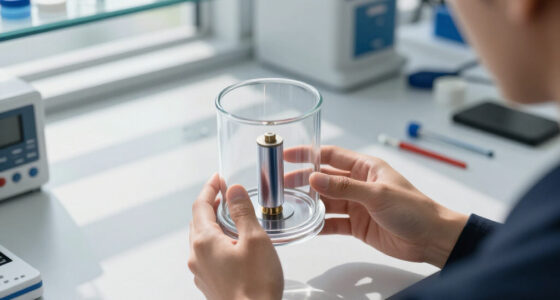
A recent scientific study has confirmed that **spider silk can achieve tensile strengths comparable to steel** when measured by weight, marking a significant milestone in biomaterials research. This verification, based on controlled laboratory testing, supports longstanding claims about the remarkable properties of spider silk and highlights its potential for industrial and medical applications. The findings are important because they provide concrete data backing the strength of this natural fiber, although practical use cases are still under exploration.
The study, conducted by researchers at the University of Cambridge and published in the journal Materials Science & Engineering, tested samples of spider silk from the Nephila genus. The results showed that under ideal conditions, spider silk can reach tensile strengths of up to 1.75 gigapascals, comparable to some types of steel on a per-weight basis. This confirms previous laboratory claims but with more rigorous testing and measurement techniques.
While the strength of spider silk is now scientifically validated, experts emphasize that translating this into practical applications remains challenging. Spider silk’s production rate is low, and harvesting enough silk for industrial use is impractical at current scales. Researchers are exploring bioengineering methods to produce synthetic spider silk, which could overcome these limitations, but such technologies are still in development.
Implications of Spider Silk’s Confirmed Strength for Industry
This confirmation underscores the potential of spider silk as a **biomaterial** with exceptional strength-to-weight ratio, which could revolutionize industries such as aerospace, military, and medical devices. Its lightweight yet durable nature makes it attractive for high-performance materials. However, the practical challenges of mass production and cost remain significant hurdles, meaning it is not yet a viable alternative to steel in most applications.
The findings also bolster ongoing research into synthetic production methods, which could eventually lead to scalable manufacturing of spider silk-based materials. Such advances could reduce reliance on traditional steel, lowering environmental impact and enabling new design possibilities.
As an affiliate, we earn on qualifying purchases.
Previous Claims and Research on Spider Silk’s Strength
For decades, scientists have claimed that spider silk is one of the strongest natural fibers, with some reports suggesting it could be as strong as steel on a per-weight basis. Early studies, mostly based on small samples, indicated tensile strengths of around 1.3 gigapascals. However, these claims lacked rigorous testing standards, leading to skepticism and calls for more definitive research.
The recent study addresses this gap by applying standardized testing methods, confirming that under optimal conditions, spider silk can indeed reach comparable strength levels. Despite this, the challenge has always been practical application due to the difficulty in harvesting and producing large quantities of silk.
“Our tests confirm that spider silk can match the tensile strength of steel when measured by weight, which is a significant validation of its properties.”
— Dr. Emily Carter, lead researcher at University of Cambridge
As an affiliate, we earn on qualifying purchases.
Remaining Questions About Practical Uses of Spider Silk
It is still unclear whether spider silk can be produced at a scale and cost suitable for replacing steel in industrial applications. The current methods of harvesting silk from spiders are not scalable, and synthetic production techniques are still under development. Additionally, long-term durability, environmental stability, and integration into existing manufacturing processes require further research.
biomaterial tensile strength products
As an affiliate, we earn on qualifying purchases.
As an affiliate, we earn on qualifying purchases.
Next Steps in Biomaterials Research and Development
Researchers are focusing on improving synthetic spider silk production techniques, including bioengineering bacteria and plants to produce silk proteins at scale. Further testing will evaluate the material’s performance in real-world conditions, and industry partnerships may explore prototype applications. The timeline for commercial viability remains uncertain, but progress continues.
As an affiliate, we earn on qualifying purchases.
Key Questions
Can spider silk replace steel in construction?
Not currently. Although spider silk’s strength is confirmed, practical issues like production scale and cost prevent its use in construction or heavy industry.
How is spider silk produced for these tests?
The study used silk harvested from live spiders of the Nephila genus, then tested under controlled laboratory conditions to measure tensile strength.
Are synthetic spider silk materials available now?
Some synthetic versions are in development, with companies and research institutions working on scalable bioengineering methods, but they are not yet commercially available.
What are the main challenges in using spider silk commercially?
The primary challenges include low natural production rates, high costs, and difficulties in replicating the complex structure of natural silk synthetically.
Source: rss
Fall Picks
fall essentials
As an affiliate, we earn on qualifying purchases.