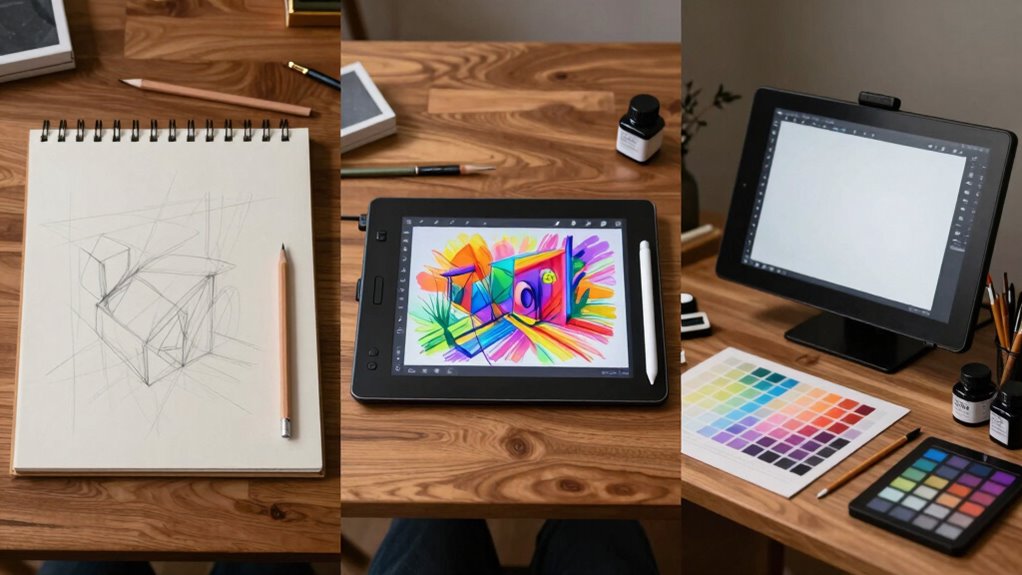

To compare entry-level, mid-range, and pro equipment for art workflows, focus on key features like color accuracy, ergonomics, and durability. Entry-level tools are great for beginners but may lack precision and comfort for long use. Mid-range options offer better performance and comfort for advancing artists. Pro gear provides top-tier color fidelity, ergonomic design, and long-lasting build for professional work. For a clearer picture of each tier’s strengths, continue exploring these differences in detail.
Key Takeaways
- Assess digital color accuracy needs to match project complexity and desired vibrancy levels.
- Evaluate ergonomic features for comfort during extended creative sessions.
- Consider long-term investment value, durability, and scalability for future skill growth.
- Compare features such as adjustable stands, grips, and interface intuitiveness across tiers.
- Align equipment choice with current skill level, project scope, and budget constraints.
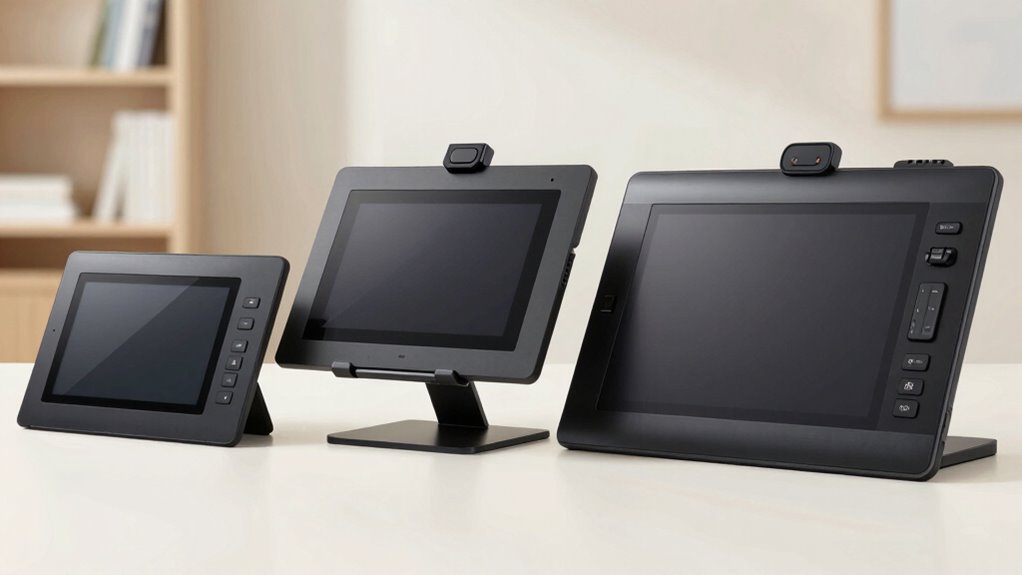
Choosing the right art equipment can be overwhelming, especially when you’re trying to balance quality and budget. When comparing entry-level, mid-range, and pro tools, you need to take into account several factors to guarantee your investments support your creative goals. One of the first things to evaluate is how well the equipment delivers digital color accuracy. This is essential because your work’s vibrancy and true-to-life hues depend on it. Entry-level devices often have decent color reproduction but may lack the precision needed for detailed work. Mid-range options typically improve on this, offering more consistent and accurate color output, which helps when you’re doing projects that demand fidelity. Pro equipment, on the other hand, provides exceptional digital color accuracy, making it ideal for professional work where color precision can’t be compromised.
Pro tools offer unmatched color accuracy, essential for professional projects demanding true-to-life hues and vibrant detail.
Another important aspect is ergonomic design. As you spend hours creating, comfort becomes a priority. Entry-level tools might lack ergonomic features, which can lead to fatigue or discomfort over time. Mid-range equipment usually starts to incorporate better ergonomic considerations, like adjustable stands, softer grips, or more intuitive interfaces, making your workflow smoother. For professional artists, ergonomic design is indispensable because it directly impacts your efficiency and health. High-end gear often includes advanced ergonomic features tailored to long working sessions, reducing strain and enabling you to work comfortably for extended periods. Additionally, understanding the role of digital color accuracy in achieving professional results can help you make smarter choices about the equipment you select. Recognizing the importance of biodiversity and sustainable practices in your choice of equipment can also contribute to more environmentally conscious art creation. Incorporating eco-friendly materials and practices in your tool selection can support a more sustainable art practice.
When comparing these levels, think about your specific needs. If you’re just starting out or experimenting, an entry-level setup might suffice, but be prepared for limitations in color accuracy and comfort. If you’re advancing your skills and need more reliable results, mid-range equipment strikes a good balance, offering improved features without the steep price tag of professional gear. For those pursuing art as a career or handling client projects, investing in pro equipment is often worth it. It provides the highest digital color accuracy, superior ergonomic design, and durability, making sure your tools keep up with your creative ambition.
Ultimately, your choice should align with your current skill level, project demands, and long-term goals. Comparing these tiers side by side helps you understand what features are essential at each stage. Keep in mind that quality tools can elevate your art, but you don’t always need the most expensive gear to produce great work. Instead, focus on the features that matter most—like digital color accuracy and ergonomic comfort—to support your artistic workflow effectively.
digital drawing tablet with color accuracy
As an affiliate, we earn on qualifying purchases.
As an affiliate, we earn on qualifying purchases.
Frequently Asked Questions
How Do I Determine Which Equipment Suits My Specific Art Style?
To determine which equipment suits your art style, consider its flexibility and how well it supports your techniques. Think about whether you need equipment that allows customization to match your workflow or if you prefer more straightforward tools. Test different options, focusing on how they enhance your creative process. The right choice aligns with your style, offers adaptability, and helps you express your vision most effectively.
What Are the Long-Term Costs Beyond Initial Investment?
Think of your art equipment as a garden—what you plant initially is just the start. Long-term costs include replacing worn-out tools, upgrading for better features, and maintenance, which can grow over time. Budget considerations help you plan for these expenses, while durability factors determine if your tools will last or need frequent repairs. Investing wisely now guarantees your creative garden flourishes without draining your resources later.
How Do Software Compatibility and Updates Impact Equipment Choices?
Software compatibility and updates are essential when choosing equipment. You need hardware that integrates seamlessly with your preferred software, ensuring smooth workflow and avoiding frustration. Keep an eye on hardware integration to prevent compatibility issues. Additionally, consider software licensing requirements, as some updates may demand higher or ongoing costs. Staying informed about compatibility and update policies helps you select equipment that remains functional and efficient over time.
Can I Upgrade Parts of My Equipment Later On?
Yes, you can upgrade parts of your equipment later on. Just keep your budget constraints in mind, as upgrades can be costly. Research brand reputation to guarantee compatibility and quality. For example, upgrading your graphics card or RAM can boost performance without replacing the entire system. Planning ahead with compatible components helps you extend your equipment’s lifespan and adapt to your evolving art workflow.
What Are the Best Practices for Maintaining and Caring for Art Equipment?
Think of your art equipment as a garden. Regular maintenance routines act as watering and pruning, keeping tools functional and vibrant. Use proper storage solutions to protect your supplies from dust and damage, like a greenhouse shields delicate plants. Clean your brushes and screens after each use, and store items in a cool, dry place. These practices guarantee your tools stay in top shape, ready for your next creative burst.
As an affiliate, we earn on qualifying purchases.
Conclusion
Just like heroes choose their gear wisely, selecting the right art equipment depends on your goals and budget. Whether you’re starting with entry-level tools or aiming for professional mastery, remember that great art isn’t just about the gadgets — it’s about your passion and skill. As the masters say, “The pen is mightier than the sword,” so invest in what fuels your creativity and keeps your artistic journey vibrant and evolving.
As an affiliate, we earn on qualifying purchases.
As an affiliate, we earn on qualifying purchases.