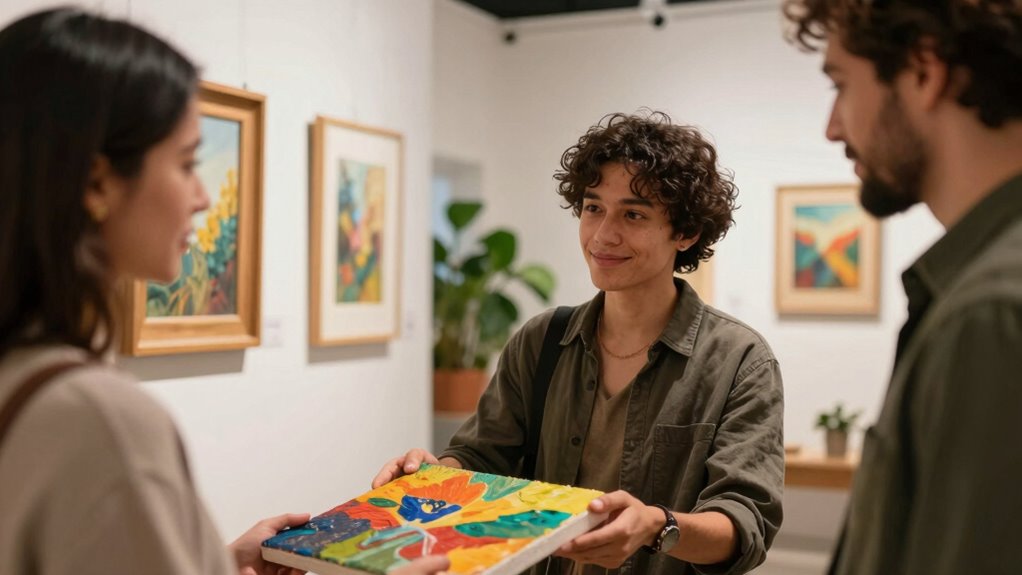

To support artists ethically, focus on fair compensation, transparent transactions, and authentic provenance. Respect cultural heritage by seeking permission, understanding the context, and collaborating with communities. Build genuine relationships through active engagement and support for local initiatives. Prioritize authenticity and verify artworks carefully to prevent exploitation. Promoting openness and accountability in your collection ensures respect for creators and their work. If you want to learn how to navigate this balance skillfully, there’s more to contemplate side by side.
Key Takeaways
- Ensure transparent payment practices and fair compensation to support artists’ livelihoods ethically.
- Verify provenance and authenticity to prevent fraud and ensure fair value for artists’ work.
- Build genuine relationships with artists through respectful engagement and ongoing collaboration.
- Support ethical sales platforms and initiatives that prioritize artists’ rights and full earnings.
- Educate yourself on cultural sensitivities to avoid exploitation and respect community and traditional practices.
Understanding the Principles of Ethical Art Collecting

Have you ever wondered what makes an art collection truly ethical? It begins with understanding the principles of collecting ethics. Ethical collecting values artistic innovation, respecting an artist’s vision and creative process. You should prioritize transparency in provenance and avoid supporting stolen or looted art. Supporting artists’ careers and fostering genuine relationships aligns with ethical standards, emphasizing respect over mere acquisition. Remember, collecting isn’t just about amassing pieces—it’s about honoring the integrity of the art and its creator. By being mindful of these principles, you ensure your collection promotes fair practices and encourages continued artistic innovation. Additionally, understanding the importance of color accuracy in reproductions can help maintain the integrity of an artwork’s original intent. Recognizing Free Floating elements in artworks can also aid in appreciating the depth and context of a piece. Ethical art collecting isn’t just about what you acquire; it’s about how your choices influence the art world and support a sustainable, respectful environment for artists. Being aware of provenance and the history behind each piece ensures your collection upholds transparency and ethical standards.
Recognizing and Supporting Fair Compensation for Artists

You can support artists by insisting on transparent payment practices that clearly outline how they are compensated. Choosing to buy through fair distribution channels guarantees artists receive their rightful earnings. By prioritizing these practices, you promote equitable recognition of artists’ work and help uphold ethical standards. Additionally, supporting ethical sales platforms ensures that artists benefit from the full value of their creations. Implementing proper compensation practices further encourages fair dealings and discourages exploitation. Recognizing the importance of transparency in transactions helps build trust and accountability within the art community. As AI-driven algorithms increasingly influence art distribution, understanding AI cybersecurity jobs can also help protect artists’ digital assets from theft and misuse.
Transparent Payment Practices
Transparent payment practices are vital to ensuring artists receive fair compensation for their work. When you prioritize openness in transactions, you help establish trust and uphold ethical standards. Clear communication about art valuation methods ensures artists are paid appropriately, reflecting the true worth of their work. Additionally, auction transparency plays a vital role; knowing how bids are handled and how final prices are determined prevents exploitation and creates a fair marketplace. By demanding detailed information about pricing structures and payment processes, you support artists’ rights and promote integrity within the art world. Transparent practices also discourage underpayment and hidden fees, ensuring artists are fairly compensated for their creativity and effort. Implementing transparent pricing structures can further enhance trust and fairness in art transactions. Promoting fair compensation encourages a sustainable environment for artistic creation and ensures artists can continue their work without financial insecurity. Ultimately, openness in payment policies benefits everyone involved in the art community and fosters ethical standards that uphold artists’ rights. Emphasizing trustworthy information about payment processes helps prevent fraud and misrepresentation, reinforcing ethical practices. Recognizing the importance of financial transparency supports long-term trust and accountability between artists and collectors.
Fair Distribution Channels
Effective distribution channels are vital for ensuring artists receive fair compensation for their work. Digital marketplaces play a pivotal role by providing platforms that connect artists directly with audiences, often offering transparent terms and fair artist royalties. To support ethical practices, consider these strategies:
- Prioritize platforms that transparently share how artist royalties are calculated and distributed. Regular monitoring of evolving policies ensures ongoing fairness and compliance. Transparent royalty structures
- Advocate for fair pay structures within digital marketplaces, ensuring artists receive a generous percentage of sales.
- Support distribution models that allow artists to retain control over their work and set equitable prices.
- Incorporate Gold IRA Rollovers strategies to diversify income streams and secure long-term financial stability for artists. Additionally, exploring alternative investment avenues like precious metal IRAs can help artists build a diversified financial portfolio that supports their creative independence. Recognizing the importance of fair compensation in sustaining artistic communities encourages more ethical and sustainable practices across distribution channels.
Respecting Cultural Heritage and Avoiding Appropriation

When collecting items from different cultures, it’s vital to understand their cultural significance and avoid misrepresentation. Always seek permission or collaborate with community members to guarantee respectful handling. Educate yourself about the cultural context to prevent unintended appropriation and honor the heritage involved. Recognizing the importance of cultural heritage preservation helps ensure that your collection supports and respects the communities involved. Developing an ethical approach to collecting fosters appreciation rather than exploitation, promoting sustainability and cultural integrity. Embracing cultural sensitivity is essential to creating a respectful and meaningful collection that celebrates diversity. Incorporating professional services can further assist in navigating complex cultural considerations and ensuring adherence to ethical standards.
Understand Cultural Significance
Understanding the cultural significance behind artifacts is essential to respectful collecting. Recognizing that items often embody traditional symbolism helps you appreciate their true meaning and context. To do this effectively:
- Research the history and origin of the artifact to understand its role within the community.
- Learn about the traditional symbolism and spiritual meanings associated with the object.
- Respect the cultural protocols involved in handling and displaying artifacts, avoiding misinterpretation or misrepresentation.
- Be aware of ongoing cultural conversations surrounding the artifact to better understand its significance.
- Acknowledge the importance of ancestral practices that influence the artifact’s meaning and use within the community.
- Familiarize yourself with material significance, which often reflects the community’s identity and values.
- Understand the cultural context in which the artifact exists, including its social and historical background, to prevent misappropriation.
Seek Permission and Collaboration
Before acquiring artifacts from cultures different from your own, it’s essential to seek permission from the community or custodians responsible for them. Respectful collecting involves engaging in collaborative projects that involve local artists and community members, ensuring their voices and perspectives are central. Always obtain artist permissions before using cultural artifacts or motifs, confirming that your intentions align with their wishes. Collaboration fosters mutual respect and helps prevent cultural misappropriation. Additionally, understanding cultural symbolism can deepen your appreciation and ensure respectful representation. By establishing open communication, you demonstrate genuine appreciation and support rather than exploitation. Remember, cultural heritage belongs to its community, and your role is to honor their rights and stories. Incorporating support for local artists into your process ensures ethical practices and strengthens community ties. Prioritizing permission and collaboration safeguards the integrity of the culture and promotes ethical, responsible collecting practices.
Educate on Cultural Context
Why is it essential to educate yourself about the cultural significance behind artifacts before collecting them? Understanding the cultural sensitivities and traditional practices associated with an item helps prevent misinterpretation and disrespect. It guarantees you’re honoring its true meaning, rather than inadvertently contributing to cultural appropriation. To deepen your understanding, consider these steps:
- Research the history and significance of the artifact within its original context.
- Consult with cultural experts or community members to gain authentic insights.
- Recognize and respect any restrictions or rituals related to the artifact’s handling or display.
Building Genuine Relationships With Artists and Art Communities

Building genuine relationships with artists and art communities requires more than just transactional exchanges; it demands sincere engagement and respect for their creative processes. You can foster trust through consistent community engagement, attending events, and supporting local initiatives. Offering artist mentorship programs helps demonstrate your commitment to their growth, showing you value their development beyond just purchasing art. By listening actively and respecting their perspectives, you create a foundation of mutual trust. Avoid treating artists as mere commodities; instead, see them as collaborators. Building these authentic bonds not only benefits your collection but also helps sustain a thriving, respectful art community. Your support becomes meaningful when rooted in genuine connection, fostering long-term relationships that honor artists’ integrity and creative journeys.
Making Informed Purchasing Decisions and Verifying Authenticity
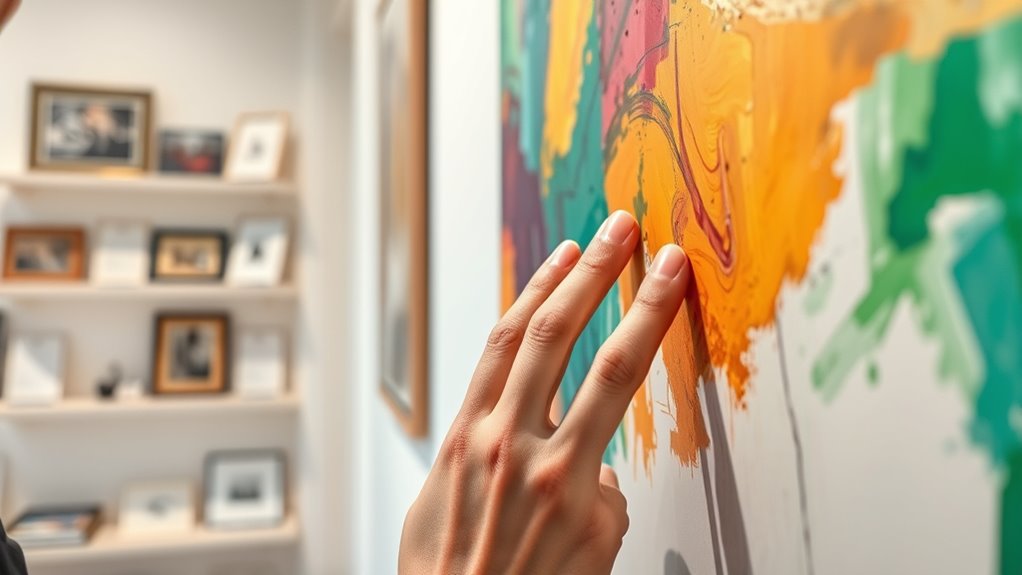
Making informed purchasing decisions is essential to building a valuable and authentic art collection, and verifying the authenticity of artworks is a crucial step in that process. To guarantee you’re making ethical choices, focus on solid provenance verification and reliable authentication methods. These steps help confirm an artwork’s origin and legitimacy, preventing fraud and supporting artists fairly.
Verifying artwork authenticity ensures ethical collecting, prevents fraud, and supports artists fairly.
Consider these key actions:
- Research the artwork’s provenance through documentation and records.
- Use scientific authentication methods, such as carbon dating or pigment analysis.
- Consult with experts, including appraisers or art historians, to validate authenticity.
Promoting Transparency and Accountability in the Art Market

Transparency and accountability are essential for creating a trustworthy art market where buyers and sellers can operate with confidence. Promoting art market transparency means openly sharing information about artwork provenance, pricing, and sales history, so you can make informed decisions. When artists and galleries prioritize transparency, it ensures artist accountability, holding them responsible for ethical practices and authentic representations. This openness helps prevent fraud and exploitation, fostering trust in transactions. As a collector, you should support initiatives that encourage clear documentation and honest communication. By demanding transparency and supporting policies that promote artist accountability, you contribute to a fairer, more ethical art market where artists are respected, and your investments are protected.
Frequently Asked Questions
How Can Collectors Identify Ethically Sourced or Fair-Trade Artworks?
To identify ethically sourced or fair-trade artworks, look for artist transparency and certification standards. Ask artists about their sourcing practices and verify if they participate in recognized fair-trade programs. Seek out authenticity certificates or labels that confirm adherence to ethical standards. By doing so, you guarantee your collection supports artists fairly while avoiding exploitation. Remember, informed buying helps promote ethical practices throughout the art world.
What Are Signs of Exploitation or Unethical Practices in Art Sales?
You spot exploitation when the power imbalance tilts unfairly, like a scale tipped by greed. Watch for false attribution, where an artwork’s origin feels like a shadow cast by someone else’s claim. If artists seem silenced or undervalued, it’s a red flag. Unethical practices often hide behind flashy promises, but true integrity reveals itself in transparency and respect. Stay vigilant, and you’ll navigate the art world with a moral compass.
How Can Collectors Support Emerging or Underrepresented Artists Ethically?
You can support emerging or underrepresented artists ethically by engaging in artist mentorship programs and actively participating in community engagement initiatives. Offer your time, resources, and connections to help them grow without expecting immediate profit. By fostering genuine relationships and promoting their work within your networks, you guarantee they gain visibility and support while maintaining their artistic integrity. Your involvement can truly empower artists and create a more equitable art community.
What Are Best Practices for Negotiating Artist Royalties or Resale Rights?
You can guarantee fair artist negotiations by openly discussing resale agreements and royalty terms upfront. Avoid assuming you know what’s best—listen actively to the artist’s needs and rights. Draft clear, transparent contracts that specify resale rights and royalties, and be willing to negotiate collaboratively. This approach fosters trust, respects their work, and prevents future disputes, making sure artists are fairly compensated and their rights protected throughout the resale process.
How Does Ethical Collecting Impact Long-Term Artist Sustainability and Market Health?
Ethical collecting positively impacts long-term artist sustainability and market health by fostering artist mentorship and cultural preservation. When you support artists ethically, you help guarantee they can thrive creatively and financially, encouraging ongoing innovation. This approach sustains a vibrant art scene, preserves cultural heritage, and builds trust within the market. Your responsible collecting habits empower artists to develop their careers, ensuring a healthy, diverse artistic ecosystem for generations to come.
Conclusion
So, next time you’re tempted to snap up that “authentic” piece, remember: supporting artists ethically isn’t just about avoiding exploitative practices. It’s about truly valuing their work, respecting their culture, and building genuine relationships. Ironically, the art market’s reputation for transparency often hides its flaws. By making informed, fair choices, you not only elevate artists but also challenge the very system that sometimes profits from their silence.