
Encaustic art combines ancient wax and heat techniques to create vibrant, textured paintings that are making a modern comeback. You can explore rich layering, carving, and mixed media effects by using hot tools and natural wax pigments. This versatile medium offers durable, eco-friendly artwork with a historical connection to civilizations like the Egyptians. Curious to see how traditional methods evolve with today’s innovations? Keep exploring to uncover more about this fascinating revival.
Key Takeaways
- Encaustic art is an ancient technique using heated wax to create durable, luminous artworks with rich textures.
- Modern artists are reviving encaustic through innovative methods, integrating digital media and mixed media elements.
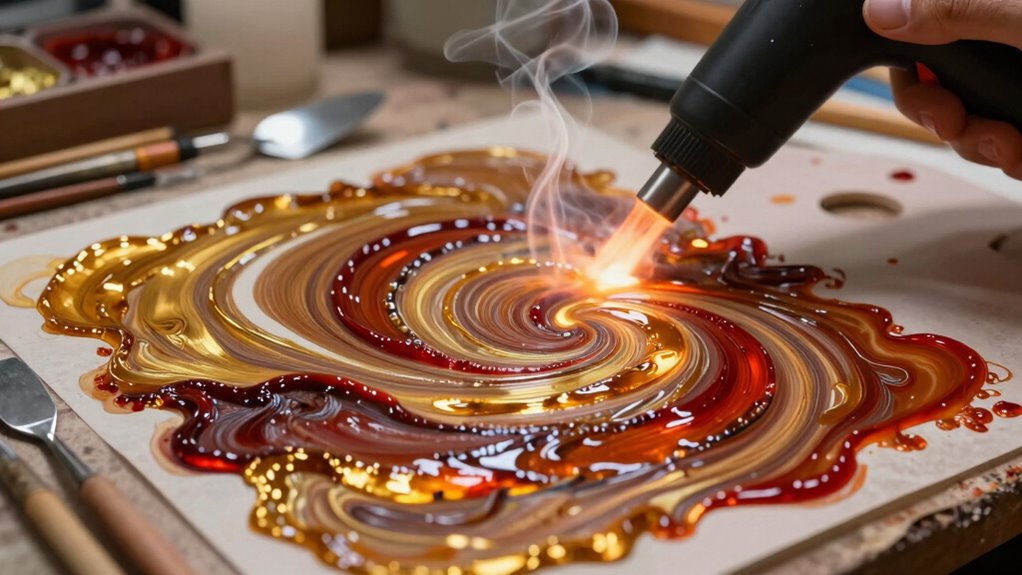
- The process involves melting beeswax with pigments, applying layers, and manipulating with heat tools for depth and effects.
- Technological advancements and online platforms are expanding encaustic art’s visibility and market reach.
- Its environmentally friendly materials and timeless appeal make encaustic a sustainable, contemporary artistic practice.

R&F Handmade Paints – Professional Encaustic Paint – Starter Kit, 14 Piece Set
- Complete Encaustic Painting Starter: 14-piece set with paints, brushes, and boards
- High-Quality Wax-Based Paint: Solvent-free, glossy, versatile encaustic paints
- Handmade with Traditional Materials: Milled in small batches using pure beeswax and damar resin
As an affiliate, we earn on qualifying purchases.
As an affiliate, we earn on qualifying purchases.
Explore the Historical Roots of Encaustic Art
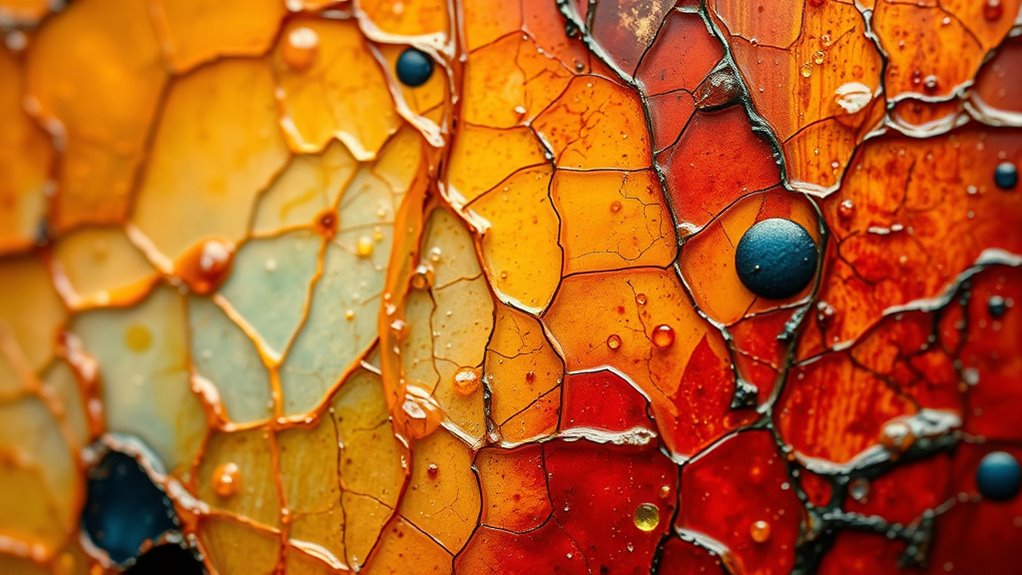
Encaustic art has ancient origins that date back thousands of years, making it one of the earliest painting techniques known to humanity. Its roots lie in ancient techniques used by civilizations like the Egyptians, who prized the durability and vibrant colors of wax-based artworks. Historically, encaustic paintings held significant cultural and religious value, often adorning tombs and temples. These artworks demonstrated advanced craftsmanship and understanding of heat and pigment application. The technique’s enduring appeal lies in its ability to preserve vivid details over centuries, giving it a profound historical significance. By mastering this ancient method, you connect with a rich artistic tradition that spans millennia, showcasing the timeless nature of wax, heat, and creativity. Additionally, modern restorers and artists continue to explore its preservation techniques, ensuring its legacy endures. Understanding the fundamental principles behind encaustic art can help artists achieve authentic results and maintain its historical integrity, while also appreciating its cultural significance in different civilizations. Recognizing the importance of material durability and how it contributes to the longevity of encaustic artworks can deepen one’s appreciation for this timeless craft.

SEEKONE 1800W Heat Gun Variable Temp 122℉-1202℉ for Crafts, Shrink Wrap
- High Power and Fast Heating: 1800W heat gun heats to 1202℉ in 1.5s
- Dual Mode Temperature Settings: Two modes: 50-450℃ and 50-650℃
- Variable Temperature Control: Adjust temperature with rheostat dial
As an affiliate, we earn on qualifying purchases.
As an affiliate, we earn on qualifying purchases.
What Materials and Tools Do You Need for Encaustic Painting?

To create stunning encaustic artworks, you’ll need a specific set of materials and tools that are essential for working with wax-based paints. Start with high-quality wax pigments, which give your artwork vibrant color and texture. You’ll also need metal tools, such as palette knives and spatulas, to manipulate and sculpt the wax. A heat source, like a heat gun or encaustic iron, is vital for melting and fusing layers of wax. Additionally, you’ll require a sturdy surface or panel to work on, along with brushes designed for encaustic techniques. Keep in mind that safety gear, like gloves and masks, helps protect you from fumes and hot materials. Proper ventilation is crucial when working with heated wax to ensure a safe environment. Using appropriate workspace setup can greatly improve your comfort and efficiency while creating art. It’s also important to understand wax compatibility to ensure your materials work harmoniously and produce the best results. Familiarity with wax properties can help you achieve desired effects and avoid common pitfalls. With these materials and tools, you’ll be well-equipped to explore the rich possibilities of encaustic art.

Encaustic Art The Original: Art Stylus Pro with Interchangeable Tips (Standard Drawing, Brush Head, Rectangular Shape) for Low-Heat Encaustic Painting – Ideal for Artists, Teachers, Parents, Crafters
- Precision Low-Heat Encaustic Tool: Ideal for detailed wax art
- Includes 3 Interchangeable Tips: Drawing, brush, and shading attachments
- Ergonomic and Comfortable Grip: Lightweight design for extended use
As an affiliate, we earn on qualifying purchases.
As an affiliate, we earn on qualifying purchases.
How to Create an Encaustic Artwork: A Step-by-Step Guide
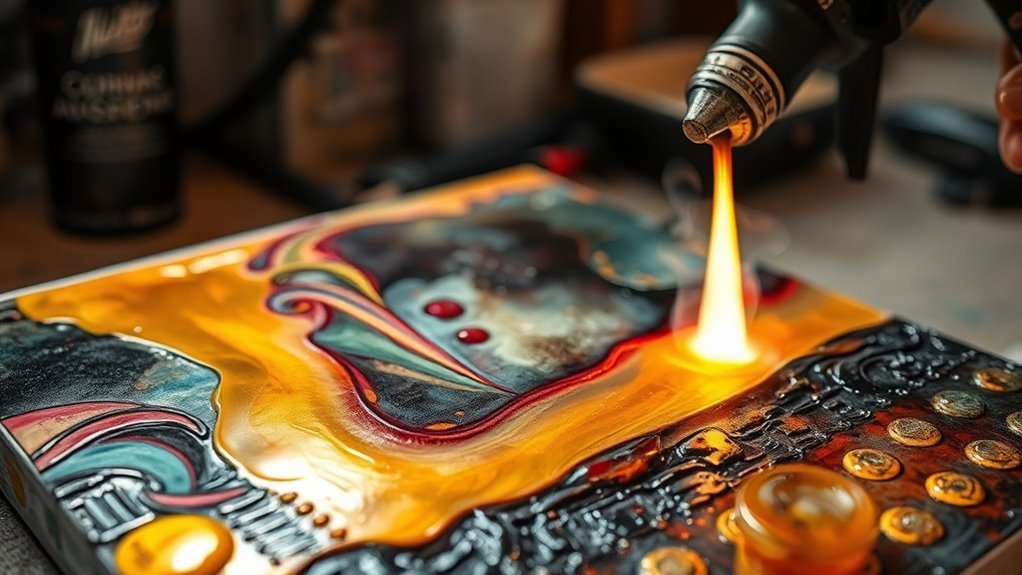
Once you have gathered your materials and tools, you’re ready to start creating your encaustic artwork. Begin by applying a thin layer of melted wax onto your surface, then add your chosen mixed media elements, like paper or fabric, pressing them gently into the wax.
Use your heat tool to fuse each layer, building up color through deliberate layering. Continue adding wax, media, and colors, focusing on color layering to create depth and texture. Work quickly but carefully, as the wax cools fast.
You can scrape or carve into your layers for additional effects. This process allows for spontaneous expression and rich visual complexity, making each piece uniquely yours. Patience and experimentation are key to mastering this layered, vibrant technique.

Ampersand Encausticbord Hardboard Panel for Encaustics and Mixed Media, 1/8 Inch Depth, 6X6 Inch, Pack of 4 (EN066)
- Surface Material: Primed encaustic gesso for smooth finish
- Heat Resistance: Resistant to heat, prevents cracking
- Versatile Use: Suitable for encaustic, mixed media, oils, collage
As an affiliate, we earn on qualifying purchases.
As an affiliate, we earn on qualifying purchases.
Discover Techniques and Styles Unique to Encaustic Art
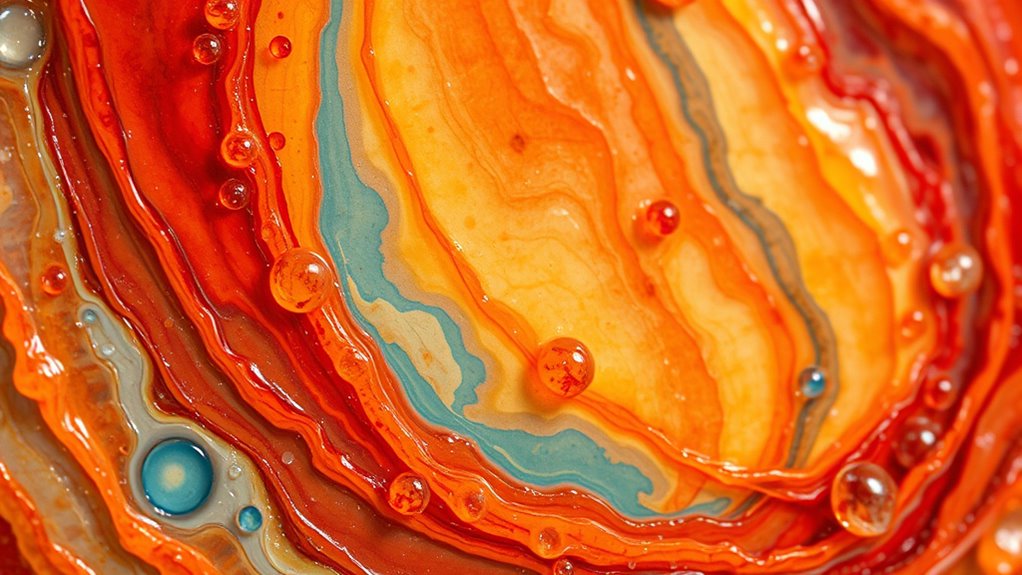
Exploring the unique techniques and styles of encaustic art allows you to achieve a wide range of textures, effects, and visual depths. One key method is color layering, where you build up translucent or opaque layers of wax to create rich, luminous surfaces. This technique lets you experiment with blending colors directly on the surface, producing complex visual effects.
Texture manipulation is another distinctive aspect; by applying heat, scraping, or adding different materials, you can create varied tactile surfaces that add dimension and interest. Using tools like brushes, spatulas, or even household items, you can carve into or manipulate the wax for diverse textures.
These techniques enable you to craft dynamic, multi-layered artworks that embody the distinctive qualities of encaustic art.
Why Choose Encaustic Mediums in Modern Art?

Choosing encaustic mediums lets you create rich textures that add depth and dimension to your artwork.
The vibrant color blends you can achieve are unlike any other, making your pieces stand out.
Plus, encaustic art is a sustainable choice, aligning your creativity with environmentally conscious practices.
Rich Textural Effects
Encaustic mediums are prized in modern art for their ability to create rich, tactile textures that captivate viewers. This medium allows you to explore texture exploration and surface manipulation, adding depth and dimension to your work. You can build up layers, carve into the wax, or embed materials for unique effects. The inherent thickness and malleability of encaustic enable you to craft varied textures, from smooth surfaces to rough, layered finishes. The following table highlights different techniques and their textural outcomes:
| Technique | Textural Effect |
|---|---|
| Layering wax | Creates depth and richness |
| Carving | Adds tactile, carved details |
| Embedding materials | Introduces varied surface textures |
| Fusing layers | Smooth, unified surface |
| Scraping or scratching | Reveals underlying layers |
Additionally, experimenting with surface techniques can further enhance the visual interest of encaustic art. Exploring layering methods can also contribute to complex, multidimensional textures that draw viewers into the artwork. Incorporating mixed media approaches can further expand the possibilities for creating unique surface effects and engaging textures. Integrating safe handling practices ensures that artists can work confidently with heat and materials while minimizing risks.
Unique Color Blends
Because of its unique properties, encaustic mediums offer you the ability to create stunning, nuanced color blends that are difficult to achieve with other mediums. The heat allows you to manipulate pigment layering seamlessly, blending colors directly on the surface. This process gives your artwork a rich depth, with subtle gradations and complex progressions that enhance visual interest. Unlike traditional paints, encaustic allows you to add new layers or rework sections without disturbing underlying colors, making color blending a dynamic and flexible process. You can achieve a luminous quality by carefully layering translucent hues, resulting in vibrant, multidimensional effects. This control over pigment layering and blending makes encaustic a versatile choice for artists seeking to explore bold, unique color expressions. Additionally, understanding color blending techniques can further expand your creative possibilities with encaustic art.
Sustainable Artistic Choice
As the art world increasingly emphasizes sustainability, encaustic mediums stand out as an eco-friendly option that aligns with modern values. You can create vibrant artwork using recyclable pigments, reducing waste and environmental impact. The wax-based medium is often combined with eco-friendly adhesives, avoiding harmful chemicals found in some traditional materials. This approach supports responsible art practices while maintaining aesthetic quality. Encaustic art’s durability means your work lasts longer, decreasing the need for replacements. Additionally, environmentally conscious materials ensure that your creative process remains sustainable from start to finish, fostering a more sustainable art practice. Incorporating renewable resources into your art supplies further enhances the ecological benefits of encaustic techniques. Embracing eco-friendly pigments can also help minimize the ecological footprint of your artistic process. Moreover, the natural properties of wax allow for recyclability, making it a truly sustainable choice for artists committed to environmental responsibility.
Key Challenges and Tips for Working With Encaustic
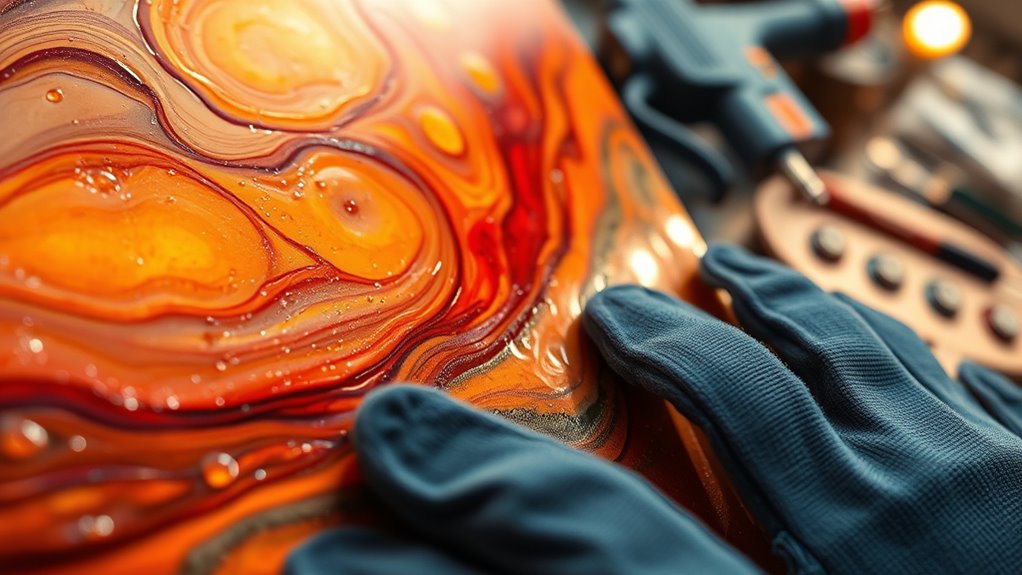
Working with encaustic art presents unique challenges, but understanding these hurdles can help you achieve better results. One key challenge is temperature control; maintaining the right heat ensures your wax flows smoothly without burning or cracking. Use a heat gun or iron carefully, adjusting as needed.
Master temperature control to keep encaustic wax flowing smoothly and prevent cracks or burns.
Surface preparation is equally important—your substrate must be clean, smooth, and free of dust or oils to ensure proper adhesion. Applying a proper primer or gesso can enhance surface readiness.
Additionally, work in a well-ventilated space to manage fumes and prevent overheating. Keep your tools clean to avoid wax buildup.
With attention to temperature control and surface preparation, you’ll find working with encaustic becomes more manageable, leading to vibrant, durable artworks.
Innovations and Modern Twists in Encaustic Practice
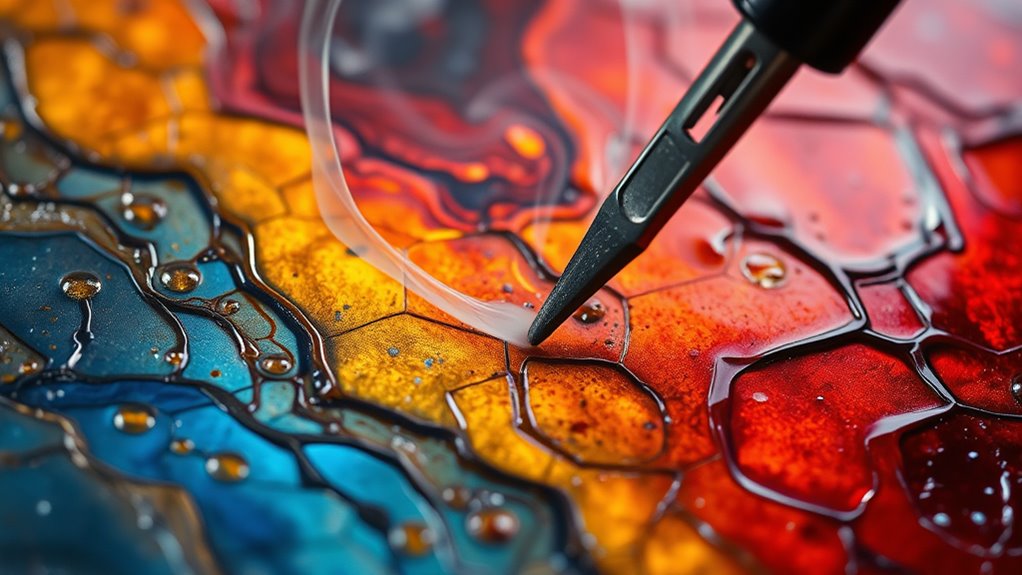
Innovations in encaustic art are transforming traditional techniques and expanding creative possibilities. Digital integration allows you to combine encaustic with photography, digital prints, and other media, creating layered, multidimensional pieces. Artists now experiment with apps to design digital images that are then transferred onto wax surfaces, blending old and new methods seamlessly. Mixed media approaches enable you to incorporate textiles, found objects, and even electronic components, pushing the boundaries of encaustic’s expressive potential. These modern twists not only enhance visual complexity but also make encaustic more accessible and versatile. Consecration in the context of art embodies the dedication of materials and practices for sacred or meaningful creative expression. Incorporating innovative techniques helps artists explore new textures, techniques, and concepts, keeping encaustic relevant in contemporary art scenes while honoring its ancient roots. Additionally, embracing technological advancements opens up new avenues for experimentation and audience engagement.
Notable Artists Who Master Encaustic Art Today
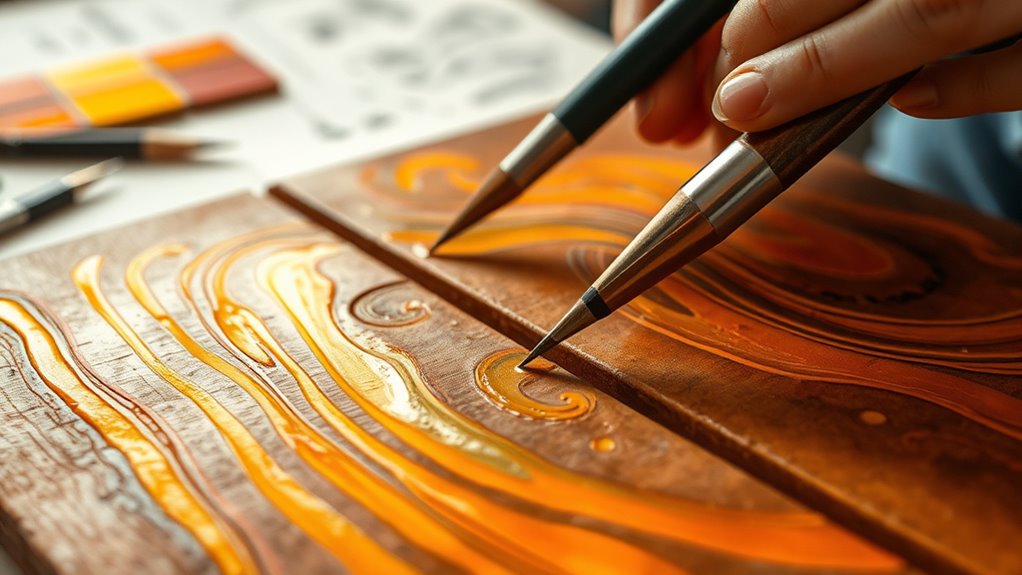
Today, several contemporary artists are pushing the boundaries of encaustic art with innovative techniques and bold visions. Their works showcase a wide range of styles, from abstract to figurative, inspiring new appreciation for this ancient medium.
Exploring these masters’ creations helps you understand how encaustic art continues to evolve and captivate audiences.
Contemporary Encaustic Innovators
Several contemporary artists have elevated encaustic art to new heights with their inventive techniques and bold visions. They blend traditional methods with modern innovations like digital techniques and mixed media, creating dynamic works that push boundaries. These artists experiment with layering translucent wax, embedding photographs, or incorporating everyday objects to craft textured, multidimensional pieces. Their mastery transforms encaustic from a historic craft into a versatile, contemporary medium. Imagine a piece where luminous wax layers intertwine with digital prints, or where textured surfaces evoke natural landscapes. Their work invites you to see encaustic as not just an ancient technique but a living, evolving art form. Here’s a glimpse of their visionary approach:
| Digital techniques | Mixed media | Textural innovation |
|---|---|---|
| Photographic transfers | Wax and fabric | Layered surfaces |
| Digital collages | Embedded objects | Tactile contrasts |
| Projection art | Collage elements | Sculptural effects |
Renowned Artists’ Works
Contemporary encaustic artists have gained recognition for their mastery and unique approaches, transforming traditional techniques into compelling modern expressions. Many renowned artists incorporate mixed media elements, blending wax with materials like paper, fabric, and found objects to add depth and texture.
They expertly use color layering, building vibrant, complex surfaces that invite close inspection. These artists push boundaries by experimenting with transparency, translucency, and surface effects, creating dynamic visual stories.
Their works often evoke emotion and provoke thought, showcasing encaustic’s versatility. You can explore their portfolios to see how they combine ancient methods with contemporary concepts, making encaustic art both innovative and deeply rooted in tradition.
Their creations highlight the endless possibilities that arise when skill meets creative exploration.
Future Trends and Opportunities in Encaustic Art
As encaustic art continues to evolve, emerging technologies and innovative materials are opening new creative avenues for artists. Digital integration is transforming how you plan, design, and share your work, enabling you to experiment virtually before applying wax. This fusion of traditional techniques with digital tools broadens your artistic possibilities and attracts a wider audience.
Additionally, market expansion presents opportunities to showcase your art globally through online platforms and galleries, increasing visibility and sales. As more people discover encaustic art’s unique appeal, new collaborations and educational programs are emerging.
Staying current with these trends allows you to innovate continuously, reach new markets, and elevate your craft. The future of encaustic art lies in blending tradition with technology to inspire fresh creative expressions.
Frequently Asked Questions
How Safe Is Encaustic Art for Beginners and Indoor Use?
Encaustic art can be safe for beginners indoors if you follow proper safety precautions. Always work in a well-ventilated area to avoid inhaling fumes from heated wax.
Use a heat gun or iron carefully, and keep flammable materials away.
Wearing masks and gloves offers extra protection.
With these precautions, you can enjoy creating beautiful encaustic pieces safely and comfortably inside your home.
Can Encaustic Art Be Preserved and Displayed Outdoors?
Yes, you can preserve and display encaustic art outdoors if you guarantee weather resistance and outdoor durability. Use a high-quality, UV-resistant varnish to protect your piece from moisture, sunlight, and temperature changes.
Choose a well-ventilated, covered spot to minimize weather exposure. Regularly inspect and reapply protective coatings as needed.
With proper care, your encaustic artwork can withstand outdoor conditions and remain vibrant over time.
What Are Eco-Friendly Alternatives to Traditional Encaustic Materials?
You can explore eco-friendly alternatives like biodegradable pigments and plant-based waxes for encaustic art. These options reduce environmental impact while maintaining vibrant colors and texture.
Using beeswax substitutes such as soy or candelilla wax helps avoid animal products. By choosing these sustainable materials, you create beautiful, environmentally conscious artwork that aligns with eco-friendly practices and supports a healthier planet.
How Does Encaustic Art Compare to Other Mixed Media Techniques?
You’ll find encaustic art excels in layering textures and color blending, offering rich depth that many mixed media techniques can’t match.
Unlike other methods, encaustic allows you to easily add transparent layers and manipulate surfaces with heat, creating unique visual effects.
Its tactile quality invites exploration, making it ideal if you enjoy combining different textures and achieving seamless color progressions.
Are There Digital or Virtual Methods to Learn Encaustic Art?
Yes, you can learn encaustic art through virtual tutorials and online workshops. These digital methods let you access expert guidance from the comfort of your home, often providing step-by-step instructions and demonstrations.
You’ll find a variety of resources that teach you everything from basic techniques to advanced applications, making it easier to explore encaustic art without needing in-person classes. Just sign up and start experimenting!
Conclusion
Encaustic art’s ancient roots and modern innovations make it an exciting medium to explore. With the right materials and techniques, you can create stunning, textured pieces that stand out. Embrace the challenges, experiment with new styles, and learn from talented artists pushing the boundaries. Whether you’re a beginner or seasoned artist, encaustic offers endless possibilities to express your creativity and connect with a timeless tradition. Immerse yourself and let your imagination heat up!