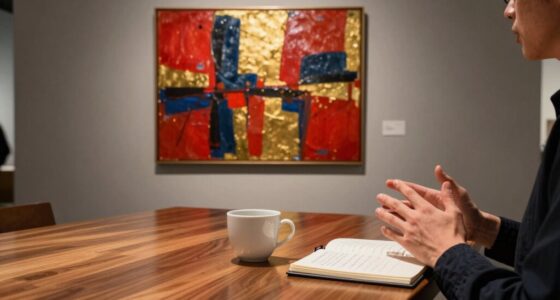
To commission art without awkwardness, start by clarifying your vision and expectations early, using visual tools like mood boards. Research artists carefully, focusing on their style, technique, and past work, and choose someone whose aesthetic aligns with your idea. Communicate clearly and respectfully about your budget and timelines, provide constructive feedback, and stay open-minded throughout revisions. Building trust and appreciating the artist’s expertise create a smooth collaboration—more tips await if you keep exploring.
Key Takeaways
- Clearly communicate your vision, expectations, and budget from the start to prevent misunderstandings.
- Choose an artist whose style aligns with your project by reviewing portfolios and asking questions.
- Maintain respectful, honest, and open dialogue throughout the process to foster trust and collaboration.
- Provide specific, constructive feedback and agree on revisions to ensure the artwork meets your needs.
- Build a positive relationship through appreciation, timely communication, and mutual respect for future projects.
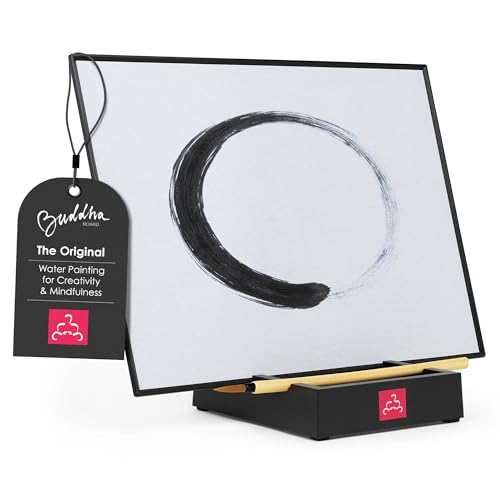
Buddha Board – The Original Water Painting Board for Mindfulness & Creativity – Unique Gift for Artists, Adults & Kids – Mess-Free Zen Art Supplies
RELAX & LET GO – The Original Buddha Board is inspired by Zen mindfulness, helping you unwind, focus,…
As an affiliate, we earn on qualifying purchases.
As an affiliate, we earn on qualifying purchases.
Clarify Your Vision and Expectations

Before reaching out to an artist, it’s crucial to clearly define your vision and expectations. Use visualization techniques to map out your ideas—sketch rough concepts or describe key elements vividly. Creating mood boards can help you assemble images, colors, and styles that resonate with your concept, giving the artist a clear starting point. Be specific about the overall mood, themes, and details you want to see in the final piece. The more precise you are, the easier it is for the artist to understand your vision and deliver accordingly. Remember, establishing this clarity early on prevents misunderstandings and sets a solid foundation for a smooth collaboration. Your detailed preparation ensures your expectations are aligned, making the process more enjoyable for both of you. Incorporating natural elements into your vision can also help create a harmonious and authentic piece that complements your environment. Additionally, understanding the importance of artistic styles can help you communicate more effectively and ensure the final artwork matches your desired aesthetic. Being aware of artistic techniques can further enhance your ability to articulate your preferences and guide the artist in achieving the desired outcome. Moreover, considering client-artist communication strategies can facilitate a more collaborative and transparent creative process. Recognizing the significance of visual language can also improve your ability to convey complex ideas clearly and efficiently.

HOW TO BUILD A DIGITAL ART PORTFOLIO: Crafting a Compelling Visual Resume for Artists
As an affiliate, we earn on qualifying purchases.
As an affiliate, we earn on qualifying purchases.
Research and Choose the Right Artist
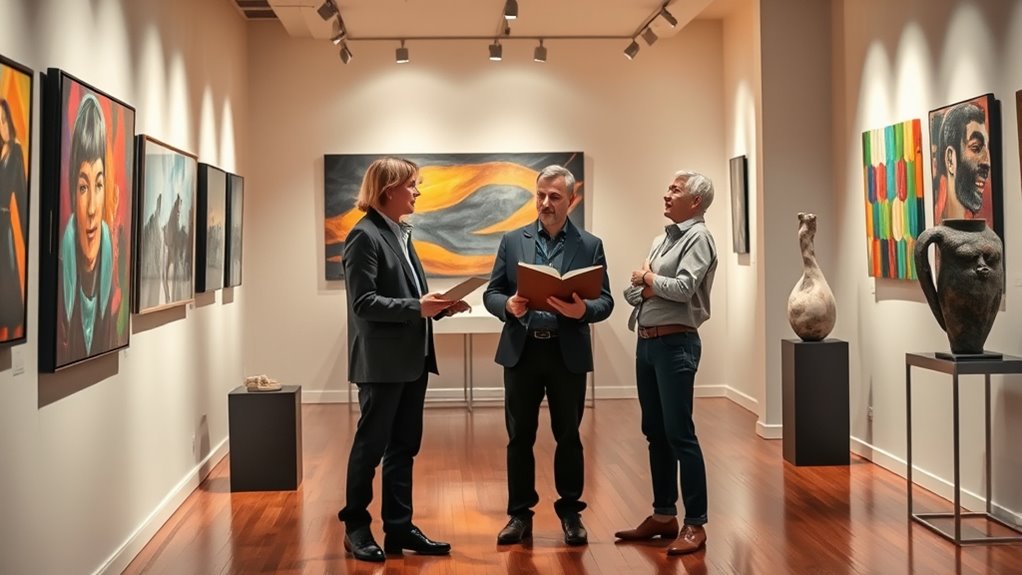
Once you’ve clarified your vision and expectations, the next step is to find an artist whose style aligns with your concept. To do this, explore portfolios online or at local galleries, focusing on pieces that resonate with your artistic inspiration. During portfolio evaluation, pay attention to the artist’s technique, consistency, and versatility. Look for work that matches your desired mood, medium, and level of detail. Don’t hesitate to reach out with questions about their process or previous projects. Finding the right artist isn’t just about skill; it’s about feeling confident they understand your vision and can bring it to life authentically. Take your time, compare options, and choose someone whose style naturally complements your project.

Trees of the West: An Artist’s Guide
As an affiliate, we earn on qualifying purchases.
As an affiliate, we earn on qualifying purchases.
Communicate Clearly and Respectfully

To guarantee a smooth collaboration, you need to set clear expectations from the start. Speak honestly and directly about your vision and deadlines, but always keep your tone respectful. This approach helps build trust and keeps the process comfortable for both you and the artist. Being aware of odor indicators can also help ensure clarity during the project, especially if visual elements involve themes related to scent or atmosphere. Additionally, understanding projector specifications can aid in discussing technical requirements effectively. Knowing the horsepower of electric dirt bikes can provide insight into the power and performance of the artwork’s subject matter, especially if it involves dynamic or energetic themes. Furthermore, considering wave and wind patterns can be important when collaborating on projects that involve natural elements or themes of movement.
Set Clear Expectations
Clear communication is essential when setting expectations for an art commission. You want to establish a solid foundation for creative collaboration by sharing your ideas and understanding the artist’s artistic vision. Be specific about your desired style, color palette, and any key details that matter most to you. This helps prevent misunderstandings and guarantees everyone is on the same page from the start. Don’t hesitate to ask questions or clarify aspects of the project. Likewise, listen carefully to the artist’s input and limitations. By openly discussing your expectations and respecting the artist’s expertise, you create a smoother process and foster mutual trust. Clear, respectful communication keeps the project aligned with your vision while allowing the artist the freedom to deliver their best work. Additionally, understanding the auditory processing involved in communication can improve how both parties interpret and respond to feedback, ensuring a more effective collaboration.
Maintain Respectful Tone
Maintaining a respectful tone is essential throughout the commissioning process, as it helps foster positive communication and collaboration. When you engage in collaborative brainstorming, approach ideas with kindness and openness, showing appreciation for the artist’s creative process. Respectful communication encourages artistic inspiration to flow freely and makes discussions more productive. Avoid dismissive language or unrealistic demands; instead, express your thoughts clearly and kindly. Remember, artists value clients who listen and respect their expertise. If you have concerns or suggestions, share them thoughtfully, emphasizing your appreciation for their talent. This respectful approach builds trust, ensuring both parties feel valued and understood. Ultimately, maintaining a respectful tone keeps the process smooth, enjoyable, and conducive to creating artwork you’ll love.

FEEDBACK SPORTS | Team Edition Bike Tool Kit | 19 Piece/25 Function Bicycle Repair Set | Professional Grade | Protective Portable and Compact Carry Case
25 FUNCTIONS IN 19 PROFESSIONAL-GRADE TOOLS: Designed specifically for bicycles, this comprehensive tool kit includes Allen wrenches, torx…
As an affiliate, we earn on qualifying purchases.
As an affiliate, we earn on qualifying purchases.
Discuss Budget and Payment Terms Upfront

Talking about your budget early helps set clear payment expectations for both of you. Be upfront about your limits to avoid surprises later on. This way, you can make sure everyone’s on the same page from the start. Understanding your interest rate and how it affects your payments can help you plan more accurately.
Clear Payment Expectations
Before starting the project, it is vital to discuss your budget and payment terms openly. Clear payment expectations help establish trust and prevent surprises. Focus on achieving pricing transparency and agree on payment schedules upfront. Consider these points:
- Define a payment schedule that aligns with project milestones
- Clarify whether deposits or full payments are required upfront
- Specify accepted payment methods and deadlines
Being transparent about costs and timing ensures both parties are on the same page. It also builds confidence and reduces the risk of misunderstandings during the creative process. Remember, having these details settled early makes commissioning more straightforward and keeps the focus on creating great art without awkwardness.
Discussing Budget Limits
Once you’ve established clear payment expectations, it’s important to openly discuss your budget limits early on. Being transparent about your budget allows the artist to assess pricing flexibility and suggest options that fit within your means. Use honest negotiating strategies to find common ground—perhaps by adjusting the scope or timeline. Remember, artists often appreciate clients who communicate openly, which can lead to more creative solutions. Clarify payment terms upfront, including deposits, installments, or final payments. This proactive approach prevents misunderstandings and keeps the project on track. Staying flexible and respectful during these discussions fosters trust and demonstrates your commitment to a collaborative process. Additionally, understanding water-related services policies can help maintain transparency and trust in your communications. Ultimately, clear conversations about budget limits set the foundation for a successful, stress-free commissioning experience.
Establish a Timeline and Milestones

Setting a clear timeline and defining key milestones are essential steps to keep your commissioning process on track. This helps manage expectations and guarantees timely delivery. When establishing your schedule, consider contract considerations, such as deadlines and payment schedules. Clarify licensing rights early, so you and the artist agree on usage rights and restrictions. To stay organized, break the process into manageable phases:
- Set initial concept and sketch deadlines
- Schedule regular check-ins for feedback
- Finalize delivery and review dates
Provide Constructive Feedback and Stay Open-Minded
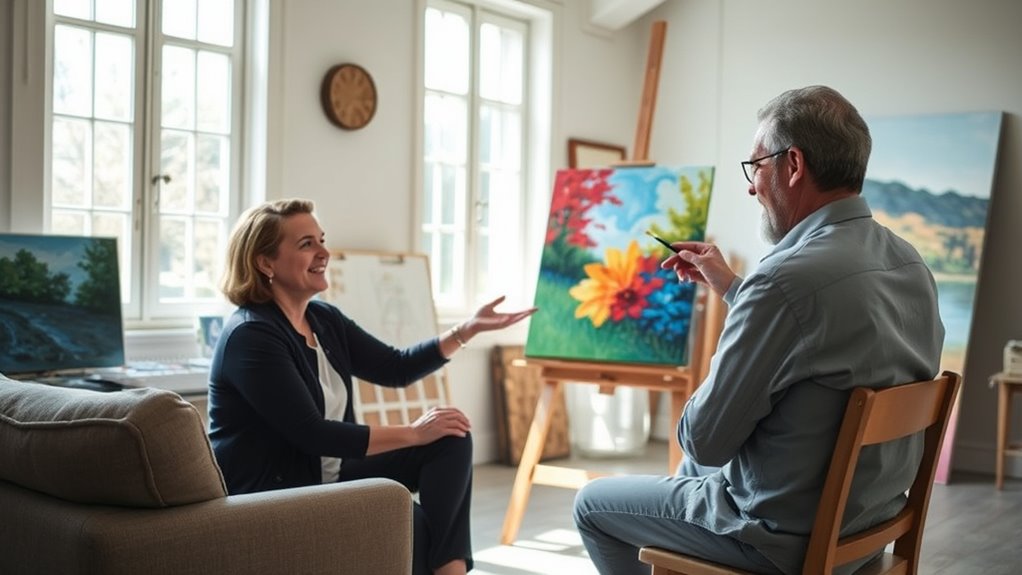
Providing constructive feedback is essential to guiding the artist toward your vision without discouraging creativity. When giving feedback, focus on specific, actionable points rather than vague criticisms. Frame your comments positively, highlighting what works well before suggesting improvements. Remember, constructive criticism isn’t about pointing out faults but helping the artist understand your perspective better. Staying open-minded is equally important; artists may interpret your ideas differently or bring creative solutions you hadn’t considered. Be receptive to their suggestions and trust their expertise. Keep communication respectful and collaborative, fostering an environment where both parties feel comfortable sharing honest opinions. This balance of constructive criticism and open-mindedness ensures the project progresses smoothly and results in artwork that truly aligns with your expectations.
Handle Revisions and Final Approval Gracefully
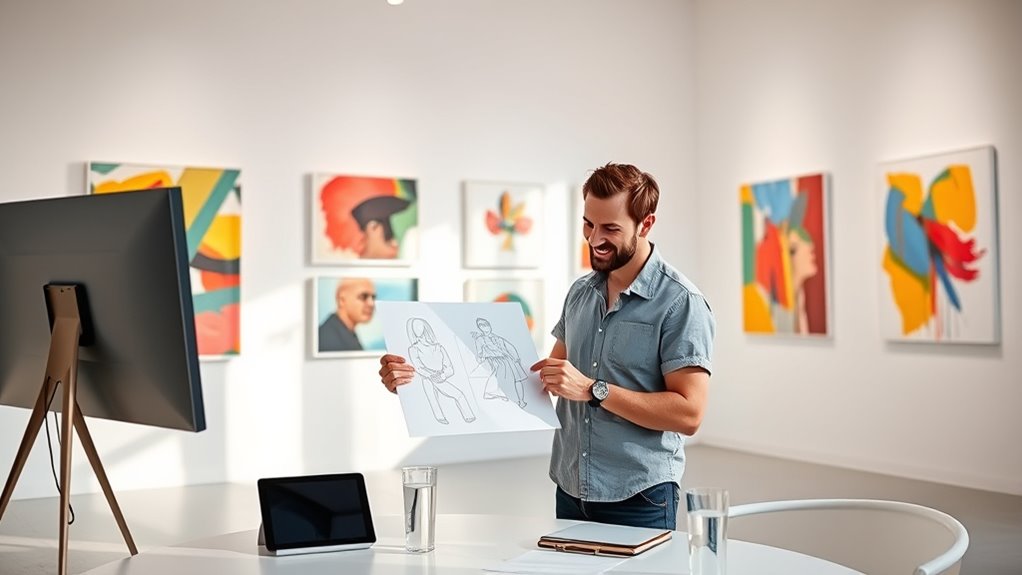
Handling revisions and final approval with grace keeps the project moving smoothly and maintains a positive relationship with the artist. Respect their artistic license, understanding that some revision requests may be necessary but don’t diminish their creative vision. When providing feedback:
- Clearly specify what needs changing, focusing on your vision rather than personal preferences.
- Keep revision requests constructive and respectful to avoid misunderstandings.
- Allow room for the artist’s creative input, trusting their expertise to interpret your suggestions.
Show Appreciation and Maintain a Good Relationship
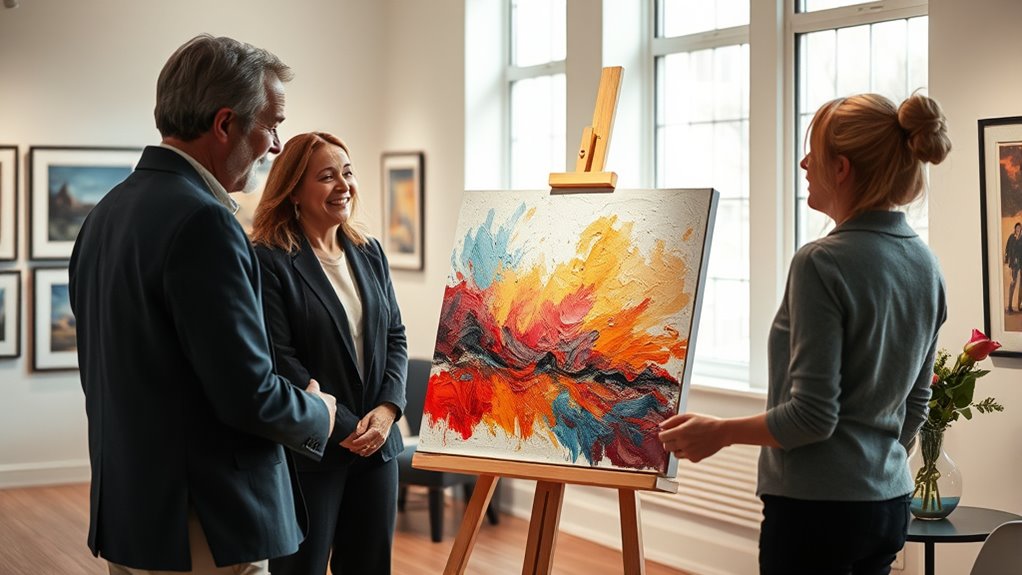
Have you ever noticed that a simple gesture of appreciation can strengthen your relationship with the artist? Showing genuine gratitude builds trust, making collaboration smoother and more enjoyable. A quick thank-you note or a positive comment can go a long way in demonstrating your respect for their effort and talent. When you express gratitude, you foster a sense of trust building that encourages open communication and future collaboration. Remember to be specific about what you appreciate—whether it’s their creativity, professionalism, or patience. Maintaining a good relationship isn’t just about the project at hand; it’s about creating a foundation of mutual respect. Consistently showing appreciation helps keep the partnership positive and productive, making the commissioning process more seamless and enjoyable for both of you. Additionally, understanding trust-building strategies can help ensure ongoing positive interactions and a successful creative partnership. Incorporating consistent communication can further reinforce trust and understanding over time, especially when mindful of effective communication techniques. Recognizing the importance of relationship maintenance can further strengthen your collaboration and lead to more successful projects in the future. Being aware of market trends and insights, such as recent surges or pump patterns, can also inform more strategic decisions in your collaborations.
Frequently Asked Questions
How Do I Approach Requesting Custom Modifications Politely?
You should use polite language and clear communication when requesting custom modifications. Start by expressing appreciation for the artist’s work, then politely ask if certain changes are possible. Be specific about what you want and avoid sounding demanding. For example, say, “Would you mind making a small adjustment?” This approach shows respect, keeps the conversation friendly, and increases the chances of a positive response without creating awkwardness.
What Are Signs of a Professional vs. Amateur Artist?
You’ll recognize a professional artist by their artistic consistency and clear pricing transparency, showing they value their craft and clients. They respond promptly, communicate openly, and showcase a cohesive portfolio that reflects their style. An amateur might lack these qualities, often displaying inconsistent work or vague pricing. Trust your instincts when their professionalism shines through in every interaction, ensuring a smooth, respectful collaboration.
How Can I Ensure My Feedback Is Constructive and Helpful?
To guarantee your feedback is constructive and helpful, focus on clear communication during artistic collaboration. Use feedback etiquette by being specific, respectful, and balanced—highlight what works and suggest improvements gently. Avoid vague comments; instead, offer actionable suggestions. This approach fosters a positive atmosphere, encourages creativity, and helps the artist understand your vision better, making the whole process smoother and more enjoyable for both of you.
What Should I Do if the Artist Misses a Deadline?
Did you know 78% of project delays stem from miscommunication? If the artist misses a deadline, act immediately with timely communication. Reach out politely to understand the reason and clarify your expectations. Stay flexible but firm, and discuss a new deadline if needed. Setting clear expectations from the start helps prevent this. Keeping open dialogue shows you’re committed, and most artists appreciate the chance to resolve issues quickly.
How Do I Handle Disagreements Over Artistic Interpretation?
When disagreements over artistic interpretation arise, you should prioritize collaborative creativity. Communicate your vision clearly, but respect the artist’s interpretation boundaries. Share specific feedback and ask about their perspective to find common ground. Remember, open dialogue fosters understanding, so stay flexible and patient. By working together, you can reach a compromise that honors both your vision and the artist’s creative expression, resulting in a successful collaboration.
Conclusion
By following this playbook, you’ll turn the art commissioning process into a smooth dance rather than a stumble. Clear communication and mutual respect are the keys that unseal a masterpiece of collaboration. Remember, a good relationship is like a garden—you need to nurture it with appreciation and patience. When you approach each step with openness, you’ll find that creating art together becomes a rewarding journey, not a rocky road.