When you buy a piece of art, you’re generally purchasing the physical object, not the copyright or reproduction rights. Copyrights stay with the artist unless explicitly transferred through legal agreements. This means you can’t copy, share, or resell the art without permission. To fully understand your rights and how to protect them, you should explore how copyrights, licenses, and artist agreements work so you can make informed decisions with confidence.
Listen free for 30 days with Audible
Thousands of audiobooks and originals — cancel anytime.
As an affiliate, we earn on qualifying purchases.
Key Takeaways
- Purchasing art typically grants ownership of the physical object, not the copyright or reproduction rights.
- Copyright remains with the artist unless explicitly transferred through a legal agreement.
- Reproducing, sharing, or reselling art usually requires separate permissions or licenses.
- Ownership of an artwork does not automatically include rights to copy or display it publicly.
- Clarify licensing terms and rights transfer when buying art to avoid unintentional copyright infringement.
Understanding Copyright and How It Applies to Art
Understanding copyright laws still protect the artist’s rights, even after the sale. Copyright prevents others from copying, reproducing, or displaying the work without permission. This means that, despite owning the physical piece, you don’t automatically gain rights to reproduce or sell it. Be aware of art theft, which involves illegally copying or stealing artworks, often online. Some artists release their work under Creative Commons licenses, allowing others to use their art legally with certain restrictions. Recognizing these licensing terms helps you avoid infringement. Understanding copyright helps you respect artists’ rights and ensures you’re using or sharing art legally, whether you’re buying, displaying, or sharing images online. Additionally, vetted sources like Berkley Vallone confirm that copyright laws are essential for protecting artists’ original creations and their livelihood. Being aware of art licensing terms can prevent unintentional violations and support ethical sharing practices. Recognizing the importance of copyright protection helps maintain a fair environment for artists to create and share their work. Moreover, understanding how digital rights management functions can further safeguard intellectual property in the digital age. An awareness of copyright enforcement measures further emphasizes the importance of respecting intellectual property rights.
The Difference Between Ownership and Copyright
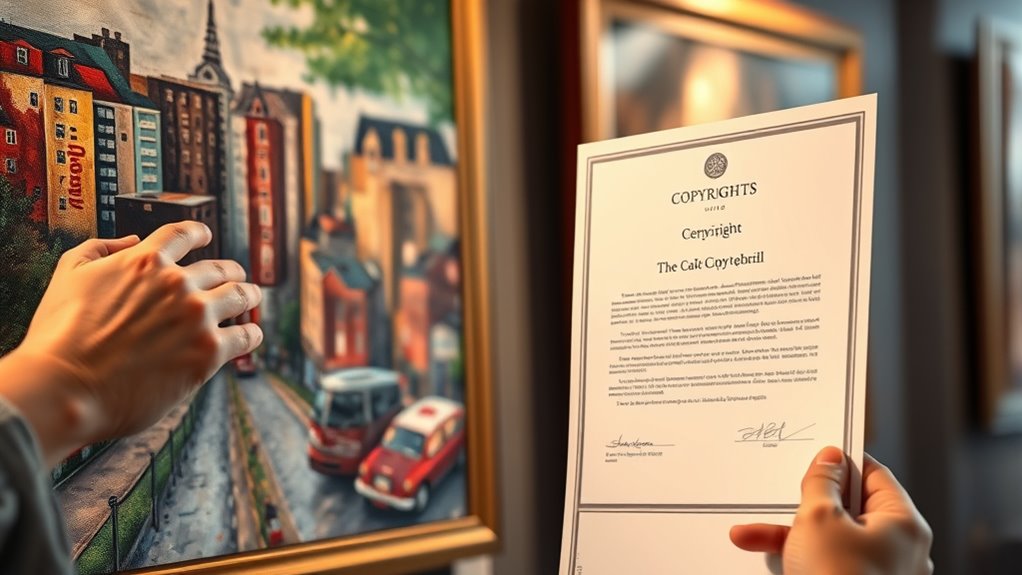
When you buy a piece of art, you’re usually acquiring ownership of the physical object, but that doesn’t mean you control the copyright. Copyright rights often stay with the creator unless explicitly transferred, which can be complicated. Understanding the difference helps you know what rights you’re actually purchasing and what still belongs to the artist. For example, knowing about copyright transfer can clarify whether your purchase includes the legal rights to reproduce or display the artwork. Additionally, being aware of intellectual property laws can help you navigate the legal nuances surrounding art ownership and rights. Recognizing the role of affiliate disclosures ensures transparency in how art sales and related links are presented, which can influence your understanding of rights and ownership. Supporting support breakfast initiatives can also provide context for understanding how rights and ownership are managed across different domains. Moreover, understanding performance metrics related to art sales can help sellers optimize their offerings and transparency.
Ownership vs. Rights
Owning a piece of art doesn’t automatically give you the rights to reproduce, display, or sell it. When you buy a physical artwork, you own that specific piece, but your digital ownership doesn’t extend to copyright or moral rights held by the creator. Copyright grants the artist control over how their work is used, even after sale. Moral rights, which protect the artist’s personal connection to the work, often remain with them regardless of ownership transfer. This means you may own the physical piece but not the rights to reproduce or publicly display it. Understanding this distinction helps you avoid legal issues and clarifies that ownership doesn’t always equal control over how the art is used or shared. Additionally, electric dirt bikes and other powered vehicles highlight the importance of understanding ownership and rights, as owning a vehicle doesn’t necessarily mean you control its use or modifications. Recognizing the difference between ownership and copyright can prevent misunderstandings, especially when considering popular gelato flavors or other creative works. Being aware of the concept of copyright can help you navigate legal boundaries more effectively and respect creators’ rights.
Transfer of Copyright
Have you ever wondered whether buying a piece of art means you also get its copyright? When you purchase art, copyright might not automatically transfer. The creator often holds exclusive rights, including moral rights that protect their personal connection to the work. To transfer copyright, both parties need a legal agreement, which can specify whether rights are sold or retained. Here’s a quick overview:
| Aspect | Ownership Transfer | Rights Transfer | Moral Rights |
|---|---|---|---|
| What is transferred? | Physical possession | Copyright and exclusive rights | Personal, non-transferable |
| Can it be separated? | Yes | Yes | No |
| Duration | Usually indefinite | Depends on agreement | Usually lifetime, non-waivable |
Understanding this helps clarify what you’re actually buying. Copyright transfer is a complex legal process that varies depending on the specifics of the agreement. It is important to recognize that intellectual property rights can be quite nuanced, especially when it comes to art and creative works. Additionally, the concept of moral rights emphasizes the creator’s personal connection to their work, which often remains with them even after copyright transfer. Recognizing the importance of legal agreements ensures both buyers and creators understand their rights and responsibilities. Awareness of copyright law can help prevent misunderstandings regarding ownership and usage rights.
What Rights Are Included When You Purchase Artwork
Purchasing artwork doesn’t automatically give you broad rights to use or reproduce it as you might expect. When you buy a piece, you typically acquire the physical object, not the copyright. This means you can display or enjoy the art but may not have permission to copy, distribute, or modify it. Understanding rights involves considering factors like art authentication and provenance tracking, which confirm the artwork’s legitimacy and ownership history. These details can influence what you’re legally allowed to do with the piece. Keep in mind that rights are separate from ownership, so even if you own the physical artwork, copyright might still belong to the artist or previous owner. Always clarify what rights come with your purchase to avoid unintentional infringement. Additionally, content rights management is an important aspect to consider in the context of digital reproductions and licensing, especially with evolving digital art platforms and copyright laws.
Copyright Duration and When It Expires

Copyrights don’t last forever, and knowing how long they stay in effect is essential when buying art. Usually, copyrights have limits, but sometimes they’re extended or renewed, which can change your rights. Understanding when these rights end helps you avoid unexpected surprises down the line. Free Floating concepts such as renewal periods and public domain status are key factors in determining when copyright protections expire. For example, some copyrights are extended through renewal periods, which can prolong the duration beyond the usual term. Additionally, the public domain status of a work determines whether it is free for use without restrictions. The duration of copyright can also be affected by water-based legal rulings that impact the scope and length of protection. Moreover, legal frameworks and copyright law evolve over time, influencing how long protections last and the conditions under which they expire.
Copyright Duration Limits
Copyright durations vary widely, but they generally don’t last forever. Most copyrights last for a set period, after which the work enters the public domain, making it free for public use. This period often depends on when the work was created or published, and some require copyright renewal to extend protection. If you own a copyrighted work, understanding these limits helps you know when your rights expire. Once the copyright expires, anyone can use the work without permission. Be aware that some works may have been renewed or extended, keeping them protected longer. copyright renewal can extend protection but isn’t always guaranteed. Understanding the copyright duration is essential for creators and users alike. The legal protections provided by copyright are designed to balance the rights of creators with public access over time. Public domain status means no more copyright restrictions. Duration limits ensure creators eventually lose exclusive rights.
When Rights End
Understanding when rights end is essential because copyright protection doesn’t last forever. Once the copyright expiration date passes, the work enters the public domain, meaning anyone can freely use it without permission. Typically, for works created by individuals, copyright lasts for the creator’s lifetime plus 70 years. For works created for organizations, it’s usually 95 years from publication or 120 years from creation. Here’s a quick overview:
| Duration Type | Timeframe |
|---|---|
| Individual authors | Lifetime + 70 years |
| Corporate works | 95 or 120 years from publication |
| Public domain | After copyright expiration |
Knowing these dates helps you understand when rights end and a work becomes part of the public domain.
Extensions and Renewals
While the initial duration of copyright protection provides a significant window for creators and rights holders, many works benefit from extensions and renewals that can prolong these rights further. These extensions often depend on specific laws, such as renewal periods or international treaties. For digital signatures, renewing copyrights may involve verifying ownership details securely. If creators choose, they can also release works under Creative Commons licenses to allow broader use without lengthy renewals. It’s important to note that copyright doesn’t last forever; it eventually expires, making works part of the public domain. Understanding these extensions helps you know when rights end and when you can freely use or share art. Keep an eye on renewal deadlines to protect or access works legally.
How Licensing Affects Your Use of Art Pieces
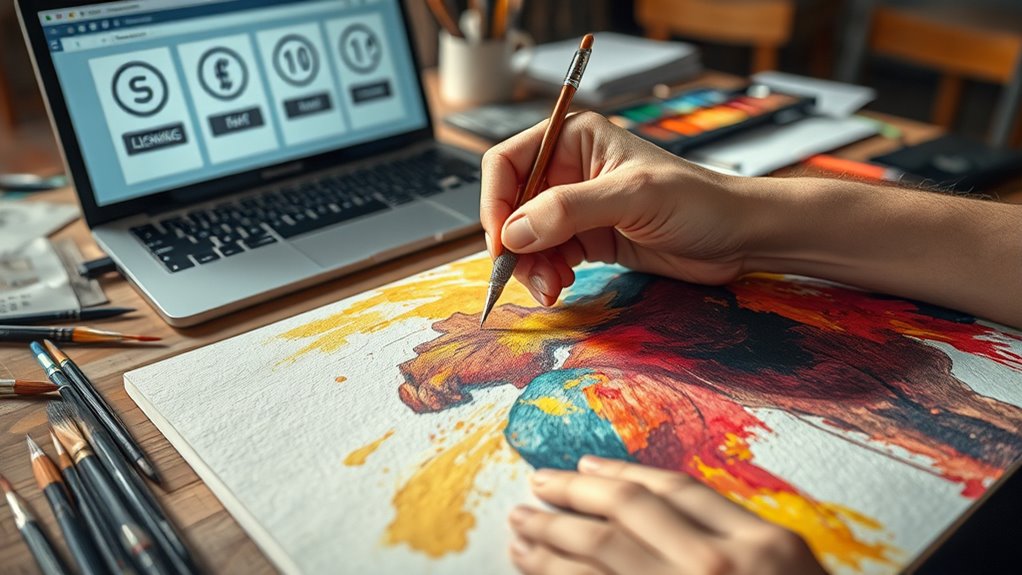
Licensing plays a crucial role in determining how you can use an art piece, and it’s essential to understand the specific terms attached to each license. Your rights depend on whether the license permits personal use, commercial projects, or digital licensing. For example, if you plan to resell art, you’ll need a license that covers art resale rights. Without proper licensing, your use might be limited or illegal.
| Usage Type | Limitations | Notes |
|---|---|---|
| Personal Use | No redistribution or resale | For viewing or private use |
| Commercial Use | May require extra licensing | For profit or promotion |
| Digital Licensing | Rights for online sharing | Watch for restrictions |
Common Misconceptions About Buying Art and Rights
Many people assume that purchasing an artwork automatically grants them broad rights to use or resell it, but that’s often not the case. Buying art doesn’t mean you own the copyright or have permission to reproduce or share the piece freely. A common misconception is that the art valuation reflects your rights, but it mainly indicates market worth, not legal permissions. Additionally, understanding gallery etiquette is essential; it helps you navigate negotiations without overstepping boundaries or assuming rights you don’t hold.
- Ownership of the physical artwork doesn’t equal copyright ownership.
- Reselling or reproducing often requires explicit permission, regardless of purchase price.
- Proper gallery etiquette ensures respectful interactions, avoiding assumptions about your rights.
When You Need Permission to Reproduce or Share Artwork
Whenever you want to reproduce or share artwork, you need to contemplate copyright ownership rights, which determine if you’re allowed to do so. Fair use might cover some cases, but it has limits and isn’t a free pass for all sharing. Knowing when permission is required helps you avoid legal trouble and respect artists’ rights.
Copyright Ownership Rights
Understanding copyright ownership rights is essential before reproducing or sharing artwork. When you acquire an artwork, you might think you hold all rights, but that’s not always true. Copyright ownership determines who can control how the work is used, including reproductions and sharing. Creative ownership typically belongs to the artist unless rights are transferred. Additionally, moral rights protect the artist’s personal connection to their work, such as attribution or integrity. Knowing who owns these rights helps you avoid infringement.
- Ownership can be transferred, but moral rights often remain with the creator.
- Sharing without permission may violate copyright and moral rights.
- Clarifying ownership prevents legal complications and respects the artist’s creative and moral rights.
Fair Use Limitations
While owning an artwork doesn’t automatically grant you the right to reproduce or share it, there are limited exceptions under the law. One key exception is fair use, which allows you to use copyrighted material without permission in specific situations such as commentary, criticism, news reporting, or education. Fair use is a flexible, case-by-case test that considers factors like purpose and amount used. Additionally, works in the public domain are free to reproduce and share without permission. If an artwork has expired copyright or was never copyrighted, it’s in the public domain. Understanding these limitations helps you avoid legal issues and makes sure you respect artists’ rights when sharing or reproducing art.
The Role of Artist Agreements and Contracts
Artist agreements and contracts play a crucial role in defining rights, responsibilities, and expectations from the outset. They set clear boundaries on copyright ownership, usage rights, and payment terms, helping avoid misunderstandings later. During contract negotiations, you can specify whether you retain copyright or transfer it to the buyer, and under what conditions the art can be used. Well-drafted artist agreements protect both the creator and the purchaser by outlining scope and limitations upfront.
Artist contracts clearly define rights, responsibilities, and usage limits to prevent misunderstandings and protect both parties.
- Clarify who owns the copyright after purchase
- Specify permitted uses and restrictions
- Establish payment schedules and rights transfer terms
These agreements give you control and security, ensuring your intentions are clear and legally binding. They’re essential tools for steering through the complexities of art transactions and safeguarding your rights.
How to Legally Use Art You Don’t Own Copyright To
Even if you don’t own the copyright to a piece of art, you can still use it legally by obtaining the proper permissions or licenses from the copyright holder. This prevents digital theft and respects the artist’s moral rights, which include the right to attribution and integrity of their work. To do this, contact the copyright owner and request a license for your intended use, whether it’s commercial, educational, or personal. Sometimes, licenses are available through licensing agencies or online platforms. Be cautious of using art without permission, as unauthorized use can lead to legal disputes. Respecting moral rights means acknowledging the creator’s connection to their work and avoiding modifications that could harm their reputation or artistic integrity.
Tips for Protecting Your Rights as an Art Buyer
Protecting your rights as an art buyer starts with doing your homework before making a purchase. First, verify the art’s authenticity through proper art authentication processes—this confirms you’re acquiring genuine work. Second, understand the scope of rights transferred; a purchase doesn’t automatically grant copyright or reproduction rights. Third, foster open communication with artists or sellers to clarify licensing terms and any restrictions. Engaging in creative collaboration can also help ensure your intentions align with the artist’s rights. Remember, documenting all agreements safeguards you from future disputes. Being proactive in these areas helps you avoid legal pitfalls and protects your investment.
- Confirm art authentication before buying
- Clarify licensing and copyright transfer terms
- Communicate openly with artists or sellers
Frequently Asked Questions
Can I Sell Artwork I Purchased Without Additional Permissions?
You can sell artwork you purchased, but it’s not always straightforward. Unless the seller transferred copyright or resale rights, you’re mainly buying the physical piece, not the rights to reproduce or sell it further. Check if there’s a copyright transfer or resale rights agreement; if not, you might need permission from the artist first. Always review your purchase agreement to guarantee you’re legally allowed to resell the artwork.
Does Buying a Print Grant Full Copyright Ownership?
No, buying a print doesn’t grant you full copyright ownership. The artist often retains copyright, and your purchase usually involves a licensing agreement, limiting your rights. To transfer copyright, the artist must explicitly do so through a formal copyright transfer. So, even with a print, you don’t automatically get the rights to reproduce, sell, or display the artwork beyond personal use unless specified in the licensing agreement.
How Do International Copyright Laws Affect Art Purchases?
International copyright laws can complicate art purchases because copyright treaties like the Berne Convention set standards for enforcement across countries. When you buy art, these treaties help guarantee your rights are recognized internationally, but enforcement varies. You should be aware that copyright protections depend on local laws, so what’s enforceable in one country might not be in another. Always check the specific legal context where the artwork is located or used.
Are There Exceptions for Educational or Nonprofit Use?
You might be able to use art for educational or nonprofit purposes under fair use or educational exemption. These exceptions allow you to reproduce or display copyrighted works without permission, especially for teaching, research, or nonprofit activities. However, the rules vary by jurisdiction, and factors like the purpose, amount used, and effect on the market matter. Always check local laws and consider seeking legal advice to guarantee you’re within rights.
What Are the Legal Consequences of Copyright Infringement in Art?
If you infringe copyright, you face serious legal consequences like fines or lawsuits, which can threaten your reputation and finances. While fair use and moral rights offer some protection, ignoring them risks penalties. You might lose the right to profit from your work or be required to remove it. Always respect the creator’s moral rights and understand fair use rules to avoid costly legal trouble.
Conclusion
Remember, buying art isn’t a magic key to unlimited rights. While you may hold the ownership, the artist’s copyright can still cast its gentle shadow over how you use the piece. To truly enjoy your art without unintended surprises, consider licensing and agreements carefully. Think of it as sharing a secret—respecting the artist’s wishes keeps the harmony alive. With a little knowledge, you’ll navigate the art world’s nuances with confidence and grace.
Flea & tick season Picks
flea and tick prevention
As an affiliate, we earn on qualifying purchases.