You can’t fully replicate the tactile feel of original surfaces in prints because digital and printing methods can’t capture the subtle irregularities and textures that give artworks their true sensory quality. Scans record visuals but miss physical surface details like bumpiness or roughness. Ink absorption and paper type also influence how textures appear in prints. These limitations mean that the tactile experience is often softened or lost. To understand why this happens and how technology is still improving, keep exploring these challenges.
Listen free for 30 days with Audible
Thousands of audiobooks and originals — cancel anytime.
As an affiliate, we earn on qualifying purchases.
Key Takeaways
- Digital scans capture visual details but cannot replicate physical surface irregularities like bumpiness or roughness.
- Ink absorption and paper properties alter how textures appear, softening or emphasizing surface qualities.
- Printing processes lack the tactile feedback, making texture perception in prints differ from the original surface feel.
- Technological limitations prevent full replication of nuanced surface textures and irregularities.
- External factors like lighting and viewing angles influence how textures are perceived in prints versus originals.
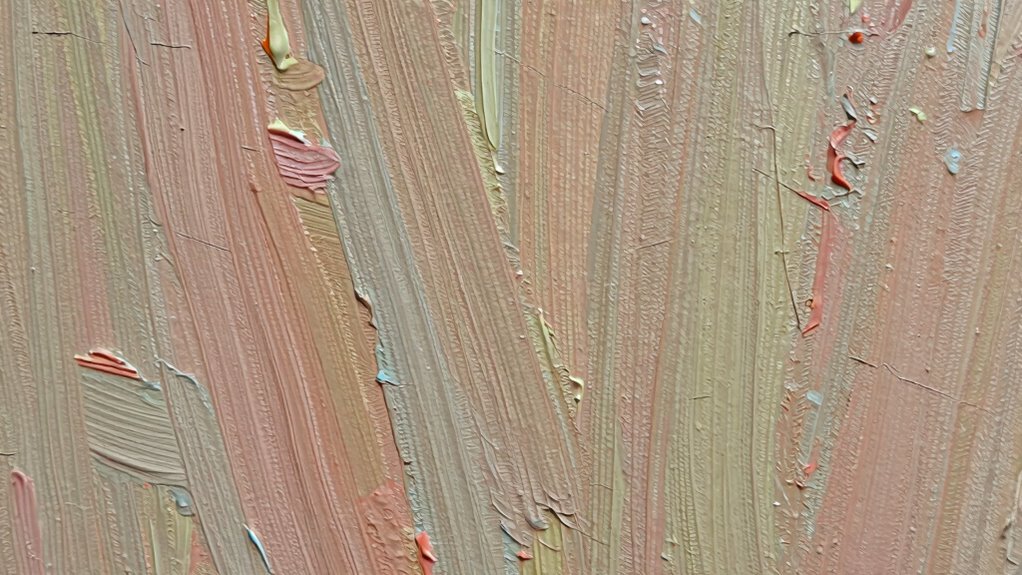
Have you ever wondered how artists and printers manage to capture the rich, tactile qualities of textures in their prints? It’s a fascinating process that involves more than just reproducing an image—it’s about translating the depth, feel, and subtle variations of an original surface onto paper or other mediums. When you look closely at a print, you might notice that it often lacks the nuanced texture of the original artwork. That’s because reproducing texture isn’t just about visual accuracy; it involves complex interactions between digital techniques and physical properties like ink absorption.
Digital scanning plays a huge role in this process. When you scan an artwork, the goal is to capture as much detail as possible, including minute surface irregularities. However, even the best scanners can’t perfectly replicate the tactile qualities of the original surface. They record light, shadow, and color, but they don’t capture the physical bumpiness, roughness, or smoothness. As a result, when the image is printed, the tactile aspect is lost or diminished. The scan serves as a detailed map of visual information, but it doesn’t translate into the actual feel of the surface. This disconnect makes it challenging to faithfully reproduce textures that depend heavily on physical surface qualities. Additionally, the limitations of digital resolution can further impact how well textures are conveyed in prints.
Ink absorption is another critical factor that influences how textures are reproduced in prints. When ink is applied to paper, it interacts with the material’s surface properties. Different papers absorb ink differently, which impacts how textures appear. For instance, a highly absorbent paper might cause ink to spread unevenly, softening the appearance of textures and making them seem flatter. Conversely, a less absorbent surface can hold the ink more precisely, potentially emphasizing the surface’s tactile qualities. But even then, the ink’s behavior—how it soaks in, dries, and settles—affects the final texture. Fine details, such as the roughness of a brushstroke or a textured canvas, can be smoothed out or exaggerated depending on ink absorption. Additionally, advancements in digital reproduction techniques aim to better simulate surface qualities, but still face limitations. The interaction between the physical properties of materials and the printing process further complicates the accurate transfer of textures. Furthermore, innovations like texture mapping are continually being developed to bridge this sensory gap. It’s also important to consider that perception of texture can be significantly influenced by lighting and viewing angles, adding another layer of complexity to the reproduction process.
Because of these factors, the texture in a print will rarely match the original surface exactly. The physical properties of the printing process—digital scanning limitations and ink absorption behaviors—shape how textures are rendered. While digital techniques have advanced considerably, they still struggle to fully replicate the sensory experience of the original. So, when you examine a print, remember that it’s a carefully crafted approximation, shaped by both technological constraints and material interactions, which together influence how textures are conveyed on the printed medium.
artwork texture reproducing tools
As an affiliate, we earn on qualifying purchases.
As an affiliate, we earn on qualifying purchases.
Frequently Asked Questions
How Does Paper Type Affect Texture Reproduction in Prints?
Your choice of paper type considerably impacts texture reproduction in prints because of surface interaction and material properties. Smooth papers enhance fine details, while textured or rough papers emphasize tactile quality. Heavier or thicker papers also influence how ink interacts with the surface, altering the perceived texture. By selecting the right paper, you control how the print’s surface engages with your artwork, ensuring the texture aligns with your creative intent.
Can Digital Editing Enhance Texture Details in Printed Artworks?
Yes, digital enhancement can markedly improve texture clarity in printed artworks. By adjusting contrast, sharpness, and detail levels during editing, you can make textures stand out more vividly. Techniques like high-resolution scans and careful digital retouching help emphasize fine surface details, ensuring that the print captures the richness of the original texture. Just be mindful not to overdo it, so the enhancement remains natural and true to the artwork.
What Printing Techniques Best Capture Surface Textures?
You might think printing can perfectly capture surface textures, but irony is, techniques like surface embossing and matte finishes actually do the best job. Surface embossing elevates tactile qualities, giving depth and dimension, while matte finishes absorb light, highlighting subtle textures. So, instead of glossy prints, opt for these methods—your artwork’s surface will genuinely come alive, even if it’s not quite the same as the original.
How Does Lighting Influence the Perception of Texture in Prints?
Lighting plays a vital role in how you perceive texture in prints. Light interaction highlights surface details, making textures appear more pronounced or subtle. Shadow effects add depth, emphasizing the three-dimensional qualities of the print. When you adjust the angle or intensity of light, you alter how textures are perceived, revealing or softening surface variations. Proper lighting enhances your appreciation of intricate surface details, making textures more vivid and engaging.
Are There Specific Inks That Better Preserve Texture Fidelity?
Sure, some inks are basically the superheroes of texture fidelity. They absorb ink beautifully, preserving delicate surface details, and boost color vibrancy, making textures pop. For instance, UV or pigmented inks excel because they cling well and resist fading, ensuring your print retains the tactile magic of the original. So, if you want your textures to shine in print, pick inks designed for high absorption and vibrant colors—your textures will thank you.
As an affiliate, we earn on qualifying purchases.
Conclusion
When you print textures, remember that up to 70% of the original detail can be lost due to material and ink limitations. This means your vibrant, textured artwork might appear flatter or less intricate in print. So, next time you design, consider how textures translate into print—sometimes, what you see on screen isn’t what you get. Keep experimenting, and you’ll find the perfect balance to bring your textures to life, both digitally and on paper.
As an affiliate, we earn on qualifying purchases.
As an affiliate, we earn on qualifying purchases.
Fall Picks
fall essentials
As an affiliate, we earn on qualifying purchases.