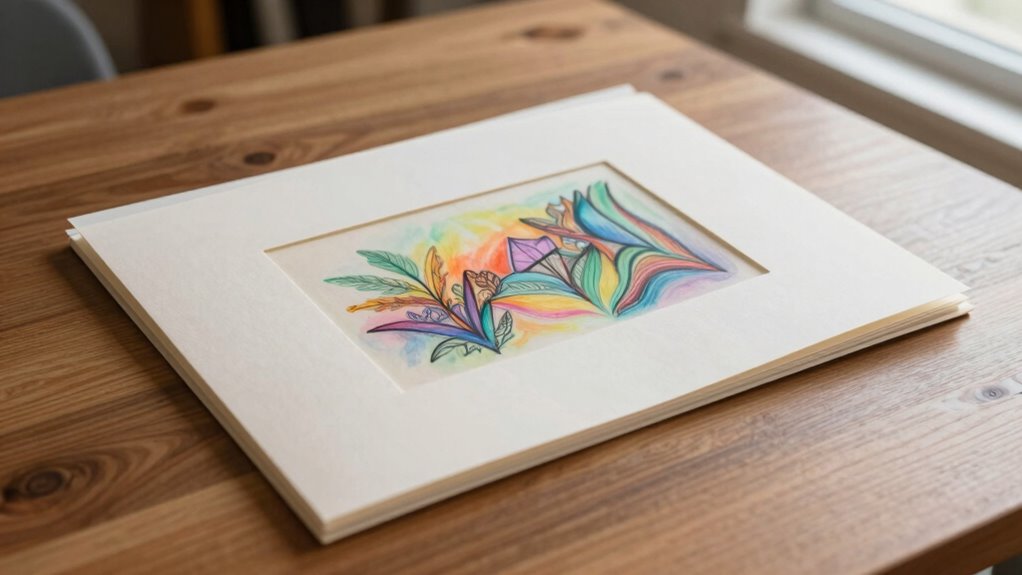

To keep your unframed works safe until you’re ready to display them, store them flat in acid-free folders or tissue paper, protected by rigid backing boards, and place each piece in its own protective sleeve. Maintain a stable, climate-controlled environment with consistent temperatures and humidity. Handle artworks gently, with clean hands or gloves, and avoid exposing them to direct sunlight or harsh lighting. Proper storage and care can prolong their life—stay with us to discover more tips.

Prime made for students and young adults
- Fast, free delivery for dorm and study essentials
- Prime Video and Amazon Music included
- Member-only deals
Key Takeaways
- Store artworks flat in acid-free folders or rigid backing boards to prevent bending or damage.
- Keep artworks in a climate-controlled space with stable temperature and humidity levels.
- Use acid-free, archival-quality protective sleeves or tissue paper between pieces for added protection.
- Handle artworks with clean hands or gloves, holding them by the edges to avoid surface contact.
- Store in a sturdy, flat container away from direct light and environmental fluctuations until display.
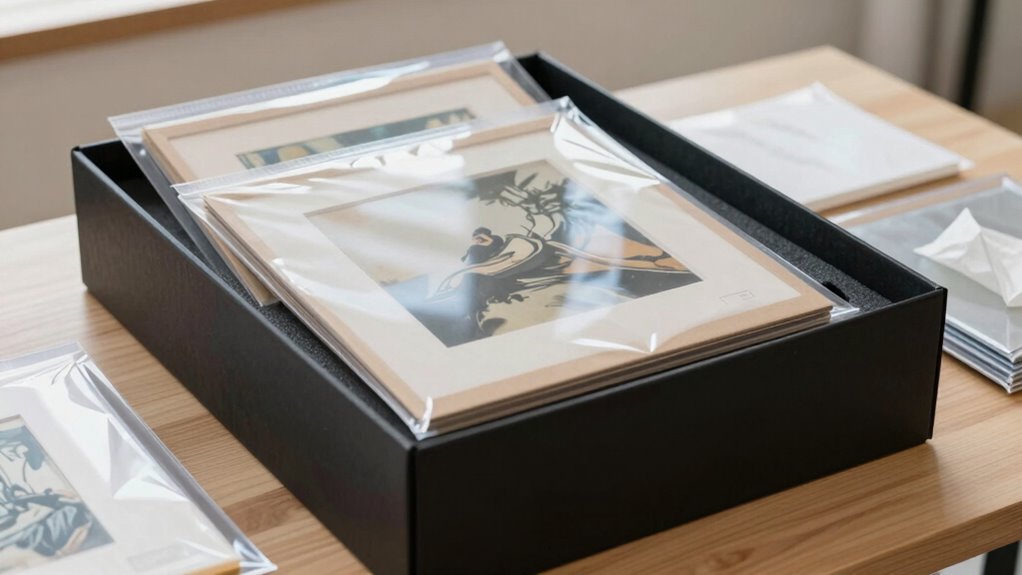
Ever wonder how to protect your unframed artworks from damage? Keeping your pieces safe until you’re ready to display them requires careful planning and attention to detail. The right storage solutions are essential to prevent warping, bending, or accidental tears. You should store unframed works flat whenever possible, especially if they’re on paper or canvas, and use acid-free materials to maintain their condition. Acid-free folders, tissue paper, or rigid backing boards can provide a buffer against environmental fluctuations and physical impacts. Avoid stacking artworks directly on top of each other without protection, as this can cause pressure marks or scratches. Instead, place each piece in its own protective sleeve or between layers of acid-free tissue, then store them in a sturdy, flat storage container. Keeping artworks in a climate-controlled environment minimizes risks related to humidity and temperature changes, which can cause warping or mold growth. Opt for a space where temperature stays around 65-70°F, and humidity remains stable, ideally between 40-50%. This helps preserve the integrity of your unframed works over time. Additionally, understanding environmental control is crucial for maintaining artwork quality during storage. Proper storage techniques can significantly extend the lifespan of your artworks and keep them in pristine condition. Using protective storage materials that are acid-free and archival-quality ensures your pieces are better shielded from environmental damage. Handling precautions are equally important to avoid accidental damage when moving or inspecting your artworks. Always wash your hands thoroughly before touching any piece, or wear clean cotton gloves to prevent transferring oils or dirt. Hold artwork by the edges to avoid pressing on the surface, especially if the piece is on paper or delicate material. Be gentle when lifting or repositioning to prevent tears or creases. When you’re stacking or storing multiple pieces, place protective layers between them, and avoid dragging artworks across surfaces which can cause abrasions. If you need to move a larger or heavier unframed work, get help to support its weight evenly and prevent bending or dropping. Additionally, proper storage environments can help mitigate risks caused by environmental fluctuations. Avoid exposing your artworks to direct sunlight or harsh lighting, as UV rays can cause fading or discoloration over time. Instead, keep them in a dark or dimly lit area until you’re ready to frame or display them.
As an affiliate, we earn on qualifying purchases.
Frequently Asked Questions
What Materials Are Best for Storing Unframed Artwork?
To store unframed artwork safely, use acid-free materials to prevent deterioration and damage. Place your work between sheets of acid-free tissue paper or in archival-quality sleeves, which protect against dirt and moisture. For added protection, store these in a protective box or portfolio with padding to avoid bending or warping. This method guarantees your artwork stays in pristine condition until you’re ready to display it.
How Often Should I Check on Stored Artworks?
You should check your stored artworks every 3 to 6 months to prevent damage. Regular inspections help you monitor storage humidity and identify any signs of deterioration early. Incorporate artwork rotation during these checks to guarantee none stay untouched for too long, which can cause warping or fading. By maintaining consistent humidity levels and monitoring your stored pieces, you guarantee their longevity and keep them in ideal condition until you’re ready to display them.
Can Sunlight Damage Unframed Works During Storage?
Sunlight exposure can damage unframed works even during storage, especially if they’re in direct sunlight. UV rays cause fading, discoloration, and deterioration over time. To safeguard your artwork, keep it in a cool, dark place and use UV protection film or glass if you store them in display areas. Regularly check on your works to make certain they’re shielded from harmful light and environmental factors.
Is It Safe to Store Multiple Artworks Together?
Storing multiple artworks together isn’t rocket science, but it’s close—art stacking can turn into chaos fast. To keep your masterpieces safe, always use protective wrapping between each piece, preventing scratches and smudges. Think of it as giving each artwork its own personal bubble. Without these precautions, your collection risks damage, and your patience wears thin. So, wrap, separate, and store with care—your future gallery will thank you.
What’s the Ideal Temperature for Storing Unframed Art?
You should store unframed art at a consistent temperature between 65-70°F (18-21°C). This range helps prevent warping or cracking, supporting proper art preservation techniques. When considering framing options later, maintaining stable conditions guarantees your artwork stays in prime condition. Avoid storing art in extreme temperatures or humid environments, as these can damage the materials. Proper temperature control is essential for safeguarding your artwork until you’re ready to display it.
archival protective sleeves for artwork
As an affiliate, we earn on qualifying purchases.
As an affiliate, we earn on qualifying purchases.
Conclusion
By handling, storing, and protecting your unframed works carefully, you guarantee they stay pristine and ready for display. Keep them flat, store them in protective materials, and avoid unnecessary exposure to light and moisture. By doing so, you preserve their beauty, maintain their value, and prepare them for the moment you’re ready to share them with the world. Because when you protect your art, you’re not just safeguarding a piece—you’re preserving your passion and creativity.
climate-controlled art storage container
As an affiliate, we earn on qualifying purchases.
As an affiliate, we earn on qualifying purchases.
rigid backing boards for paintings
As an affiliate, we earn on qualifying purchases.
As an affiliate, we earn on qualifying purchases.
Halloween Picks
halloween
As an affiliate, we earn on qualifying purchases.