
Your frame does more than look good—it’s your artwork’s first line of defense. High-quality, acid-free materials and UV-protective glazing prevent deterioration and fading over time. Proper backing offers stability and safety, while climate control and careful sealing safeguard against environmental damage. Avoid shortcuts that compromise protection, and regularly check your framing setup. To ensure your pieces stay preserved long term, understanding what really matters behind the frame is essential—keep exploring to learn more.

Prime made for students and young adults
- Fast, free delivery for dorm and study essentials
- Prime Video and Amazon Music included
- Member-only deals
Key Takeaways
- Proper framing safeguards artwork from physical damage, dust, pollutants, and environmental fluctuations, ensuring long-term preservation.
- Using conservation-grade materials like acid-free backing and UV-filtering glass prevents chemical deterioration and pigment fading.
- Climate control, sealing, and regular maintenance protect framed pieces from humidity, temperature changes, and light exposure.
- Custom and professional framing ensure delicate or valuable items are securely mounted and properly protected for durability.
- Well-maintained frames preserve both the visual integrity and monetary value of artwork over time.
archival acid-free picture framing materials
As an affiliate, we earn on qualifying purchases.
As an affiliate, we earn on qualifying purchases.
Understanding the Role of Framing in Preservation
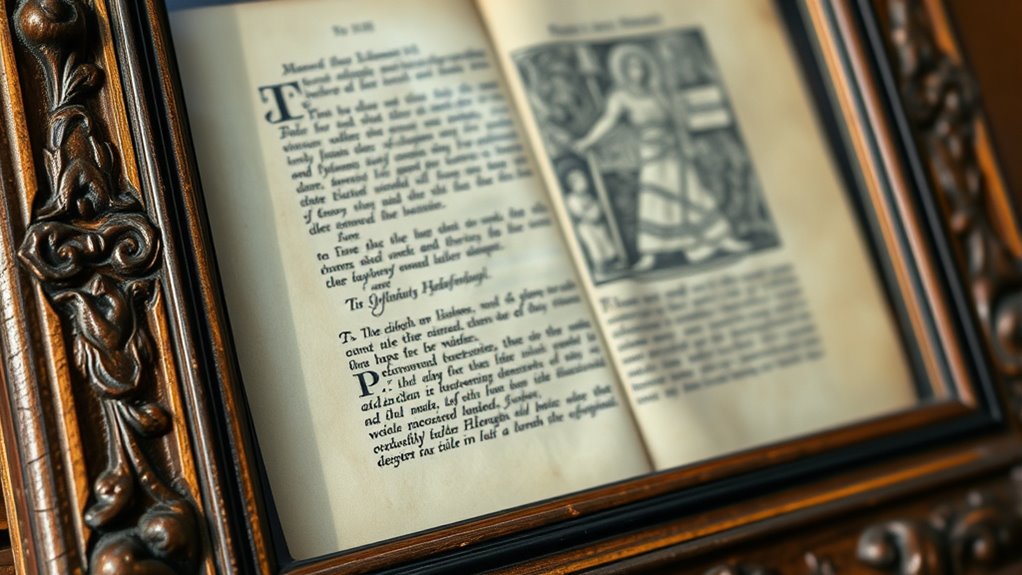
While many see a frame simply as a decorative border, its true purpose is to protect the artwork. Proper framing plays a crucial role in art conservation by preventing physical damage, dust, and pollutants from reaching your piece. It helps maintain structural integrity and reduces exposure to harmful elements, prolonging the artwork’s life. Additionally, framing aesthetics enhance the visual presentation without overshadowing the art itself. When you choose a frame thoughtfully, you’re not just adding style; you’re establishing a protective barrier that supports long-term preservation. Understanding this balance between function and beauty is essential for safeguarding your artwork’s value and integrity over time. A well-chosen frame combines protection with visual harmony, making your art both safe and stunning. Environmental factors and the way materials respond to environmental changes are also critical considerations in the preservation process. Proper framing materials can help mitigate environmental effects, ensuring your artwork remains in optimal condition. Recognizing the importance of material durability can further enhance the longevity of your framed piece.
As an affiliate, we earn on qualifying purchases.
The Importance of Archival Quality Materials
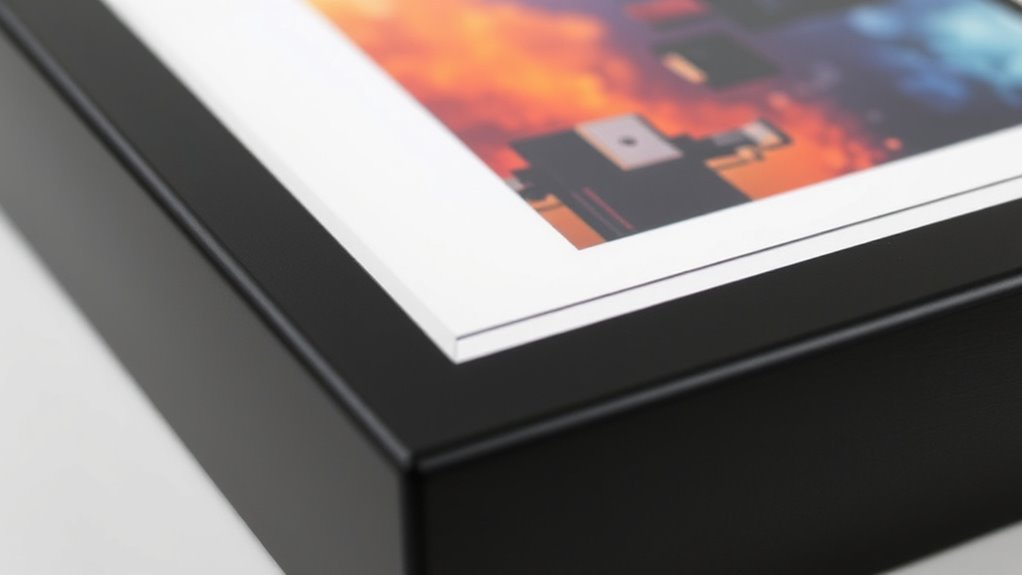
Choosing the right materials for framing isn’t just about appearance; it directly impacts the longevity of your artwork. Archival quality materials, like acid-free matting with matte finishes, prevent deterioration over time. Matte finishes help reduce glare and protect artwork from environmental damage, making them a smart choice for preservation. When selecting frame embellishments, opt for those that are also archival quality—avoiding metals or plastics that may degrade or discolor. Using non-archival materials can accelerate fading, staining, or warping. Your goal should be to create a protective environment that preserves the integrity of your piece, ensuring it looks its best for years to come. Prioritizing Archival quality materials is the most effective way to safeguard your artwork’s value and beauty. Incorporating smart home technology such as climate control systems can further help maintain ideal conditions for your artwork’s preservation, reducing the risk of damage caused by fluctuations in humidity or temperature. Additionally, using acid-free adhesives and mounting techniques can prevent chemical reactions that might harm your artwork over time.
climate control system for art preservation
As an affiliate, we earn on qualifying purchases.
As an affiliate, we earn on qualifying purchases.
UV-Protection and Its Impact on Artwork Longevity
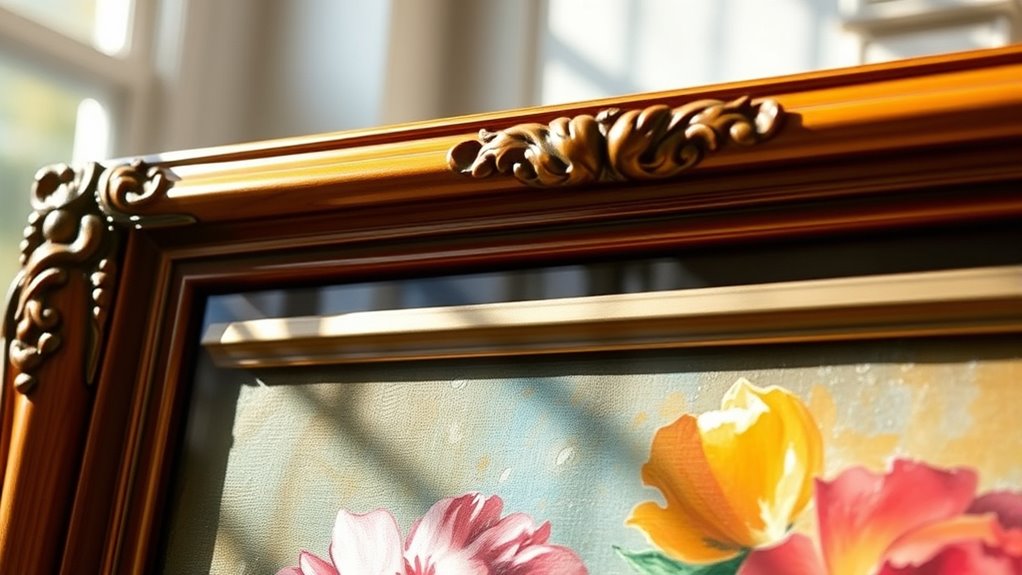
Did you know that ultraviolet (UV) rays can cause significant damage to your artwork over time? UV damage results from prolonged light exposure, breaking down pigments and fading colors. Without proper protection, your artwork becomes vulnerable to deterioration, reducing its visual impact and value. UV rays penetrate glass and acrylic, so even indirect sunlight can harm your pieces. By choosing UV-filtering glazing or using UV-protective coatings, you minimize light exposure and preserve your artwork’s original vibrancy. Protecting against UV damage is essential for maintaining its longevity, especially when displaying art in well-lit areas. UV protection is an important factor in preserving artwork, as it directly impacts their lifespan and appearance. Investing in UV protection isn’t just about safeguarding aesthetics; it’s about ensuring your artwork remains beautiful and intact for years to come. Additionally, understanding light exposure risks helps in selecting appropriate display locations and protective measures to extend your art’s lifespan. Incorporating UV-filtering technology into display cases or windows can further enhance overall protection by reducing harmful UV and visible light without compromising visual clarity. Being aware of artwork preservation techniques can also help you make informed decisions about environmental controls and display options.
professional custom picture framing
As an affiliate, we earn on qualifying purchases.
As an affiliate, we earn on qualifying purchases.
The Significance of Proper Glazing Options
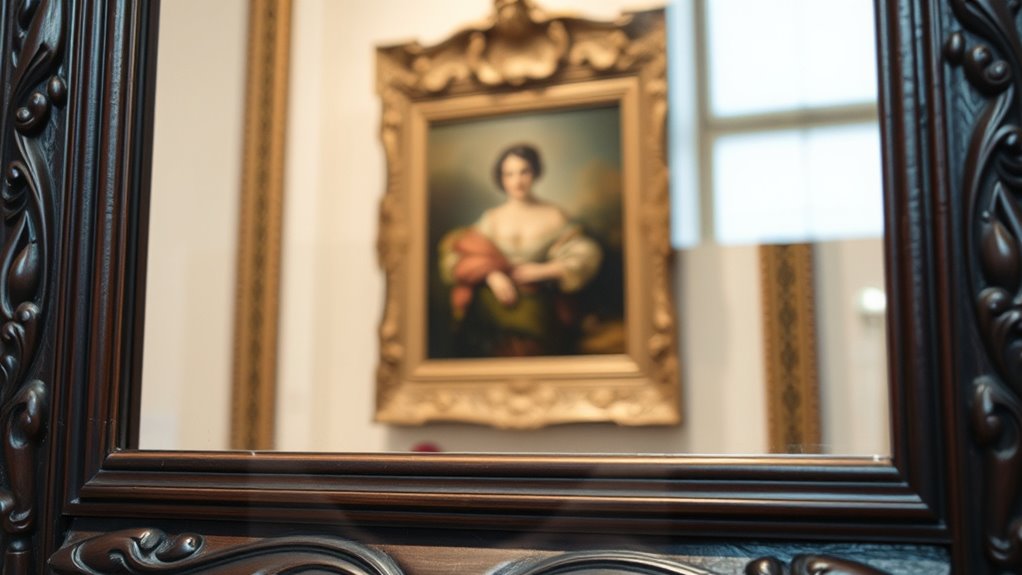
Selecting the right glazing options plays a vital role in protecting your artwork from UV damage and environmental factors. The glass clarity determines how well your piece is viewed without distortion or glare, so choosing high-quality, UV-filtering glass enhances visibility while safeguarding the artwork’s colors. Proper glazing also influences frame aesthetics; clear, well-chosen glass complements the frame without overpowering it, creating a balanced presentation. Different glazing options, such as UV-protective or non-reflective glass, can optimize both protection and appearance. Additionally, glass durability is essential to ensure long-term protection against scratches and impacts, further preserving your art. Considering the environmental factors that may affect your artwork helps you select the most appropriate glazing for your specific conditions. Using appropriate glazing materials that meet industry standards ensures your artwork remains vibrant and secure over time. It’s also important to understand the UV-filtering properties of different glass types to maximize protection. By prioritizing these choices, you guarantee your artwork remains vibrant and secure over time. Remember, the glazing isn’t just a functional layer—it’s an indispensable element that preserves your art’s beauty and integrity.
Choosing the Right Backing for Stability and Safety
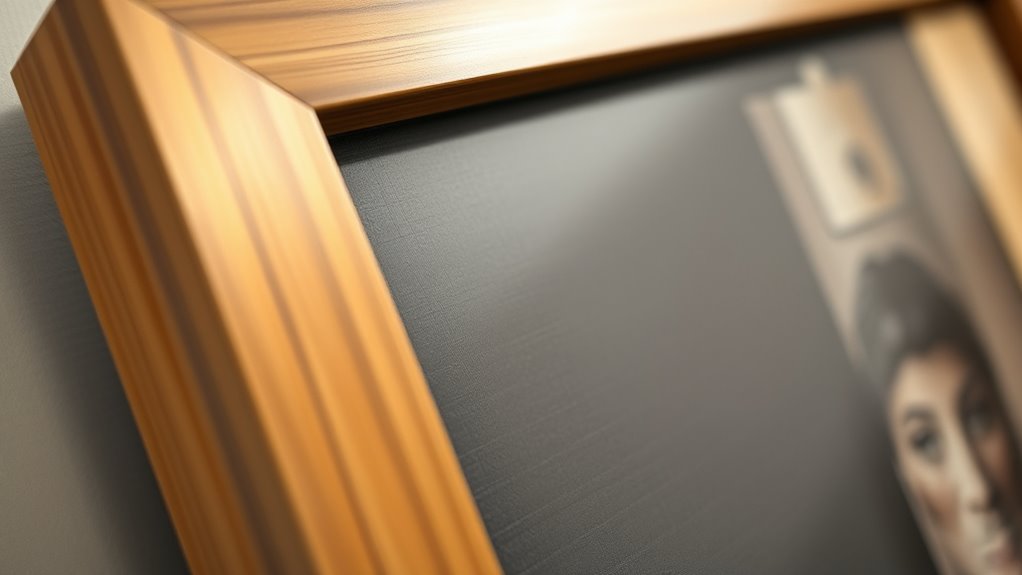
Choosing the right backing is essential for ensuring your frame provides maximum stability and safety. You need to contemplate material durability and support to prevent future damage, as well as proper frame alignment to keep everything secure. When these elements are handled carefully, your display stays protected and looks great for years to come. Incorporating nanomaterial reinforcement can further enhance the structural integrity of your backing, providing advanced protection based on nanotechnology advancements. Additionally, selecting backing materials with good heat resistance can help prevent warping or deterioration over time, especially if the display is exposed to varying environmental conditions. Paying attention to material properties ensures that the backing performs well under different circumstances and maintains its protective qualities over the long term. Furthermore, considering environmental resilience can help your backing withstand humidity, UV exposure, and other environmental factors that could compromise its integrity. Evaluating material compatibility is also key to ensuring the backing works well with other components and adhesives used in your display setup.
Material Durability and Support
When it comes to guaranteeing your artwork stays secure and safe, the backing material plays a crucial role in providing both stability and support. Choosing durable materials helps protect your piece from damage over time, maintaining its value and appearance. The right backing also influences frame aesthetics by complementing or subtly enhancing decorative elements without overpowering the artwork. Consider options like acid-free foam board, wood panels, or conservation-grade cardboard for longevity and support. Here’s a quick comparison:
| Material | Durability | Decorative Compatibility |
|---|---|---|
| Acid-free foam | High | Subtle, versatile |
| Wood panels | Very high | Natural, rustic look |
| Conservation cardboard | Medium to high | Discreet, supportive |
Additionally, selecting supportive backing can help prevent warping or sagging, especially for larger or valuable pieces. Choose wisely to ensure your artwork remains protected and visually appealing.
Proper Frame Alignment
Ensuring proper frame alignment is essential for maintaining the stability and safety of your artwork. When selecting a frame, consider how the matte vs glossy finish impacts the overall look and protection. A matte finish can reduce glare and fingerprints, providing a subtle backdrop that emphasizes the art, while a glossy finish adds vibrancy and depth. Proper alignment also involves choosing a frame color that complements your piece without overpowering it. Misaligned frames can cause stress points, risking damage over time. Make sure your artwork sits flush within the frame, with even spacing and secure backing. This not only enhances visual appeal but also prevents warping or shifting, ensuring your artwork remains protected and stable for years to come.
Sealing and Climate Control Within the Frame
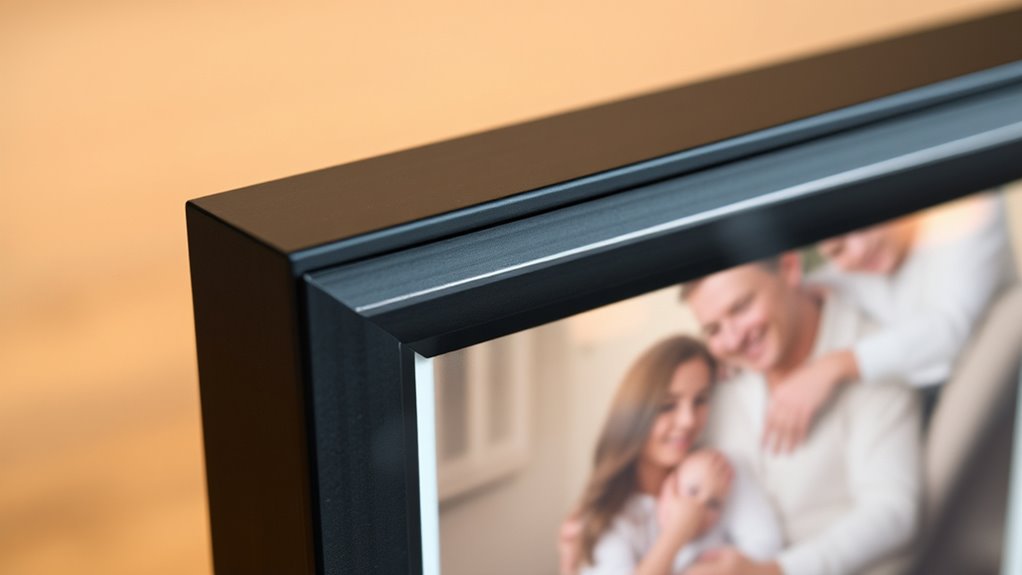
To protect your artwork effectively, you need to focus on proper sealant application to prevent dust and moisture from entering. Managing humidity levels and maintaining temperature stability also play vital roles in preserving your piece over time. Implementing these climate control strategies ensures your artwork stays safe behind the frame. Additionally, incorporating air purifiers into your environment can help reduce airborne pollutants that might settle on or damage your artwork over time. Regularly monitoring climate conditions ensures that your preservation efforts remain effective and consistent. Using smart climate sensors can provide real-time data to optimize storage conditions continuously.
Proper Sealant Application
Applying the right sealant is essential for maintaining climate control and preventing moisture intrusion within the frame. You want a sealant that adheres well and offers a durable barrier, especially if you prefer matte finishes, which complement the frame’s aesthetics without glare or shine. Proper application guarantees no gaps or weak spots, so moisture stays out and temperature stays consistent. Clean surfaces thoroughly before sealing to improve adhesion. Use a consistent bead for even coverage, and smooth it out for a neat finish. Take your time; rushing can lead to leaks or compromised protection. When done correctly, your frame remains both visually appealing and protected against environmental damage, ensuring it functions as intended—more than just decoration, it’s a safeguard.
Humidity Regulation Techniques
Controlling humidity inside the frame is essential for preventing moisture buildup and maintaining a stable environment. To achieve this, you should install effective moisture barriers that block any external humidity from seeping in. These barriers help regulate internal moisture levels and protect delicate contents. Incorporating humidity sensors allows you to monitor moisture levels continuously, giving you real-time data to make informed adjustments. By keeping humidity steady, you reduce the risk of mold, warping, and other damage caused by excess moisture. Ensure the frame is properly sealed and that barriers are airtight to maintain consistent conditions. Regularly checking sensors and adjusting climate controls will help sustain ideal humidity, safeguarding your valuable items over time.
Temperature Stability Strategies
Sealing the frame effectively is crucial for maintaining temperature stability, as it prevents drafts and external air from infiltrating the interior. Proper sealing ensures your artwork remains in a controlled environment, reducing fluctuations that can cause damage. To enhance glass clarity and prevent fogging, consider using matting techniques that create a buffer zone, minimizing direct contact with the glass. These techniques help regulate temperature by reducing heat transfer and humidity changes. Additionally, sealing gaps with appropriate weatherstripping or gasket materials keeps air leaks at bay, maintaining consistent interior conditions. Regularly inspecting and resealing as needed ensures your frame continues protecting the artwork from temperature swings, ultimately preserving its longevity and appearance.
Common Mistakes That Compromise Protection
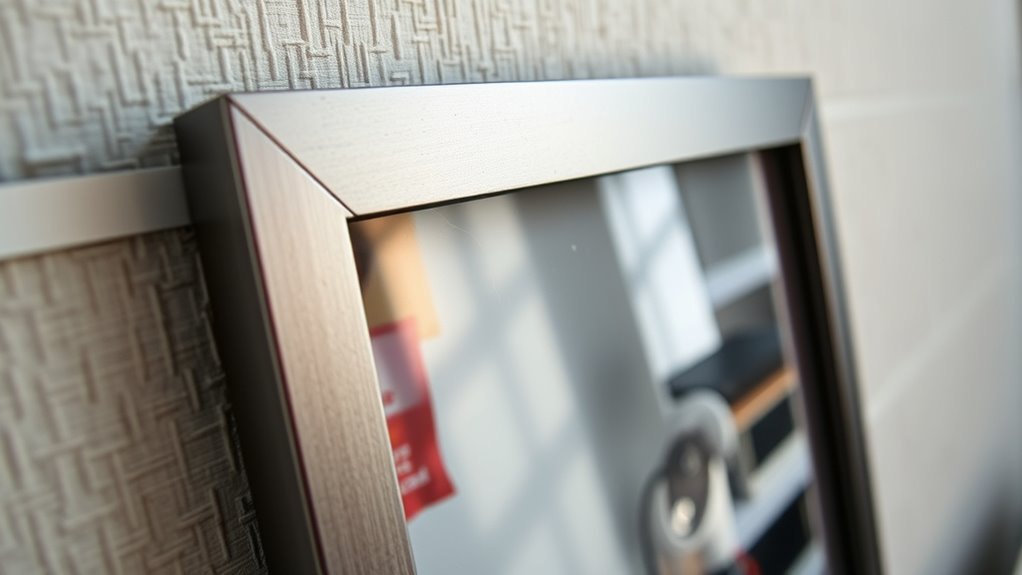
Many homeowners unknowingly weaken their window protection by making simple yet critical mistakes. One common error is choosing a frame color that clashes with the environment or doesn’t suit the home’s overall aesthetic, which can lead to neglect or improper care. Additionally, overemphasizing decorative embellishments can compromise the frame’s structural integrity. These embellishments might look attractive but can create gaps or weak spots vulnerable to damage. Ignoring the importance of a sturdy, well-designed frame in favor of appearance can leave your windows exposed to the elements or impact. Remember, protection isn’t just about looks—it’s about functionality. Prioritize a durable frame with a practical color choice and minimal decorative clutter to ensure your windows remain resilient and effective over time.
How to Assess a Frame’s Protective Capabilities
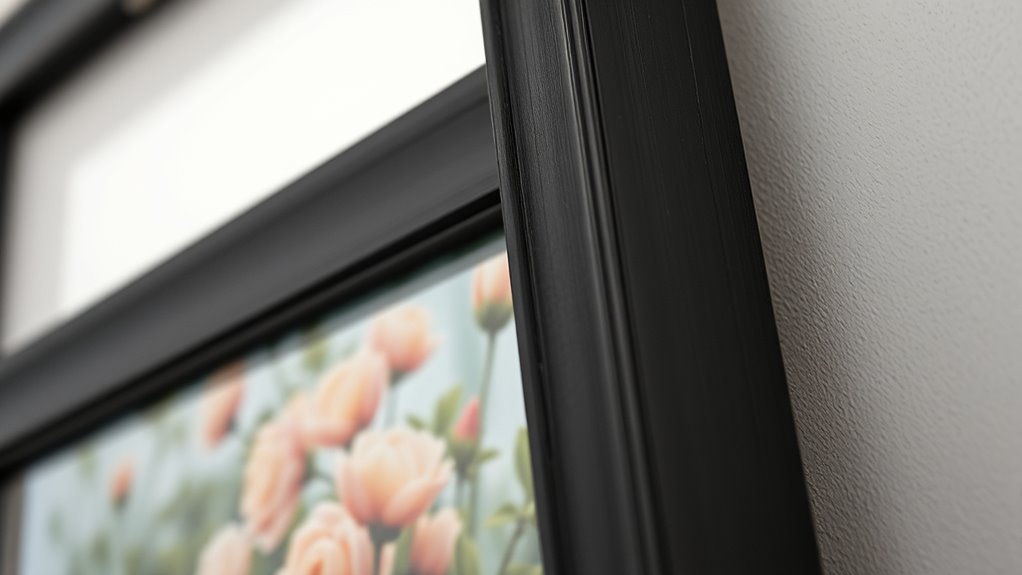
To determine if a window frame offers adequate protection, start by inspecting its physical condition. Look for cracks, warping, or signs of rot that could weaken its structure. Consider how the frame’s aesthetics and decorative molding contribute to its durability—well-crafted moldings often indicate quality craftsmanship. Check if the frame fits snugly within the opening, preventing drafts or intrusions. Evaluate the material—wood, vinyl, or metal—as each offers different levels of protection. Finally, observe the overall alignment and stability of the frame.
Inspect window frames for damage, fit, material, and craftsmanship to ensure reliable protection.
- Check for damage or deterioration
- Assess the fit within the window opening
- Consider the quality of decorative molding
- Review the material’s resilience against elements
Maintaining Your Framed Pieces Over Time
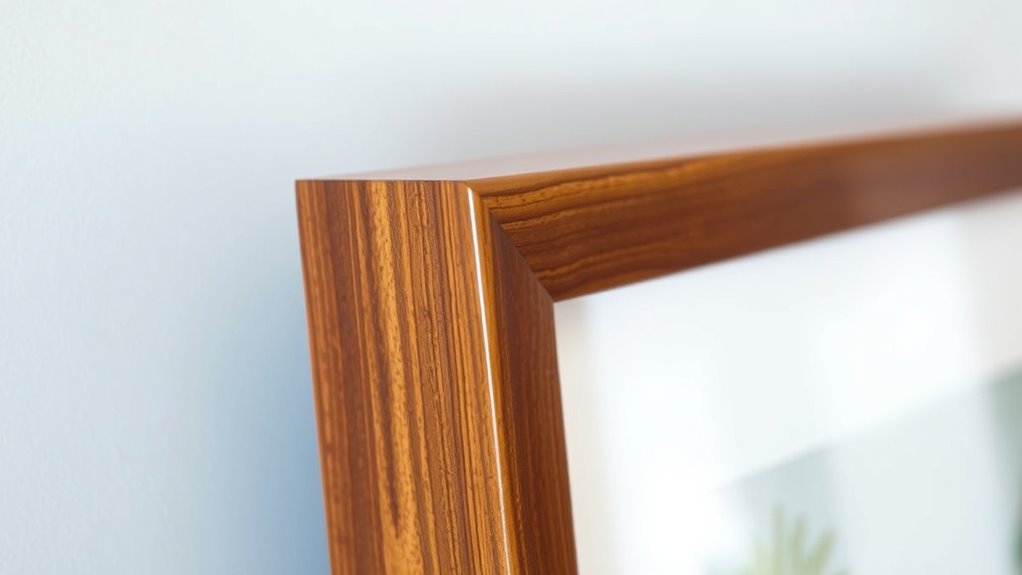
Regular maintenance is essential to guarantee your framed pieces continue to provide protection and aesthetic appeal over time. To preserve frame aesthetics, regularly dust the frame with a soft cloth and check for signs of wear or damage. Keep display arrangements clean and avoid placing framed items in direct sunlight or areas with high humidity, which can cause fading or warping. If you notice any looseness or deterioration, tighten or replace components promptly. Properly maintaining your frames ensures they remain sturdy and visually appealing, protecting your artwork or photos from harm. Rotate or update display arrangements periodically to prevent prolonged exposure to light in one spot. Consistent care not only extends the life of your framed pieces but also keeps your space looking fresh and well-curated.
When to Seek Professional Framing Services
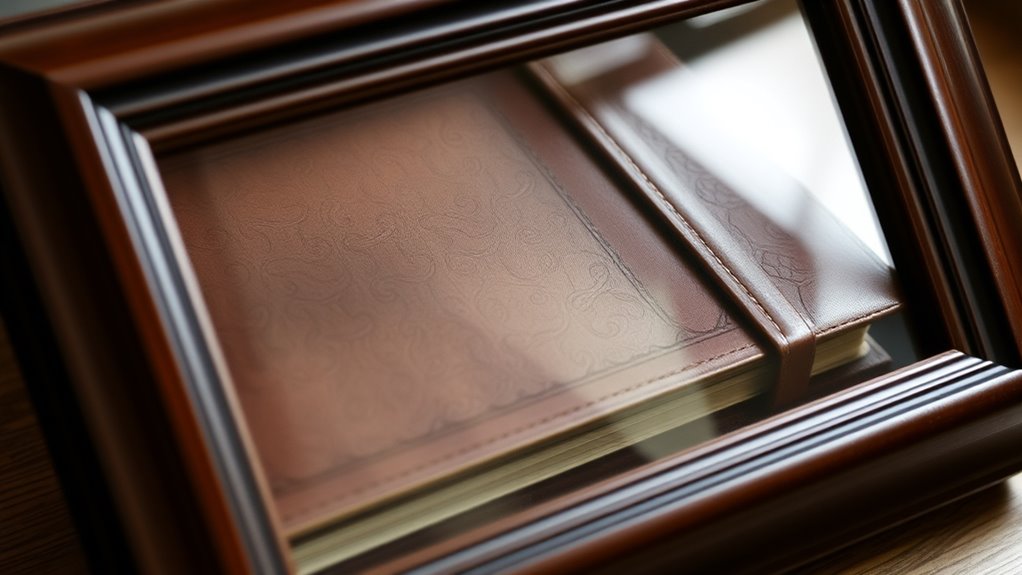
Knowing when to seek professional framing services is essential to guarantee your artwork or photos are properly protected and displayed. If your piece requires frame customization or artistic embellishments that enhance its visual appeal, a professional can ensure these details are expertly handled. Seek expert help when your artwork involves delicate materials, valuable collectibles, or unique dimensions that standard frames can’t accommodate. Professional framers also excel at preserving vintage or fragile items, preventing damage over time. Additionally, if you want a custom design that complements your décor perfectly, professionals can create a tailored solution. Trust their expertise for complex mounting techniques and specialty glass options that improve durability and clarity. Ultimately, investing in professional framing ensures your pieces remain protected and beautifully showcased for years to come.
Frequently Asked Questions
How Do Different Framing Styles Affect Artwork Protection?
Different framing styles impact your artwork’s protection considerably. Choosing the right matting options can prevent direct contact with glass, reducing damage risks. Opt for UV-resistant glass types to shield against fading and environmental harm. You should consider secure, sturdy frames that withstand handling and environmental changes. Ultimately, the combination of suitable matting choices and glass types ensures your artwork stays protected from dust, moisture, and UV damage, preserving its beauty over time.
What Are the Signs of a Frame That’s Failing to Protect?
You’ll notice a failing frame through signs like wobbling or looseness, which indicate poor frame stability. Material deterioration, such as cracks, warping, or peeling paint, also signals that the frame isn’t providing adequate protection anymore. If you see gaps or gaps around the edges or the artwork shifts easily, it’s time to repair or replace the frame to guarantee your artwork stays safe and secure.
Can Framing Techniques Influence Artwork Resale Value?
Framing techniques can markedly boost your artwork’s resale value, like a well-tailored suit enhances confidence. Choosing the right frame color and matting styles complements the piece, making it more appealing to buyers. A carefully selected frame highlights the art’s details, increasing its desirability. By investing in quality framing, you demonstrate its importance, which can lead to higher offers and a quicker sale, ensuring your artwork stays protected and attractive.
How Often Should Framed Pieces Be Inspected for Damage?
You should inspect your framed pieces at least once a year to guarantee proper frame maintenance. Regular inspection frequency helps catch damage like warping, mold, or loose glass early, preventing further issues. Check for signs of deterioration, especially if your artwork is exposed to humidity or sunlight. By staying vigilant and inspecting frequently, you protect your investment and preserve the artwork’s integrity over time.
Are Eco-Friendly Framing Options Available That Enhance Protection?
Absolutely, eco-friendly framing options exist that boost protection and save the planet. You can choose sustainable materials like bamboo, reclaimed wood, or even biodegradable options that break down harmlessly over time. They’re not just good for Mother Earth but also add a charming, rustic touch to your display. So go ahead, protect your art while saving the environment—your walls, and the planet, will thank you.
Conclusion
Remember, a picture is worth a thousand words, but a well-protected one lasts a lifetime. By understanding framing’s true purpose—preservation—you guarantee your artwork stays vibrant and safe. Choose quality materials, proper glazing, and regular maintenance. Don’t cut corners or rush the process. When in doubt, trust the experts. Protect your treasures today, because as the saying goes, “A stitch in time saves nine.” Your art will thank you for it.
Fall Picks
fall essentials
As an affiliate, we earn on qualifying purchases.