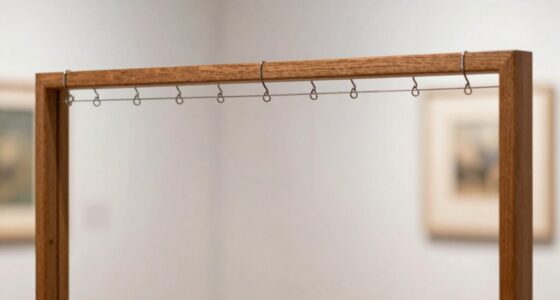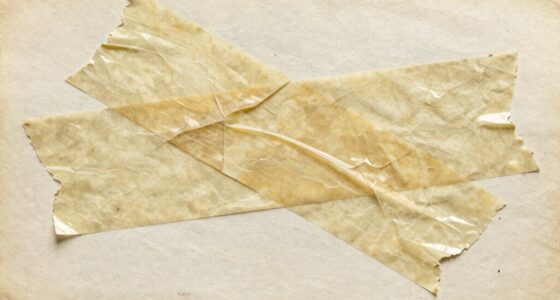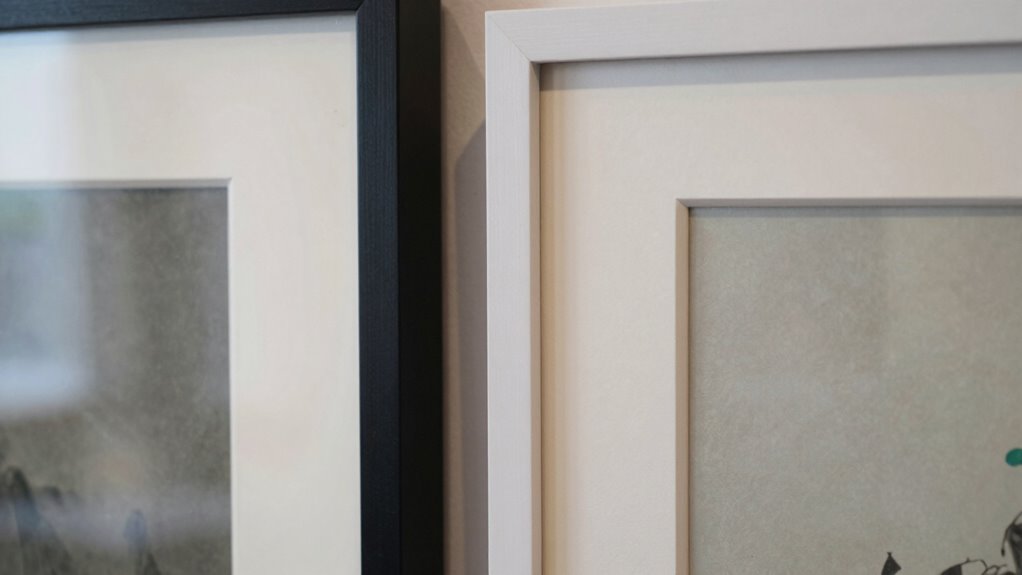

Choosing between cold mounting and dry mounting depends on your artwork and preservation goals. Cold mounting is quick, easy, and less invasive, making it ideal for delicate or vintage items. Dry mounting offers a sleek, professional finish but is more permanent and requires specialized equipment. If you want flexibility and safety, cold mounting makes more sense. To discover which method suits your project best, keep exploring the key differences and benefits.
Key Takeaways
- Cold mounting is quick, less invasive, and suitable for delicate or vintage materials, while dry mounting offers a sleek, professional finish for high-quality prints.
- Cold mounting is reversible and adjustable, making it ideal for changing displays; dry mounting is permanent and best for long-term installations.
- Cold mounting minimizes risks of warping, discoloration, or damage, whereas dry mounting requires specialized equipment and can be more invasive.
- Both methods use archival-quality materials; choice depends on artwork type, preservation needs, and presentation goals.
- Cold mounting is cost-effective and accessible for DIY projects, while dry mounting is preferred for museum-quality, polished presentations.
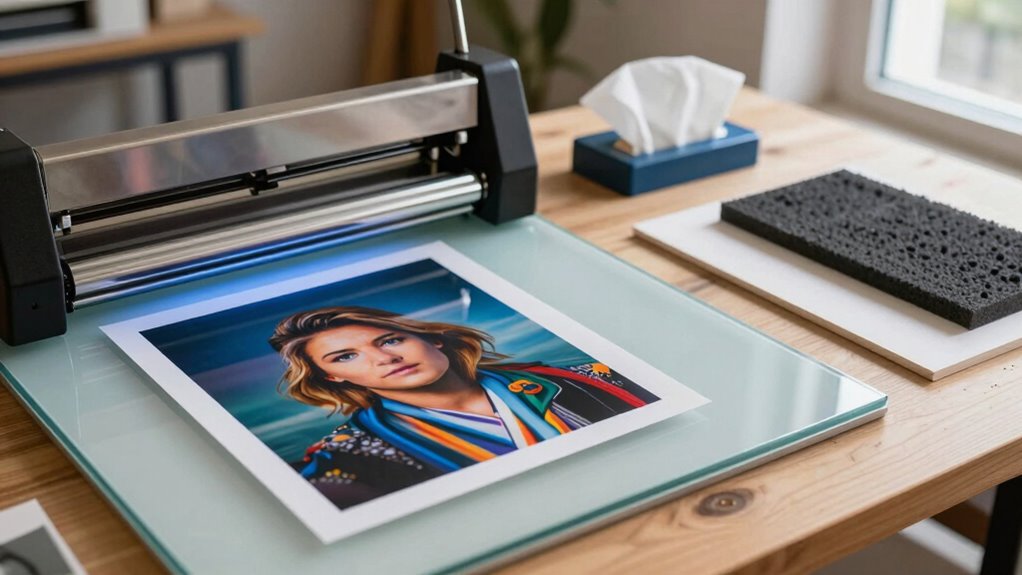
When it comes to mounting photographs or artwork, choosing the right method can make a significant difference in the final appearance and longevity. Understanding the differences between cold mount and dry mount techniques is essential to making an informed decision. Both methods involve attaching your image to a backing surface, but they differ in process, materials, and preservation outcomes. Your choice depends on factors like the type of artwork, desired presentation, and long-term preservation goals.
Cold mounting uses mounting adhesives—specifically, pressure-sensitive or double-sided adhesives—that bond the artwork to a backing without heat. This method is generally straightforward, quick, and less invasive, making it suitable for delicate or easily damaged materials. Because it avoids heat, cold mounting minimizes the risk of warping or discoloration, which can be critical for preserving vintage photographs or sensitive prints. However, the quality of adhesion depends heavily on the proper application of mounting adhesives. If not applied evenly, you risk bubbles or wrinkles that can mar the finished piece. Cold mounting is also easier to undo or adjust, which is helpful if you anticipate changing displays or need to correct positioning. Additionally, cold mounting is often favored for its non-invasive nature, making it a popular choice for preservation purposes. Moreover, cold mounting can be more cost-effective and accessible for small-scale projects or DIY framing. Using appropriate adhesive materials is vital to ensure both the ease of removal and the safety of the artwork.
Cold mounting uses adhesives without heat, making it quick, less invasive, and ideal for delicate materials.
Dry mounting, on the other hand, involves using heat-activated adhesives that bond the artwork to a backing board through a dry mount press. This process creates a smooth, taut surface, making it ideal for fine art prints or photographic prints that benefit from a polished, professional appearance. The heat activates the adhesive, ensuring a strong, permanent bond that resists peeling or lifting over time. Because dry mounting requires specialized equipment, it’s typically performed by professionals or experienced framers who understand preservation techniques. While dry mounting produces a sleek, modern look, it can be more invasive, and once done, it’s difficult to reverse without risking damage. For preservation purposes, dry mounting can be problematic if the adhesive isn’t archival quality, as it may cause long-term deterioration or discoloration. Additionally, improper techniques or materials can lead to artificial aging, which affects the artwork’s long-term condition. In terms of preservation, both methods can work well if you choose suitable materials. Archival-quality mounting adhesives and backing boards help ensure your artwork remains stable and vibrant over decades. Cold mounting is often preferred for preservation because it’s less likely to introduce artifacts or damage, especially for sensitive materials. Dry mounting, when performed with proper preservation techniques, can also last a long time, but it requires careful material selection. Ultimately, your decision hinges on the artwork’s nature and your long-term display goals. If you want a reversible, less invasive option, cold mounting is generally safer. If you seek a permanent, museum-quality finish, dry mounting might be the better choice, provided you use preservation-grade materials. Selecting archival-quality materials and proper techniques can significantly influence the lifespan of your mounted artwork.

PHIXBEAR Extra Large Mounting Putty No Residue, Strong Double Sided Glue Adhesive Dots Clear Museum Sticky Tack, Picture Hanging Strips Fixed Posters Decor Craft, 0.6 x 1.38 in (180 Pcs)
【Upgrade Stickiness & Extra Large】PHIXBEAR Extra Large mounting putty double sided tape dots for walls are crystal clear,…
As an affiliate, we earn on qualifying purchases.
As an affiliate, we earn on qualifying purchases.
Frequently Asked Questions
Which Mounting Method Is More Environmentally Friendly?
Cold mounting is generally more eco-friendly because it uses less energy and avoids chemicals like adhesives and heat, aligning with eco-friendly practices. It also produces less waste since it’s a simpler process with fewer materials. Dry mounting, on the other hand, often involves adhesives and heat, which can generate more waste and environmental impact. So, if you want a sustainable option, cold mounting promotes waste reduction and minimizes your ecological footprint.
Can Cold Mounting Be Used on All Types of Artwork?
Cold mounting can’t be used on all types of artwork because it depends on material compatibility and art preservation needs. You should avoid cold mounting for delicate, water-sensitive, or textured pieces, as the adhesive may damage them or cause warping. Always assess the artwork’s materials first, ensuring the mounting process preserves its integrity. When in doubt, consult a professional to choose the best framing workflow that safeguards your artwork.
How Long Does Each Mounting Process Typically Take?
They say, “Haste makes waste,” but understanding the process duration helps you plan better. Cold mounting usually takes longer, around 1-3 hours, due to its careful adhesive application and pressing time. Dry mounting is quicker, often done within 30-60 minutes, making it ideal when mounting speed is a priority. Your choice depends on your artwork’s needs and your timeline, balancing quality with efficiency.
Is Special Training Required for Cold or Dry Mounting?
You don’t need special training for cold or dry mounting, but understanding mounting safety and technical expertise enhances your skills. Cold mounting involves adhesive and pressure, requiring attention to safety to avoid damage, while dry mounting uses heat and pressure, demanding careful handling to prevent accidents. By learning proper techniques and safety protocols, you can guarantee quality results and protect yourself during the process.
Which Mounting Method Is More Cost-Effective Long-Term?
Choosing the more cost-effective method is like choosing a path in a forest—long-term savings depends on your journey. Cold mounting often costs more upfront but offers durability, reducing future repairs. Dry mounting might save money initially but can be less resilient, leading to higher costs down the line. Consider the cost comparison carefully, and you’ll find the best route for your framing needs, ensuring long-term savings.

5/10 Tons Heat Press Machine with LCD Screen 2.3 x 4.7 Inch Dual Heating Plate (5T Pressure)
【Product Settings】First press “Set”, the display will show “SP”, select the desired temperature; press “SET” again, the display…
As an affiliate, we earn on qualifying purchases.
As an affiliate, we earn on qualifying purchases.
Conclusion
Choosing between cold mount and dry mount is like selecting a path through a dense forest—each offers its own journey. Cold mounting is the steady river, gentle and preserving the landscape of your artwork, while dry mounting is the swift mountain trail, offering quick results but risking a rocky climb. Your decision depends on what kind of adventure you seek: the calm, lasting flow or the brisk, definitive ascent. Either way, your framing journey shapes the story your art will tell.

Scrapbook Adhesives by 3L Repositionable Mounting Squares, 1000-Pack
Repositionable mounting 1/2-Inch squares are double sided in white colour
As an affiliate, we earn on qualifying purchases.
As an affiliate, we earn on qualifying purchases.

Aneco Transparent Photo Corners Clear Picture Mounting Corner Stickers for DIY Album, Scrapbook, Journal, 500 Pieces/Pack
Product quantity and size: one pack including 500 pieces of transparent photo corners, each piece is 2.75 x…
As an affiliate, we earn on qualifying purchases.
As an affiliate, we earn on qualifying purchases.