Recessed and track lighting serve different roles in showcasing art, so you need to plan carefully for each. Recessed fixtures create a soft, ambient glow that covers the entire space without drawing attention. Track lighting offers flexibility and precise focus, making it great for highlighting individual pieces. To protect your art and achieve the best display, you must consider placement, fixture type, and light spectrum. Keep exploring to discover how to optimize your lighting for stunning and safe art presentation.
Key Takeaways
- Recessed lighting provides diffuse ambient illumination, while track lighting offers targeted, adjustable highlights for art display.
- Proper planning ensures recessed fixtures create a soft, overall glow without overshadowing focal artworks.
- Track lighting requires precise positioning to highlight specific pieces without causing glare or damage.
- Different fixtures have unique placement needs to minimize light pollution and preserve artwork integrity.
- Combining both requires coordinated control to balance overall ambiance and specific highlighting effects.
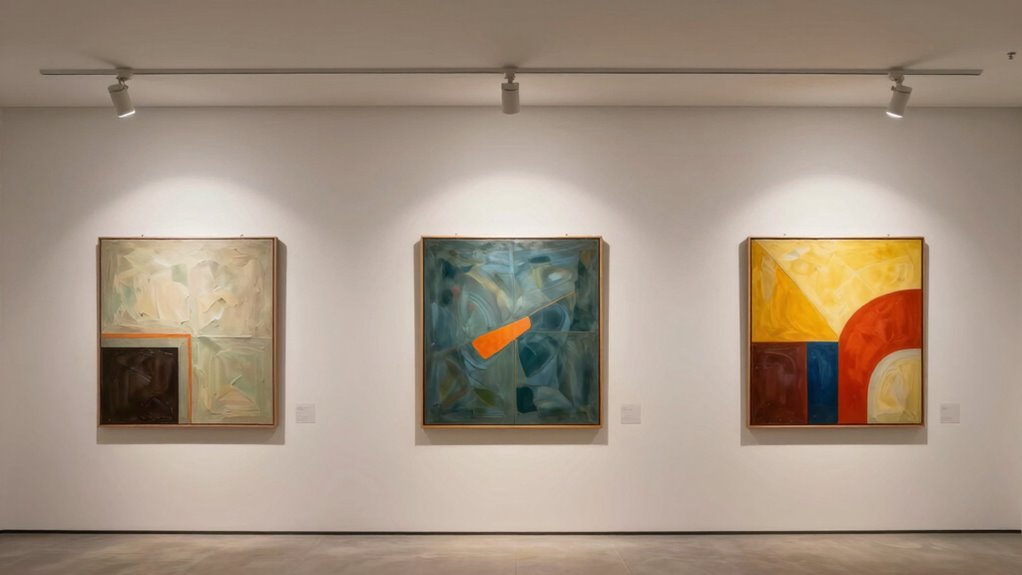
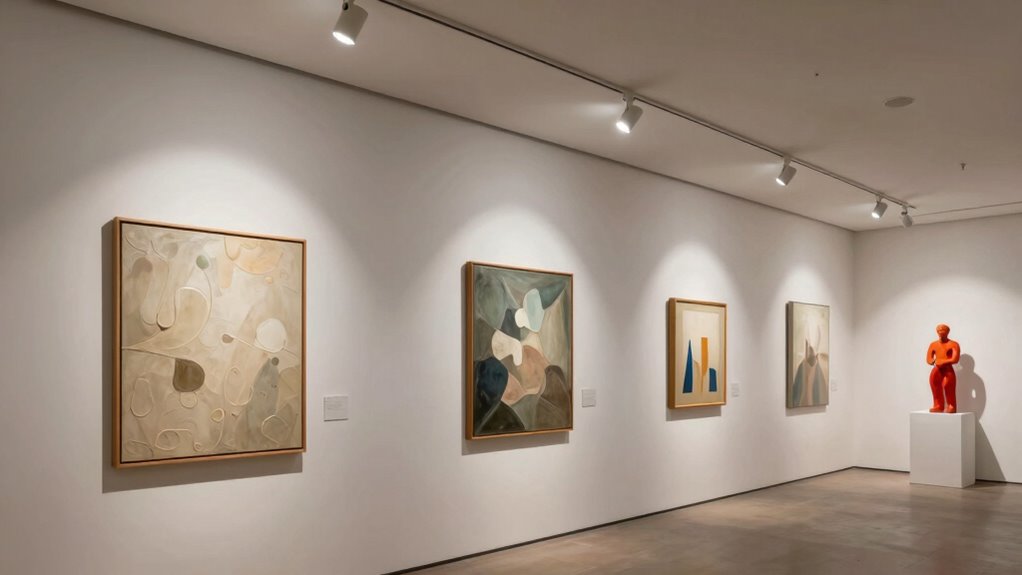
Designing your space with recessed and track lighting requires careful planning to guarantee both functionality and style. When it comes to showcasing art, how you plan your lighting makes all the difference. Recessed lighting offers a sleek, unobtrusive way to provide even, ambient illumination, but it can fall short when highlighting specific artworks. That’s where gallery lighting and accent illumination come into play. These techniques focus light precisely where you want it—on the art itself—making it stand out and drawing viewers’ attention. Track lighting, on the other hand, offers flexibility and control, allowing you to direct light exactly on individual pieces.
Recessed, track, and gallery lighting work together to highlight art with style and precision.
Understanding that recessed lighting and track lighting serve different purposes is key to effective art presentation. Recessed lighting creates a broad, diffuse light that fills the space without causing glare or harsh shadows. This makes it ideal for overall illumination but less suited for highlighting particular artworks. Gallery lighting, in contrast, is designed to highlight art with focused, often adjustable light fixtures. It guarantees each piece is lit with the right intensity and angle, revealing textures and details that might otherwise go unnoticed. Accent illumination, a vital element of gallery lighting, emphasizes specific features of artwork, giving depth and dimension and making the art pop visually. Additionally, choosing the right lighting fixtures helps ensure the appropriate light quality and minimizes potential damage to sensitive artworks. Proper placement and selection of fixtures can also help reduce light pollution, which can degrade artwork over time. Being aware of light spectrum considerations is essential for protecting delicate pieces from harmful UV rays and heat.
Track lighting provides the versatility needed to adapt to different art displays. You can easily reposition or swap out fixtures to suit changing exhibits or preferences. Its adjustable heads allow you to create focal points with precision, making it perfect for accent illumination that accentuates individual pieces. When planning your art lighting, you need to think about how recessed lighting can complement these targeted techniques. Generally, recessed fixtures serve as the base layer of illumination, providing a soft glow that reduces shadows and enhances the overall ambiance. Meanwhile, track lighting can be used as the primary tool for gallery lighting and accent illumination, spotlighting key artworks and adding visual interest. Additionally, understanding the importance of art conservation and choosing lighting that minimizes heat and UV exposure helps protect your collection. Incorporating lighting controls such as dimmers and timers can further optimize the presentation while safeguarding your art. Properly integrating these different lighting types ensures a harmonious and effective display that highlights your collection’s beauty and integrity.

Glendan Picture Light for Wall, Professional Art Light for Museum & Gallery
- Vivid Viewing Experience: Anti-glare optics with high CRI 95+
- Adjustable Light Shaping: Customize aperture and shape freely
- Precise Artwork Illumination: Adjustable beam angle and smart control
As an affiliate, we earn on qualifying purchases.
As an affiliate, we earn on qualifying purchases.
Frequently Asked Questions
How Do You Balance Ambient and Accent Lighting Around Art?
To balance ambient and accent lighting around art, you should carefully consider art placement and lighting angles. Use ambient lighting to create an even, soft glow in the room, while accent lights highlight specific pieces. Adjust lighting angles to avoid glare or shadows, guaranteeing the artwork is well-lit without overpowering the space. Proper planning ensures your art stands out beautifully while maintaining a warm, inviting atmosphere.
Can Adjustable Track Lighting Damage Artwork Over Time?
Adjustable track lighting can potentially damage artwork over time if you don’t monitor lighting adjustments carefully. UV rays, heat, and excessive brightness can harm artwork, impacting its preservation. To protect your pieces, regularly check and limit lighting intensity, ensuring proper lighting adjustment. Use UV-filtering bulbs and keep fixtures at a safe distance. This proactive approach helps preserve your artwork’s integrity while allowing you to enjoy flexible, adjustable lighting options.
What Are the Best Color Temperatures for Art Lighting?
You should aim for a color temperature between 3000K and 3500K for art lighting, as it offers a warm, natural look that enhances colors without distortion. Consistent lighting is key, so choose fixtures with stable color temperature to prevent shifts that can affect how your artwork appears over time. This range balances vibrant detail and true color, ensuring your art looks its best under different lighting conditions.
How Do You Prevent Glare From Recessed Lighting on Artwork?
The glare from recessed lighting can blind your art gallery visitors and ruin the experience. To prevent this, you should carefully adjust the lighting angles, directing lights slightly downward and away from the artwork. Use diffusers or dimmers to soften the light, and consider adjustable fixtures to fine-tune the placement. These steps help guarantee your art remains vibrant, undistorted, and free from glare, creating an inviting viewing environment.
Is Dimmable Lighting Necessary for Art Displays?
Dimmable lighting is essential for art displays because it helps you achieve lighting consistency and supports art preservation. By adjusting the light levels, you prevent glare and UV damage, which can harm artworks over time. This flexibility allows you to highlight details without risking fading or deterioration. Ultimately, dimmable lighting gives you control, ensuring your art looks its best while maintaining its integrity for years to come.

BISAMIYA Modern 4-Light Track Lighting Kit, Matte Black & Dark Wood
- Modern Mid-Century Design: Matte black finish with dark wood shades
- Geometric Style: Ring-perforated heat dissipation design
- Multi-Angle Illumination: Adjustable swivel with 350° horizontal and 90° vertical rotation
As an affiliate, we earn on qualifying purchases.
As an affiliate, we earn on qualifying purchases.
Conclusion
So, next time you’re plotting your art display, remember that recessed and track lighting are like oil and water—completely incompatible without some serious planning. Don’t just slap them in and hope for the best; your art deserves better than a misguided spotlight disaster. After all, nothing screams “art lover” quite like a poorly lit masterpiece, right? Play it smart, plan carefully, and save your walls from the tragic fate of terrible lighting choices.

Picture Light for Wall Display Rechargeable with Remote, Wireless Painting light 3PACK, Brightness Dimmable with 3 Color Temp, Art Display Accent Lighting, Timmer Auto-OFF for Frame Gallery Portrait
- 3-Pack Rechargeable Lights: Long-lasting 2500mAh battery, up to 100 hours
- Adjustable Color Temperature: Warm, natural, and white light options
- Dimmable Brightness: Adjust from 10% to 100% brightness
As an affiliate, we earn on qualifying purchases.
As an affiliate, we earn on qualifying purchases.

PDClnyck 2pcs Wooden USB UV LED Blacklight Display Base, 395nm UV Light Stand for Uranium Glass, Glow Art & UV Reactive Items, Round Glow-in-the-Dark Lighting Base
- Natural Wood Texture: High-quality natural wood with warm texture
- 395nm UV Light: Powerful 395nm UV LED for glowing effects
- USB Powered: 5V USB plug, no batteries needed
As an affiliate, we earn on qualifying purchases.
As an affiliate, we earn on qualifying purchases.