

Digital note-taking tablets for students range from simple pen-and-paper digitizers to full-featured tablets and focused E Ink notebooks. My best overall pick is the reMarkable Paper Pro for students who want a spacious, distraction-light workspace, while the Kindle Scribe stands out for reading and annotating course material, and the XPPen Magic Note Pad offers a full-color option. The main tradeoff is between a paper-like writing experience and the flexibility of a general-purpose tablet, with size, syncing, and app support shaping daily usefulness. Some models capture handwriting on paper; others store notes directly on a screen, so the right choice depends on how you study. Read on for the full comparison and a guide to matching a device to your classes and workflow.

Prime made for students and young adults
- Fast, free delivery for dorm and study essentials
- Prime Video and Amazon Music included
- Member-only deals
Key Takeaways
- The lineup splits into two kinds of tools: the Ophayapen and HUION Note capture writing made on paper, while the reMarkable, Kindle, and Android models let students write directly on a screen.
- reMarkable Paper Pro leads for focused digital handwriting because it pairs a large paper-like workspace with color, while the Kindle Scribe is more compelling when reading and annotating books is central.
- Full-color Android models trade simplicity for flexibility: the XPPen Magic Note Pad and XPPen standalone tablet can suit students who need more than a notebook, but bring a broader device experience than focused E Ink options.
- Compact E Ink choices fit portable study habits: the AINOTE Air and iFLYTEK AINOTE Air 2 are easier to carry than larger note-focused tablets, though their smaller screens leave less room for diagrams and split-page work.
- Several entries are bundle variations, not separate tablet platforms: the two reMarkable Paper Pure listings and the two Paper Pro listings differ by folio or configuration, so compare the included accessories rather than assuming a different core study experience.
| Ophayapen 3-in-1 Smart Pen, Digital Notebook, and Writing Board |  | Best for Lecture Notes with Audio | Model: SMP-3 | Included notebook: PU notebook with 60 sheets | Pressure sensitivity: 1024 levels | VIEW LATEST PRICE | See Our Full Breakdown |
| XPPen Note Plus Digital Notebook with Pen Syncs to Phone |  | Best for Replaceable Paper | Writing surface: A5 paper | Compatible notebook cores: A5 size, up to 8 mm thick | Pressure sensitivity: 8192 levels | VIEW LATEST PRICE | See Our Full Breakdown |
| Amazon Kindle Scribe (16GB) with Premium Pen, Tungsten |  | Best for Reading and Annotating Course Materials | Storage: 16 GB | Display: 10.2-inch front-lit Paperwhite display, 300 ppi | Dimensions: 7.7 × 9.0 × 0.22 inches, excluding feet | VIEW LATEST PRICE | See Our Full Breakdown |
| reMarkable Paper Pro Digital Notebook with Marker Plus |  | Best Premium for Color Notes and PDFs | Display: 11.8-inch Canvas Color e-ink, 1872 × 1404 native resolution | Storage: 64 GB | Memory: 2 GB RAM | VIEW LATEST PRICE | See Our Full Breakdown |
| HUION Note Digital Notebook with Real-Time and Offline Sync |  | Best for Paper Notes That Can Become a Drawing Tablet | Model: X10 | Notebook size: A5 | Notebook pages: 50 | VIEW LATEST PRICE | See Our Full Breakdown |
| XPPen 3-in-1 Color Digital Notebook 10.95” Magic Note Pad | 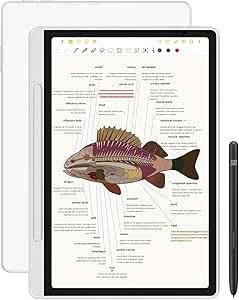 | Best for Color-Coded Class Notes | Display: 10.95-inch LCD, 1920 × 1200 | Refresh rate: 90Hz | Operating system: Android 14 | VIEW LATEST PRICE | See Our Full Breakdown |
| AINOTE Air 8.4″ AI Digital Notebook Tablet, Full Color Paper-Like Display |  | Best for Lecture Transcription | Display: 8.4-inch color LCD, 1920 × 1200 | Operating system: Android | Memory: 4GB RAM | VIEW LATEST PRICE | See Our Full Breakdown |
| XPPen 10.95″ Standalone Drawing Tablet with Android 14 |  | Best for Notes and Sketching | Display: 10.95-inch anti-glare LCD, 1920 × 1200 | Operating system: Android 14 | Refresh rate: 90Hz | VIEW LATEST PRICE | See Our Full Breakdown |
| Huion Ink EB1011 E Ink Tablet 10.3″ Digital Notebook |  | Best for E Ink Reading and Handwriting | Display: 10.3-inch E Ink, 1404 × 1872, 227 PPI | Operating system: Android 11 | Stylus: Battery-free, felt tip, tail eraser | VIEW LATEST PRICE | See Our Full Breakdown |
| reMarkable Paper Pure with Marker Plus and Mist Green Sleeve Folio |  | Best for Distraction-Free Study | Display: 10.3-inch black-and-white E Ink | Writing latency: 21ms | Operating system: reMarkable OS | VIEW LATEST PRICE | See Our Full Breakdown |
| reMarkable Paper Pure with Marker Plus and Ocean Blue Sleeve Folio |  | Best for Focused Lecture Notes | Screen size: 10.3 inches | Display: Black-and-white E Ink | Writing latency: 21 ms | VIEW LATEST PRICE | See Our Full Breakdown |
| iFLYTEK AINOTE Air 2 8.2″ E Ink Tablet with Black Folio Case |  | Best for Lecture Transcription | Display size: 8.2 inches | Display type: E Ink with adjustable warm and cool lighting | Pressure sensitivity: 4,096 levels | VIEW LATEST PRICE | See Our Full Breakdown |
| reMarkable Paper Pro with Marker Plus and Basalt Book Folio |  | Best Premium Large-Screen Pick | Display size: 11.8 inches | Display type: Canvas Color E Ink | Battery life: Up to 15 days | VIEW LATEST PRICE | See Our Full Breakdown |
| digital note taking tablets for student | Weight | Connectivity | Display |
|---|---|---|---|
| Ophayapen 3-in-1 Smart Pen | — | Real-time sync and offline storage with auto-upload | — |
| XPPen Note Plus Digital Notebo | — | Bluetooth 5.3 | — |
| Amazon Kindle Scribe | 433 g, device only | Wi-Fi 5 and Bluetooth 5.2 | 10.2-inch front-lit Paperwhite display, 300 ppi |
| reMarkable Paper Pro Digital N | 1.2 pounds | — | 11.8-inch Canvas Color e-ink, 1872 × 1404 native resolution |
| HUION Note Digital Notebook wi | — | Bluetooth 5.0 | — |
| XPPen 3-in-1 Color Digital Not | 495g | — | 10.95-inch LCD, 1920 × 1200 |
| AINOTE Air 8.4" AI Digital Not | 320g | — | 8.4-inch color LCD, 1920 × 1200 |
| XPPen 10.95" Standalone Drawin | 495g in description; 1.61kg in specs | USB | 10.95-inch anti-glare LCD, 1920 × 1200 |
| Huion Ink EB1011 E Ink Tablet | 0.99lb | — | 10.3-inch E Ink, 1404 × 1872, 227 PPI |
| reMarkable Paper Pure with Mar | 360g | Wi-Fi | 10.3-inch black-and-white E Ink |
| reMarkable Paper Pure with Mar | 360 g | Wi-Fi | Black-and-white E Ink |
| iFLYTEK AINOTE Air 2 8.2" E In | 8.1 oz (230 g) | — | — |
| reMarkable Paper Pro with Mark | — | USB-C and Wi-Fi (802.11a/b) | — |
More Details on Our Top Picks
Ophayapen 3-in-1 Smart Pen, Digital Notebook, and Writing Board
The Ophayapen suits students who want to keep handwriting on paper while building a searchable digital record. Its OCR conversion can make handwritten material easier to find later, and audio recorded alongside writing gives lecture notes extra context when reviewing a difficult topic. Unlike the Kindle Scribe, which is a standalone reading-and-writing device, this kit relies on a compatible phone or tablet for its app-based features. Offline storage helps if a classroom connection is unreliable, with syncing set to resume later. The kit also includes a writing board and refills, though the included notebook has only 60 sheets. I’d pick it over the HUION Note when OCR and the broader included kit matter more than using the notebook as a PC drawing tablet.
Pros:- OCR can convert handwriting into searchable digital text
- Audio recording can be synchronized with writing for later review
- Offline storage supports writing when a connection is unavailable
- Includes a notebook, writing board, refills, and replacement nibs
Cons:- Full functionality requires a compatible smartphone or tablet
- The included notebook is limited to 60 sheets
- Device compatibility starts at iOS 11 or Android 6.0
Best for: Students who take handwritten lecture notes and want audio playback and searchable text through a compatible iOS or Android device
Not ideal for: Students seeking a standalone tablet or a large supply of included paper; full app use depends on a compatible phone or tablet, and the pad holds 60 sheets
- Model:SMP-3
- Included notebook:PU notebook with 60 sheets
- Pressure sensitivity:1024 levels
- Compatibility:iOS 11+, Android 6.0+, Amazon Fire Tablets
- Connectivity:Real-time sync and offline storage with auto-upload
- Supported formats:PDF, Word, PNG, GIF, MP4
- Included items:Smart pen, notebook, writing board, 4 ballpoint refills, 2 plastic pen nibs, USB cable
Our verdict“Choose the Ophayapen if you want paper-based lecture notes paired with searchable text and synchronized audio, and already have a compatible mobile device.”
XPPen Note Plus Digital Notebook with Pen Syncs to Phone
The XPPen Note Plus is a strong fit for students who want digital capture without giving up ordinary paper. Its A5 format is easy to carry between classes, and the notebook accepts compatible A5 cores up to 8 mm thick, so students aren’t tied to one paper refill. Offline writing and later sync can help when campus connectivity is patchy; the app also offers tagging, search, and editing tools. Compared with the Ophayapen, it lists much higher pressure sensitivity and longer stated continuous writing time, but its supplied description does not include audio recording or OCR. It also depends on a phone for synced notes, rather than acting like the standalone Kindle Scribe. Check the stated mobile OS requirements before buying.
Pros:- Works with compatible A5 notebook cores up to 8 mm thick
- 8192 pressure levels support detailed handwriting and sketching
- Offline notes can sync after reconnection
- App tools include tagging, search, highlighting, and editing
Cons:- Requires a compatible smartphone for note syncing and management
- Android 10+ or iOS 14+ is required
- The supplied product details do not list audio recording or handwriting OCR
Best for: Students who prefer writing on replaceable A5 paper and want their notes synced to an Android 10+ or iOS 14+ phone
Not ideal for: Students who need a standalone screen, audio-linked lecture notes, or compatibility with older mobile operating systems
- Writing surface:A5 paper
- Compatible notebook cores:A5 size, up to 8 mm thick
- Pressure sensitivity:8192 levels
- Connectivity:Bluetooth 5.3
- Compatibility:Android 10.0 or later; iOS 14.0 or later
- Battery:1000 mAh; up to 14 hours continuous writing and 50-day standby
- Charging:Full charge in about 2.5 hours
- Dimensions and weight:245 × 176 × 13 mm; 300 g
Our verdict“Pick the XPPen Note Plus if replaceable A5 paper and offline phone syncing matter more than audio capture or standalone use.”
Amazon Kindle Scribe (16GB) with Premium Pen, Tungsten
The Kindle Scribe makes the most sense for students whose coursework involves substantial reading as well as note-taking. Its 10.2-inch, 300 ppi glare-free display supports reading and writing on the same device, while the included Premium Pen needs no setup or charging. Built-in tools can convert handwriting and summarize notes, and students can annotate supported documents rather than carrying a separate paper notebook. Compared with the reMarkable Paper Pro, the Scribe has a smaller monochrome display, but it combines e-reading with writing and weighs less. It is still 433 g, so it may feel heavy during long one-handed reading sessions. Its writing battery estimate is shorter than its reading estimate, and it is a less natural fit for students who want a paper-first notebook with broad app-based workflows.
Pros:- Glare-free, front-lit 300 ppi display supports reading in varied lighting
- Included Premium Pen requires no setup or charging
- Handwriting conversion, note summaries, and document annotation are built in
- Supports a broad range of document and ebook file formats
Cons:- At 433 g, it may feel heavy for extended one-handed use
- Battery estimates differ substantially between reading and writing use
- Charging can take about 2.5 to 7 hours depending on the power source
Best for: Students who read digital textbooks or documents and want to annotate and organize notes on the same glare-free device
Not ideal for: Students who prioritize a lightweight handheld device, color notes, or a paper-notebook workflow with phone-based syncing
- Storage:16 GB
- Display:10.2-inch front-lit Paperwhite display, 300 ppi
- Dimensions:7.7 × 9.0 × 0.22 inches, excluding feet
- Weight:433 g, device only
- Connectivity:Wi-Fi 5 and Bluetooth 5.2
- Battery life:Up to 12 weeks for reading or 3 weeks for writing under stated usage conditions
- Charging:USB-C; approximately 7 hours via computer or 2.5 hours with a 9W USB-C adapter
- Included accessories:Premium Pen, USB-C cable, 5 replacement tips, tip replacement tool
- Supported formats:AZW3, AZW, TXT, PDF, MOBI, PRC, DOCX, DOC, HTML, EPUB, RTF, JPEG, GIF, PNG, BMP, AAX
Our verdict“Choose the Kindle Scribe if you want one device for digital course reading, document annotation, and handwritten notes.”
reMarkable Paper Pro Digital Notebook with Marker Plus
For students who want a spacious digital notebook rather than a general-purpose tablet, the reMarkable Paper Pro stands apart with its 11.8-inch color e-ink display and paper-like writing surface. Color can make diagrams, highlighted readings, and organized lecture notes easier to scan than on the monochrome Kindle Scribe. The adjustable reading light supports work after class, while folders, tags, PDF markup, and handwriting conversion help keep course material together. Its included Marker Plus has a built-in eraser, and the stated battery life is up to 15 days at one hour of regular use daily. That larger screen also means a bigger device to carry, and the product description ties some extra cloud benefits to a Connect subscription. It suits focused reading and writing better than students seeking a conventional app-rich tablet.
Pros:- 11.8-inch color e-ink display provides room for notes, diagrams, and documents
- Marker Plus includes a built-in eraser
- Folders, tags, PDF annotation, and handwriting conversion support study organization
- Adjustable reading light and up to 15 days of stated battery life
Cons:- Larger screen makes it less compact to carry than the Kindle Scribe
- Some additional cloud benefits require a Connect subscription
- Dedicated notebook functions may not suit students seeking a broad app-based tablet
Best for: Students who work with color-coded notes, large PDFs, and handwritten diagrams and want a dedicated paper-like writing device
Not ideal for: Students who need a lightweight compact device or expect a general-purpose tablet with a broad app ecosystem
- Display:11.8-inch Canvas Color e-ink, 1872 × 1404 native resolution
- Storage:64 GB
- Memory:2 GB RAM
- Weight:1.2 pounds
- Battery life:Up to 15 days at 1 hour of regular use per day
- Battery capacity:19.25 Wh lithium-ion
- Processor:ARM Cortex-A53, 1.8 GHz
- Included accessories:Marker Plus with built-in eraser and 6 spare Marker tips
Our verdict“Choose the Paper Pro if a large color writing surface and PDF-focused study workflow justify carrying a dedicated notebook device.”
HUION Note Digital Notebook with Real-Time and Offline Sync
The HUION Note is a flexible choice for students who want to write on paper now and use the same kit for basic PC drawing later. It captures notes as vector lines and syncs them to an iOS or Android app, where pages can be edited, organized, and shared as images, PDFs, or MP4 files. Audio synced with notes adds a useful review aid for lectures, much like the Ophayapen, while the replaceable panel lets this notebook switch into drawing-tablet mode with a PC. That second use is a meaningful distinction from the XPPen Note Plus, which emphasizes replaceable A5 paper and high pressure sensitivity. The HUION includes a 50-page notebook and offers up to 18 hours of use, but mobile syncing depends on its app and drawing mode requires changing the page setup.
Pros:- Captures paper handwriting as digital vector lines
- Audio recordings can be synchronized with notes
- Notes can be edited, organized, and shared in multiple formats
- Can operate as a PC drawing tablet when using the included panel
Cons:- Mobile syncing requires the Huion Note app
- Drawing-tablet mode requires replacing the notebook pages with the included panel
- The included notebook has 50 pages
Best for: Students who want app-synced handwritten notes with lecture audio and occasional PC drawing-tablet use
Not ideal for: Students who need a standalone display tablet or want to switch between paper notes and PC drawing without changing the notebook setup
- Model:X10
- Notebook size:A5
- Notebook pages:50
- Connectivity:Bluetooth 5.0
- Battery life:Up to 18 hours of use
- Standby time:About 30 days
- App compatibility:iOS and Android
- Included accessories:USB-C cable, magnetic pen sleeve, 3 ballpoint refills, 3 plastic pen nibs, pen nib clip, quick start guide
- Warranty:1 year
Our verdict“Pick the HUION Note if you want paper-based lecture notes with audio syncing and value the option to use it as a PC drawing tablet.”
XPPen 3-in-1 Color Digital Notebook 10.95” Magic Note Pad
The XPPen Magic Note Pad suits students who want handwritten notes alongside the flexibility of an Android tablet. Its 10.95-inch LCD switches among monochrome, light color, and nature color modes, while the 90Hz refresh rate keeps writing and scrolling fluid. The included X3 Pro Pencil supports pressure-sensitive strokes, and the note app offers handwriting conversion, audio recording, and PDF markup. Compared with the Huion Ink EB1011, this is the better fit for color-coded diagrams and app use; the Huion’s E Ink screen is more focused on reading and a paper-like display. The tradeoff is that this is not an E Ink tablet, and its etched screen has a narrow preferred viewing angle. Students seeking a conventional tablet display should also factor in the stated caution about running many apps at once.
Pros:- Three display modes make it easy to distinguish headings, diagrams, and annotations.
- 90Hz LCD and 16,384-level pressure-sensitive stylus support smooth, varied handwriting.
- Native note app supports audio recording, handwriting conversion, and PDF editing.
- Android 14 and 128GB storage allow app downloads and substantial local file storage.
Cons:- It uses an LCD rather than E Ink, so its display experience differs from dedicated reading tablets.
- The etched glass has a narrow preferred viewing angle.
- The product description advises avoiding multiple software programs running at the same time.
Best for: Students who annotate colorful lecture slides, switch between note-taking and Android apps, and want handwriting tools for coursework.
Not ideal for: Readers who want a true E Ink screen, broad viewing angles, or a tablet meant to run many demanding apps at once.
- Display:10.95-inch LCD, 1920 × 1200
- Refresh rate:90Hz
- Operating system:Android 14
- Memory:6GB RAM
- Storage:128GB
- Stylus pressure levels:16,384
- Battery capacity:8,000mAh
- Weight:495g
Our verdict“Choose the Magic Note Pad for color-rich class notes and Android flexibility, but pick the Huion Ink EB1011 if an E Ink reading experience matters more.”
AINOTE Air 8.4″ AI Digital Notebook Tablet, Full Color Paper-Like Display
The AINOTE Air is the most specialized pick here for students who need searchable records of lectures, interviews, or group discussions. It can capture audio offline and then provide transcription, summaries, and action items after reconnecting; its listed language tools also support transcription and translation in 48 languages. At 320g with an 8.4-inch screen, it is easier to carry between classes than the larger XPPen Magic Note Pad, though its smaller writing area is less comfortable for wide diagrams or side-by-side documents. The color paper-like LCD, stylus, and broad document-format support make it a capable study notebook, not just a recorder. Its 4GB RAM and 64GB storage are more modest than the XPPen’s, and the AI workflow depends on cloud access for features that become available after offline recording.
Pros:- Offline audio capture can preserve lecture recordings when connectivity is unavailable.
- AI tools support transcription, summaries, action items, and question-based searches.
- Compact 320g design is easy to carry throughout a school day.
- Supports handwriting conversion in 66 languages and transcription or translation in 48 languages.
Cons:- The 8.4-inch screen offers less room for notes and document markup than the 10.95-inch XPPen models.
- 64GB storage and 4GB RAM are comparatively limited for a device that supports third-party apps.
- AI transcription, summaries, and cloud sync require a connection after offline recording.
Best for: Students who record lectures, study in multiple languages, and want AI-generated transcripts or summaries to review later.
Not ideal for: Students who need a large canvas for diagrams, extensive local storage, or a simple note tablet without AI and cloud-dependent features.
- Display:8.4-inch color LCD, 1920 × 1200
- Operating system:Android
- Memory:4GB RAM
- Storage:64GB
- Stylus pressure levels:4,096
- Weight:320g
- Battery capacity:4,500mAh
- Listed battery life:Up to 25 days
Our verdict“Pick the AINOTE Air if turning recorded lectures into searchable study material is your priority, rather than having the largest writing surface.”
XPPen 10.95″ Standalone Drawing Tablet with Android 14
For students who mix written notes with diagrams, illustrations, or handwritten problem-solving, this XPPen standalone tablet pairs a 10.95-inch anti-glare display with a stylus offering 16,384 pressure levels and tilt support. Android 14 gives it broader app flexibility than the focused reading experience of the reMarkable Paper Pure, while its 90Hz LCD is better suited to smooth scrolling and color than an E Ink screen. The supplied description also calls the stylus battery-free, which is useful for carrying it through classes without managing a pen charge. There is a data discrepancy in the listing: the detailed description gives the device as 495g, while the spec field says 1.61kg. The LCD also cannot match E Ink’s paper-like viewing character, and update support is unspecified.
Pros:- 16,384 pressure levels and tilt support offer detailed control for handwriting and sketching.
- Android 14 supports a wider range of apps than a dedicated note-taking operating system.
- Anti-glare display is suited to writing and PDF annotation.
- Battery-free stylus avoids charging the pen.
Cons:- The listing gives conflicting weights: 495g in the description and 1.61kg in the specs.
- An LCD is less like E Ink for extended reading than the reMarkable Paper Pure.
- Software update support duration is not stated.
Best for: Students who take handwritten notes and also draw diagrams, annotate PDFs, or use Android creative and study apps.
Not ideal for: Students prioritizing a confirmed lightweight device, E Ink reading, or a clearly documented long-term software update schedule.
- Display:10.95-inch anti-glare LCD, 1920 × 1200
- Operating system:Android 14
- Refresh rate:90Hz
- Stylus pressure levels:16,384
- Stylus support:Tilt support; described as battery-free
- Thickness:7mm
- Weight:495g in description; 1.61kg in specs
- Connectivity:USB
Our verdict“Choose this XPPen for a flexible Android note-and-drawing setup, but verify the device weight before buying if portability is a deciding factor.”
Huion Ink EB1011 E Ink Tablet 10.3″ Digital Notebook
The Huion Ink EB1011 is the clearest choice for students who spend long stretches reading PDFs and writing by hand. Its 10.3-inch E Ink display, adjustable dual-color front light, and felt-tip stylus prioritize a paper-like study experience over fast animation or vivid color. Compared with the XPPen Magic Note Pad, the Huion is better aligned with reading-heavy coursework; the XPPen’s color LCD is more capable for color-coded notes and app use. Huion adds handwriting conversion, split-screen mode, and expandable storage, which can help organize course materials without relying on a larger device. The tradeoff is the usual E Ink compromise: slower scrolling, plus grayscale-only display. Android 11 is also older than Android 14 on the XPPen models, which may matter to students seeking newer app and system support.
Pros:- E Ink display with anti-glare glass and adjustable dual-color front light suits extended reading.
- Battery-free felt-tip stylus provides 8,192 pressure levels and a tail eraser.
- Expandable storage supports up to 2TB, beyond the internal 64GB.
- Can function as a drawing tablet when connected to a computer.
Cons:- Grayscale display is a poor fit for color-coded notes and color-dependent course materials.
- E Ink refresh is slower than the LCD screens on the XPPen models.
- Android 11 is older than Android 14 on several alternatives in this roundup.
Best for: Students who read and annotate long PDFs, prefer grayscale E Ink, and want expandable storage for course documents.
Not ideal for: Students who rely on color diagrams, frequent video or animated content, or the newer Android version offered by the XPPen tablets.
- Display:10.3-inch E Ink, 1404 × 1872, 227 PPI
- Operating system:Android 11
- Stylus:Battery-free, felt tip, tail eraser
- Stylus pressure levels:8,192
- Storage:64GB internal; expandable up to 2TB
- Battery capacity:4,650mAh
- Listed battery life:Up to 12 days
- Weight:0.99lb
Our verdict“Choose the Huion for reading-heavy coursework and a paper-like E Ink workflow, but opt for an XPPen if color and faster scrolling matter more.”
reMarkable Paper Pure with Marker Plus and Mist Green Sleeve Folio
The reMarkable Paper Pure is built for students who want a focused space for handwritten notes, sketches, and document markup rather than a general-purpose tablet. Its 10.3-inch black-and-white E Ink display and stated 21ms latency support a responsive writing feel, while the 360g body is easy to carry between lectures. The included Marker Plus and sleeve folio provide a ready-to-use study setup. Compared with the Huion Ink EB1011, the reMarkable emphasizes a streamlined writing and cloud workflow, while the Huion lists Android apps, expandable storage, and a front light. The reMarkable’s main sacrifice is flexibility: it has no color display, and some advanced cloud features and AI transcription require a paid Connect subscription. Students who need broad app access may find the Android-based XPPen options a better fit.
Pros:- 10.3-inch E Ink display and 21ms latency are geared toward responsive handwriting.
- At 360g, it is light enough to carry between classes.
- Cloud integrations support organizing and sharing documents.
- Marker Plus and a protective sleeve folio are included.
Cons:- Black-and-white display cannot show color-coded highlights or color course materials.
- Advanced cloud features and AI transcription require a paid Connect subscription.
- reMarkable OS offers a more focused, less app-flexible setup than Android tablets such as the XPPen.
Best for: Students who want a lightweight, distraction-reduced notebook for handwriting, sketching, and annotating course documents.
Not ideal for: Students who need color, third-party Android apps, built-in AI transcription, or cloud features without a paid subscription.
- Display:10.3-inch black-and-white E Ink
- Writing latency:21ms
- Operating system:reMarkable OS
- Connectivity:Wi-Fi
- Weight:360g
- Included accessories:Marker Plus and Mist Green Sleeve Folio
- Warranty:1-year limited warranty
Our verdict“Pick the reMarkable Paper Pure for a lightweight, focused digital notebook, but choose an Android model if your study routine depends on apps or color.”
reMarkable Paper Pure with Marker Plus and Ocean Blue Sleeve Folio
For students who want a distraction-light notebook for lectures and document markup, the reMarkable Paper Pure balances a roomy writing area with a light carry weight. Its 10.3-inch black-and-white E Ink screen and 21 ms latency are suited to handwriting and sketching, while cloud integration can help move notes into services such as Google Drive or Microsoft Word. The included Marker Plus and Ocean Blue Sleeve Folio make this bundle ready for class. Compared with the smaller iFLYTEK AINOTE Air 2, the Paper Pure gives you more space for equations and page layouts, but it lacks that model’s meeting transcription tools. The tradeoff is specialization: there is no color display or general-purpose app experience, and some advanced cloud and AI functions require a Connect subscription.
Pros:- 10.3-inch E Ink screen offers more room for notes than the iFLYTEK AINOTE Air 2’s 8.2-inch display.
- 21 ms latency supports responsive handwriting and document annotation.
- At 360 g, it is light enough to carry between classes.
- Marker Plus and protective Ocean Blue Sleeve Folio are included.
Cons:- Black-and-white display cannot show color-coded notes or images in color.
- Some advanced cloud storage and AI text-conversion features require a paid Connect subscription.
- Specialized note and document workflow does not replace a general-purpose tablet.
Best for: Students who mainly handwrite lecture notes, annotate readings, and want a portable device that syncs with familiar cloud services.
Not ideal for: Students who need color-coded diagrams, built-in AI transcription, or a tablet for video, web apps, and other general-purpose tasks.
- Screen size:10.3 inches
- Display:Black-and-white E Ink
- Writing latency:21 ms
- Weight:360 g
- Connectivity:Wi-Fi
- Operating system:reMarkable OS
- Included accessories:Marker Plus and Ocean Blue Sleeve Folio
- Warranty:1-year limited warranty
Our verdict“Choose the Paper Pure if your priority is a lightweight, focused digital notebook with a larger writing surface than the AINOTE Air 2.”
iFLYTEK AINOTE Air 2 8.2″ E Ink Tablet with Black Folio Case
The iFLYTEK AINOTE Air 2 is the most specialized pick here for students who want lecture notes supported by audio tools. Its voice-to-text transcription, meeting summaries, and translation features can help capture spoken material, with transcription in 18 languages and translation in 14. At 230 g, it is notably easier to carry than the 360 g reMarkable Paper Pure, making it appealing for students moving between classes. That portability comes with a smaller 8.2-inch writing area, so lengthy equations or broad diagrams may feel more constrained. The adjustable-light E Ink screen and 4,096 pressure levels support handwriting, but E Ink refreshes are less fluid than on conventional tablet screens. Also, voice transcription and handwriting-to-text conversion cannot run at the same time.
Pros:- Voice-to-text transcription and automatic meeting summaries can help capture lecture content.
- Supports transcription in 18 languages and translation in 14.
- Light 230 g build and slim profile suit daily campus carry.
- E Ink display includes adjustable warm and cool lighting and 4,096 pressure levels.
Cons:- The 8.2-inch screen provides less writing space than the reMarkable Paper Pure’s 10.3-inch display.
- Transcription and handwriting-to-text conversion cannot run simultaneously.
- E Ink page turns and scrolling are less fluid than on LCD or OLED tablets, with possible afterimages.
Best for: Students who attend spoken lectures or multilingual classes and want a compact device with transcription and translation tools.
Not ideal for: Students who need a large page for diagrams and equations, or who want transcription and handwriting recognition to operate simultaneously.
- Display size:8.2 inches
- Display type:E Ink with adjustable warm and cool lighting
- Pressure sensitivity:4,096 levels
- Weight:8.1 oz (230 g)
- Dimensions:7.6 × 5.4 in (193 × 137 mm)
- Thickness:5–6.5 mm
- Transcription languages:18
- Translation languages:14
- Included components:Stylus Pen and Black Folio Case
Our verdict“Pick the AINOTE Air 2 if lecture transcription and low carry weight matter more to you than a larger handwriting surface.”
reMarkable Paper Pro with Marker Plus and Basalt Book Folio
Students who annotate illustrated course material or rely on color-coded notes may find the reMarkable Paper Pro more useful than the black-and-white Paper Pure. Its 11.8-inch color E Ink display provides a larger canvas for diagrams and reading, while the included Marker Plus has a built-in eraser and the Book Folio helps protect the tablet in a backpack. The stated battery life of up to 15 days also suits students who do not want to charge between every class day. This is the broadest writing surface among these three picks, but it remains a writing-and-reading device rather than a general tablet. Unlike the iFLYTEK AINOTE Air 2, the listed features emphasize handwriting rather than AI transcription, and advanced cloud storage and AI text conversion require a separate subscription.
Pros:- 11.8-inch color E Ink screen offers more room and color support than the Paper Pure.
- Marker Plus includes a built-in eraser, with six spare tips in the bundle.
- Battery life is listed at up to 15 days.
- Basalt Book Folio and USB-C cable are included.
Cons:- Its larger screen is less compact for students prioritizing a small everyday carry.
- Advanced cloud storage and AI text conversion require a separate subscription.
- Specialized for writing and reading, without the general-purpose versatility of a standard tablet.
Best for: Students who work with color-coded notes, annotated readings, and large diagrams and prefer a spacious E Ink writing surface.
Not ideal for: Students who prioritize a small, lightweight carry or need built-in lecture transcription and general-purpose tablet apps.
- Display size:11.8 inches
- Display type:Canvas Color E Ink
- Battery life:Up to 15 days
- Charging:0 to 90% in less than 45 minutes
- Connectivity:USB-C and Wi-Fi (802.11a/b)
- Included components:reMarkable Paper Pro, Marker Plus, six spare Marker tips, Book Folio, and USB-C cable
- Warranty:1-year limited warranty
Our verdict“Choose the Paper Pro if a large color E Ink canvas matters more than compact size or built-in lecture transcription.”

How We Picked
I ranked these digital note-taking tablets for student use by how well they support common study tasks: taking lecture notes, annotating readings, organizing material, and carrying a device between classes. I weighed writing experience, screen size and type, portability, sync approach, and how much flexibility a student gets beyond handwriting. A device’s fit matters more than a long feature list: a paper-capture pen can suit someone who wants to keep using notebooks, while a dedicated E Ink tablet better serves someone ready to move notes onto a screen.
The ranking gives priority to useful study workflows and clear role separation, not to the number of products from a single brand. Full-featured tablets can do more, but may be less focused; dedicated writing devices can reduce distractions, but may limit apps or color use. I also treated folio and bundle variants as accessory choices rather than wholly different devices. Where listed details do not establish a capability, I avoid treating it as a proven advantage.
Factors to Consider When Choosing Digital Note Taking Tablets For Students
Before choosing a device, map it to how you already study. A tablet that fits your note-taking habits can be more useful than one with the longest feature list, and the biggest source of regret is often a mismatch between screen, workflow, and course materials.
Choose Between Writing on Paper and Writing on a Screen
Start with the physical act of note-taking you want to keep. A smart pen and digital notebook can preserve the feel of paper and add digital capture, which may suit students who rely on handwritten pages or prefer not to replace their existing notebooks. A screen-based E Ink device makes notes digital from the start, which can simplify keeping class materials together. These approaches are not interchangeable: paper capture depends on the notebook-and-pen workflow, while a tablet depends on its own screen, software, and file handling. If you often switch between paper worksheets and digital lectures, consider whether you need both workflows or only one. Avoid choosing a paper digitizer just because it sounds more familiar if you actually want to annotate files on-screen.
Match Screen Size to Your Coursework
Screen size changes how comfortably you can work with lecture notes, equations, charts, and readings. A compact device is easier to slip into a bag and hold during short study sessions, but dense pages may require more zooming or page changes. Larger displays offer more room for handwriting and diagrams, though they take up more space in class and during commutes. Students in math, engineering, and art may benefit from extra writing area, while readers who mostly mark up passages may prefer a smaller device. Check how often your courses require two-page views, large diagrams, or simultaneous reading and note-taking. Do not mistake portability for convenience if the screen makes your regular assignments harder to read.
Treat Sync and Backup as Part of the Study Workflow
A note-taking device is only helpful if your notes are available when you need them. Before buying, identify where you must access class material: on a phone, laptop, learning platform, or only on the tablet itself. Real-time sync and offline capture solve different problems; students in unreliable campus Wi-Fi may value working without a connection, while group assignments can make quick sharing more useful. Check whether your notes can be exported in formats your school or collaborators use, and whether handwriting remains legible after export. A common mistake is to focus on the writing surface and leave file access until after purchase. Map the route from lecture note to revision sheet before deciding.
Decide Whether You Need a Notebook or a General-Purpose Tablet
Focused E Ink devices can make handwriting and reading the center of the experience, while Android tablets can support a wider range of apps and media. That flexibility may help when a student needs course apps, reference tools, or color-rich material on one device. It can also mean more notifications, setup, and distractions during lectures. A dedicated notebook is a stronger fit when the main goal is to write, organize, and review notes; a general-purpose tablet suits a student who expects it to take on several digital tasks. Consider which apps your classes actually require rather than buying flexibility you may rarely use. If you already own a capable tablet, a simpler note device may complement it better than duplicating its functions.
Weigh Color Against Paper-Like Reading and Writing
Color can help separate subjects, mark diagrams, and read course material designed with color in mind. It matters most when assignments include annotated charts, visual references, or materials where color carries meaning. A monochrome E Ink screen may be a better match for mostly text-based reading and handwriting, especially if you value a quieter, paper-like study environment. Do not assume color alone improves learning; a clear organization system matters more than adding colors to every page. Think about whether your own notes and readings use color as information or decoration. Paying for a color screen is easier to justify when it supports regular coursework rather than occasional highlighting.
Compare the Complete Kit, Not Just the Device Name
Pen, folio, and storage details can change how ready a tablet is for daily classes. A bundled folio may protect the screen and make carrying a device easier, while a pen is central to a writing-first product rather than an optional extra. In this roundup, some reMarkable entries are variations of the same family with different folio colors or configurations, so their core role may be similar even when the listing differs. Check what is included and whether the accessories match your routine before comparing models. A lower-complexity bundle can be a better fit than a more elaborate setup if you want fewer items to manage. Keep a short checklist of the pen, protection, charging, and file access needs you will rely on every week.
Frequently Asked Questions
Should I get a digital notebook that captures handwriting on paper or a tablet with a writing screen?
Choose paper capture if keeping a familiar notebook and pen is central to your study routine, as with options such as the Ophayapen or HUION Note. Choose a writing screen if you want notes created and stored directly on a device, as with the reMarkable, Kindle, and E Ink tablet options. The paper route can feel more natural to students who already write on physical pages, but it adds a separate capture workflow. Screen-based writing may make digital organization more direct, though it asks you to adapt to the device’s display and software. Decide based on how you handle lecture notes after class, not just on which writing surface sounds appealing.
Is an E Ink tablet suitable if my classes use color diagrams and slides?
It can work if most of your study involves text and handwritten notes, but color-heavy material deserves closer attention. Color-capable options such as the reMarkable Paper Pro, XPPen Magic Note Pad, and AINOTE Air may be more suitable when color distinctions help you understand charts or mark up slides. A full-color Android model can add broader flexibility, though it may not deliver the same focused notebook experience as a dedicated writing device. Think about how often color communicates meaning in your actual course materials. If it is only used for occasional emphasis, a monochrome-first device may still suit your routine.
Which screen size should I choose for lecture notes and textbooks?
Choose a larger display if you regularly write equations, draw diagrams, or annotate full-page readings without frequent zooming. A compact model such as the 8.2-inch iFLYTEK AINOTE Air 2 or 8.4-inch AINOTE Air may be easier to carry, but offers less room for complex pages. Devices around 10 inches or larger can give your handwriting and course materials more space, at the cost of a larger item in your bag. Consider how much of your week involves reading documents versus jotting short notes. If possible, compare the display area with the page size of the materials you use most.
Can I use one of these devices instead of my laptop for all coursework?
That depends on your course software and the amount of typing, research, and file work you do. Android-based models such as the XPPen standalone tablet offer a broader app environment than focused E Ink notebooks, which may cover more study tasks. A dedicated digital notebook is generally better treated as a companion for handwriting, reading, and reviewing rather than an automatic laptop replacement. Check your school’s required apps, browser needs, and document workflows before relying on a tablet as your only computer. Students who write long papers or use specialized software should plan to keep access to a laptop or desktop.
How should I compare the reMarkable listings that have different folios?
Start by separating the tablet experience from the bundle details. The Paper Pure listings in Mist Green and Ocean Blue are folio variations, while the Paper Pro listings include different configurations such as a Book Folio; the color or accessory listing alone does not establish a different study workflow. Compare the device family, included Marker Plus, and the protection or carrying style you want. A sleeve-style folio may suit students who prioritize simple protection, while a book-style cover may appeal to those who want a cover attached during use. Confirm the exact contents of each listing before choosing, especially if a pen or folio is necessary for your daily routine.
Conclusion
For most students who want a dedicated, roomy digital writing space, my best overall pick is the reMarkable Paper Pro. The Kindle Scribe is my choice for students who read and annotate course material heavily, while the XPPen Magic Note Pad fits students who want color in a notebook-focused device. For a broader app-based setup, look at the XPPen standalone Android tablet; for a compact study companion, compare the AINOTE Air and iFLYTEK AINOTE Air 2. Students who prefer handwritten paper should focus on the Ophayapen or HUION Note, and beginners should start by choosing between paper capture and direct screen writing before comparing advanced features. The best fit is the device that matches your course materials, note workflow, and willingness to carry and manage another screen.