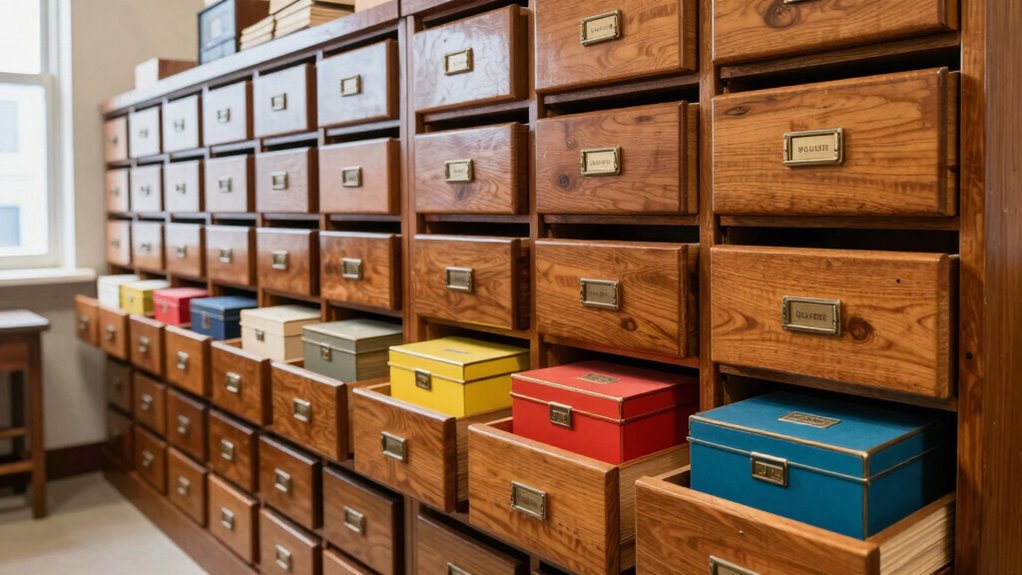
To organize and protect prints effectively, you should understand the storage hierarchy involving flat files, solander boxes, and drawers. Flat files store large, fragile prints flat to prevent damage. Smaller or delicate items fit well in acid-free solander boxes for long-term preservation. Drawers, part of larger cabinets, serve as the last layer for smaller or less fragile prints, offering environmental protection. If you continue, you’ll discover how combining these methods helps maintain your collection’s integrity.
Listen free for 30 days with Audible
Thousands of audiobooks and originals — cancel anytime.
As an affiliate, we earn on qualifying purchases.
Key Takeaways
- Flat files provide primary protective storage for large, fragile prints, minimizing handling and environmental exposure.
- Solander boxes are ideal for smaller or delicate prints, offering long-term protection from light and pollutants.
- Drawers serve as the final storage layer within cabinets, suitable for less fragile or temporarily stored prints.
- An effective storage hierarchy combines flat files, boxes, and drawers to optimize protection and accessibility.
- Proper environmental control and organization are essential across all storage elements to ensure long-term preservation.
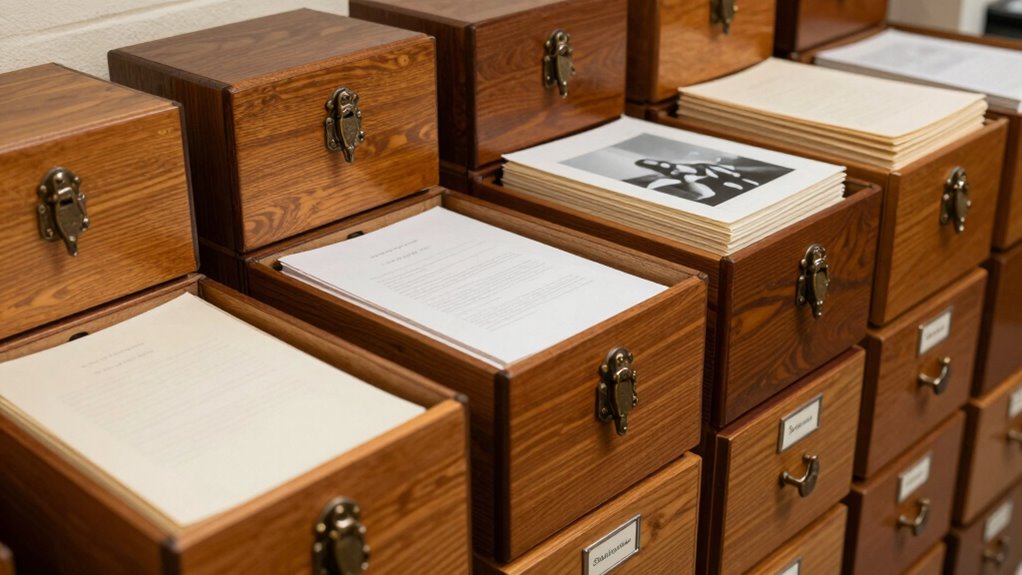
Understanding the storage hierarchy for prints is essential to organizing and preserving your printed materials effectively. When dealing with valuable or delicate prints, choosing the right storage method isn’t just about convenience; it’s about safeguarding these pieces for the long term. Flat files, Solander boxes, and drawers each serve a specific role in creating a structured hierarchy that prioritizes protection, accessibility, and conservation. Your goal should be to minimize handling and environmental exposure, which can cause deterioration over time. Proper environmental control is crucial to maintaining the integrity of your collection, ensuring that factors like humidity, light, and temperature are kept within safe ranges. Flat files are often the first line of defense for larger, fragile prints. These wide, shallow drawers are designed to store prints flat, preventing folds, creases, and tears. When you use flat files, you’re applying conservation techniques that reduce physical stress on your prints. They’re ideal for archiving materials that require minimal handling, such as posters, maps, or large photographic prints. Because flat files keep prints organized and accessible, you can easily locate specific pieces without unnecessary movement, which minimizes risk of damage. They also protect prints from dust, light, and environmental fluctuations, extending their lifespan. Proper organization within flat files further enhances their protective qualities and ensures quick access when needed. Solander boxes are another indispensable component in your storage hierarchy, especially suited for smaller or more delicate items. These sturdy, acid-free boxes are crafted to house prints, drawings, or photographs in a way that shields them from light, air pollutants, and physical contact. When you store prints in Solander boxes, you’re implementing conservation techniques that maintain the integrity of the materials. These boxes are especially useful for archival materials that require long-term preservation. By labeling and organizing your Solander boxes properly, you facilitate easy retrieval while ensuring each print remains in a controlled environment, less susceptible to the wear and tear of daily handling. Drawers, typically part of a larger cabinet, serve as the final layer in your hierarchy. They’re perfect for storing smaller, less fragile prints or for temporary storage during cataloging or research. When you use drawers, you’re applying a practical approach to protect prints from environmental factors such as light, humidity, and temperature fluctuations. Properly lined and compartmentalized drawers keep prints separated, reducing the risk of accidental damage or abrasion. This method is particularly effective when combined with acid-free tissue or interleaving sheets, which act as additional conservation techniques to prevent prints from sticking or rubbing against each other. In creating this storage hierarchy, each element plays an essential role in preserving your collection. By understanding the purpose of flat files, Solander boxes, and drawers, you’re better equipped to implement conservation techniques that extend the life of your prints and keep them easily accessible for future study or display.
As an affiliate, we earn on qualifying purchases.
Frequently Asked Questions
How Do I Determine the Best Storage Method for Different Print Types?
To determine the best storage method, assess each print’s material, size, and condition. Use acid-free enclosures for delicate or valuable prints to prevent deterioration. For larger or more fragile works, opt for flat files or drawers that provide support and easy access. Always apply archival labeling to identify and track your prints, ensuring proper care and organization. Tailoring your storage to each print’s needs preserves its integrity over time.
What Materials Are Safest for Long-Term Print Storage?
You protect your prints from deterioration by choosing materials like acid-free paper and UV-resistant enclosures, which guard against aging and fading. These materials act as silent guardians, shielding your artwork from harmful light and acidic damage over time. While delicate, their strength lies in offering long-term preservation, ensuring your prints remain vibrant and intact. Trust these safe materials to keep your cherished pieces safe for generations to come.
How Often Should Stored Prints Be Inspected or Maintained?
You should inspect your stored prints at least once a year to catch any issues early. During inspections, check for signs of deterioration, mold, or discoloration. Use archival adhesives carefully if repairs are needed, and consider applying UV protective coatings to prevent fading. Regular maintenance helps prolong the lifespan of your prints, ensuring they stay in good condition and retain their visual integrity over time.
Can Digital Backups Replace Physical Storage?
Digital backups can’t fully replace physical storage because they serve as a supplementary safety measure rather than a complete substitute. You should consider digital archiving, like cloud storage, for easy access and disaster recovery. However, physical storage in flat files, Solander boxes, and drawers still provides essential protection, especially for original prints. Combining both methods guarantees your prints are preserved, accessible, and protected against unforeseen digital failures.
What Climate Conditions Are Ideal for Print Preservation?
Think of the ideal climate as a gentle cradle where your prints can rest peacefully. You should maintain stable environmental controls, especially humidity regulation, to prevent damage. Keep temperatures cool and consistent, ideally around 65-70°F, with humidity levels between 40-50%. Avoid fluctuations or damp environments, as they can cause warping, mold, or deterioration. Proper climate conditions are your prints’ best shield against time’s relentless march.
acid-free Solander boxes for artwork
As an affiliate, we earn on qualifying purchases.
As an affiliate, we earn on qualifying purchases.
Conclusion
As you navigate the layered world of print storage, picture yourself opening a snug solander box, its smooth interior cradling delicate prints like secrets held close. Flat files stretch beneath like silent guardians, each drawer a quiet vault of history. Together, these elements form a harmonious hierarchy—protecting, organizing, and revealing art’s quiet stories. Embrace this structured sanctuary, where every piece finds its place, safe and ready to whisper its tale when called upon.
As an affiliate, we earn on qualifying purchases.
print preservation storage solutions
As an affiliate, we earn on qualifying purchases.
As an affiliate, we earn on qualifying purchases.
Flea & tick season Picks
flea and tick prevention
As an affiliate, we earn on qualifying purchases.