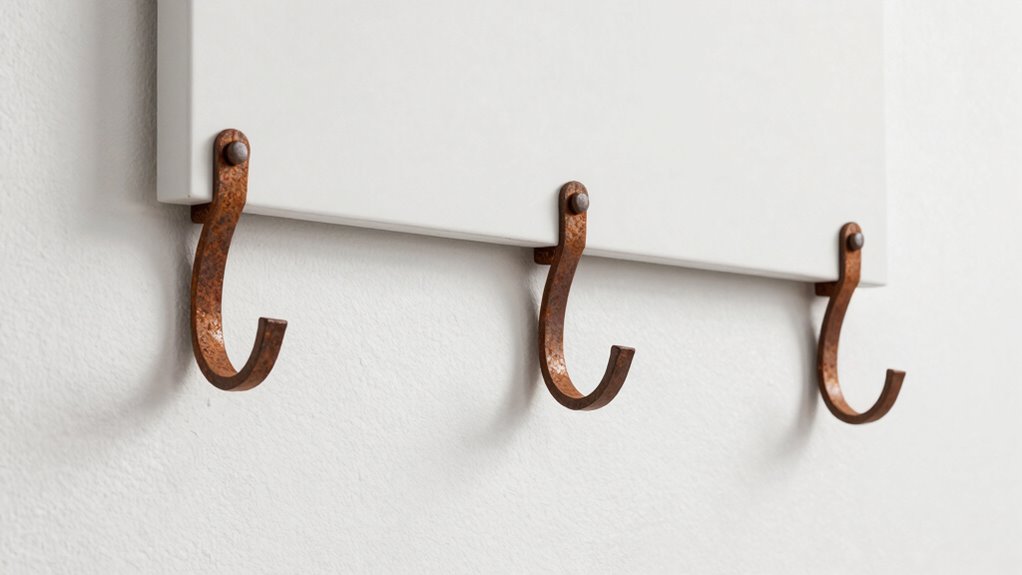

To hang heavy art safely, choose hardware rated for your wall type and weight, such as toggle bolts or steel D-rings. Locate wall studs precisely using a stud finder or tapping technique, and secure anchors directly into them for maximum support. Use a level to ensure even placement, and periodically check hardware for stability. Following these steps guarantees long-term safety—stick with the no-regret method to maintain your art’s beauty and security over time.
Key Takeaways
- Use heavy-duty wall anchors rated for the art’s weight, preferably metal or toggle anchors, to ensure secure support.
- Locate and confirm wall studs with a stud finder and tapping, then drill into these for maximum stability.
- Measure and mark precise spots, ensuring hardware matches wall material and weight requirements for safe hanging.
- Follow the no-regret method by choosing high-quality hardware, regular maintenance, and proper placement to preserve art and safety.
- Double-check hardware installation, use a level for alignment, and consider professional help for heavy or valuable pieces.
Choosing the Right Hardware for Heavy Art
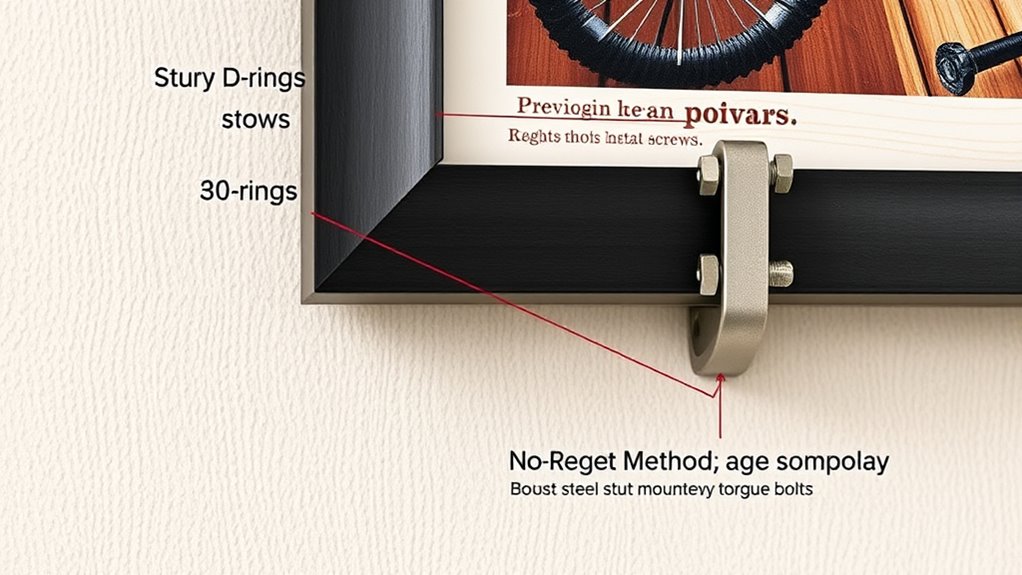
When hanging heavy art, selecting the appropriate hardware is essential to guarantee safety and stability. Start by considering the wall anchors you’ll use; they must match the weight capacity needed for your artwork. Heavy pieces require robust anchors designed to hold substantial weight without pulling out. Look for wall anchors rated specifically for the weight of your art, and always choose anchors that exceed your art’s weight for added safety. Metal or toggle anchors are often best for heavy loads, as they distribute weight evenly. Avoid relying solely on nails or lightweight hooks, which can fail under pressure. Investing in the right hardware ensures your art stays securely mounted, preventing accidents and damage over time. Additionally, understanding the load-bearing capacity of your hardware is crucial for ensuring long-term safety. Always verify the hardware’s maximum weight limits before installation to avoid potential failures. Being aware of proper installation techniques can also significantly improve the stability and safety of hanging heavy art. Properly installed, the hardware can provide long-lasting support that ensures your art remains secure for years to come. Incorporating appropriate hardware selection can also help prevent damage to your walls and artwork.
Locating and Confirming Wall Studs

Start by using a stud finder to locate the edges of the wall stud. Tap lightly along the wall to confirm your findings—solid sounds indicate studs. Measure wall spaces to double-check the spacing, ensuring you’re marking the right spots before hanging your art. For added certainty, look for natural building features that can indicate stud locations, especially in walls that lack electrical or plumbing lines. Additionally, understanding common wall construction practices can help identify where studs are likely to be positioned. Recognizing building code standards can also guide you to more accurately locate studs. Being familiar with local building regulations can further improve your accuracy when identifying stud placements. Using a stud finder with a deep scan feature can help detect hidden studs behind multiple layers of drywall or insulation.
Using a Stud Finder
Using a stud finder is an essential step to guarantee your artwork hangs securely and safely. It helps you locate the wall studs precisely, ensuring proper weight distribution and reducing the risk of damage. To get the best results, follow these tips:
- Calibrate your stud finder according to the manufacturer’s instructions for accuracy.
- Move the device steadily across the wall, marking each detected stud with a small pencil mark.
- Confirm the stud’s location by checking for consistent signals, which supports aesthetic considerations by avoiding uneven hanging or multiple holes.
- Remember that understanding support breakfast can help you choose the right hardware and placement for your artwork.
Tapping for Confirmation
Tapping for confirmation is a simple yet effective way to verify the presence of wall studs after you’ve used a stud finder. Lightly tap along the wall with your knuckles or a tool like a screwdriver. A solid sound indicates a stud, while a hollow sound suggests empty space. This method works well with decorative wall textures, helping you avoid damage by confirming stud locations before drilling. Keep in mind, wall paint compatibility varies; tapping can help confirm areas less affected by textured finishes or uneven surfaces. Use the following table to interpret tapping results:
| Sound | Interpretation | Tip |
|---|---|---|
| Solid | Likely a stud | Confirm with visual cues |
| Hollow | Likely gap or space | Avoid drilling here |
| Slightly solid | Possible stud edge or corner | Tap along to narrow down location |
Additionally, understanding the structure of walls can improve your accuracy when locating studs. Knowing the typical spacing of studs can help you anticipate where to tap next and increase your confidence in finding the correct locations. You might also consider studs in different wall types, as construction methods can vary.
Measuring Wall Spaces
Have you ever wondered how to accurately measure wall spaces to locate studs? Proper measuring guarantees your art hangs securely and evenly. Here’s how to do it:
- Use a tape measure to find wall stud spacing, typically 16 or 24 inches apart. Mark these spots lightly.
- Measure from a corner or known point to confirm stud placement, helping with precise art placement.
- Use a stud finder along your measured points to confirm the location before drilling.
Measuring wall spaces carefully helps you avoid mistakes and ensures your heavy art stays safely mounted. Confirming stud locations is essential for secure art placement, especially when hanging valuable or heavy pieces. Always double-check your measurements to prevent mishaps and achieve a perfect display.
Types of Hooks and Anchors for Secure Hanging

Choosing the right hooks and anchors is essential for securely hanging heavy artwork. You have a variety of options, from traditional hardware to innovative alternative hanging methods. For maximum security, consider heavy-duty eye hooks, screw-in hooks, or wall anchors designed for weight. Decorative hardware options can add style while maintaining strength. Here’s a quick comparison:
| Hook/Anchor Type | Load Capacity | Best For |
|---|---|---|
| Steel D-Ring | High | Heavy frames, art |
| Toggle Bolt | Very high | Drywall, large pieces |
| Adhesive Hooks | Light to medium | Small art, decorative options |
| Sleeve Anchors | Heavy | Concrete or brick walls |
Choose wisely to match your wall type and artwork weight, ensuring safety and durability. Proper installation and understanding of wall anchors can further enhance hanging security and prevent accidents. Additionally, considering proper placement on the wall can distribute weight more evenly, reducing the risk of failure. When selecting hardware, it’s also important to understand the types of hooks and anchors for secure hanging, so you can choose the best option for your specific situation. Familiarity with Gold IRA markets can also guide investment decisions that secure your financial future.
Step-by-Step Guide to Properly Mount Heavy Pieces
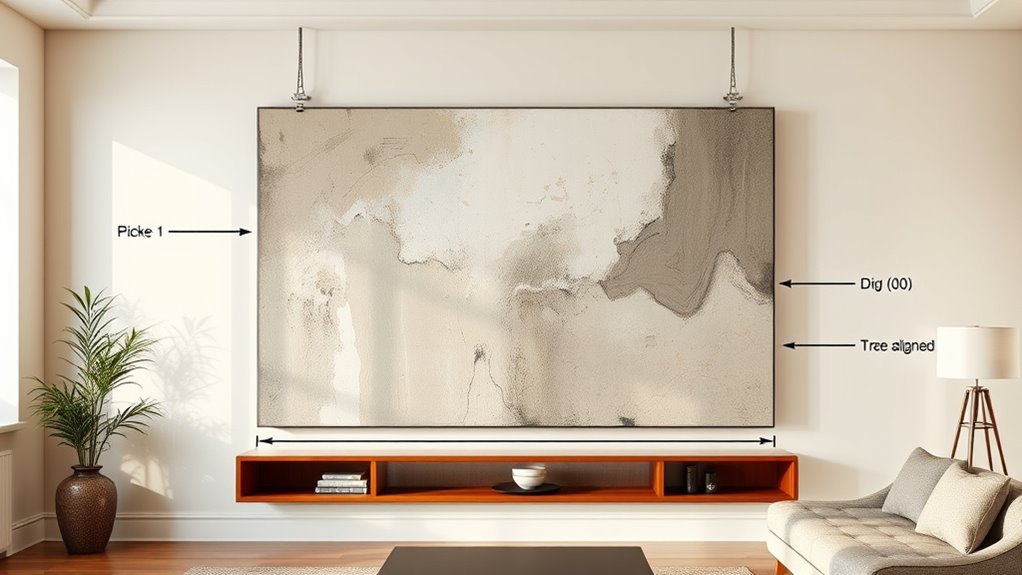
To safely mount heavy art, you need to choose the right hardware that can support the weight. Follow the proper steps to install everything securely, so your artwork stays safe and level. With confidence, you can complete the process smoothly and avoid accidents or damage. Understanding nanotechnology can also inspire innovative hanging solutions using advanced materials. Additionally, considering smart-home integrations can help monitor and secure your art display remotely.
Selecting the Right Hardware
Selecting the right hardware is essential to guarantee your heavy artwork stays securely mounted. Your decor selection and wall preparation influence which hardware works best. To ensure stability, consider these steps:
- Match hardware to your decor style and weight of the piece, opting for heavy-duty anchors or hooks.
- Check your wall type—drywall, plaster, or brick—to choose appropriate anchors and screws. Using the correct type of hardware for your wall material helps prevent damage and ensures a secure hold. Consulting wall material considerations can guide your hardware choice effectively.
- Use sturdy hardware that distributes weight evenly and minimizes stress on your wall. Proper hardware installation techniques are crucial for long-term safety. Employing secure mounting methods can further enhance stability, especially for very heavy or valuable pieces.
- Incorporate proper mounting techniques and ensure your hardware is rated for the weight and conditions of your artwork. Additionally, understanding the appropriate hardware ratings can help you select the best options for heavy pieces.
Proper hardware selection reduces the risk of damage or accidents. Remember, a well-prepared wall and suitable decor choices make mounting safer and easier. Always verify weight ratings and installation instructions to guarantee your heavy art stays put for the long haul.
Installing With Confidence
Mounting heavy artwork confidently requires careful attention to each step of the process. Start by double-checking your hardware and ensuring it’s properly anchored into studs for optimal support, which is vital for art preservation. Measure precisely to position the piece at the desired height, considering aesthetic considerations like balance and visual impact. Use a level to ensure everything lines up correctly, preventing future shifting or unevenness. When hanging, gently secure the artwork to avoid damage or unnecessary strain on the mounting hardware. Take your time to verify stability before fully settling the piece. Proper installation not only safeguards your artwork but also enhances its visual appeal, giving you peace of mind and a beautifully displayed masterpiece that lasts. Additionally, selecting reliable security zone info can help you understand the best practices for safeguarding your valuable art collection.
To ensure long-term safety, consider professional installation services for very heavy or valuable pieces.
The No-Regret Method: Ensuring Long-Term Stability

Ensuring long-term stability when hanging heavy art requires more than just a quick fix; it demands a thoughtful approach that minimizes future regrets. The No-Regret Method focuses on durability, art preservation, and aesthetic considerations. By selecting high-quality hardware and proper placement, you prevent damage and maintain visual harmony. Here’s how to do it:
- Use heavy-duty studs and appropriate anchors to support weight securely.
- Choose hardware that minimizes impact on the artwork’s surface, preserving its condition.
- Plan placement with aesthetic considerations to keep the art balanced and visually appealing over time.
Following these steps guarantees your art stays safe, looks great, and remains a cherished part of your space for years.
Tips for Maintaining and Adjusting Your Display

Regular maintenance and adjustments are key to keeping your art display looking its best over time. To support art preservation, regularly check that hardware remains secure and that the piece isn’t shifting. Adjusting lighting considerations can prevent damage; verify lights are not too close or too hot for your artwork. Use the table below to guide your maintenance routine:
| Task | Frequency | Tips |
|---|---|---|
| Tighten hardware | Every 6 months | Use appropriate tools to avoid damage |
| Clean the surface | Quarterly | Use soft, non-abrasive cloth |
| Adjust lighting | Annually | Optimize for art preservation, avoid UV exposure |
| Check for wall stability | Annually | Confirm studs and anchors remain secure |
Consistent checks help preserve your art and ensure safe adjustments over time.
Frequently Asked Questions
How Do I Prevent Wall Damage When Hanging Heavy Art?
To prevent wall damage when hanging heavy art, use wall anchors designed for high weight capacity and make certain of proper weight distribution across multiple anchors if needed. Always choose the right hardware for your wall type, like toggle bolts or molly bolts, and avoid overloading hooks. Carefully distribute the weight to avoid stress on a single point, reducing the risk of cracks or dents. This approach keeps your wall intact and your art secure.
What Tools Are Essential for Installing Heavy Art Securely?
Think of your tools as your art’s best friends. You’ll need sturdy wall anchors to support the weight and reliable mounting brackets to keep everything in place. A drill with appropriate bits makes installation smooth, while a level guarantees perfect alignment. Don’t forget a measuring tape for precise placement. When you combine these essentials, you’ll create a secure, visually pleasing display that lasts without risking damage or regret.
Can Hanging Hardware Be Concealed Behind Art Pieces?
Yes, you can use concealed mounting with hidden hardware to make your art pieces look seamless. By choosing specialized hardware designed for concealment, you hide the mounting system behind the artwork, giving a clean, floating effect. Just make certain you install the concealed mounting securely into studs or appropriate anchors, so your heavy art stays safe and stable while maintaining an elegant, uncluttered appearance.
How Often Should I Check the Stability of Hung Heavy Artwork?
You should check the stability of your heavy artwork every 6 to 12 months. Regularly inspecting guarantees the weight distribution remains secure and that the hardware hasn’t loosened over time. If you notice any shifting, creaking, or wobbling, re-tighten or reinforce the hanging hardware promptly. Consistent hanging frequency checks help prevent accidents and keep your art securely displayed, giving you peace of mind and preserving your artwork’s safety.
Are There Specific Wall Types Better Suited for Heavy Art Hanging?
Certain wall types are better suited for heavy art hanging. For example, drywall with studs provides sturdy mounting surface options, especially when you use the right hardware. Masonry or concrete walls are excellent for heavy pieces, requiring appropriate anchors. Avoid hollow or thin walls without proper reinforcement, as they can’t support significant weight. Always consider wall material considerations to guarantee your art stays secure and safe.
Conclusion
By choosing the right hardware, finding sturdy studs, and following the no-regret method, you set your heavy art for long-term safety. Think of your wall as a stage and your art as the star—only the best support will do. With patience and precision, you’ll create a display that stands tall and proud, a masterpiece in its own right. When you hang wisely, your art becomes a bold statement—unshakable, beautiful, and forever secure.