To measure art for framing like a pro, start by gathering reliable tools such as a straight ruler, tape measure, and level. Carefully measure the width and height of your artwork, double-checking for accuracy. Decide on border sizes and frame style, including margins and mats, to enhance your piece. For irregular shapes, use flexible tools to capture contours precisely. Mastering these steps guarantees a perfect fit—continue here to learn the detailed techniques for flawless results.

Prime made for students and young adults
- Fast, free delivery for dorm and study essentials
- Prime Video and Amazon Music included
- Member-only deals
Key Takeaways
- Use a sturdy, calibrated ruler or tape measure to accurately record the artwork’s width and height, ensuring straight, level measurements.
- For irregular shapes, measure the widest and tallest points with flexible tools, noting contours and curves precisely.
- Organize and double-check measurements in a digital or physical record to prevent errors and guide framing decisions.
- Determine appropriate matte size and margins that complement the artwork without overpowering it, ensuring proper proportions.
- Verify all measurements before purchasing or cutting materials, considering artwork style, display context, and preservation needs.
As an affiliate, we earn on qualifying purchases.
Gather the Right Tools for Accurate Measurements

To guarantee your artwork fits perfectly in its frame, you need to gather the right tools for accurate measurements. Start with a reliable ruler or measuring tape to determine artwork dimensions precisely. Keep a pencil and paper handy to record measurements accurately. When considering framing materials, choose options that complement your art’s colors and style, ensuring a cohesive look. Color matching is essential; select mats, glass, and frames that enhance your artwork without overpowering it. A level or square can help ensure your frame is aligned correctly. Having these tools ready will make the process smoother and ensure your finished display looks professional. Proper preparation minimizes errors, so don’t skip this step—your effort will pay off with a beautifully framed piece. Additionally, understanding Free Floating techniques can help you achieve a modern, minimalist look that highlights your artwork beautifully. Incorporating visual balance principles during framing can further enhance the overall presentation and harmony of your display. Paying attention to accurate measurements ensures your artwork is perfectly centered and proportioned within the frame, avoiding awkward gaps or misalignment. Moreover, considering proper lighting can enhance the visibility and appeal of your framed art, making it stand out in any space. Furthermore, utilizing proper tools can significantly reduce errors and improve the precision of your framing project.
professional picture framing ruler
As an affiliate, we earn on qualifying purchases.
As an affiliate, we earn on qualifying purchases.
Measure the Artwork’s Dimensions Carefully

To get an accurate measurement, use a rigid measuring tool to prevent any bending or flexing. Make sure to record both the width and height precisely, noting any irregular shapes or edges. Double-check your measurements to ensure they reflect the artwork’s true dimensions before proceeding. Incorporating precise measurement techniques and verifying measurements against the artwork’s original dimensions can help avoid framing mistakes and ensure a perfect fit. Properly documenting your measurements is essential for achieving consistent results.
Use a Rigid Measuring Tool
Have you ever struggled with getting accurate measurements for artwork? Using a rigid measuring tool is essential for precise results. Flexible or flimsy rulers can bend or shift, leading to errors in your measuring techniques. Opt for a sturdy, straight ruler or a metal tape measure that maintains its shape. Before measuring, verify your tool is properly calibrated—check that it aligns perfectly at zero and hasn’t been damaged. Hold the measuring tool steady and keep it flush against the artwork’s edges to avoid skewed readings. A rigid tool minimizes movement and provides the consistency needed for accurate dimensions. Understanding cybersecurity vulnerabilities in your measuring tools can help prevent errors and ensure you get reliable measurements, setting a strong foundation for selecting the right frame and achieving professional-looking results. Additionally, being aware of measurement accuracy helps you recognize the importance of proper tools and techniques in framing projects.
Record Width and Height
Are you confident you’re recording your artwork’s dimensions accurately? To do so, carefully measure both the width and height, ensuring your measurements are precise. Use a ruler or measuring tape, keeping it level and steady. When recording, note the exact dimensions to assist with color matching and texture assessment later, especially when selecting a frame and mat that complement the artwork. Be mindful of any variations or irregularities, and avoid rounding numbers excessively. Double-check your measurements to prevent errors that could affect the framing fit. Accurate recording guarantees your finished display will enhance the artwork’s appearance, highlighting its details and textures. Proper measurement techniques are essential for achieving a professional-looking result. Precise dimensions ensure your framing choices align perfectly, creating a professional and polished presentation. Additionally, understanding artwork measurement standards can help ensure consistency and accuracy across different pieces, supporting your efforts in art preservation and presentation.
Check for Irregular Shapes
When working with artwork that has irregular shapes, it’s essential to measure carefully to guarantee a proper fit. Irregularities in shape can affect how the piece sits in the frame, so you need to account for these shape considerations during measurement. Use a flexible ruler or measuring tape to follow the contours of the artwork, noting the widest and tallest points. Pay close attention to frame irregularities, ensuring you measure all angles and curves accurately. Avoid relying solely on standard measurements; instead, record the exact dimensions of each unique side. This detailed approach ensures your frame will accommodate the artwork’s shape precisely, preventing gaps or tight fits. Incorporating knowledge of accurate measuring techniques can also improve your ability to assess complex shapes more effectively. Additionally, auditory processing techniques can enhance your spatial awareness, helping you interpret irregular shapes more intuitively. Recognizing the importance of patience during measurement can further ensure accuracy when dealing with challenging shapes. Practicing consistent measurement methods can lead to more reliable results over time. Developing a keen eye for detail and understanding shape recognition can also assist in achieving precise measurements for irregular art pieces.
artwork mat cutter and measuring tools
As an affiliate, we earn on qualifying purchases.
As an affiliate, we earn on qualifying purchases.
Decide on the Frame Style and Borders

Choosing the right frame style and borders is an essential step in showcasing your art effectively. Your selection influences the overall aesthetic and how viewers perceive the piece. Take into account matte options that complement your artwork’s tones, enhancing visual depth. Frame colors should contrast or harmonize with the art to create balance. Think about the style—classic, modern, or ornate—that fits your piece’s character. Incorporating visual hierarchy principles can help guide viewers’ attention and create a cohesive display. Key points to consider include: – Selecting matte options that add sophistication without overpowering the artwork – Picking frame colors that enhance or subtly contrast with your art – Deciding on border widths that provide adequate space and focus. Understanding feature Buddies can also help you choose framing options that align with your artwork’s context and intended presentation. Additionally, considering cultural symbolism may influence your framing choices to better reflect the artwork’s meaning or origin. To ensure your framing choices are well-informed, it’s helpful to familiarize yourself with presentation techniques that can elevate the visual impact of your art. Making thoughtful choices ensures your art is framed in a way that elevates its beauty and aligns with your personal style.
art framing level and square set
As an affiliate, we earn on qualifying purchases.
As an affiliate, we earn on qualifying purchases.
Measure for Matting and Margins

To guarantee your artwork is properly framed, start by measuring for matting and margins carefully. First, decide on the matte size that complements your piece without overpowering it. Use a ruler or measuring tape to determine the width of the margins you want around the artwork, typically between 1 to 3 inches, depending on your style. Consider color matching when selecting the matte; choose a shade that enhances or harmonizes with your art’s colors. Accurate measurements ensure that the mat fits perfectly, highlighting your artwork and providing a professional look. Remember, well-measured margins create balance and focus. Take your time to double-check your measurements before purchasing or cutting your matte to avoid errors that could detract from your finished display. Additionally, understanding nanotechnology can inspire innovative framing techniques or materials that improve the preservation and presentation of your artwork. Utilizing advanced materials can also help protect your art from environmental damage over time.
Determine the Correct Frame Size

Before selecting a frame, you need to determine the correct size to make certain your artwork fits perfectly and looks balanced. Consider your art style considerations, as different styles may require varying frame dimensions to enhance their features. Think about how the framing material choices complement your artwork and overall decor, making certain a cohesive presentation. To choose the right frame size:
- Match the frame dimensions to the artwork’s actual measurements, accounting for matting if used.
- Decide whether to add a border for aesthetic balance or focus on the artwork itself.
- Factor in the visual weight of your art style considerations to avoid overwhelming or underwhelming the piece.
- Additionally, understanding professional framing techniques can help you achieve a polished look that highlights your artwork effectively. Paying attention to support breakfast options and styles can inspire creative presentation ideas, even in framing choices. Incorporating proper measurement methods ensures your framing process is precise and professional. Getting these elements right ensures your framed art will be visually appealing and professionally presented.
Record and Double-Check Your Measurements

Accurately recording and double-checking your measurements is essential to guarantee your artwork fits perfectly within the frame. Precise measurements help preserve art conservation standards, preventing damage caused by ill-fitting frames or improper handling. Use a reliable ruler or tape measure, noting the height and width carefully. Once you record these measurements, double-check them by measuring again, ideally from different points to ensure consistency. This step minimizes errors that could compromise framing aesthetics or lead to costly rework. Keep your measurements organized, perhaps in a notebook or digital file, for easy reference. Taking the time to verify your measurements ensures your framing choices enhance your artwork’s presentation while maintaining its integrity. Accurate records are the foundation of a professional, visually appealing framed piece.
Tips for Measuring Unusual or Irregular Artworks
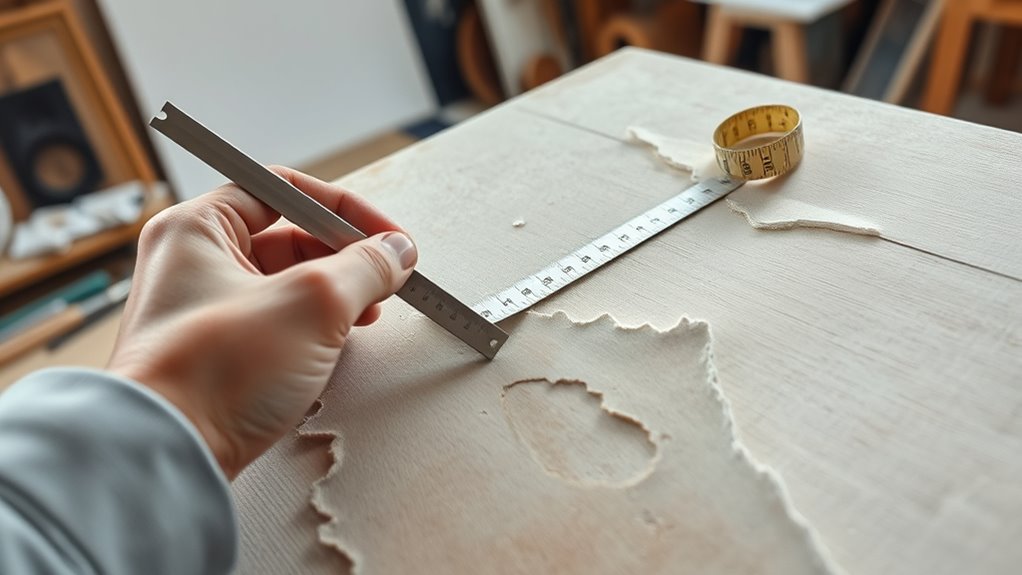
Measuring artworks with unusual or irregular shapes can be more challenging than standard rectangles. To guarantee a proper fit and ideal protection, focus on precise measurements and consider custom framing options that accommodate unique dimensions. When measuring, use flexible rulers or painter’s tape to trace the artwork’s outline directly, capturing every contour. Keep in mind artwork preservation tips, such as avoiding contact with glass or matting that might press against delicate edges. For irregular pieces, consider creating a custom mat or backing to enhance stability and presentation. This not only enhances aesthetic appeal but also provides additional support. Accurate measurements combined with thoughtful framing choices help preserve the integrity of your art while showcasing its distinctiveness elegantly.
Frequently Asked Questions
What Are the Best Tools for Measuring Very Delicate or Fragile Artwork?
For delicate artwork, use precision measuring tools like a flexible measuring tape or a lightweight, non-abrasive ruler. You might also consider using a digital caliper for accuracy without applying pressure that could damage fragile pieces. Always handle delicate artwork with gloves and support it carefully to prevent tears or bends. These tools help you get accurate measurements while keeping your fragile artwork safe during the process.
How Do I Measure Artwork With Irregular Shapes Accurately?
Imagine you’re framing a unique, irregularly shaped sculpture. To measure it accurately, use artwork templates or create your own with paper or cardboard, tracing its outline carefully. Then, employ measurement techniques like using a flexible ruler or calipers to capture every curve. This method guarantees precise dimensions, helping you select the perfect frame that complements your artwork’s shape and size, giving it a polished, professional look.
Should I Include the Frame or Matting Measurements When Sizing?
You should include the matting width and framing edge measurements when sizing your artwork. Measure the artwork itself first, then add the desired matting width on all sides, along with the framing edges. This guarantees your piece fits perfectly within the frame, with the matting providing a balanced look. Including these measurements helps you achieve a professional finish and prevents any surprises during framing.
How Do I Account for Framing Materials That Add Thickness?
Think of framing materials like a puzzle piece—fitting perfectly requires accounting for their thickness. To do this, add the matting thickness to your artwork dimensions, ensuring the frame can accommodate both. Consider framing depth, especially with thicker mats or decorative frames, so your art sits flush. Measure carefully, and you’ll prevent any surprises, creating a polished look that showcases your art beautifully without any awkward gaps or protrusions.
What Are Common Mistakes to Avoid When Measuring Artwork for Framing?
You should avoid common measurement errors like rushing or misreading rulers, which lead to inaccurate sizing techniques. Always double-check your measurements and use a proper, flat surface to prevent skewed results. Don’t forget to account for framing materials’ thickness, as overlooking this can cause fitting issues. Keep your tools precise and take your time to make certain the artwork is perfectly measured for a professional, clean frame fit.
Conclusion
Now that you know how to measure art for framing like a pro, you’re ready to turn your space into a gallery of your own. Think of measurement as the map that guides your frame to perfectly hug your artwork. With your tools in hand and attention to detail, you’ll craft a display that’s as polished as a masterpiece. Remember, precision is key—your art deserves the royal treatment it’s been waiting for!
Fall Picks
fall essentials
As an affiliate, we earn on qualifying purchases.