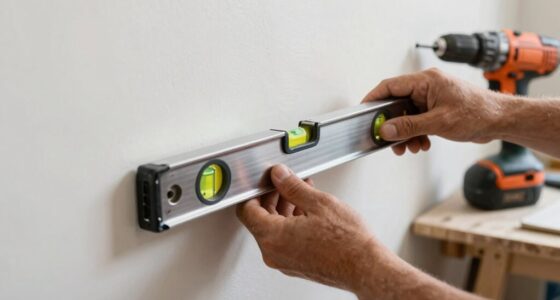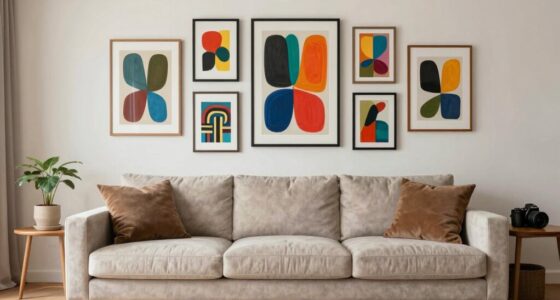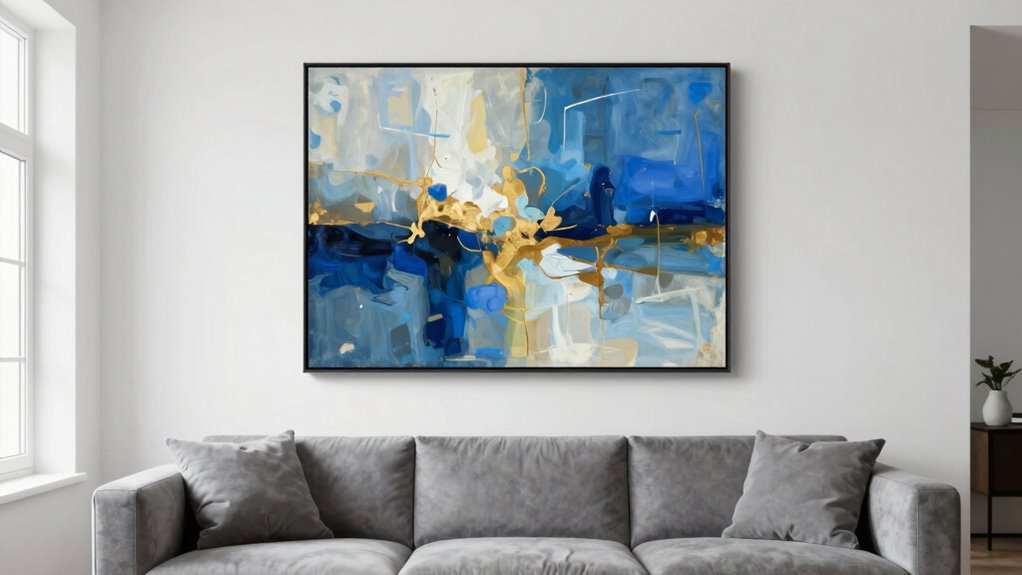

The most common mistake is hanging art too high or too low, disrupting the room’s balance. The typical guideline is to place art around 57-60 inches from the floor, but this can vary based on room features and artwork size. Factors like furniture placement and wall proportions also matter. To create a visually appealing display, you need to think about these details, and if you keep exploring, you’ll discover how to find the perfect placement for any space.
Key Takeaways
- The standard rule is to hang art so its center is 57-60 inches from the floor.
- Avoid hanging art too high or too low, which can disrupt room balance and furniture harmony.
- Consider room features, artwork size, and lighting to determine the best height for each piece.
- Larger walls allow for more flexible art placement, while smaller walls require careful height adjustments.
- Use visual cues and interior design principles to customize art height beyond generic guidelines.
The Common Mistake: Hanging Art Too High or Too Low
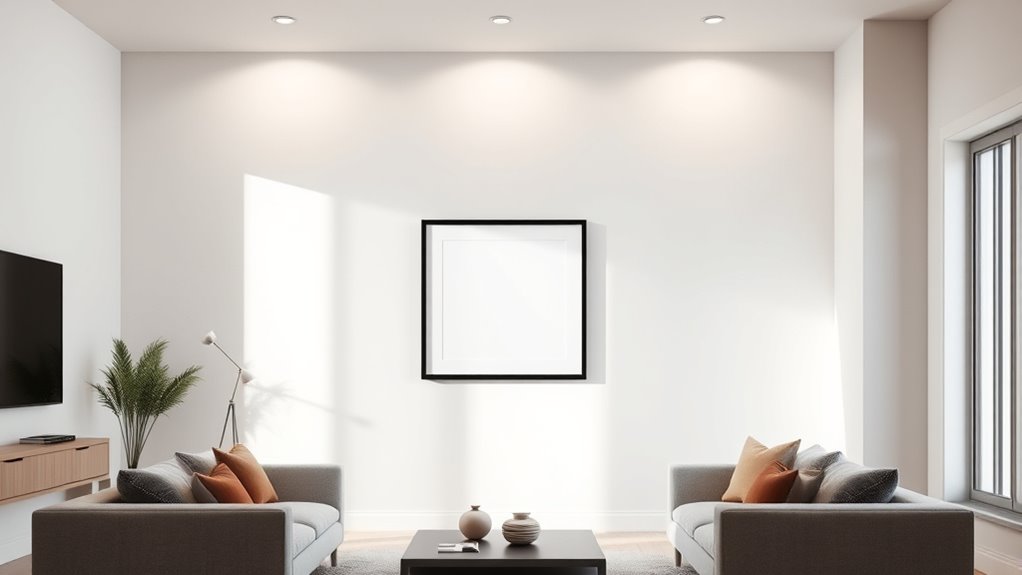
Many people make the mistake of hanging art either too high or too low, which can disrupt the balance of a room. When you place an art installation too high, it can seem disconnected from your furniture and diminish wall aesthetics. Conversely, hanging it too low can make the space feel cramped or cluttered. The goal is to create a visual flow that complements your room’s proportions. Consider the height of your furniture—most artwork should be hung so that its center is around eye level, roughly 57 to 60 inches from the floor. This rule helps you achieve harmony, but remember that room size and ceiling height also influence placement. Properly positioned art enhances your space without overwhelming or underwhelming your wall surfaces. Using visual balance principles can further refine your art placement for a cohesive look, ensuring your artwork complements your overall room design and spatial harmony. Additionally, understanding art placement guidelines can help you optimize your wall decor for maximum aesthetic impact. Paying attention to proportion and scale is essential for achieving a balanced and pleasing display in any room. For example, choosing the right projector screen size can significantly impact how your artwork or visual displays are perceived within the space.
The Standard Rule for Art Placement and Its Limitations

The standard rule for hanging art is to position its center at eye level, typically around 57 to 60 inches from the floor. This guideline works well for a variety of art styles, especially when creating a balanced, cohesive look. However, it has limitations. For example, large or bold pieces might need to be hung slightly higher or lower to suit the room’s proportions. Color coordination also plays a role; vibrant or contrasting artwork can draw attention differently depending on placement. This rule assumes a uniform height, but your space and art style may call for adjustments. Relying solely on this standard can result in mismatched proportions or visual imbalance, so consider your room’s unique features when positioning your art.
How to Find the Perfect Art Height for Your Space

Finding the perfect height for your art involves considering the unique features of your space and the size of the piece itself. To get it right, think about how color coordination and lighting considerations play a role. Properly hung art should complement your room’s design and enhance its ambiance. Additionally, understanding art placement techniques can help you achieve a balanced and visually appealing display. Incorporating visual cues can also guide you in aligning your artwork for optimal impact. Paying attention to art hanging height standards ensures your artwork is positioned at a level that feels natural and engaging for viewers. Exploring design principles can also inspire you to experiment with innovative hanging methods that break conventional rules and truly personalize your space.
Factors That Influence the Ideal Hanging Height
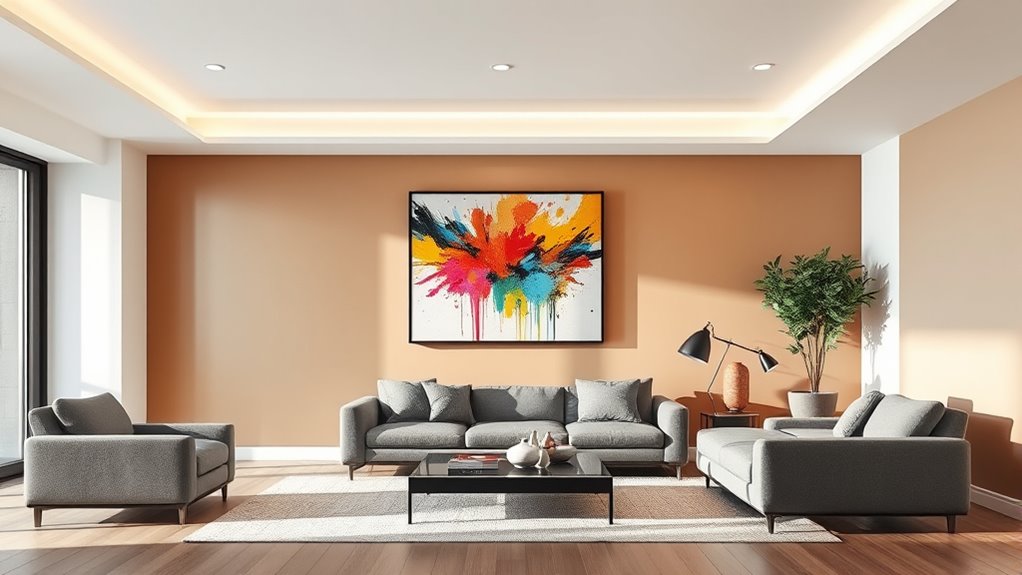
Several factors can influence the ideal height to hang your art, making it important to contemplate more than just eye level. Art placement depends on wall proportions, as larger walls can accommodate higher or lower placements without feeling off-balance. For instance, on tall walls, hanging art slightly higher can help it feel integrated, while on shorter walls, lower placement may be more appropriate. The size of the artwork also matters; bigger pieces often look better hung slightly higher to avoid dominating the space. Additionally, furniture placement influences art height—hanging art above a sofa or console requires specific adjustments. Considering these factors ensures your art complements the space and creates visual harmony rather than feeling oddly positioned. Understanding how visual harmony influences interior design can help you make better placement choices. Moreover, paying attention to proper hanging height can significantly enhance the overall aesthetic and balance of your room. Recognizing art placement principles can lead to more confident and aesthetically pleasing decisions when decorating your walls. Remember, visual balance is key to creating a cohesive and inviting environment. To achieve this, it’s also helpful to consider lighting effects that can accentuate your artwork and influence perceived height.
Tips for Achieving a Balanced and Cohesive Gallery Wall

Creating a balanced and cohesive gallery wall starts with careful planning of layout and spacing. To achieve this, consider your stylistic choices and how curated displays reflect your personality. Here are three tips:
- Start with a unifying theme or color palette to guarantee visual consistency across your frames.
- Mix frame styles and sizes intentionally to add interest without cluttering the display.
- Use a grid or grid-like pattern for a structured look, or go for an eclectic arrangement for a dynamic feel—whichever suits your style.
These strategies help you create a gallery wall that feels intentional and polished. Remember, the key is balancing individual pieces with the overall display, making every element contribute to a cohesive story.
Frequently Asked Questions
How Does Ceiling Height Affect Where I Should Hang Art?
Ceiling height directly impacts where you should hang art, as taller ceilings allow for more space and different artwork alignment. With higher ceilings, you can place art slightly higher for balance, but avoid floating it too close to the ceiling. Conversely, in rooms with standard or lower ceilings, hang artwork at eye level to create a cozy, proportional look. Adjust based on ceiling proportions to achieve the best visual impact.
Should Art Placement Differ Between Residential and Commercial Spaces?
Yes, art placement differs between residential and commercial spaces. In an art gallery, you’ll want to prioritize eye level placement for impact, considering wall textures that can enhance each piece. For residential areas, you can experiment with higher or lower placements based on furniture and wall features. Always tailor your choices to the space’s purpose, ensuring each piece complements the wall textures and overall ambiance.
How Do Furniture Styles Influence Art Hanging Height?
Imagine a dance between furniture scale and room ambiance, guiding your art placement. You should hang art so it complements the furniture’s style and size—lower for cozy, intimate pieces and higher for bold, modern designs. This balance creates harmony, making your space inviting. Adjust your art height accordingly, ensuring it flows seamlessly with your furniture, enhancing the overall atmosphere without overwhelming or underwhelming the room’s vibe.
What Are the Best Practices for Hanging Art in Irregularly Shaped Rooms?
When hanging art in irregularly shaped rooms, you should prioritize art placement that complements wall proportions. Center larger pieces on the main focal wall and arrange smaller artworks around them for balance. Use eye level as a guide, but don’t be afraid to experiment with asymmetry to enhance the room’s unique shape. This approach guarantees your art feels intentional and harmonious with the room’s unconventional proportions.
How Can Lighting Impact the Perceived Height of Artwork?
Lighting impact can profoundly influence the perceived height of your artwork. Bright, focused lighting draws attention upward, making the piece seem taller, while softer, diffused light creates a more balanced, grounded look. Experiment with different angles and intensities to see how lighting impact alters perception. Proper lighting not only highlights your art but also adjusts its perceived height, ensuring it complements your space perfectly.
Conclusion
So, next time you hang art, remember—your walls aren’t auditioning for a skyscraper. Ignore the outdated rules and trust your eye (and maybe a level). After all, who needs perfect measurements when you can have a perfectly mismatched masterpiece that sparks conversation? Just don’t blame the wall when your art looks like it’s auditioning for a circus act. Hang smart, hang fun—your walls will thank you (or at least not judge you too harshly).